Artwork
Landscape
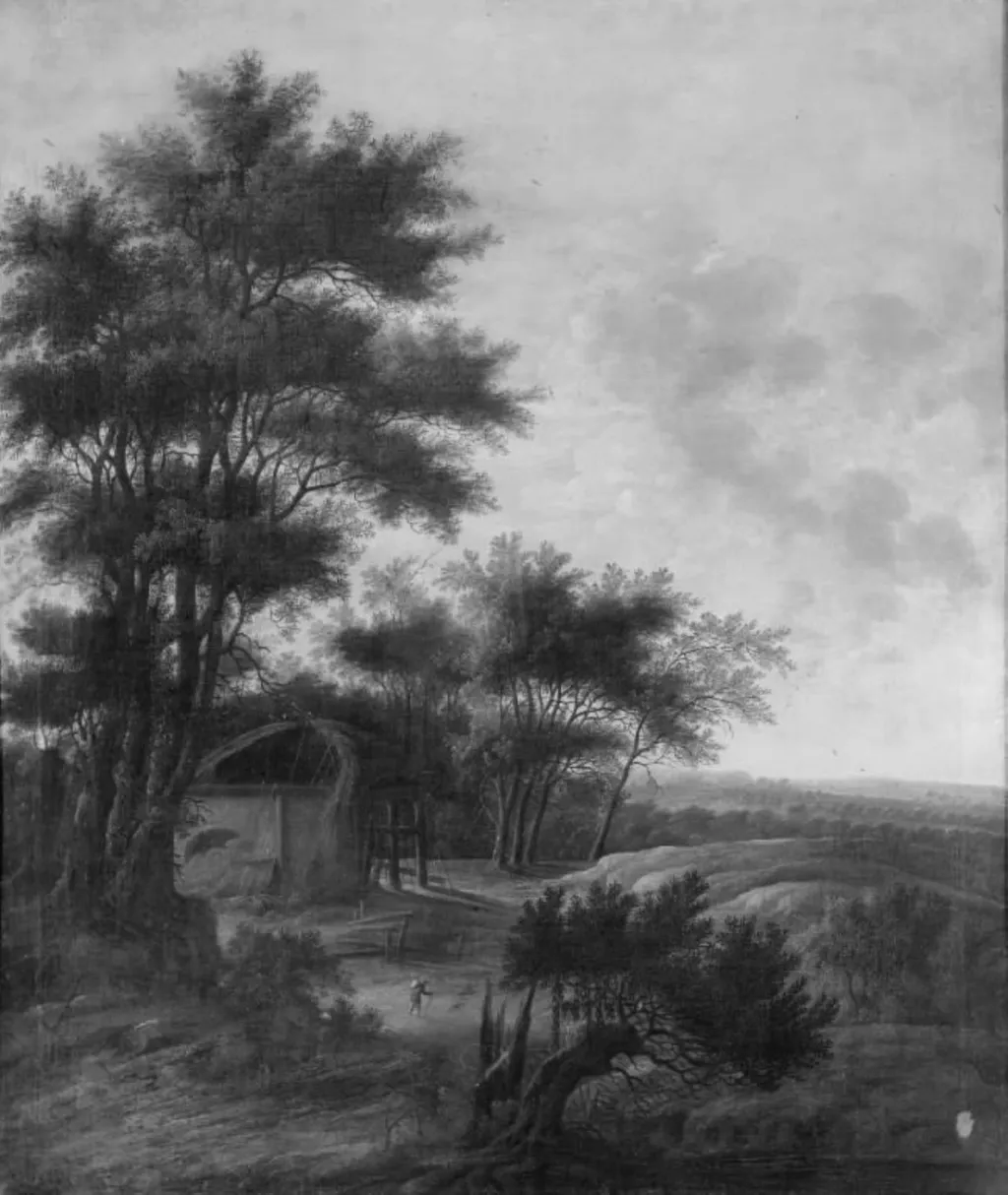
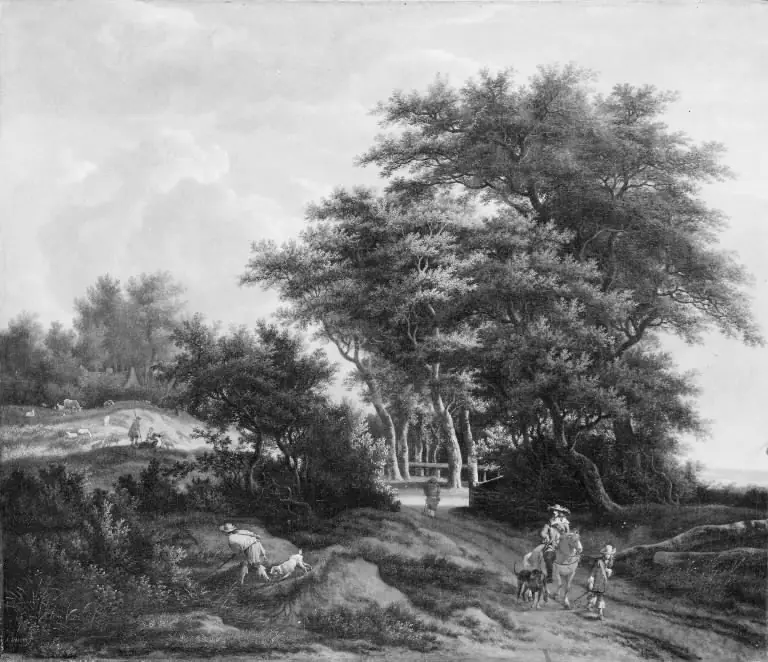
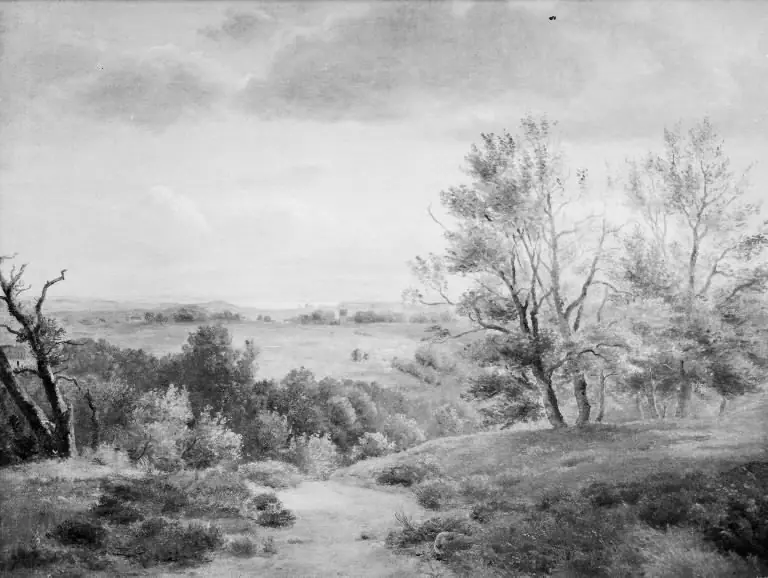
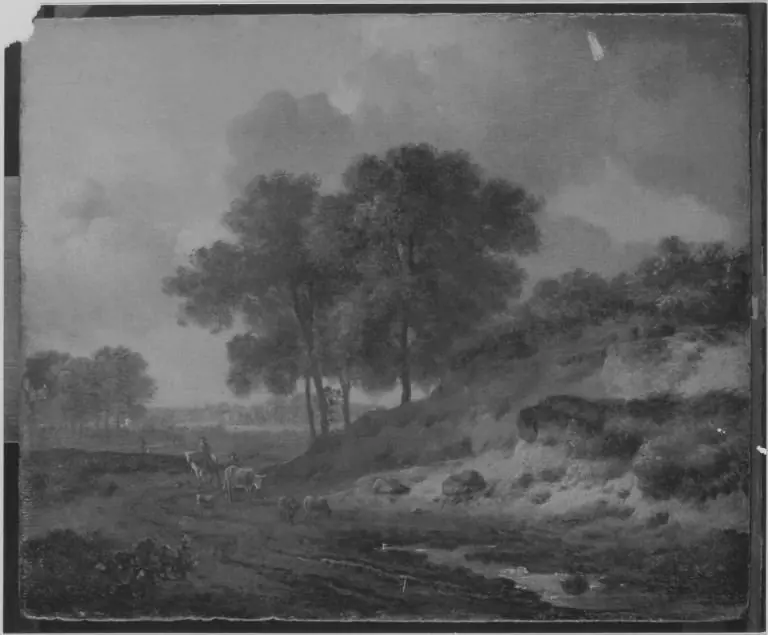
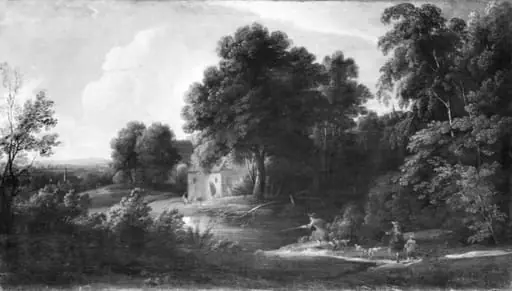
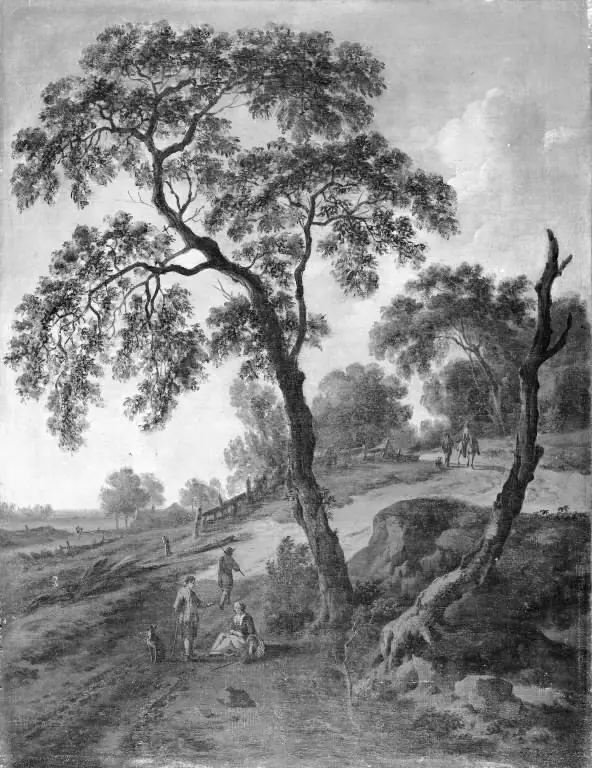
Landscape is an unspecified painting by the Baroque artist Unknown. It dates from 1659 and is held in the collection of the Statens Museum for Kunst.
About this work
Overview
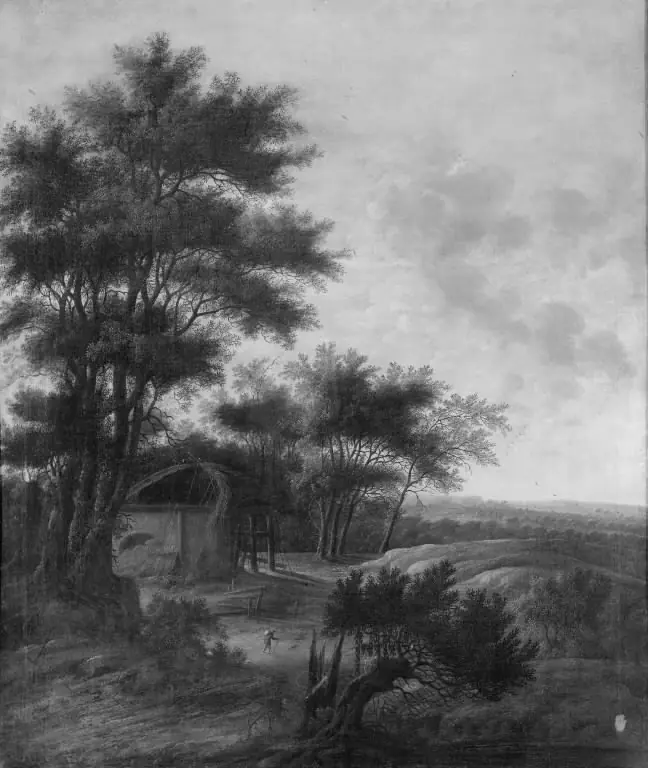
‘Landscape’ is an oil painting executed in 1659 by the artist known as 1610_person. The work is part of the collection of the Museum of Ethnography, where it is displayed among other 17th‑century European pieces. Measuring a modest size, the canvas presents a tranquil hillside scene rendered with a subdued palette and careful attention to atmospheric conditions.
Subject & Meaning
The composition depicts a gently sloping hill punctuated by a modest stone structure partially concealed by a stand of trees. A narrow, winding path descends from the upper left, along which a solitary figure proceeds, suggesting a narrative of solitary travel or contemplation. The overcast sky and elongated shadows lend the scene a quiet, slightly enigmatic mood.
Technique & Style
The artist employs a pronounced chiaroscuro effect, juxtaposing deep shadows with illuminated forms to give volume to the foliage and architecture. This manipulation of light and dark aligns the painting with Baroque sensibilities, where dramatic contrast was used to heighten spatial depth and emotional resonance. The brushwork remains restrained, emphasizing tonal modulation over surface detail.
History & Provenance
Created in the mid‑17th century, the painting entered the Museum of Ethnography’s holdings through a donation in the early 20th century, though the exact provenance prior to that remains sparsely documented. Archival records indicate the work was part of a private collection in the Netherlands before being acquired by the museum’s founders.
Context
During the 1650s, landscape painting in Northern Europe increasingly embraced naturalistic observation combined with theatrical lighting, a trend reflected in this work. The inclusion of a lone traveler mirrors contemporary allegorical themes of pilgrimage and introspection, while the modest architecture hints at rural habitation typical of the period’s pastoral ideal.
Artist & collection

 Domestic Scene
 Giacomo and Cardinal Marco, investing Andrea, Abbot of San Zeno, with his Benefice
 The Nymph of Fontainebleau
 Portrait of a Woman
 Madonna and Child with Saints in the Enclosed Garden
 Venus and Minerva
 Family Group of Four on Sofa
 Wall painting from Room H of the Villa of P. Fannius Synistor at Boscoreale