Artwork
The Entombment of Christ
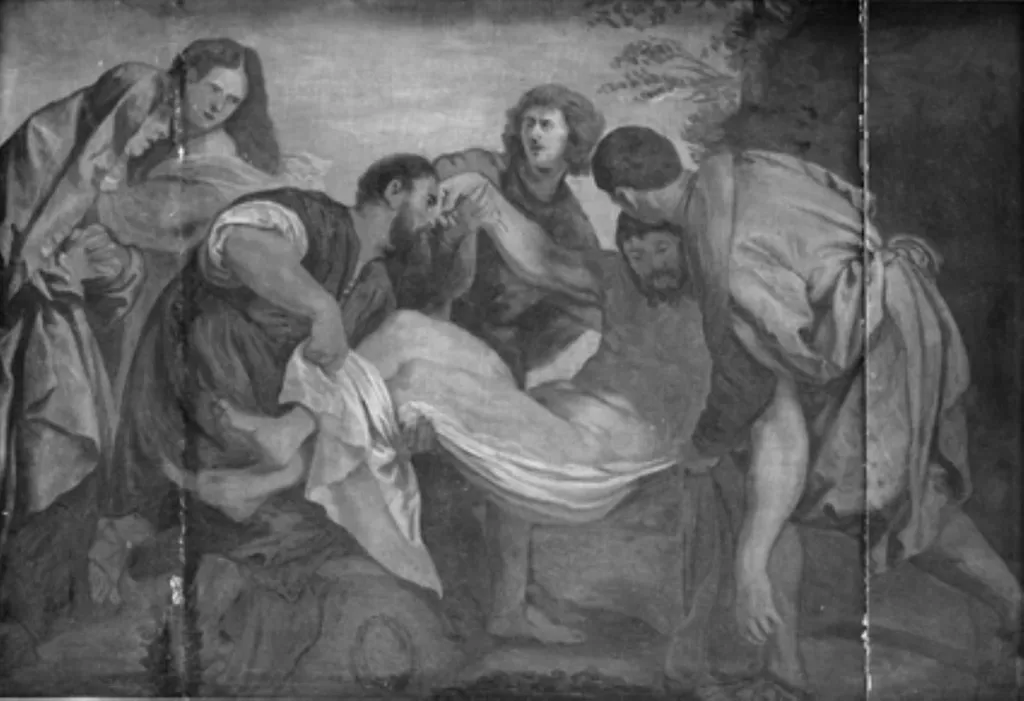
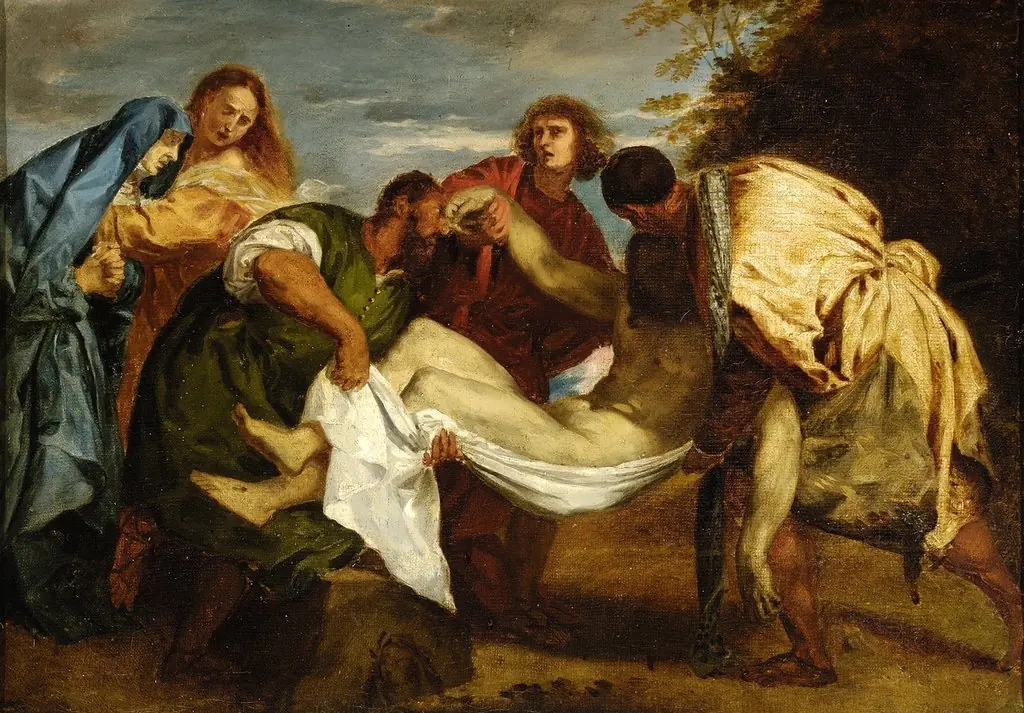
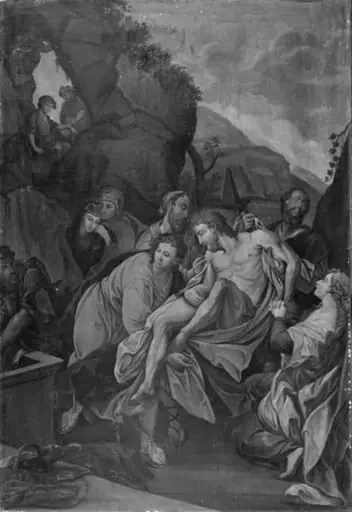
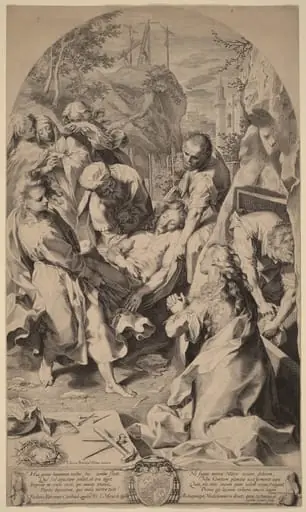
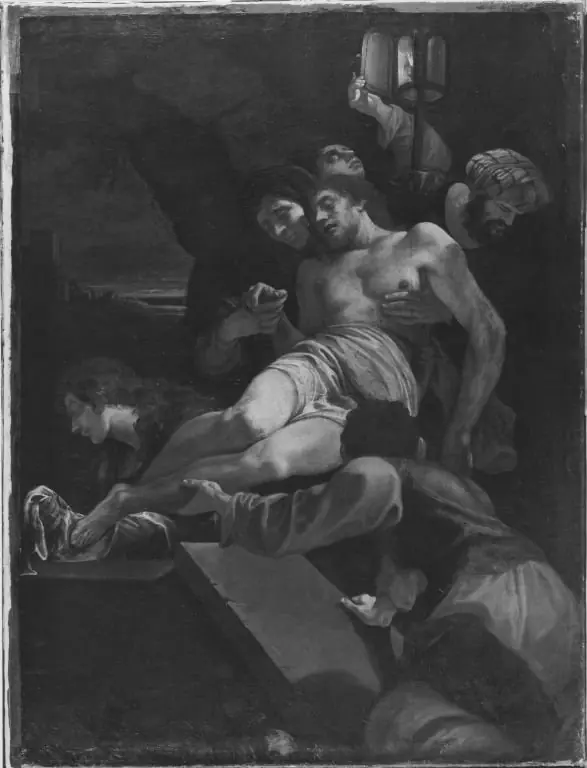
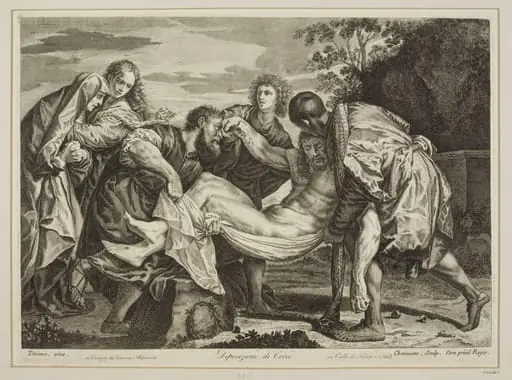
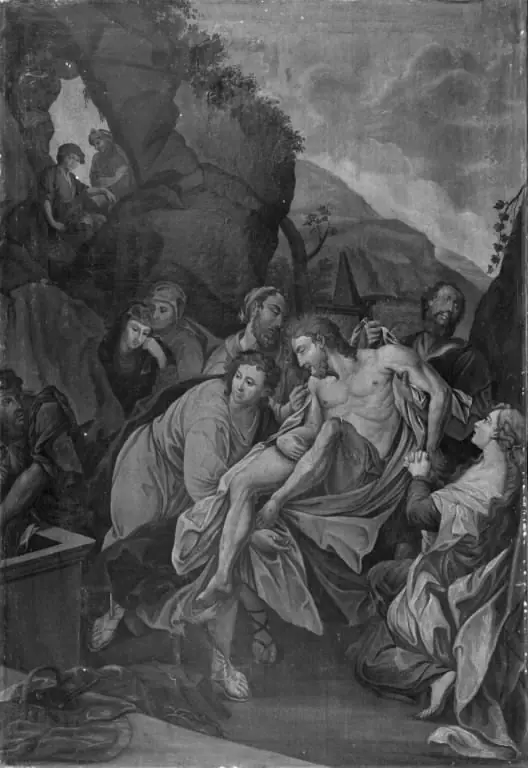
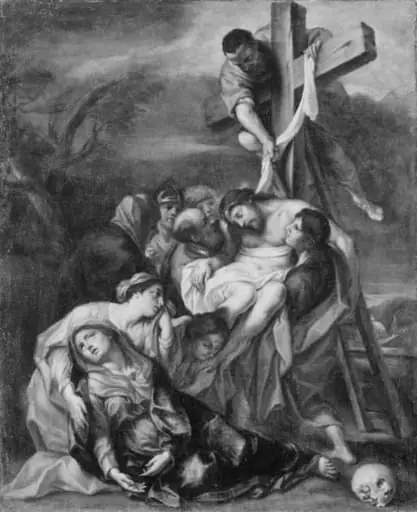
The Entombment of Christ is a photography by Unknown. It dates from 1650 and is held in the collection of the Statens Museum for Kunst. Painted around 1650, this work depicts the burial of Christ shortly after his crucifixion.
About this work
Overview
The painting resides in the Museum of Ethnography, where it is displayed as part of a collection focused on religious imagery from early modern Europe.
Painted around 1650, this work depicts the burial of Christ shortly after his crucifixion. It is attributed to an artist active in the mid-17th century, though the exact identity remains uncertain. The painting resides in the Museum of Ethnography, where it is displayed as part of a collection focused on religious imagery from early modern Europe. Its composition centers on a quiet, intimate moment of mourning.
Subject & Meaning
The scene captures six figures surrounding the lifeless body of Christ, wrapped in a linen shroud. Figures gesture gently toward the corpse or gaze upward, conveying grief and reverence. The absence of overt spectacle emphasizes personal sorrow rather than divine triumph. The quietude of the moment reflects a devotional emphasis on human loss and the physical reality of death within Christian piety.
Technique & Style
The artist employs chiaroscuro to model forms through stark contrasts between light and shadow. Figures emerge from a deep, unmodeled background, their simple garments rendered with soft, flowing folds. Lighting falls unevenly across faces and cloth, heightening emotional tension and directing focus to the central body. The restrained palette and lack of decorative detail reinforce the scene’s solemnity and immediacy.
History & Provenance
The painting entered the Museum of Ethnography’s collection in the late 19th century, likely acquired through ecclesiastical or private donations. Its origins trace to a regional workshop in southern Europe, though no documentation confirms its original commission or location. It was preserved in religious contexts before being transferred to a secular institution, where its devotional function gradually shifted to historical study.
Context
Created during the Counter-Reformation, the painting aligns with Catholic efforts to foster personal devotion through emotionally resonant imagery. While grand altarpieces dominated major churches, smaller works like this one were used in private prayer or monastic settings. Its intimate scale and subdued tone reflect a trend toward contemplative, human-centered religious art in the decades following the Council of Trent.
Legacy
Though not widely reproduced or studied in mainstream art history, the painting remains a quiet example of 17th-century devotional painting. It contributes to understanding how religious themes were rendered in modest, non-urban contexts. Its preservation in an ethnographic museum underscores its value as a cultural artifact, offering insight into everyday spiritual practices beyond the canon of celebrated masters.
Artist & collection

 Domestic Scene
 Giacomo and Cardinal Marco, investing Andrea, Abbot of San Zeno, with his Benefice
 The Nymph of Fontainebleau
 Portrait of a Woman
 Madonna and Child with Saints in the Enclosed Garden
 Venus and Minerva
 Family Group of Four on Sofa
 Wall painting from Room H of the Villa of P. Fannius Synistor at Boscoreale