Artwork
Untitled
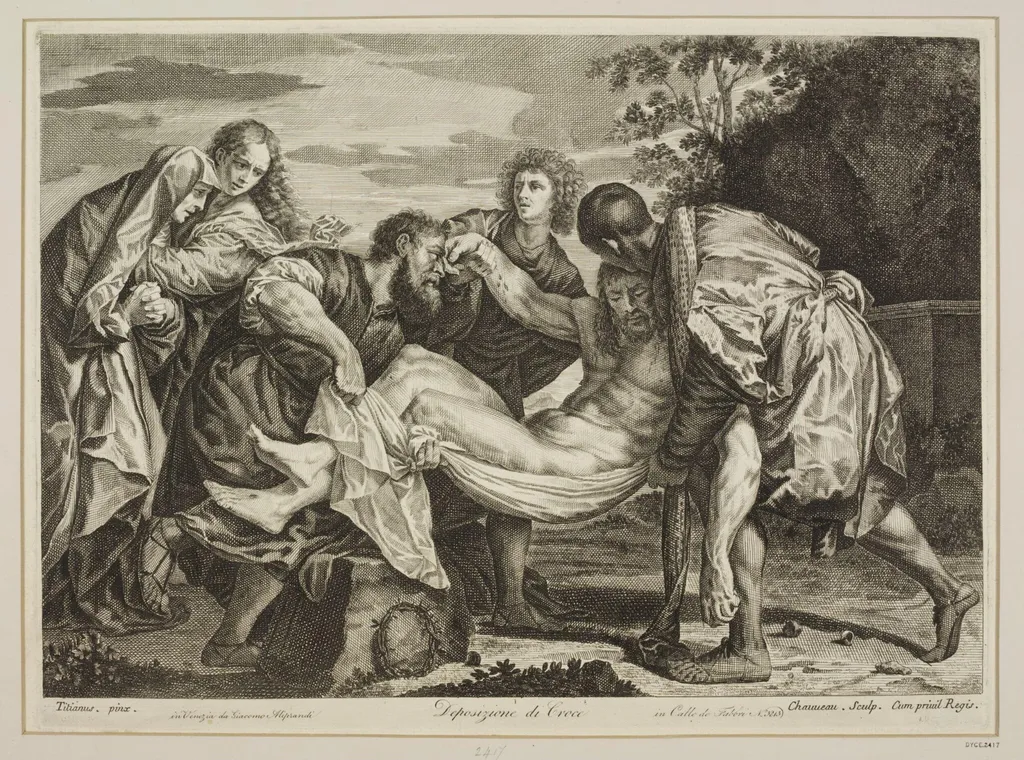
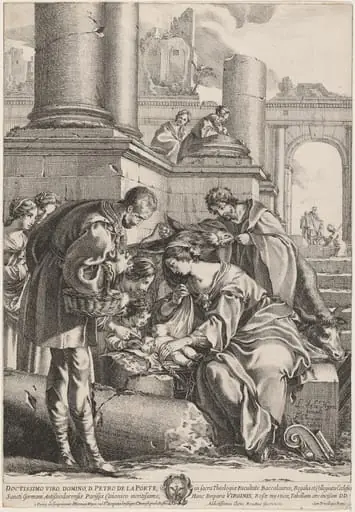
Untitled is a print by François Chauveau. It dates from 1650 and is held in the collection of the Victoria and Albert Museum.
About this work
Overview
The work belongs to the printmaking tradition of the early modern period, translating a monumental oil painting into a more accessible graphic format.
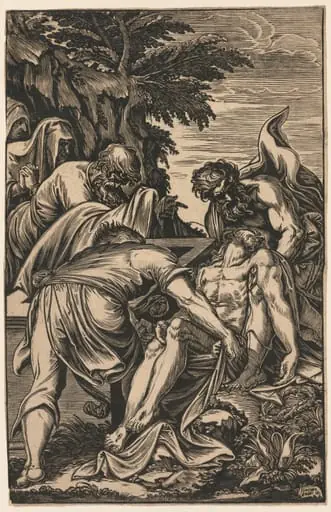
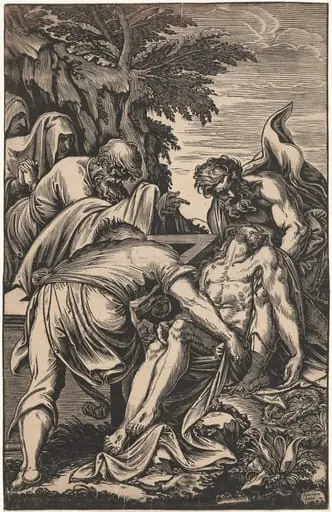
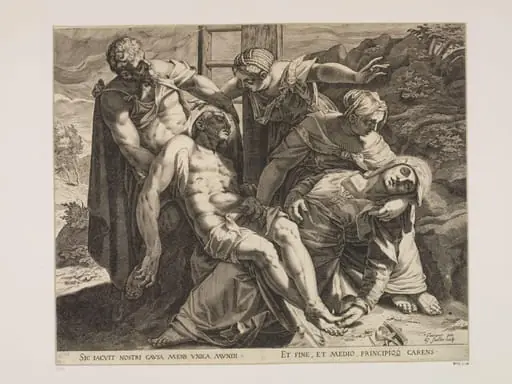
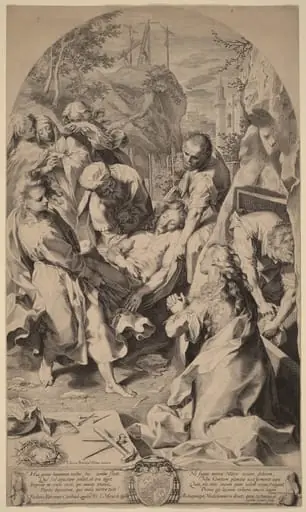
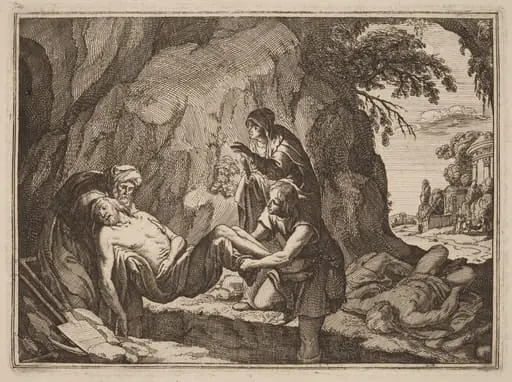
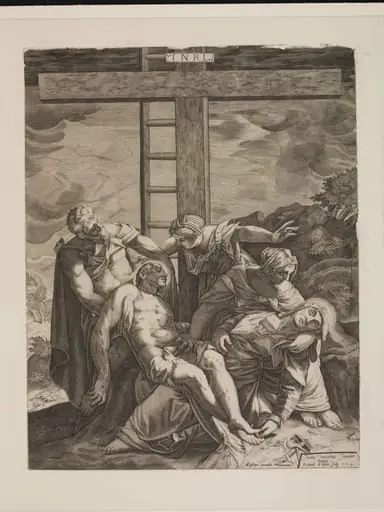
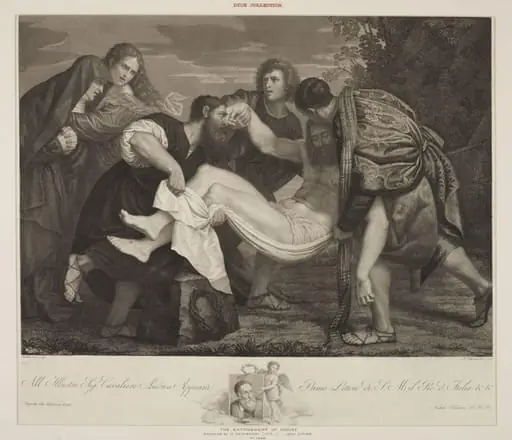
This print captures a scene from the descent of Christ’s body after the crucifixion, adapted from a composition originally painted by Titian. Executed on paper, it carries the inscription 'Deposizione di Croce,' identifying its subject as the deposition. The work belongs to the printmaking tradition of the early modern period, translating a monumental oil painting into a more accessible graphic format.
Subject & Meaning
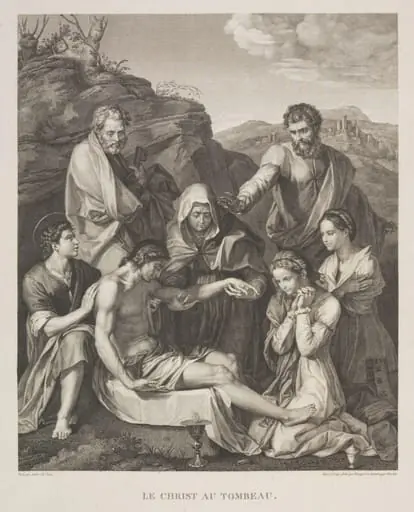
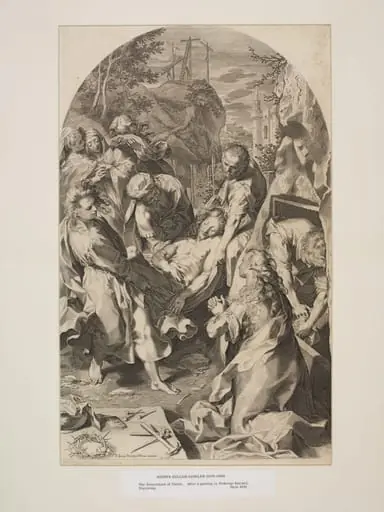
The image portrays Christ’s lifeless body, wrapped in a white shroud, being gently lowered by mourners. Figures surround him with expressions of grief, their postures conveying solemn reverence. The absence of overt drama emphasizes quiet mourning, aligning with devotional practices that invited contemplation of Christ’s sacrifice and the human response to loss.
Technique & Style
Rendered in monochrome, the print uses fine linear detail to define drapery and facial expressions. The figures are arranged in a compact, horizontal grouping, with soft gradations of tone suggesting volume and depth. The background, lightly sketched with trees and architecture, recedes into a hazy sky, reinforcing the scene’s stillness and spiritual gravity.
History & Provenance
The print is attributed to François Chauveau, a French engraver active in the 17th century, who frequently reproduced compositions by Italian masters. It derives from Titian’s painting in the Louvre, indicating a circulation of religious imagery across national boundaries. The work likely served private devotion or as a study piece for artists familiar with Italian Renaissance models.
Context
In the decades following the Counter-Reformation, images of Christ’s burial were widely reproduced to foster personal piety. French engravers like Chauveau played a key role in disseminating such subjects, adapting Italian prototypes for Northern European audiences. These prints bridged devotional needs and artistic education, reinforcing established iconography through accessible media.
Legacy
Chauveau’s print exemplifies the enduring influence of Titian’s compositional language in early modern print culture. While not an original invention, its careful translation into line and tone preserved the emotional tone of the source. Such works contributed to the standardization of sacred imagery across Europe, shaping how generations visually engaged with biblical narratives.
Artist & collection