Artwork
An Astronomer
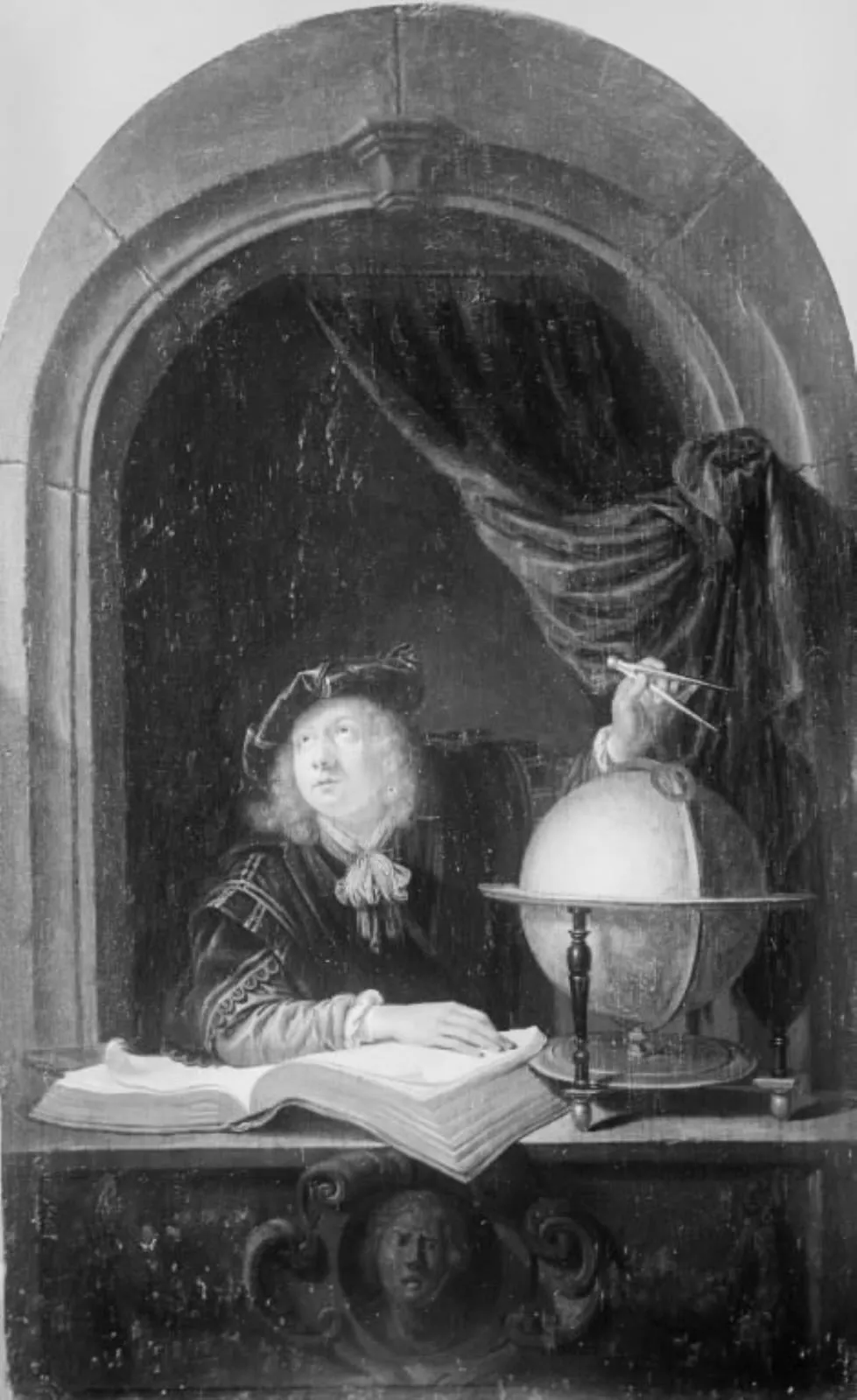
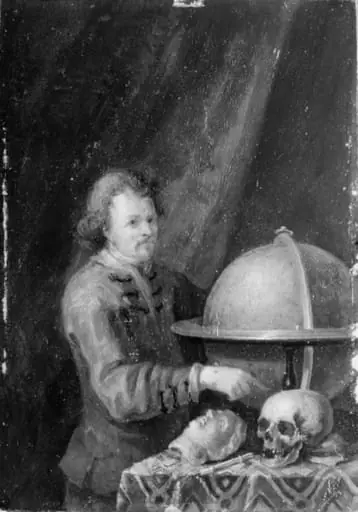
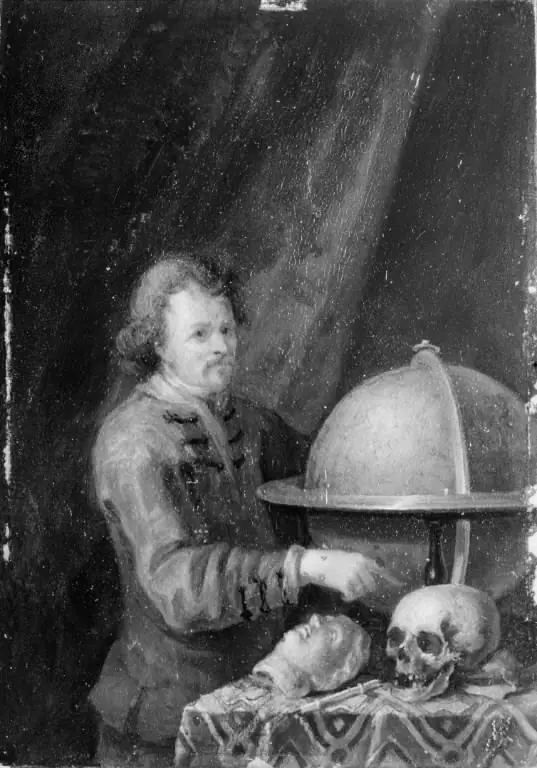
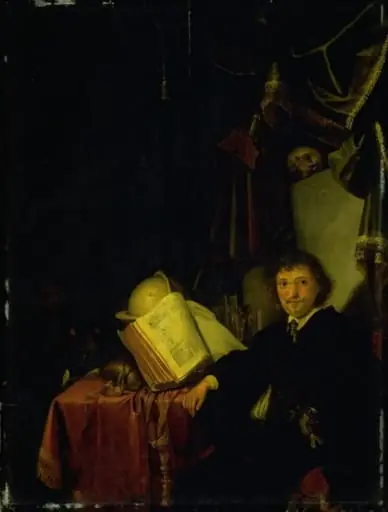
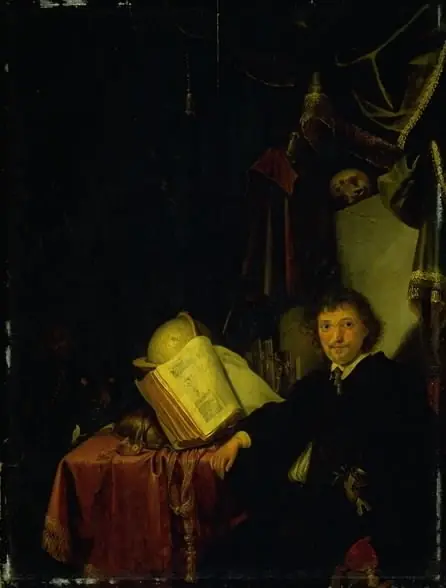
An Astronomer is a photography by Unknown. It dates from 1650 and is held in the collection of the Statens Museum for Kunst. Painted around 1650, this work depicts a scholar engaged in celestial observation.
About this work
Overview
Painted around 1650, this work depicts a scholar engaged in celestial observation. Though often attributed to a Dutch artist active in the 1630s, the painting was not created by him directly but is a later photographic reproduction. The original artwork resides in the Museum of Ethnography, where it is preserved as part of a collection documenting historical scientific practice.
Subject & Meaning
A globe and an open book on the desk suggest scholarly activity, while the tool in his hand—likely a compass or sextant—points to precise measurement.
The figure, dressed in a dark jacket with a high white collar and a hat, is shown mid-study, gazing upward as if tracking stars. A globe and an open book on the desk suggest scholarly activity, while the tool in his hand—likely a compass or sextant—points to precise measurement. The scene conveys quiet intellectual focus, reflecting the era’s growing emphasis on empirical observation in natural philosophy.
Technique & Style
The painting employs chiaroscuro to model form and direct attention, with strong contrasts between shadow and light falling across the figure’s face and hands. The textures of fabric, wood, and metal are rendered with restrained detail, emphasizing the quiet dignity of the subject. The composition is tightly framed, isolating the astronomer within his study, reinforcing the introspective nature of his work.
History & Provenance
The original painting was likely produced in the Dutch Republic during the mid-seventeenth century. It entered the Museum of Ethnography’s collection in the twentieth century, where it is now preserved as a photographic reproduction. The attribution to the 1634 artist remains tentative, and the work’s early ownership history is not fully documented.
Context
This image reflects the rising status of astronomy in the Scientific Revolution, when observation and instrumentation replaced purely theoretical models. The presence of a globe and measuring tool aligns with contemporary practices among scholars like Kepler and Tycho Brahe. The domestic setting suggests that scientific inquiry was becoming an intimate, personal pursuit, not confined to institutions.
Legacy
Though not widely exhibited as a standalone work, the image has contributed to visual narratives about early modern science. Its quiet realism and focus on the individual thinker continue to inform how museums represent the history of knowledge. The photograph preserves a lost original, making it a key reference for studies of scientific iconography in Dutch art.
Artist & collection

 Domestic Scene
 Giacomo and Cardinal Marco, investing Andrea, Abbot of San Zeno, with his Benefice
 The Nymph of Fontainebleau
 Portrait of a Woman
 Madonna and Child with Saints in the Enclosed Garden
 Venus and Minerva
 Family Group of Four on Sofa
 Wall painting from Room H of the Villa of P. Fannius Synistor at Boscoreale