Artwork
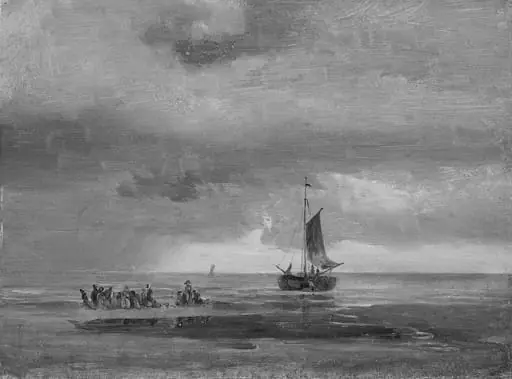
Fishermen on the Beach with their Boats and Catch
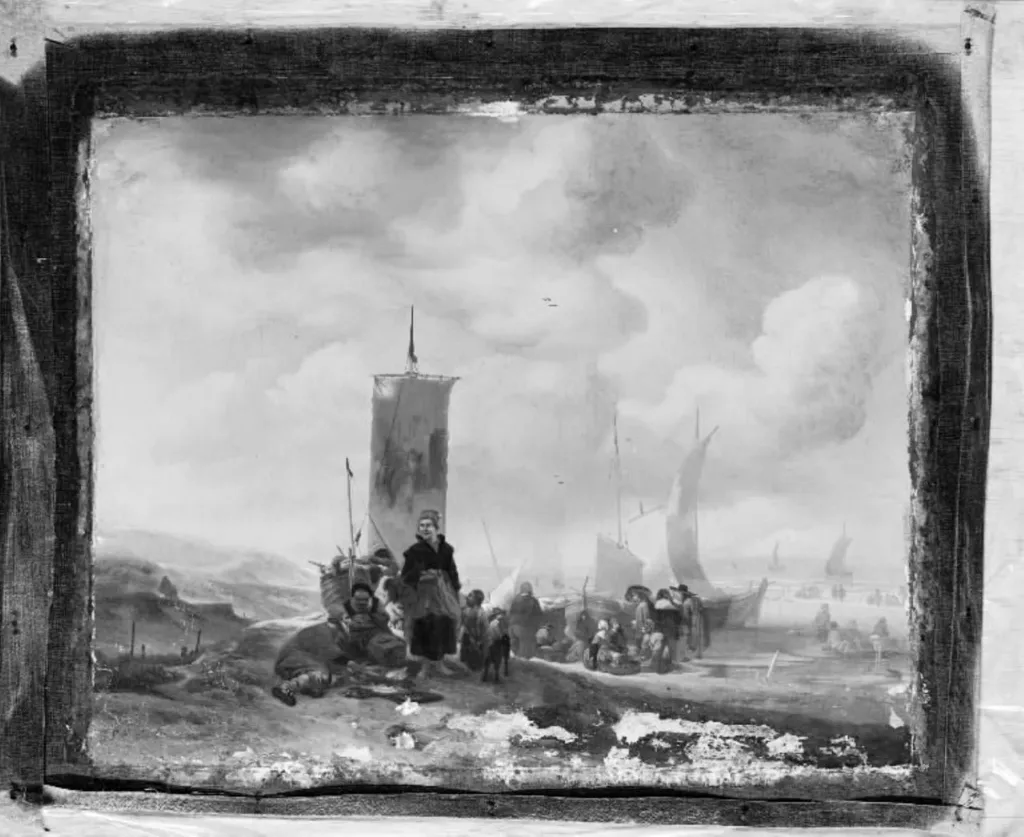
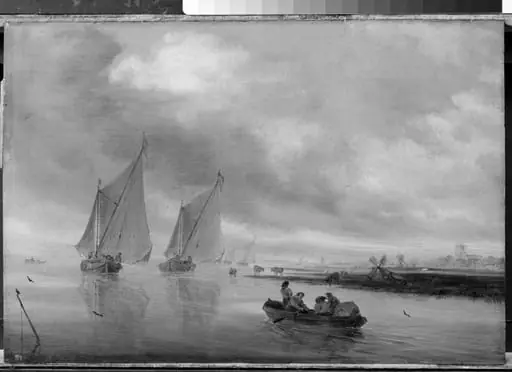
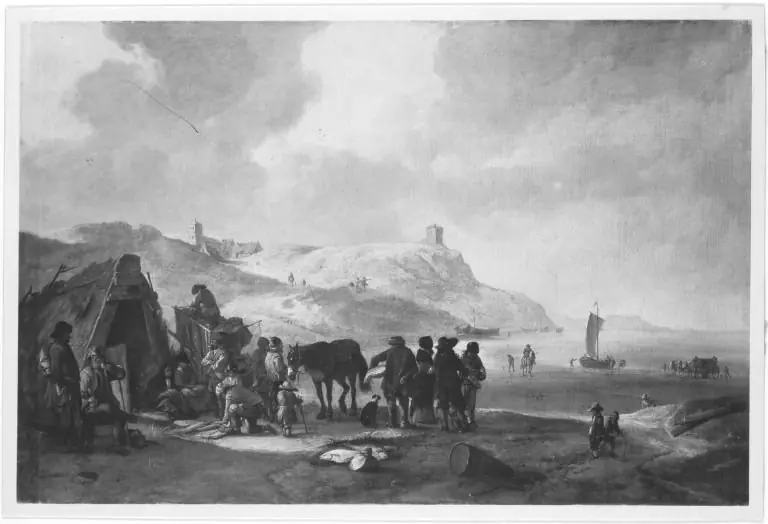
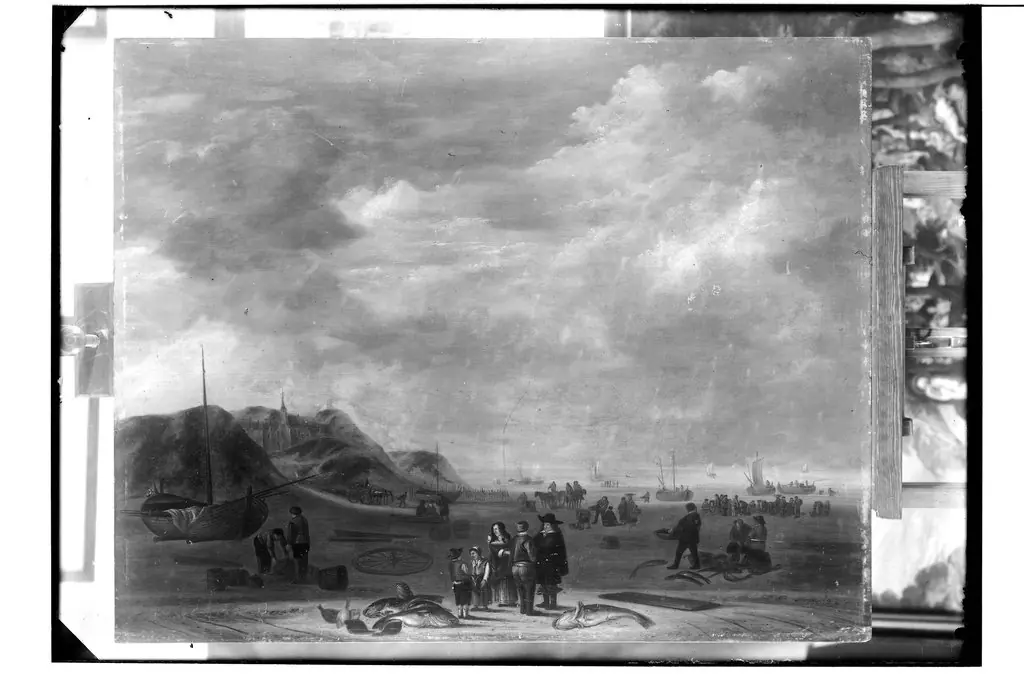
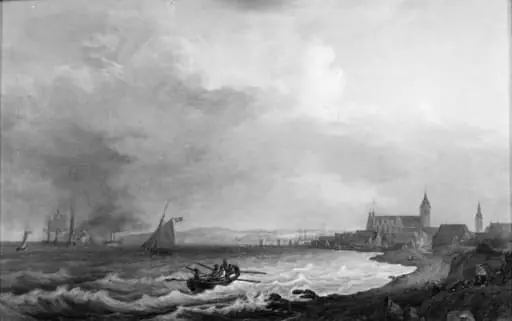
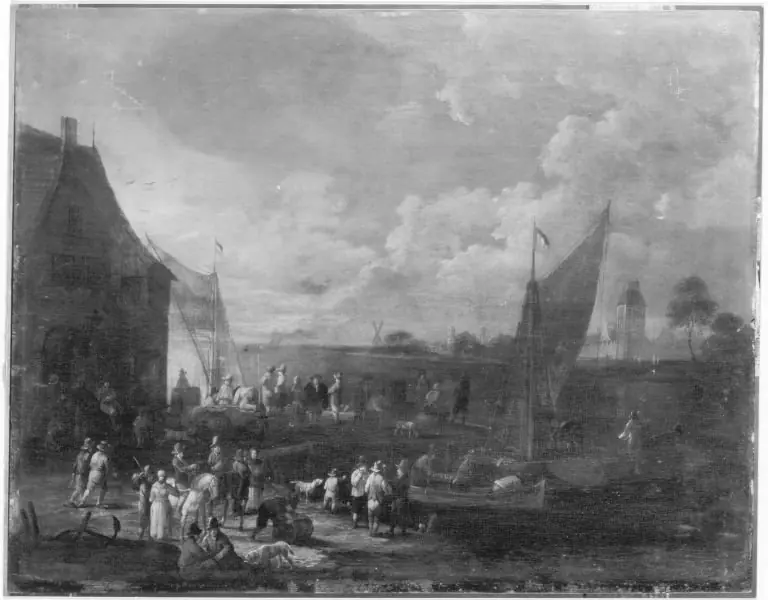
Fishermen on the Beach with their Boats and Catch is a photography by Unknown. It dates from 1664 and is held in the collection of the Statens Museum for Kunst. Painted around 1664, this work depicts a coastal scene of fishermen engaged in post-harvest labor.
About this work
Overview
Painted around 1664, this work depicts a coastal scene of fishermen engaged in post-harvest labor. The artist, active in the mid-17th century, rendered the moment with attention to daily routine rather than spectacle. The painting resides in the Museum of Ethnography, where it is valued for its documentation of maritime life in northern Europe during the period.
Subject & Meaning
The scene captures fishermen sorting their catch along the shore, surrounded by beached boats and scattered gear. No figures are idealized; their postures suggest fatigue and routine. The absence of narrative drama emphasizes the quiet endurance of coastal labor. The work functions as a record of subsistence activity, reflecting the rhythms of life dependent on the sea.
Technique & Style
The artist employs chiaroscuro to define form and space, using deep shadows in the fishermen’s clothing and hulls to contrast with the diffuse light of the overcast sky. Brushwork is restrained, favoring tonal gradation over fine detail. This approach enhances the sense of atmosphere and spatial depth, grounding the figures firmly in their environment without theatrical emphasis.
History & Provenance
No earlier records of ownership are documented, suggesting it may have remained in local hands until institutional acquisition.
The painting entered the Museum of Ethnography’s collection in the late 19th century, likely acquired as part of a broader effort to document regional livelihoods. Its attribution to a specific artist remains tentative, with stylistic links to Dutch and Flemish coastal scenes of the era. No earlier records of ownership are documented, suggesting it may have remained in local hands until institutional acquisition.
Context
In the 1660s, coastal communities across the North Sea relied heavily on small-scale fishing. This painting aligns with a growing interest in depicting ordinary labor, distinct from aristocratic or religious themes. It reflects a regional visual culture that valued accuracy in costume, boat design, and activity, offering insight into the material conditions of maritime workers.
Legacy
Though not widely exhibited, the painting contributes to scholarly understanding of 17th-century coastal economies and visual representation of labor. Its preservation in an ethnographic context underscores its role as a cultural artifact rather than a decorative object. It continues to inform studies on the intersection of art, work, and regional identity in early modern Europe.
Artist & collection

 Domestic Scene
 Giacomo and Cardinal Marco, investing Andrea, Abbot of San Zeno, with his Benefice
 The Nymph of Fontainebleau
 Portrait of a Woman
 Madonna and Child with Saints in the Enclosed Garden
 Venus and Minerva
 Family Group of Four on Sofa
 Wall painting from Room H of the Villa of P. Fannius Synistor at Boscoreale