Artwork
Sea cost near Scheveningen
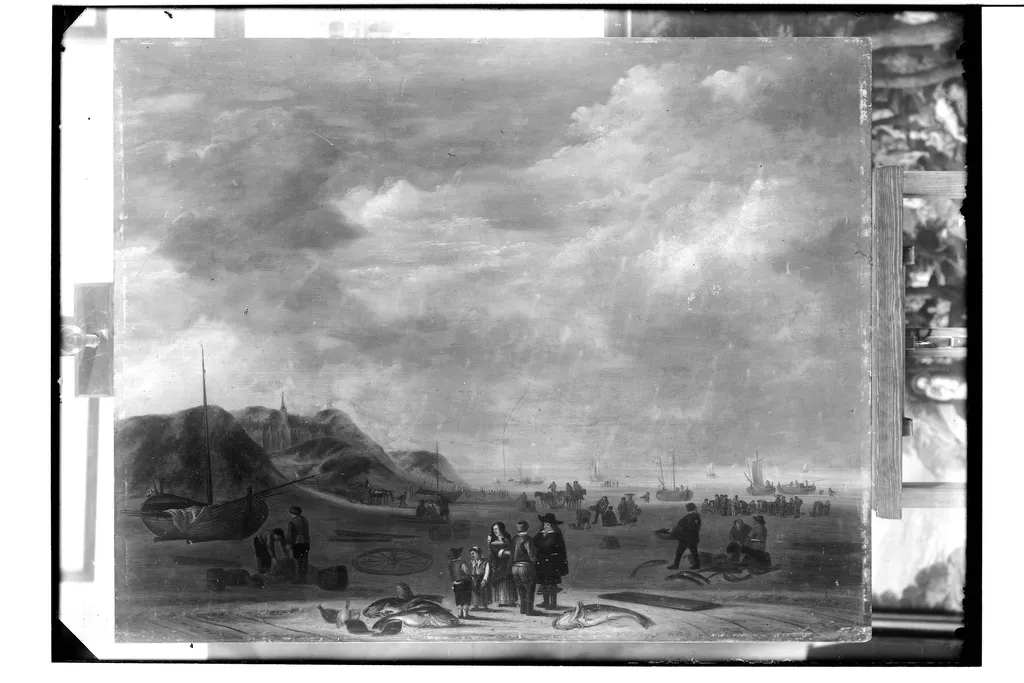
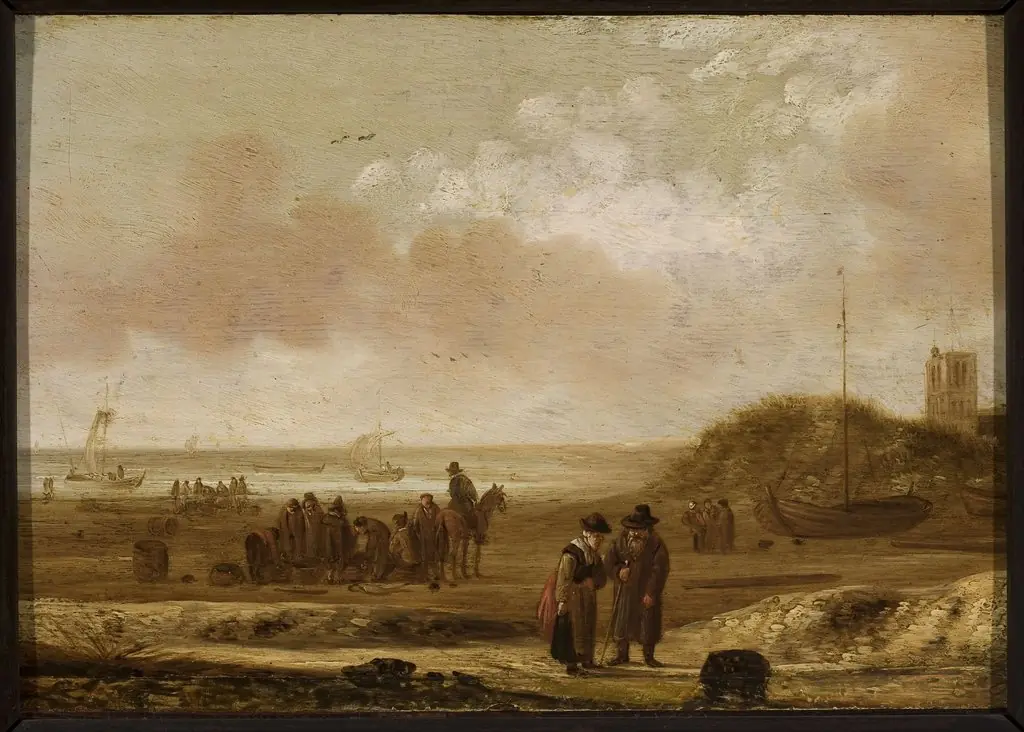
Sea cost near Scheveningen is an oil painting by the Dutch Golden Age artist Willem Gillisz Kool. It dates from 1658 and is held in the collection of the National Museum in Warsaw.
About this work
Overview
This work exemplifies Kool's specialization in coastal scenes and beach markets, a genre that flourished in the Netherlands during the seventeenth century.
Painted in 1658, Sea Cost near Scheveningen is an oil on canvas work by the Dutch Golden Age painter Willem Gillisz Kool. The composition depicts a coastal landscape at Scheveningen, a fishing village near The Hague, characterized by a low horizon line that emphasizes the expansive, overcast sky typical of Dutch marine art. In the foreground, the sandy beach is populated by figures engaged in daily maritime activities; a catch of fish lies displayed on the sand, suggesting the conclusion of a fishing expedition, while nearby individuals converse or observe the scene. Further back, small boats rest on the shore or navigate the calm waters, with additional vessels visible on the distant horizon. Kool employs a restrained palette of earthy browns, grays, and muted blues to render the atmospheric conditions of the North Sea coast. This work exemplifies Kool's specialization in coastal scenes and beach markets, a genre that flourished in the Netherlands during the seventeenth century. Created during the height of his career, the painting reflects the period's interest in realistic depictions of local life and the natural environment, capturing the quiet industry of the fishing community without idealization.
Subject & Meaning
The canvas captures a peaceful moment on the Dutch coast: a small group of people gathers on the sand, some conversing, others simply observing the sea. Nearby, a few vessels drift on the water, while fish lie scattered on the beach, emphasizing the everyday relationship between locals and the marine environment.
Technique & Style
Kool employs a restrained palette of muted blues and earth tones, using chiaroscuro to model forms and suggest the sun’s warm glow across the water and sand. The brushwork is smooth, allowing subtle transitions of light that give the scene depth without dramatic contrast.
History & Provenance
Created in the mid‑seventeenth century, the painting entered the National Museum in Warsaw’s holdings at an unspecified date, where it remains on display as an example of Dutch coastal genre painting from the period.
Artist & collection

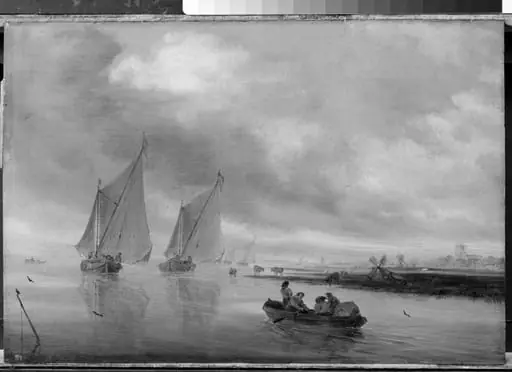 River Scenery
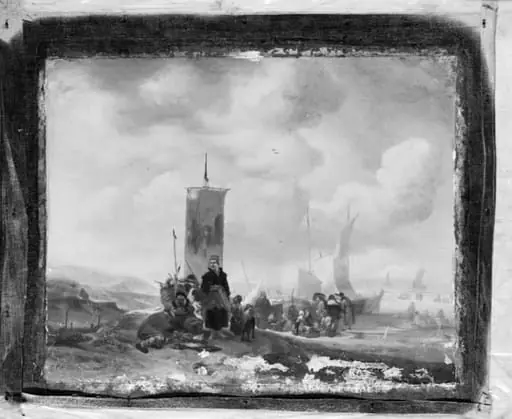 Fishermen on the Beach with their Boats and Catch
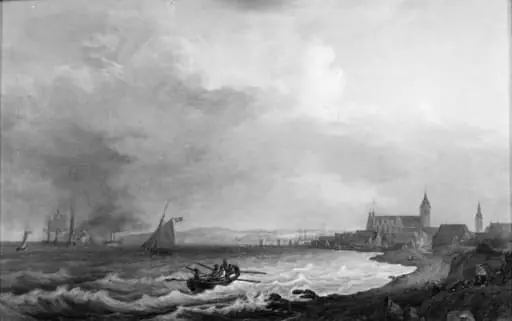 Fregatten "Havfruen"s ankomst uden for Århus
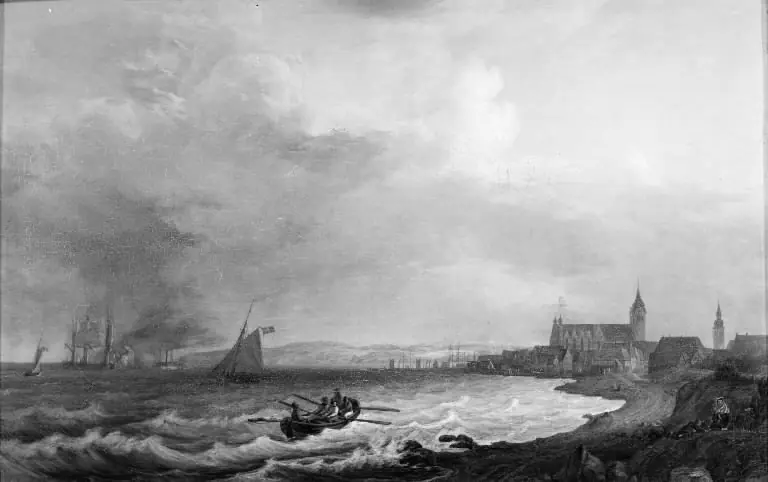 Fregatten "Havfruen"s ankomst uden for Århus
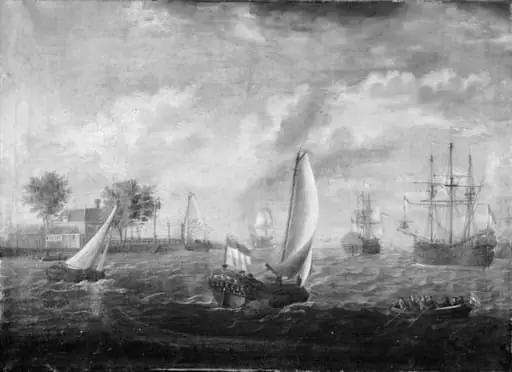 Seascape
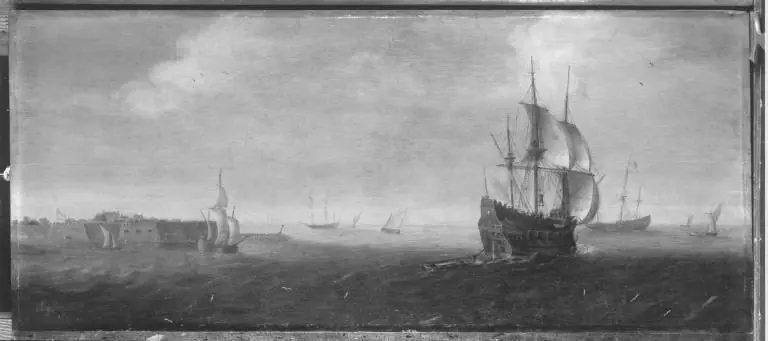 Seestück
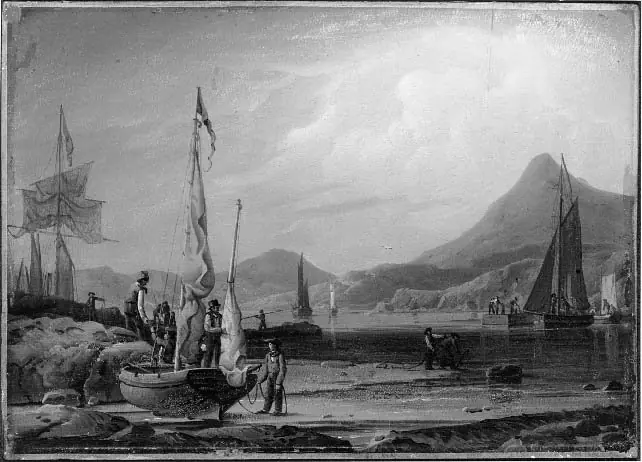 Boat and Shore
 Marine. Udsigt over Øresund
 Marine
 Flat Beach by Sunset
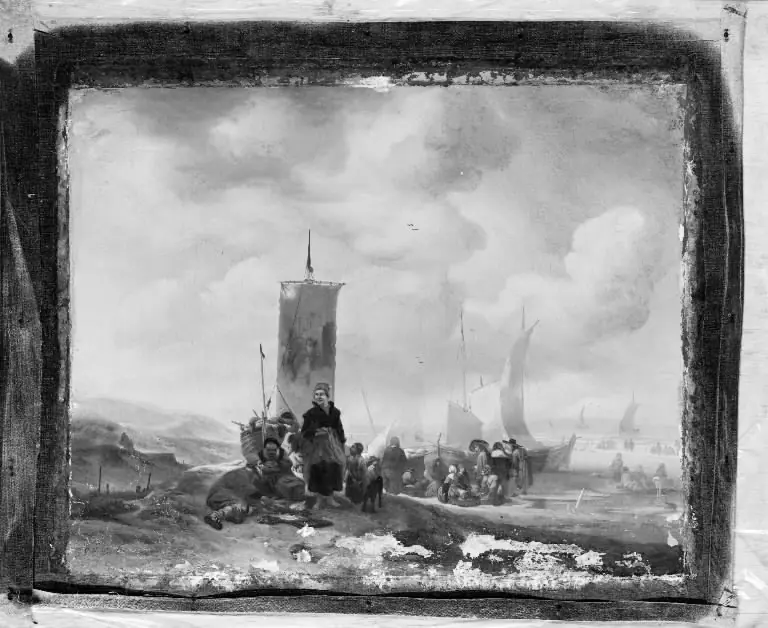 Fishermen on the Beach with their Boats and Catch
 Fishermen at the coast near Scheveningen