Artwork
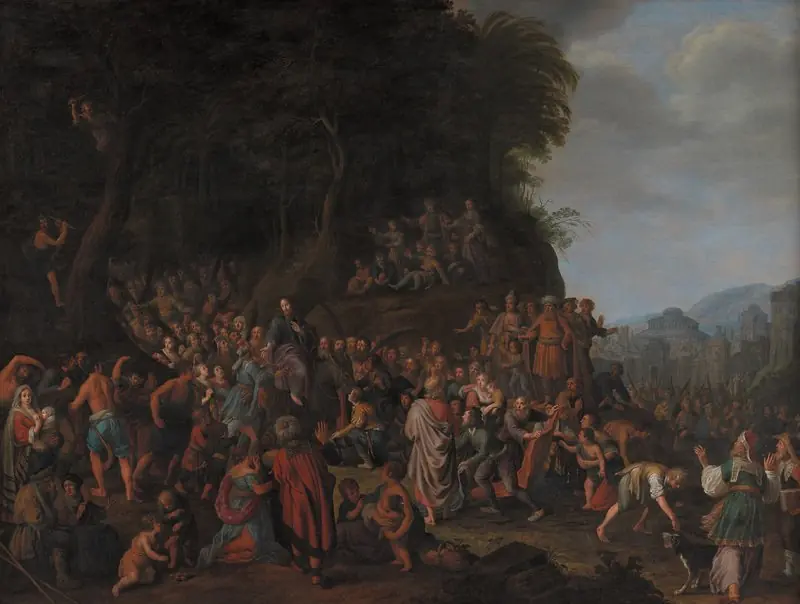
Christ's Entry into Jerusalem
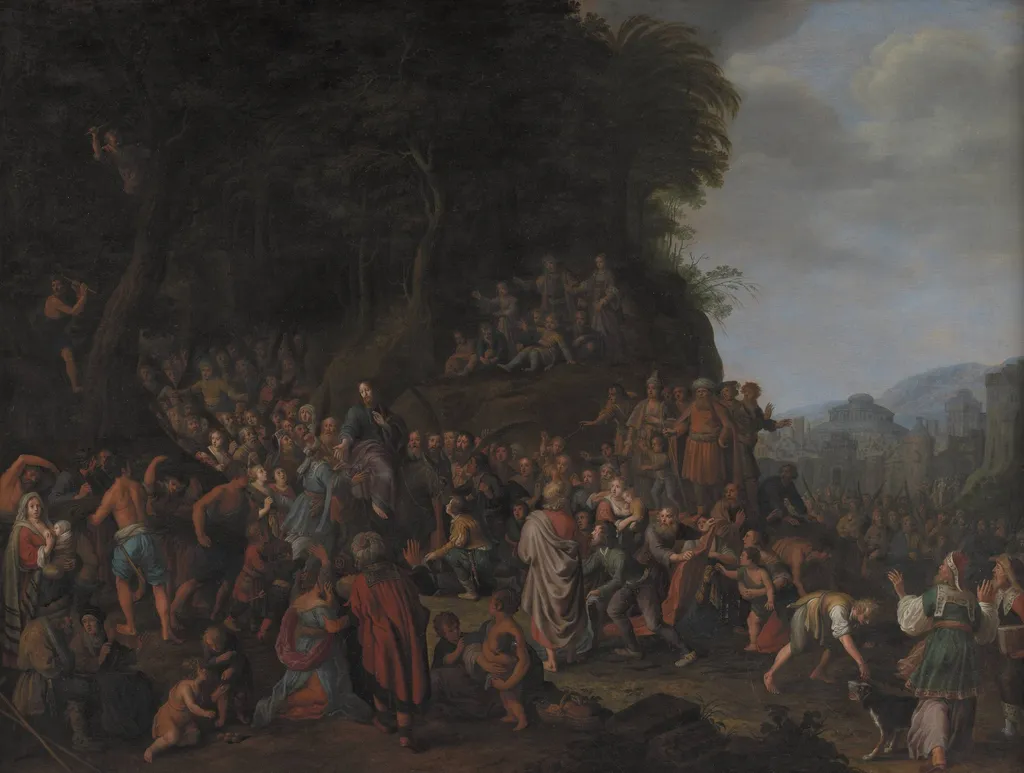
Christ's Entry into Jerusalem is a photography by the Baroque artist Unknown. It dates from 1655 and is held in the collection of the Statens Museum for Kunst. Painted in 1655, this work depicts the biblical moment of Christ’s arrival in Jerusalem.
About this work
Overview
The composition centers on a serene central figure surrounded by a diverse assembly of onlookers, all set within a wooded landscape.
Painted in 1655, this work depicts the biblical moment of Christ’s arrival in Jerusalem. Executed in oil on panel, it belongs to a private collection now housed at the Museum of Ethnography. The composition centers on a serene central figure surrounded by a diverse assembly of onlookers, all set within a wooded landscape. The artist’s use of controlled lighting draws focus to the protagonist without overt theatricality.
Subject & Meaning
The scene illustrates the Gospel account of Christ entering Jerusalem amid a crowd of followers, some laying down garments and branches in homage. The figures’ varied postures—kneeling, reaching, standing—convey reverence and anticipation. Though the setting is forested rather than urban, the emotional weight of the moment remains clear: the central figure is recognized as a figure of spiritual authority by those gathered.
Technique & Style
The artist employs chiaroscuro to define forms against a dim, wooded backdrop. Light falls selectively on faces and robes, creating depth and directing the viewer’s gaze. Brushwork is precise but not overly detailed, favoring atmospheric cohesion over individualized portraiture. The background hills and trees are rendered with muted tones, reinforcing the quiet solemnity of the event.
History & Provenance
The painting was completed in 1655 and remained in private hands until the early 20th century, when it entered the collection of the Museum of Ethnography. Its attribution to a specific artist from 1686 is uncertain; the date may refer to a later cataloging or restoration event. The work’s journey reflects broader patterns of religious art being reclassified in secular institutions during the modern era.
Context
Created during the mid-17th century, the painting aligns with regional devotional traditions that favored intimate, emotionally resonant biblical scenes over grand altarpieces. The forest setting may reflect local landscape familiarity or symbolic interpretations of nature as a sacred space. Its inclusion in an ethnographic museum suggests later interest in its cultural rather than purely theological significance.
Legacy
Though not widely exhibited, the painting contributes to understanding how biblical narratives were localized in early modern visual culture. Its quiet composition and emphasis on collective reverence distinguish it from more dramatic Baroque treatments of the same subject. It remains a quiet example of how religious imagery adapted to regional aesthetics and institutional contexts beyond the church.
Artist & collection

 Domestic Scene
 Giacomo and Cardinal Marco, investing Andrea, Abbot of San Zeno, with his Benefice
 The Nymph of Fontainebleau
 Portrait of a Woman
 Madonna and Child with Saints in the Enclosed Garden
 Venus and Minerva
 Family Group of Four on Sofa
 Wall painting from Room H of the Villa of P. Fannius Synistor at Boscoreale
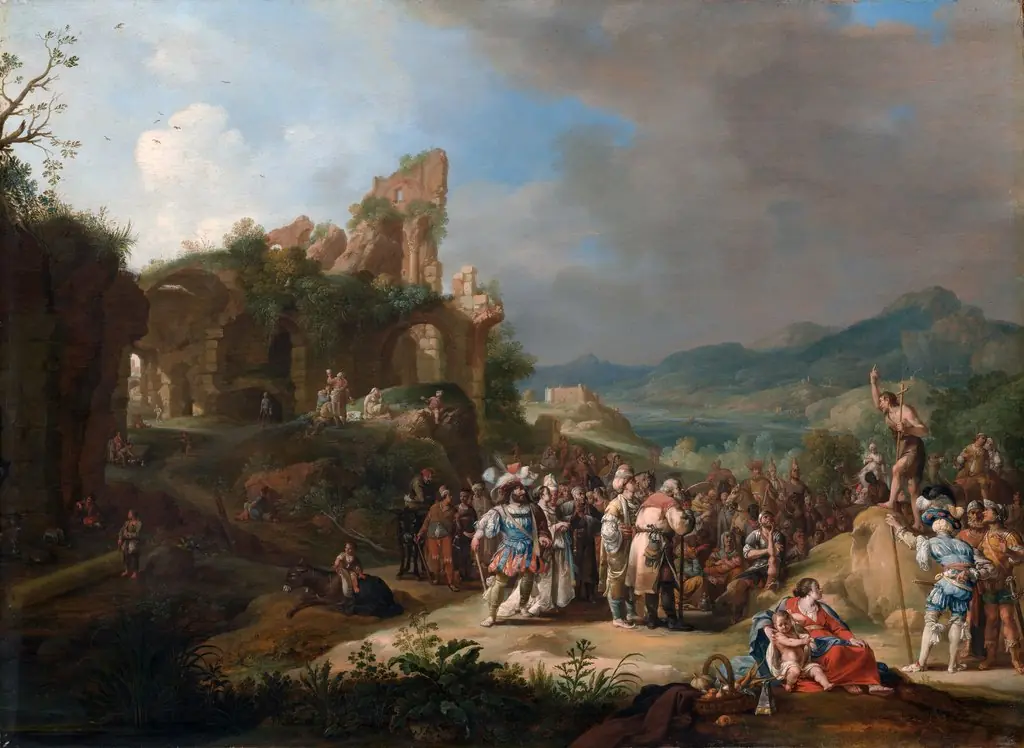 The Preaching of John the Baptist
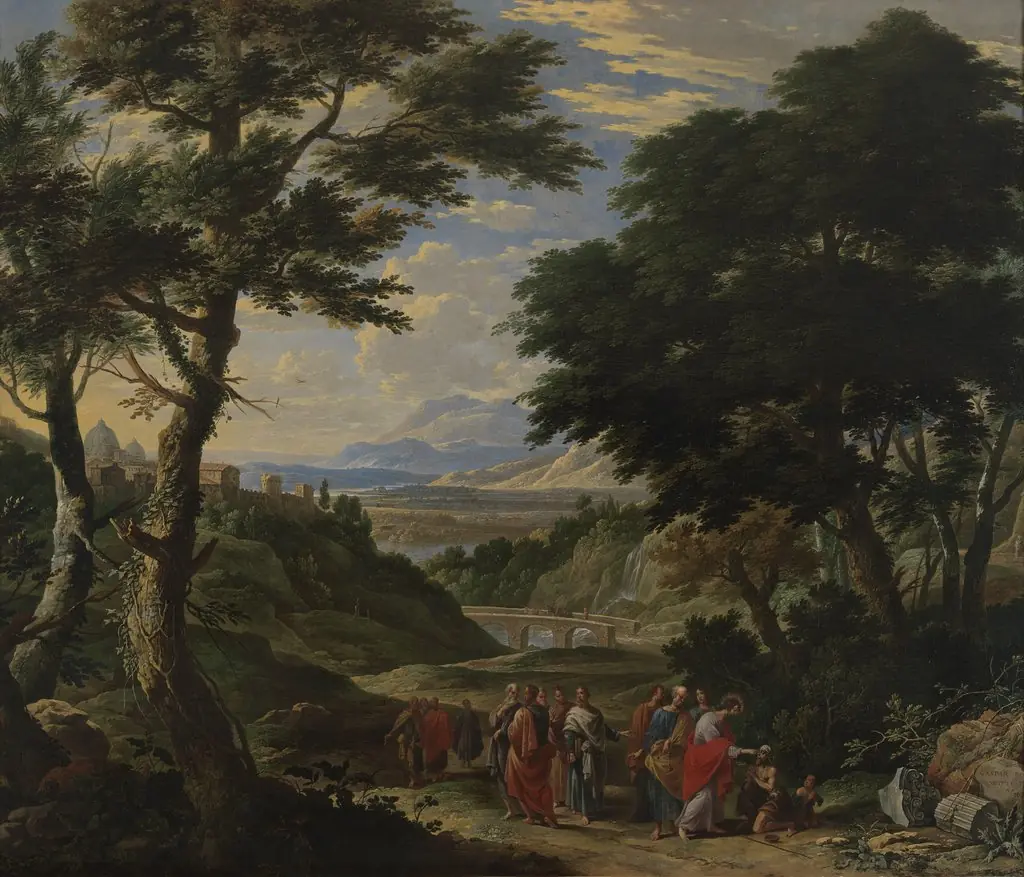 Christ Healing the Blind Man at Jericho
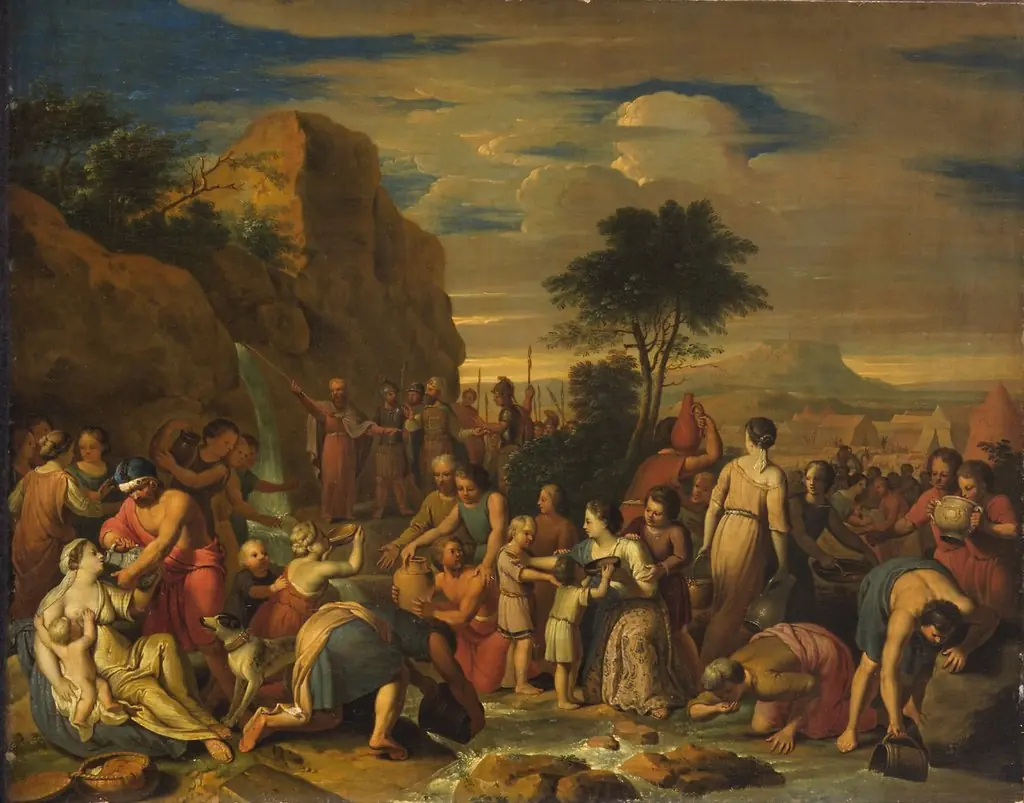 Moses schlägt Wasser aus dem Felsen
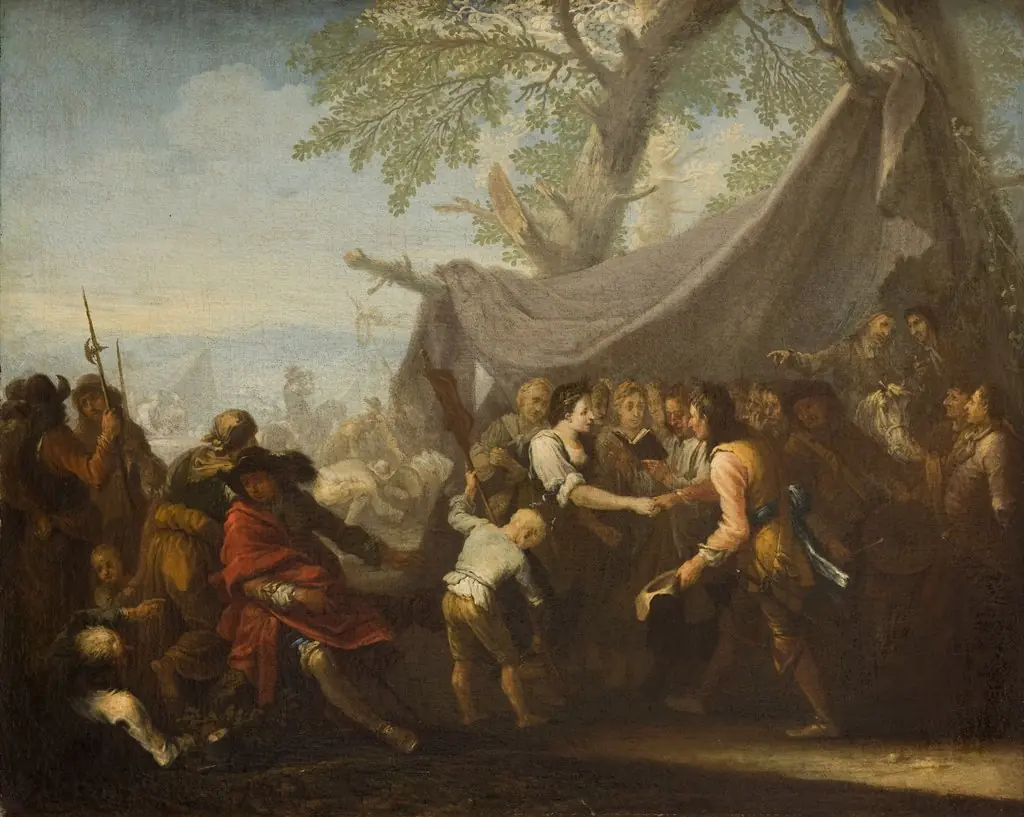 Event at a Military Camp (Wedding at a Military Camp)
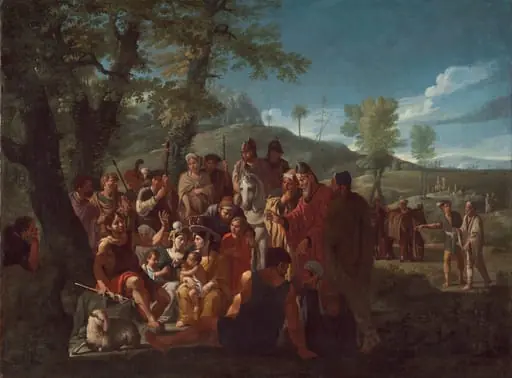 Saint John the Baptist Preaching
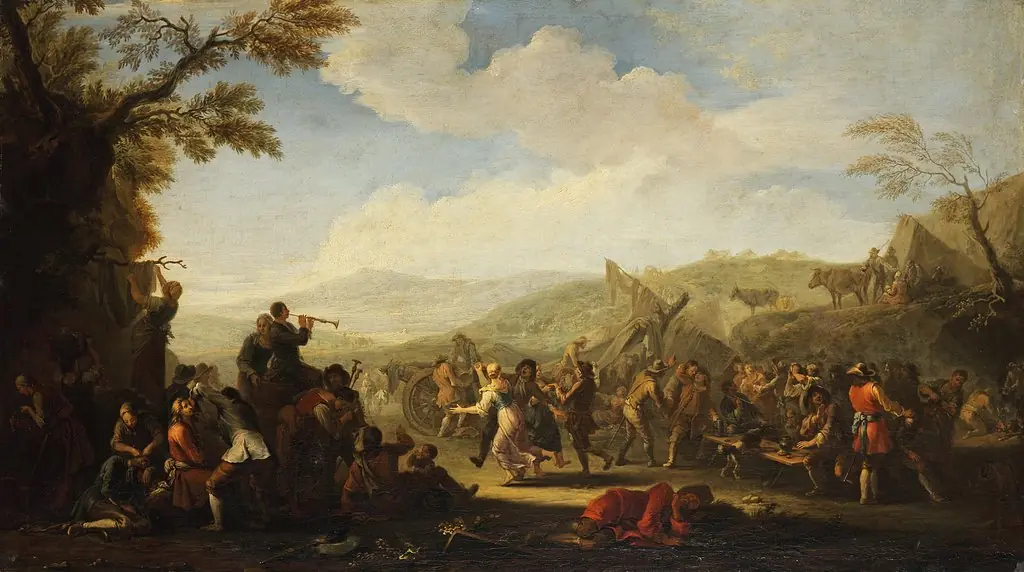 Amusement in the Field Camp
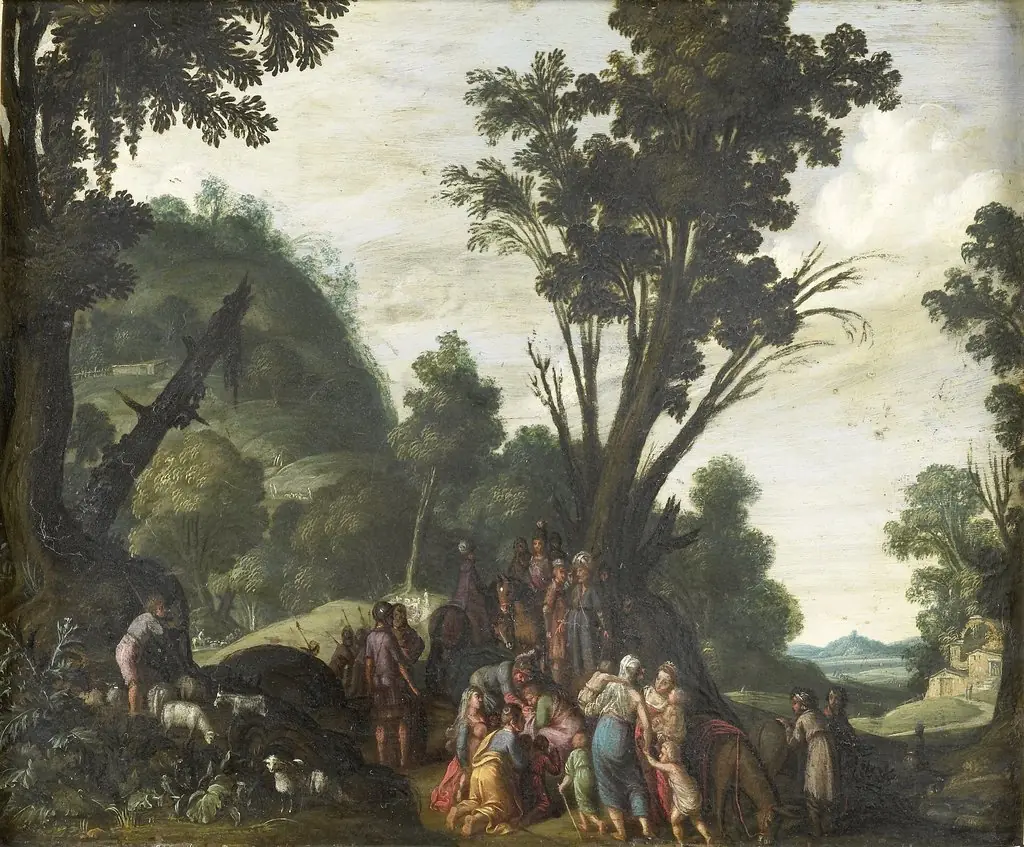 The meeting of Jacob and Esau
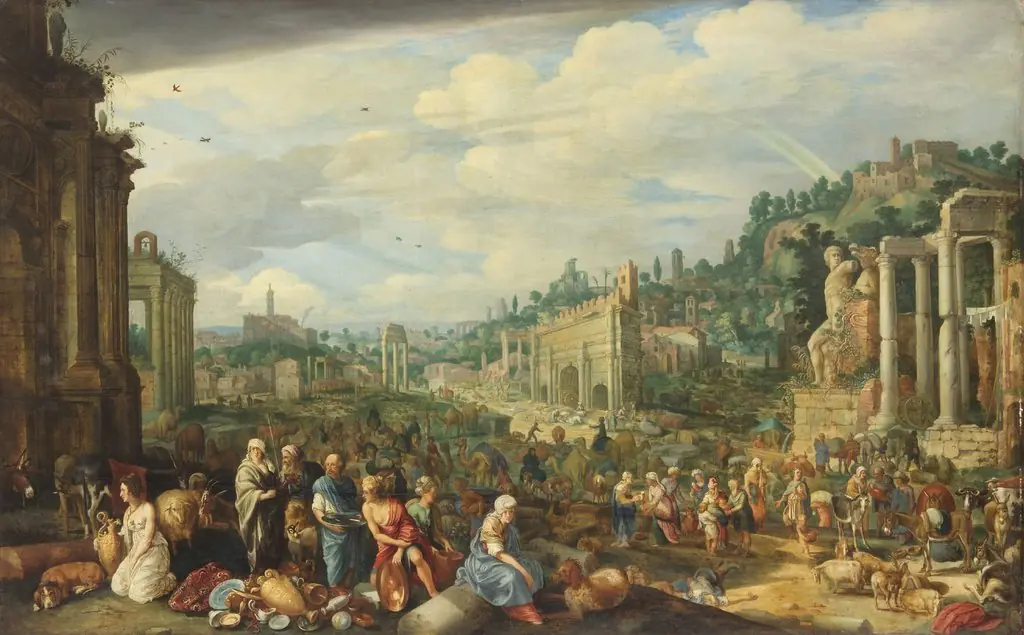 Ansicht des Campo Vaccino in Rom (Aufbruch der Israeliten aus Ägypten)
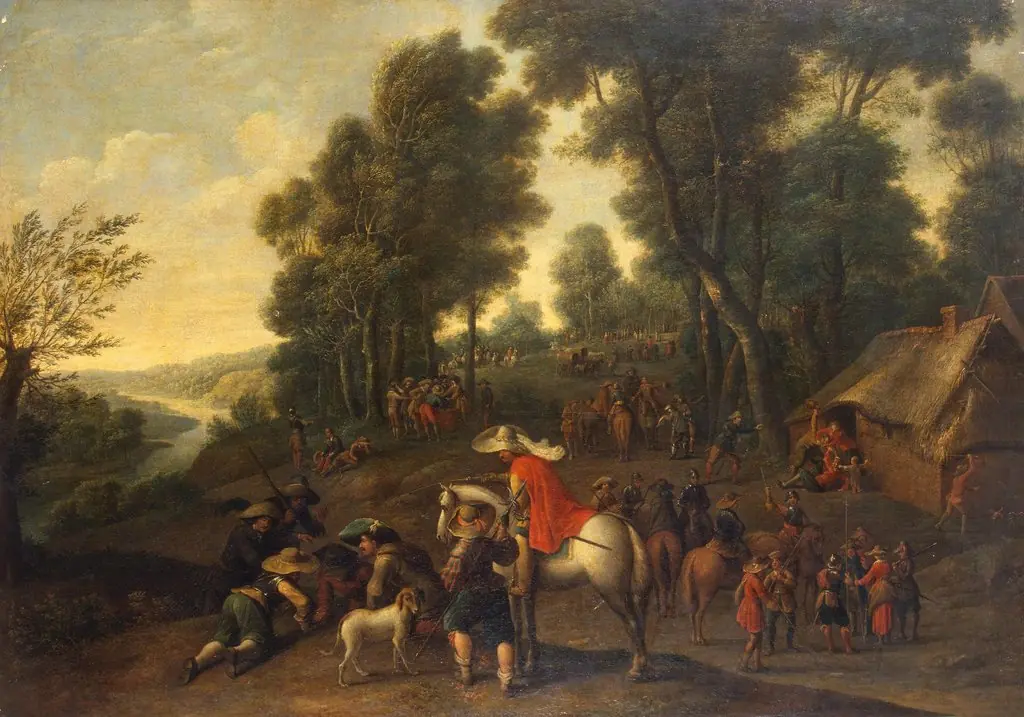 Halt of Horsemen in a Forest
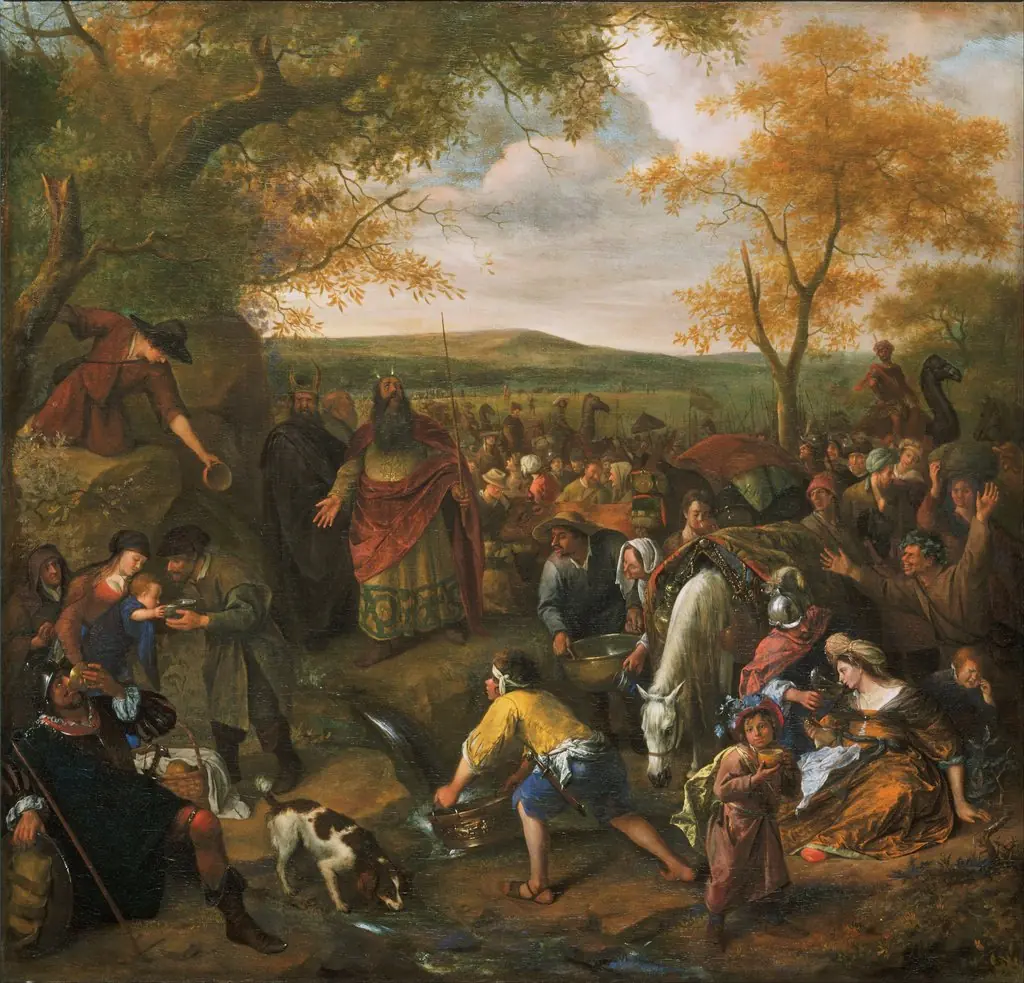 Moses Striking the Rock
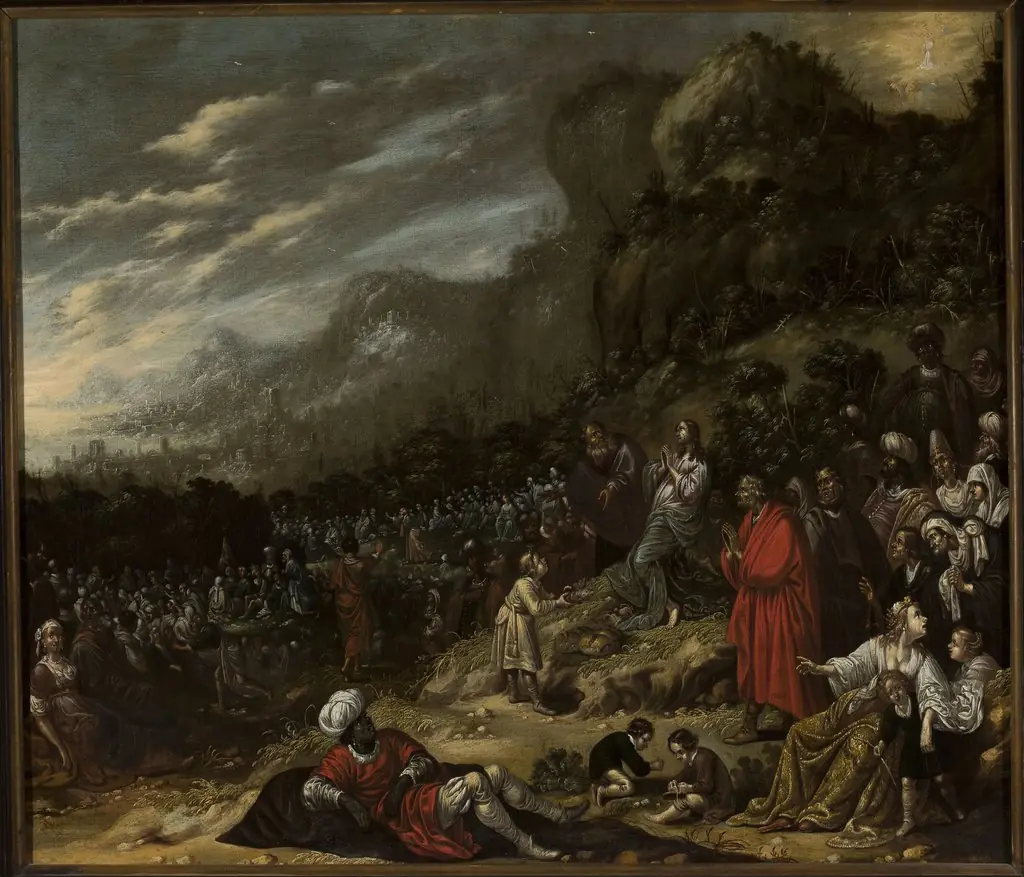 Miracle of the multiplication of bread (John 6:1-13)
 Christ's Entry into Jerusalem