Artwork
Interior of the Pantheon, Rome
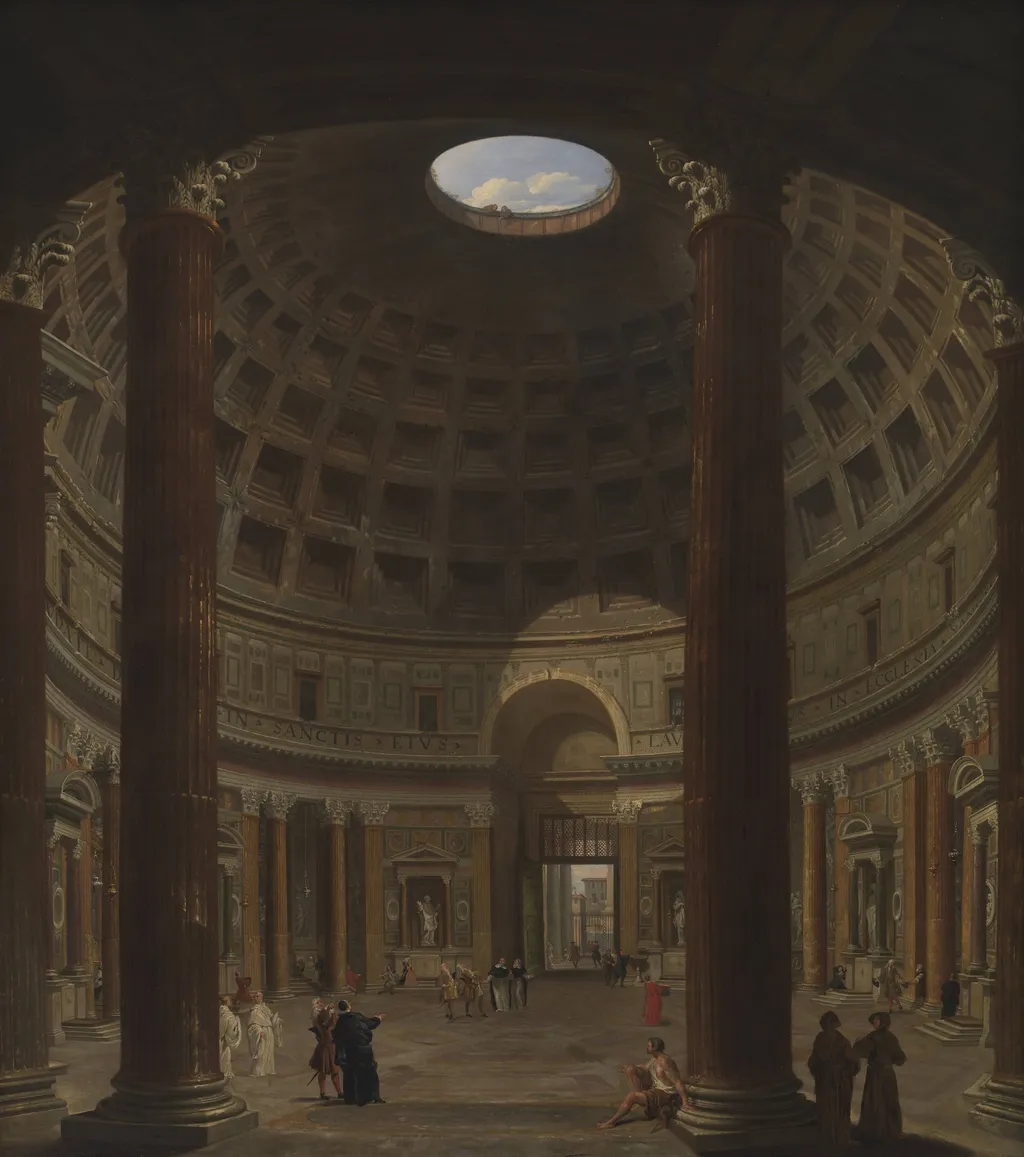
Interior of the Pantheon, Rome is a photography by Unknown. It dates from 1750 and is held in the collection of the Statens Museum for Kunst. This architectural interior depicts the Pantheon in Rome, rendered around 1750 by an artist active in the early 18th century.
About this work
Overview
It is currently held in the collection of the Museum of Ethnography, though its origins lie in topographical observation rather than ethnographic study.
This architectural interior depicts the Pantheon in Rome, rendered around 1750 by an artist active in the early 18th century. The painting captures the vast, light-filled space with precision, emphasizing its monumental scale and classical proportions. It is currently held in the collection of the Museum of Ethnography, though its origins lie in topographical observation rather than ethnographic study.
Subject & Meaning
The scene portrays ordinary visitors moving through the ancient structure, their presence suggesting the Pantheon’s continued use as a public and spiritual space centuries after its construction. One figure sits quietly on the floor, drawing attention to the human scale against the building’s grandeur. The composition implies a quiet reverence, not ceremony, reflecting the building’s dual role as both monument and lived environment.
Technique & Style
The artist employs careful linear perspective to convey depth and spatial harmony, with light streaming through the oculus creating subtle gradations across the interior surfaces. Soft modeling of architectural details and muted tones enhance realism without theatricality. The treatment of light suggests an awareness of chiaroscuro, though the effect is restrained, prioritizing accuracy over dramatic contrast.
History & Provenance
The work was likely produced during a period of heightened interest in Roman antiquities among European travelers and artists. It entered the Museum of Ethnography’s collection in the 19th century, possibly as part of a broader archive documenting architectural heritage. Its classification there reflects historical curatorial practices that grouped visual records of cultural sites under ethnographic themes.
Context
In the mid-18th century, the Pantheon was a frequent subject for artists and architects studying classical design. This painting aligns with a growing trend of documenting ancient monuments as living spaces, not just relics. Unlike idealized ruins, it presents the building in active use, capturing the continuity between antiquity and contemporary Roman life.
Legacy
The painting contributes to a visual record of how Enlightenment-era observers engaged with ancient architecture. Its quiet realism distinguishes it from more romanticized depictions of the period. Today, it serves as a historical document of the Pantheon’s condition and social use in the 1750s, offering insight into early practices of architectural documentation.
Artist & collection

 Domestic Scene
 Giacomo and Cardinal Marco, investing Andrea, Abbot of San Zeno, with his Benefice
 The Nymph of Fontainebleau
 Portrait of a Woman
 Madonna and Child with Saints in the Enclosed Garden
 Venus and Minerva
 Family Group of Four on Sofa
 Wall painting from Room H of the Villa of P. Fannius Synistor at Boscoreale
 Interior of the Pantheon, Rome
 Interior of the Pantheon, Rome
 Interior of the Pantheon, Rome
 Interior of St. Peter's, Rome
 Interior of Saint Peter's, Rome
 View of Pantheon
 Interior of St Peter's, Rome
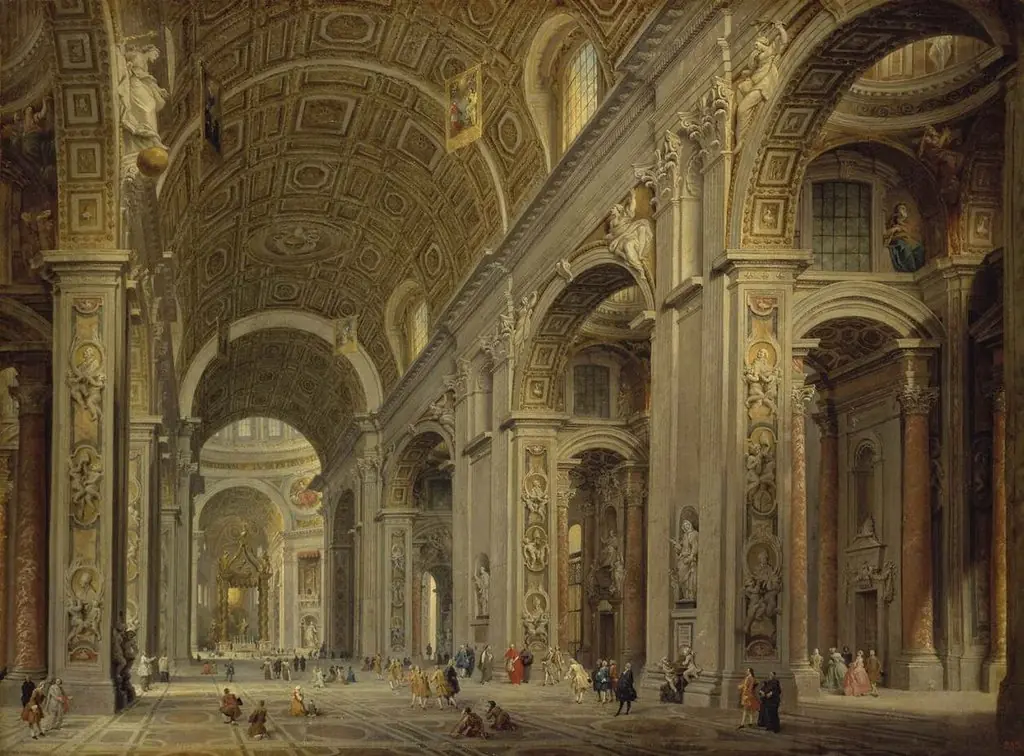 Interior of St Peter's Cathedral in Rome
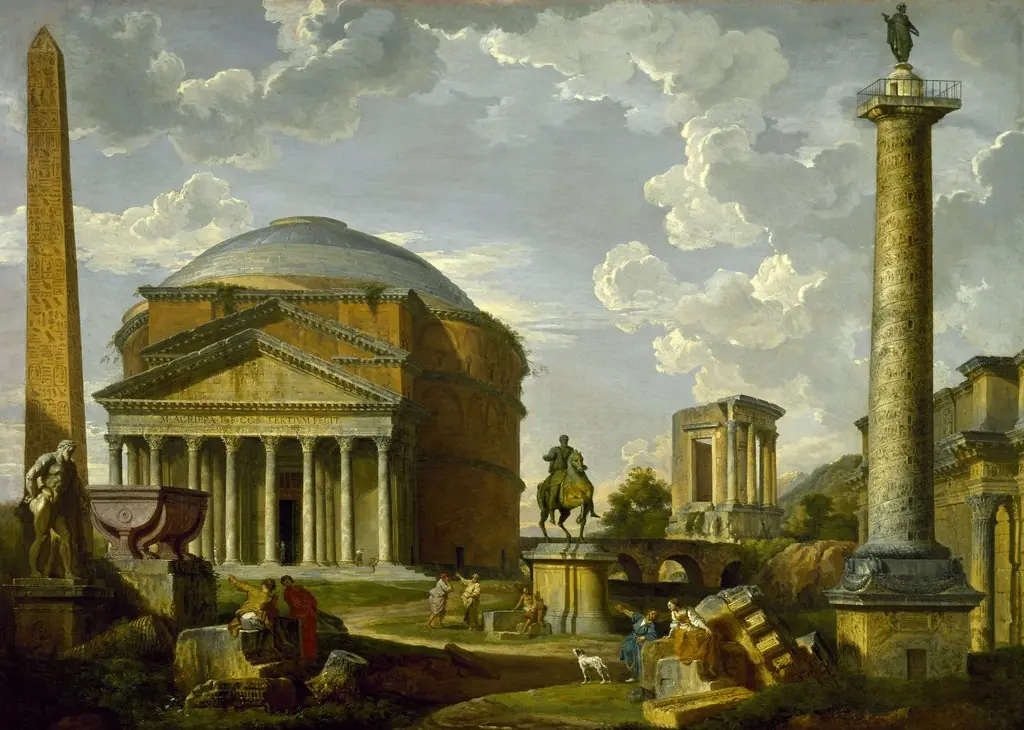 Fantasy View with the Pantheon and other Monuments of Ancient Rome
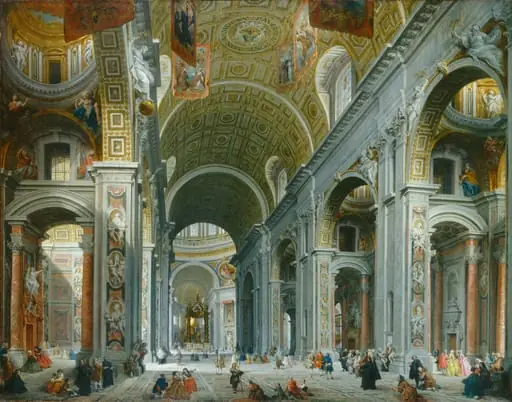 Interior of Saint Peter's, Rome
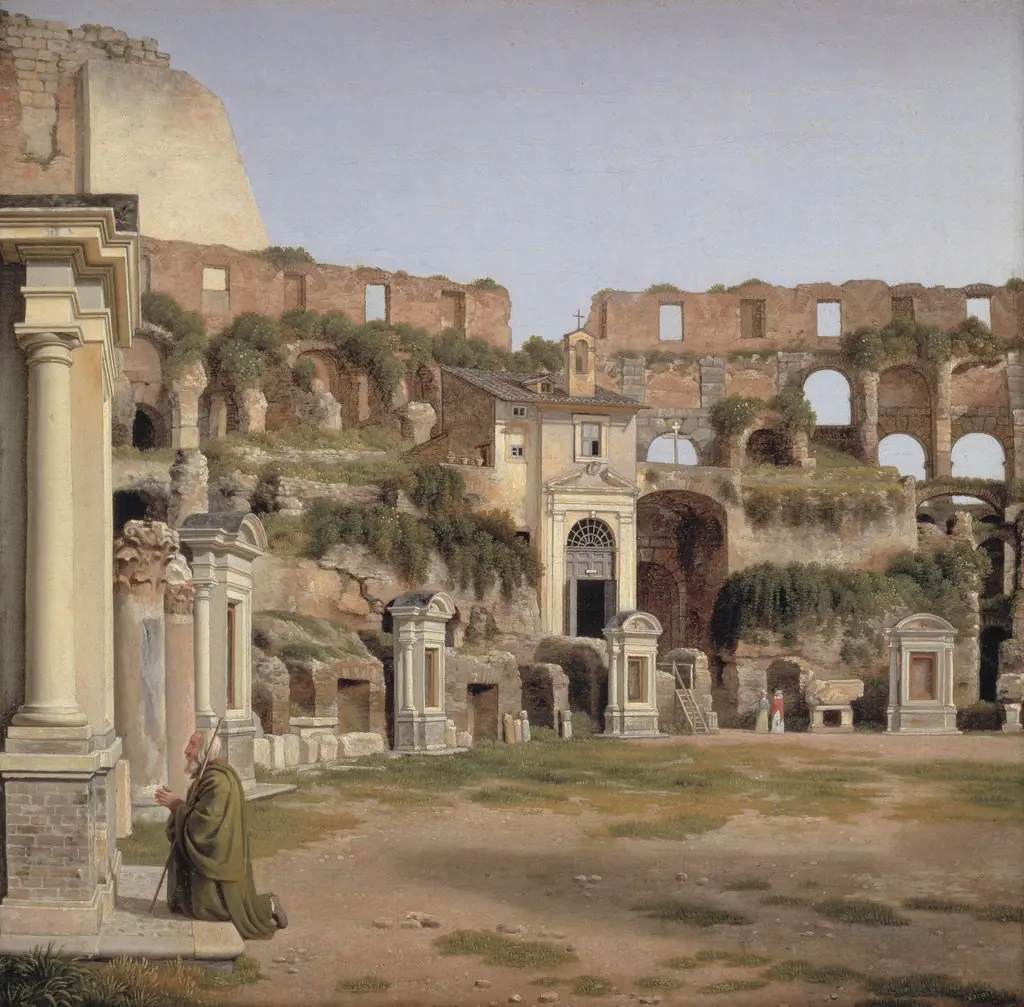 View of the Interior of the Colosseum
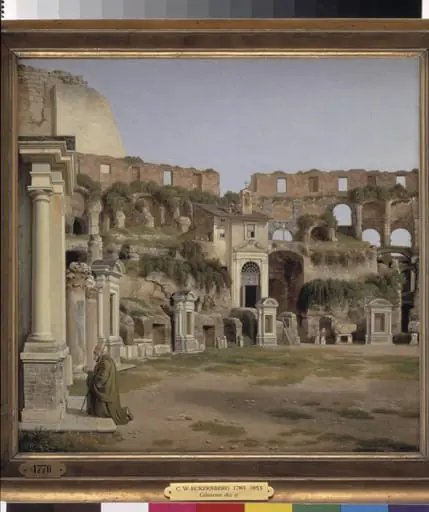 View of the Interior of the Colosseum