Artwork
A Young Girl Sewing
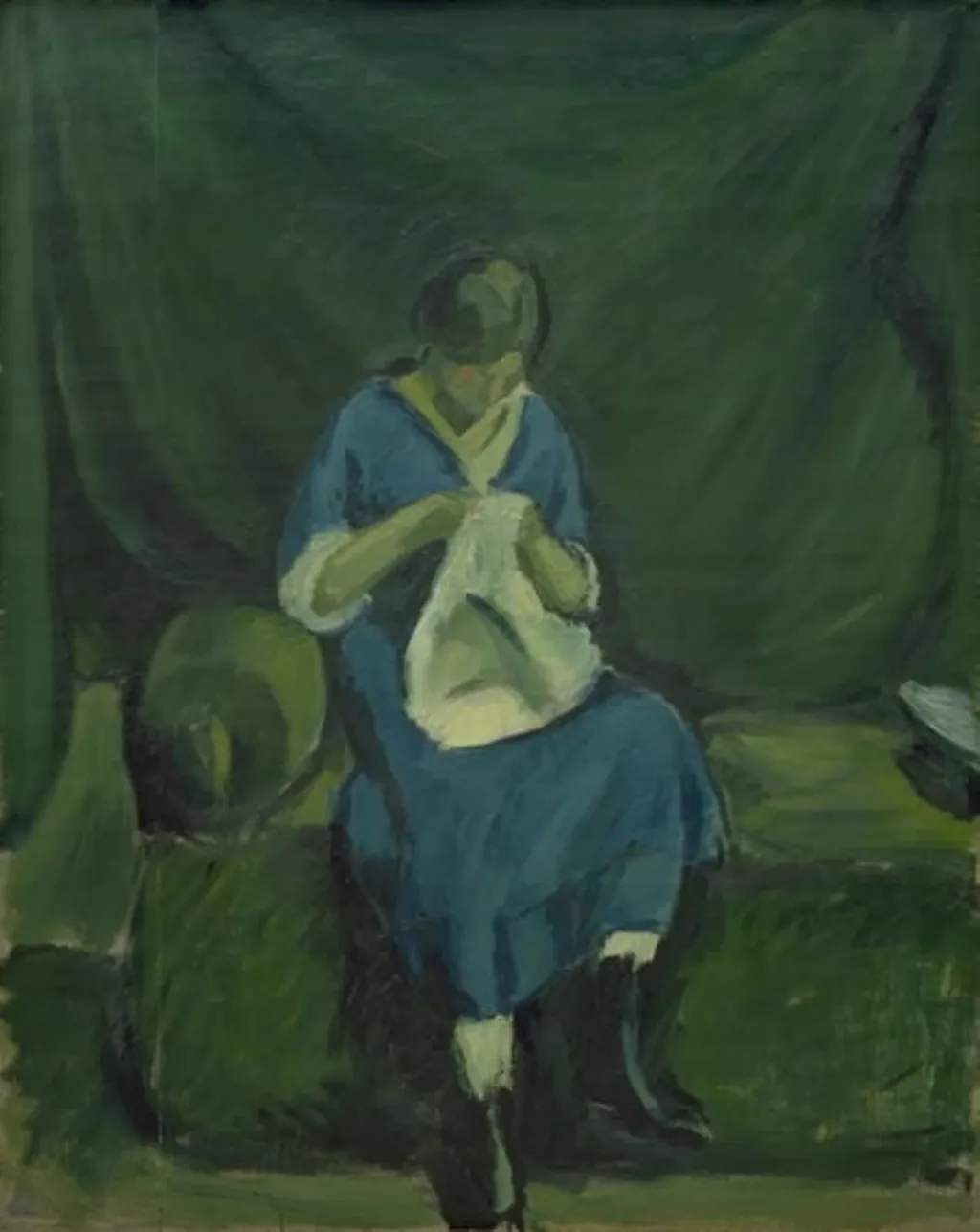
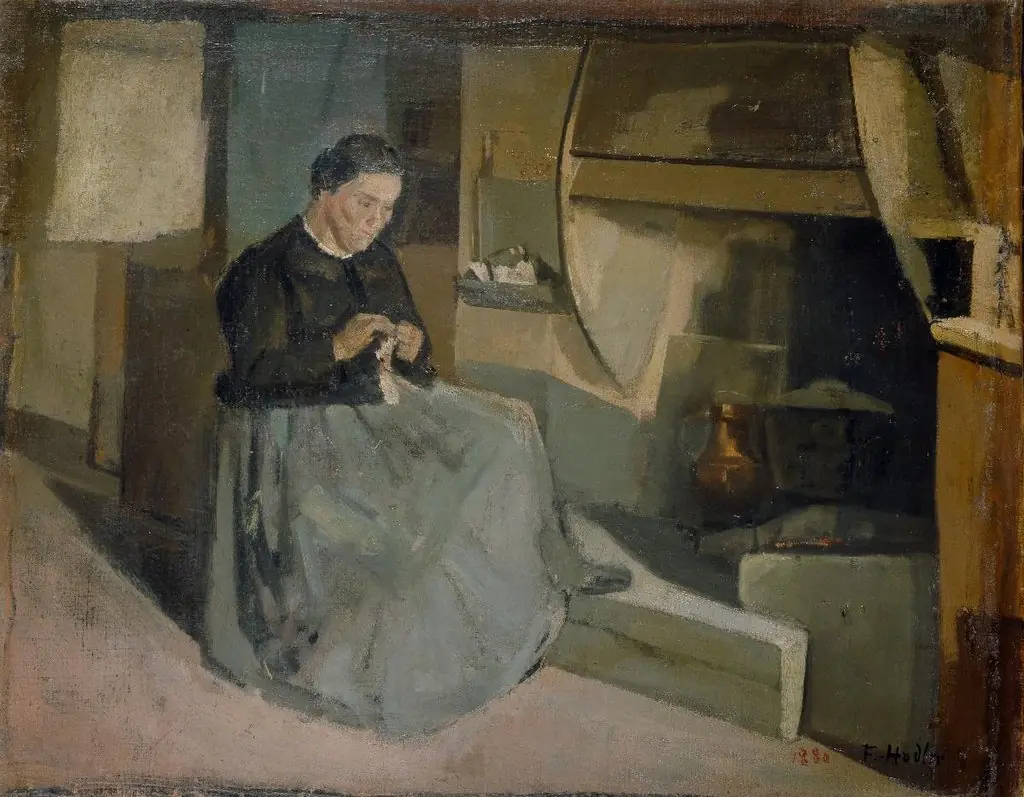
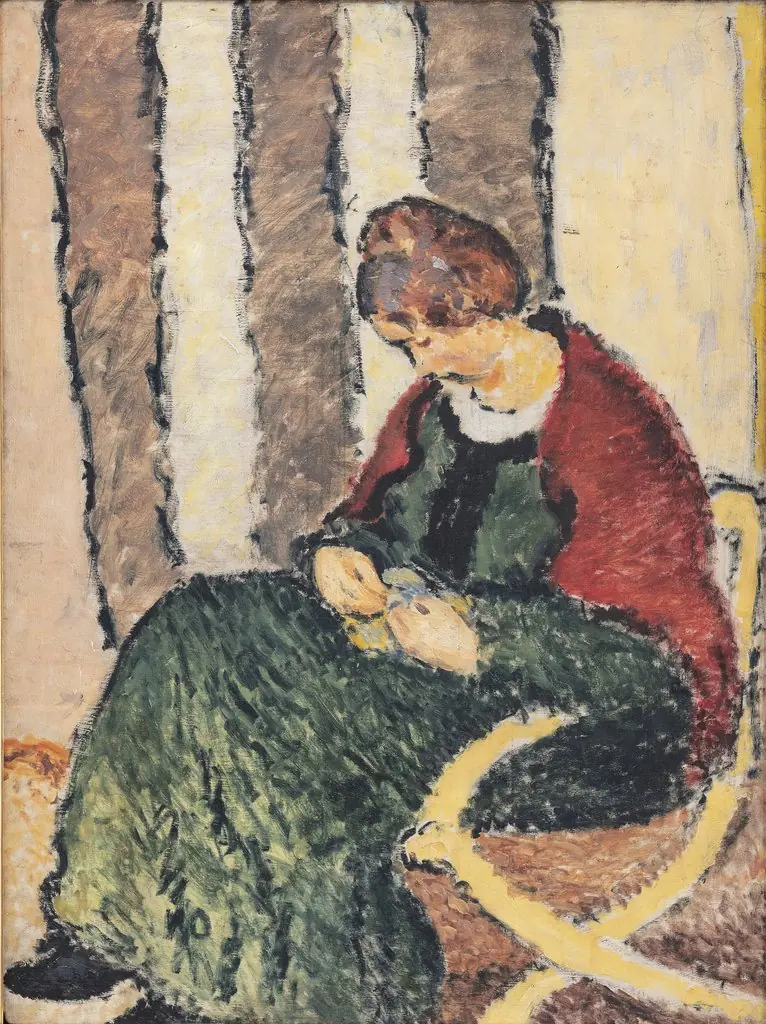
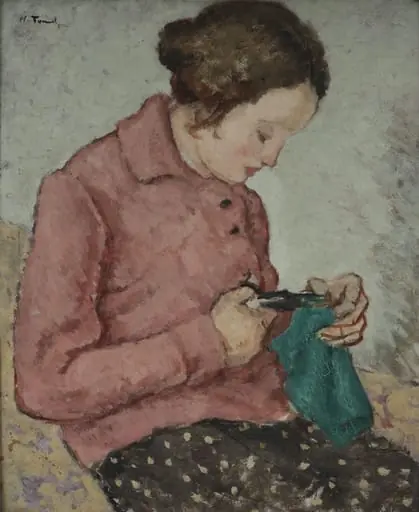
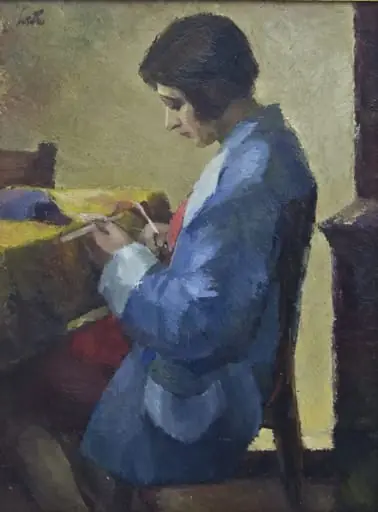
A Young Girl Sewing is a photography by Unknown. It dates from 1915 and is held in the collection of the Statens Museum for Kunst. Created in 1915, this photograph captures a young girl engaged in the quiet act of sewing.
About this work
Overview
Created in 1915, this photograph captures a young girl engaged in the quiet act of sewing. The image is part of the Museum of Ethnography’s collection and reflects early 20th-century documentary photography. The composition emphasizes the immediacy of labor, framing the subject with minimal distraction to highlight the precision of her hands and the texture of the fabric.
Subject & Meaning
The girl, dressed in a blue dress with white trim, is depicted in a moment of focused domestic work. Her identity is not recorded, but the image suggests a common daily ritual among young women of the time. The absence of context or facial detail shifts attention to the act itself, framing sewing not as a decorative gesture but as a grounded, repetitive practice embedded in everyday life.
Technique & Style
The photographer employed a close-up framing and soft, diffused lighting to isolate the girl’s hands and the fabric she manipulates. The blurred, dark background eliminates environmental cues, reinforcing the intimacy of the scene. This restrained aesthetic prioritizes tactile detail—the thread’s tension, the fabric’s weave—over narrative or emotional expression.
History & Provenance
The photograph entered the Museum of Ethnography’s collection shortly after its creation, likely as part of a broader effort to document domestic labor and material culture. Its origin as a photographic study rather than a commissioned portrait suggests it was made for anthropological or educational purposes, aligning with early ethnographic documentation practices of the period.
Context
In 1915, photography was increasingly used to record social conditions and traditional skills, especially in rural or working-class communities.
In 1915, photography was increasingly used to record social conditions and traditional skills, especially in rural or working-class communities. This image fits within a global trend of visual ethnography that sought to preserve knowledge of handcrafts before industrialization transformed domestic economies. The quiet dignity of the subject reflects a broader interest in the unseen labor sustaining daily life.
Legacy
The photograph endures as a quiet record of gendered labor and material culture. It contributes to scholarly understanding of how sewing was both a practical skill and a cultural practice. Its simplicity invites ongoing interpretation, offering a window into the rhythms of early 20th-century domestic life without romanticizing or dramatizing it.
Artist & collection

 Domestic Scene
 Giacomo and Cardinal Marco, investing Andrea, Abbot of San Zeno, with his Benefice
 The Nymph of Fontainebleau
 Portrait of a Woman
 Madonna and Child with Saints in the Enclosed Garden
 Venus and Minerva
 Family Group of Four on Sofa
 Wall painting from Room H of the Villa of P. Fannius Synistor at Boscoreale