Artwork
A Cow
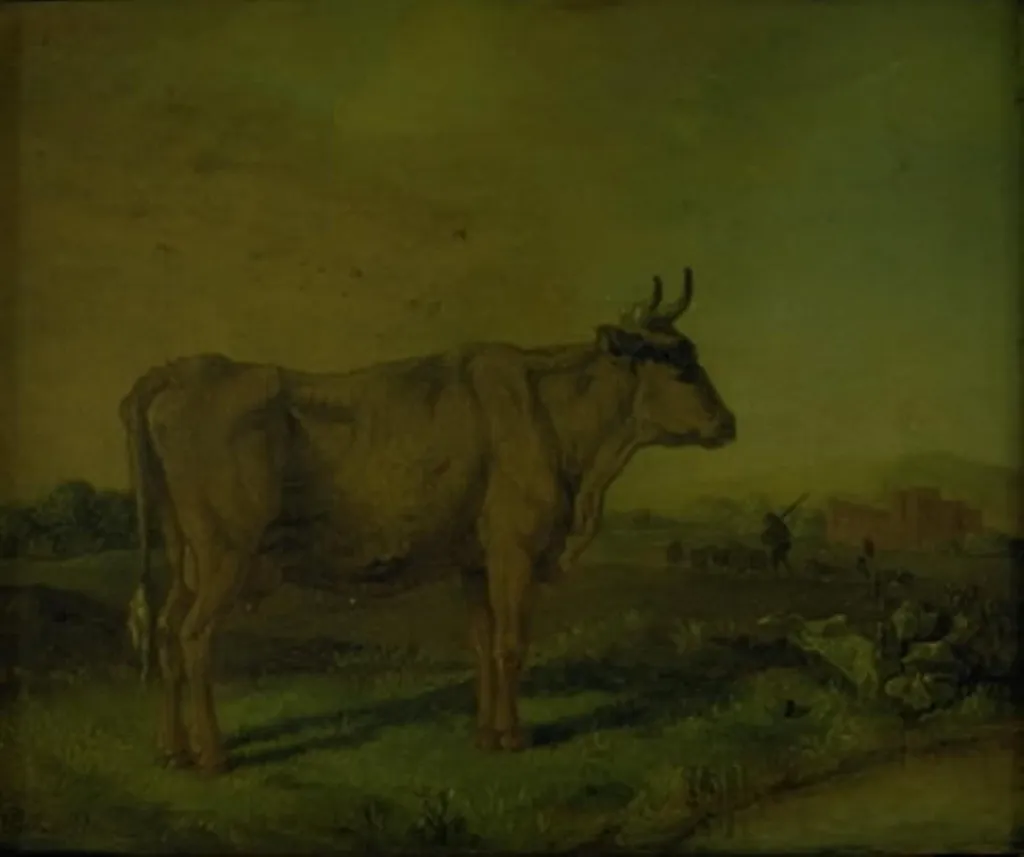
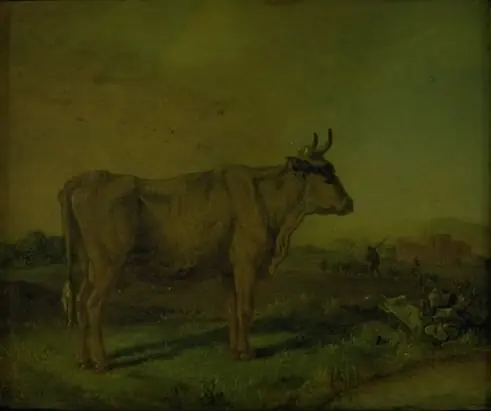
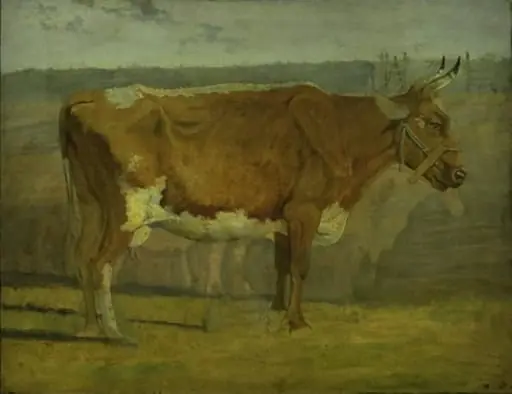
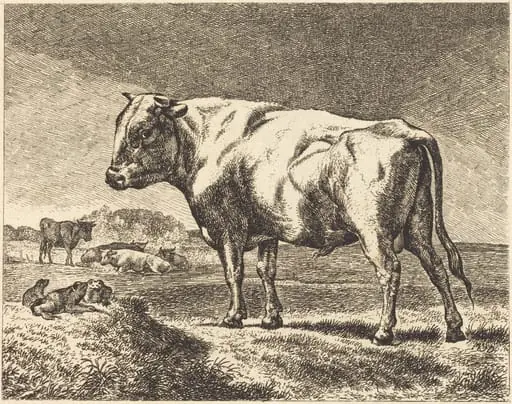
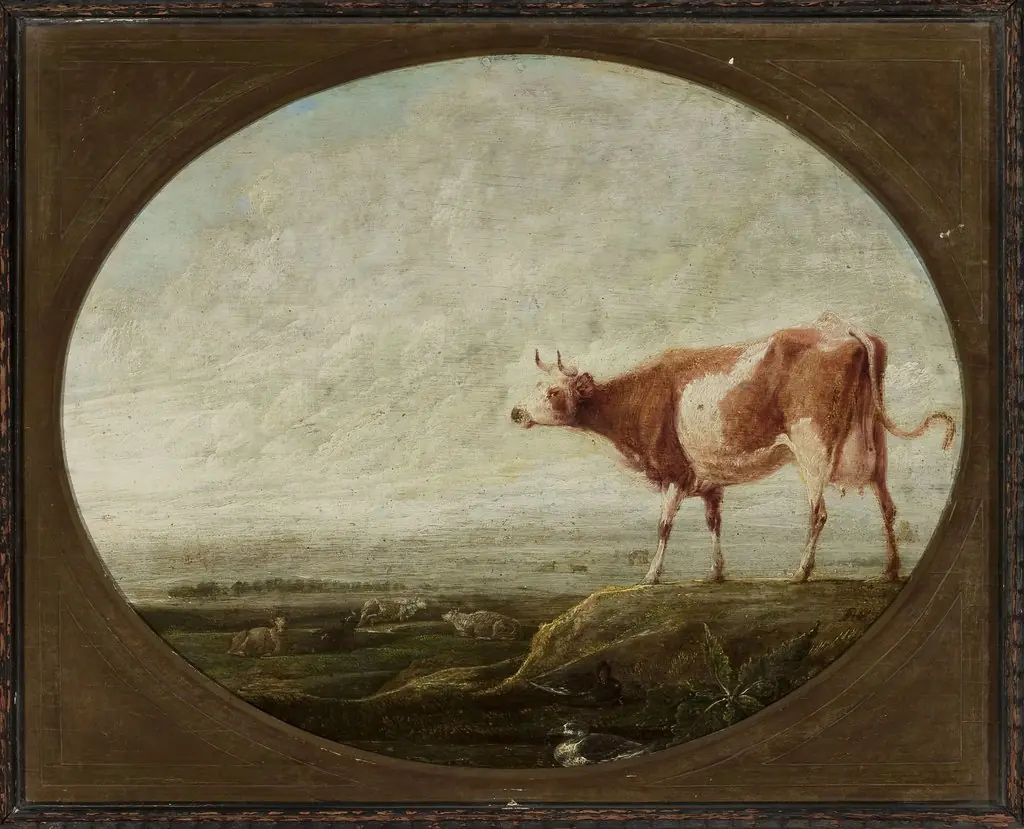
A Cow is a photography by Unknown. It dates from 1650 and is held in the collection of the Statens Museum for Kunst. Created around 1650, this image depicts a single cow in a quiet, open field.
About this work
Overview
It is preserved in the Museum of Ethnography, where its unusual realism sets it apart from contemporaneous artistic conventions.
Created around 1650, this image depicts a single cow in a quiet, open field. Though attributed to an artist active in 1738, the work’s style and execution suggest an earlier period. It is preserved in the Museum of Ethnography, where its unusual realism sets it apart from contemporaneous artistic conventions. The image lacks overt decorative elements, focusing instead on the animal’s presence in a neutral landscape.
Subject & Meaning
The cow, rendered with quiet attention, appears as a solitary figure in an undetailed environment. Its sideways stance and slight head turn suggest awareness of the viewer without dramatic engagement. The absence of human figures or symbolic context implies a focus on the animal as a subject in its own right, possibly reflecting observational interest rather than allegorical intent.
Technique & Style
The painting avoids traditional chiaroscuro, employing even, diffuse lighting that minimizes shadow and texture. Fur is suggested through flat areas of brown and black pigment, with no modeling to suggest volume. The background is a uniform, muted green-yellow, reducing spatial depth. The result resembles photographic documentation more than painted interpretation, indicating a departure from prevailing artistic norms of the time.
History & Provenance
The work’s origins are unclear, but its attribution to a figure active in 1738 may reflect later cataloging rather than accurate dating. It entered the Museum of Ethnography’s collection as part of a broader effort to document rural life and animal husbandry. Its preservation suggests it was valued for its documentary quality rather than its aesthetic innovation.
Context
In mid-17th-century Europe, livestock was often depicted in pastoral scenes or as symbols of wealth. This image diverges by isolating the cow without narrative or social context. Its plainness may reflect regional artistic practices, early naturalist observation, or the work of a non-professional artist. It stands as a quiet counterpoint to the elaborate compositions of its era.
Legacy
The image remains notable for its unembellished realism, offering insight into how non-elite or regional artists approached natural subjects. It has influenced later studies of vernacular art and the history of visual documentation. While not widely exhibited, it serves as a reference point for understanding the diversity of artistic intent beyond canonical traditions.
Artist & collection

 Domestic Scene
 Giacomo and Cardinal Marco, investing Andrea, Abbot of San Zeno, with his Benefice
 The Nymph of Fontainebleau
 Portrait of a Woman
 Madonna and Child with Saints in the Enclosed Garden
 Venus and Minerva
 Family Group of Four on Sofa
 Wall painting from Room H of the Villa of P. Fannius Synistor at Boscoreale