Artwork
Cow
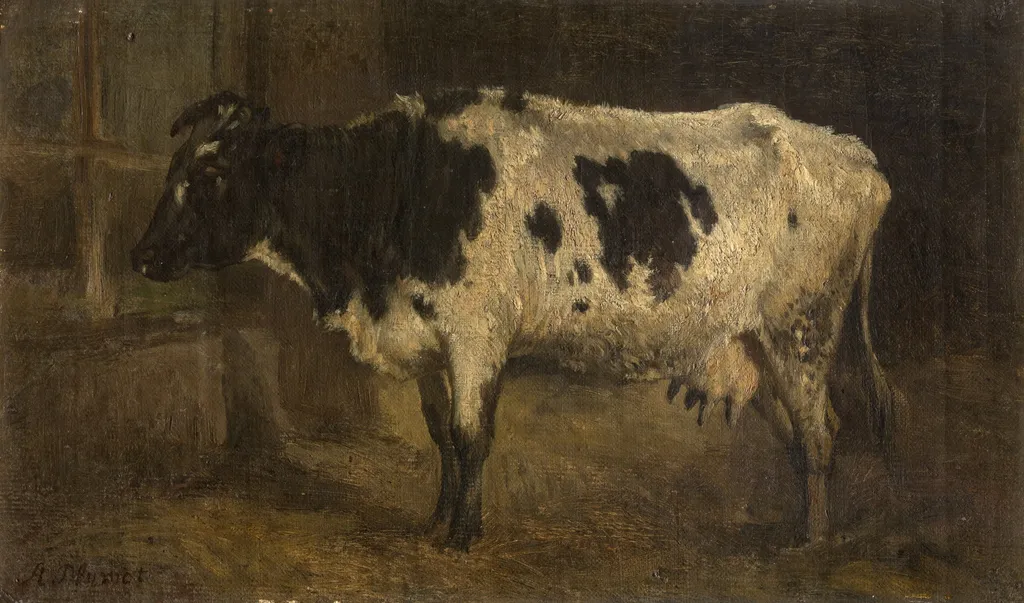
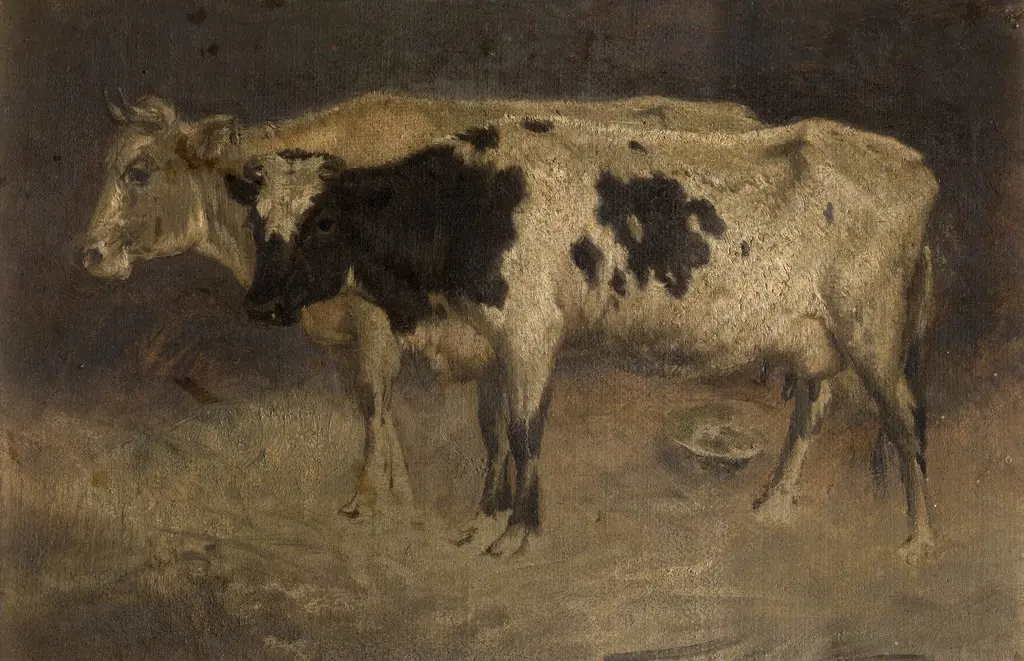
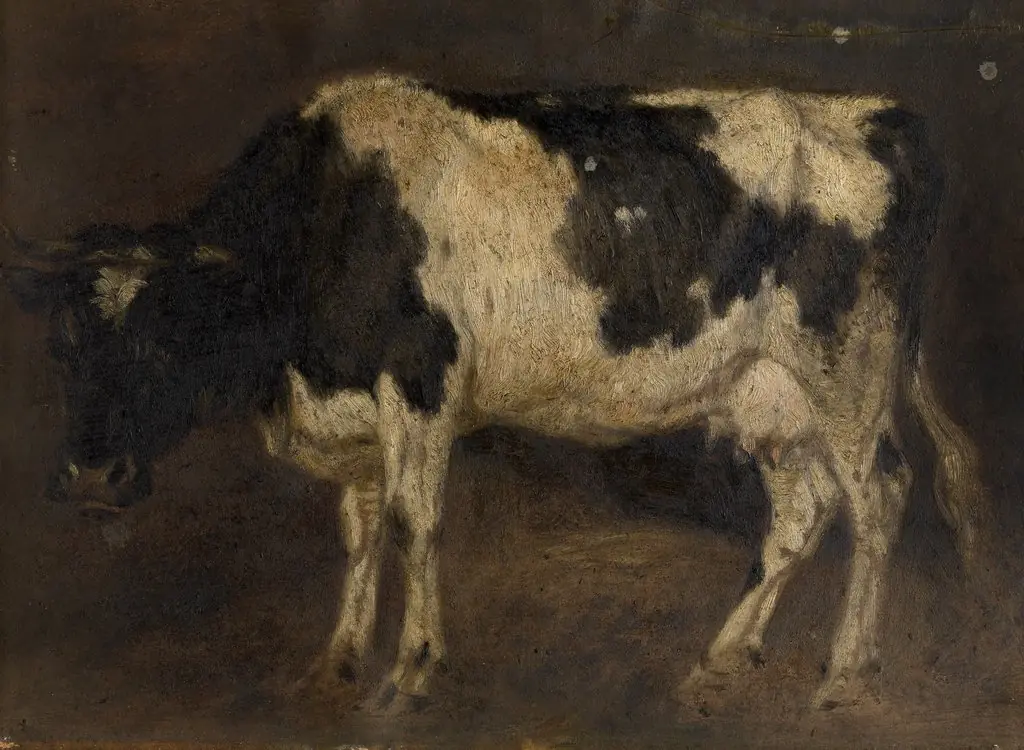
Cow is an unspecified painting by André Plumot. It dates from 1877 and is held in the collection of the Royal Museum of Fine Arts Antwerp.
About this work
Overview
Its quiet composition and restrained palette distinguish it from more dramatic animal studies of the period, emphasizing stillness over narrative.
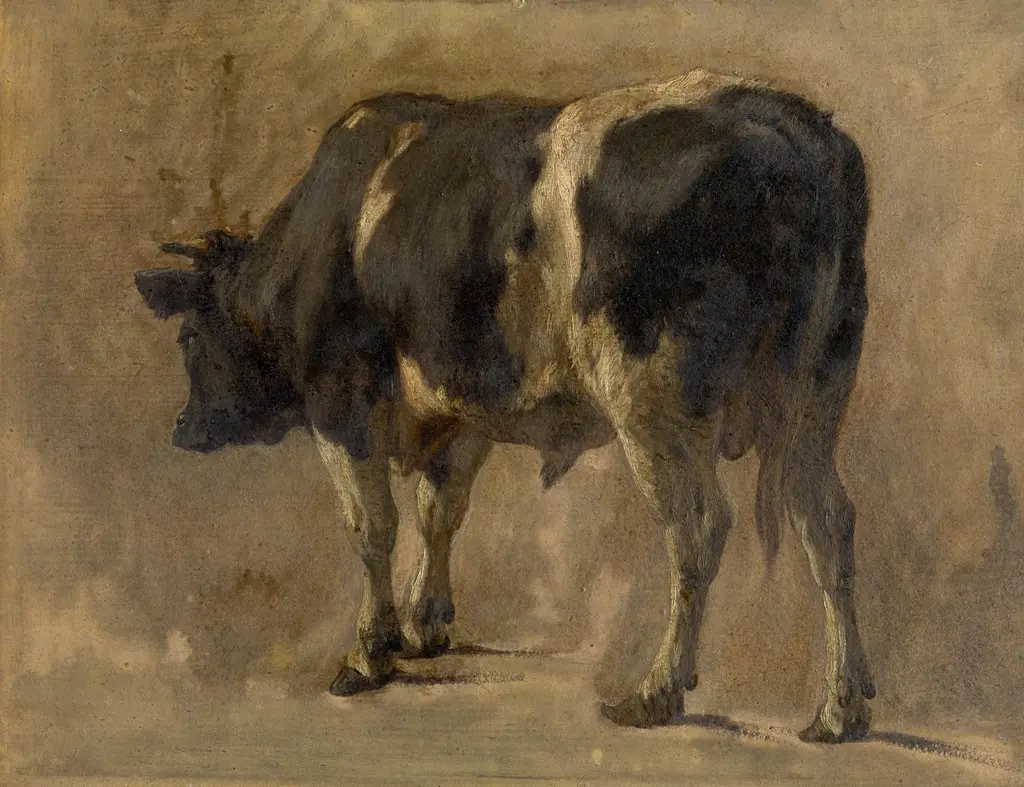
Painted around 1877 by André Plumot, this work depicts a single cow in a muted interior setting. The painting is part of the collection at the Royal Museum of Fine Arts Antwerp. Its quiet composition and restrained palette distinguish it from more dramatic animal studies of the period, emphasizing stillness over narrative. The subject is rendered with attention to texture and spatial ambiguity, inviting close observation rather than immediate interpretation.
Subject & Meaning
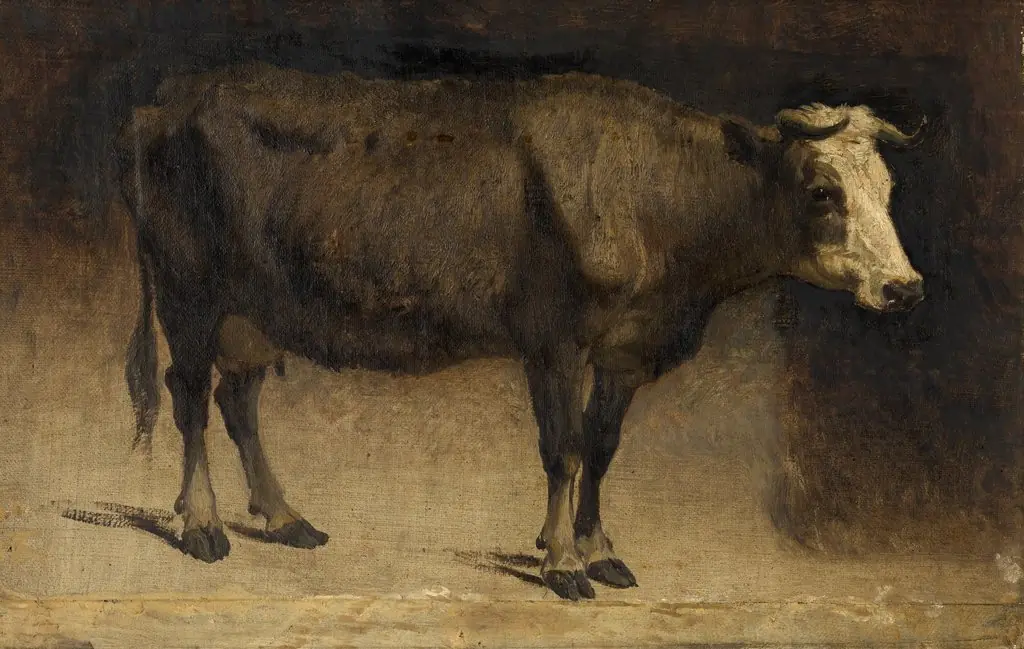
The cow, white with scattered black markings, stands motionless with its head turned left, facing away from the viewer. Its posture suggests introspection, though no symbolic or allegorical intent is documented. The dim, indistinct background removes the animal from any specific farm or landscape context, focusing attention solely on its presence. The painting may reflect a quiet interest in the dignity of ordinary livestock, common in 19th-century regional realism.
Technique & Style
Plumot employs thick, tactile brushwork to convey the texture of the cow’s hide, creating a sense of physical weight and roughness. The dark background is built with layered shadows, while faint highlights suggest nearby surfaces without defining them. The limited color palette—dominated by grays, whites, and muted blacks—enhances the somber mood. The technique prioritizes material presence over detail, aligning with a tactile, observational approach to painting.
History & Provenance
The painting entered the collection of the Royal Museum of Fine Arts Antwerp in the late 19th or early 20th century, likely through acquisition or donation. Little is known about its early ownership or exhibition history. André Plumot, a Belgian artist active in the latter half of the 1800s, produced relatively few documented works, and this piece remains one of the better-known examples of his output.
Context
In the 1870s, Belgian artists increasingly turned to everyday rural subjects, moving away from grand historical themes. Plumot’s cow aligns with this trend, reflecting a broader interest in the quiet dignity of agricultural life. Unlike French realists who often depicted labor, Plumot isolates the animal, suggesting a more meditative engagement with the natural world, possibly influenced by regional Flemish traditions of stillness and restraint.
Legacy
Though not widely reproduced or studied, the painting endures as a quiet example of late 19th-century Belgian realism. Its emphasis on texture and atmosphere over narrative distinguishes it from more conventional animal portraiture. It contributes to a lesser-known strand of art that values contemplative observation, preserving a sense of the ordinary as worthy of sustained attention.
Artist & collection