Artwork
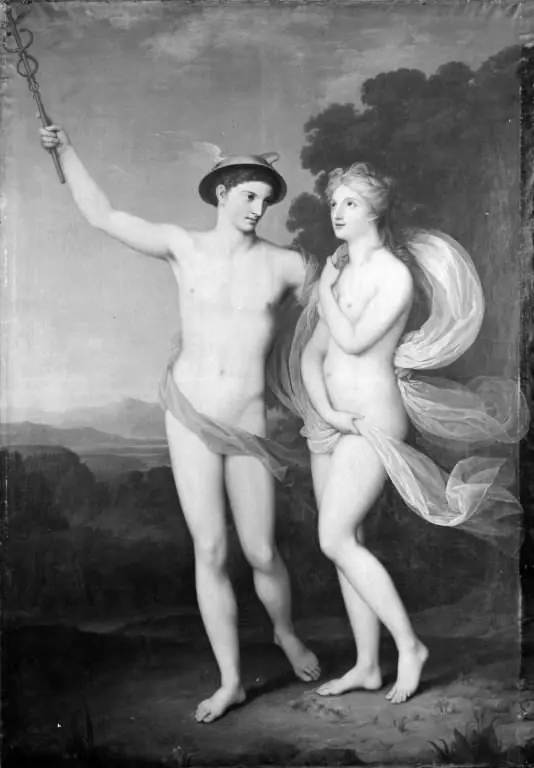
Apollon og Hermes
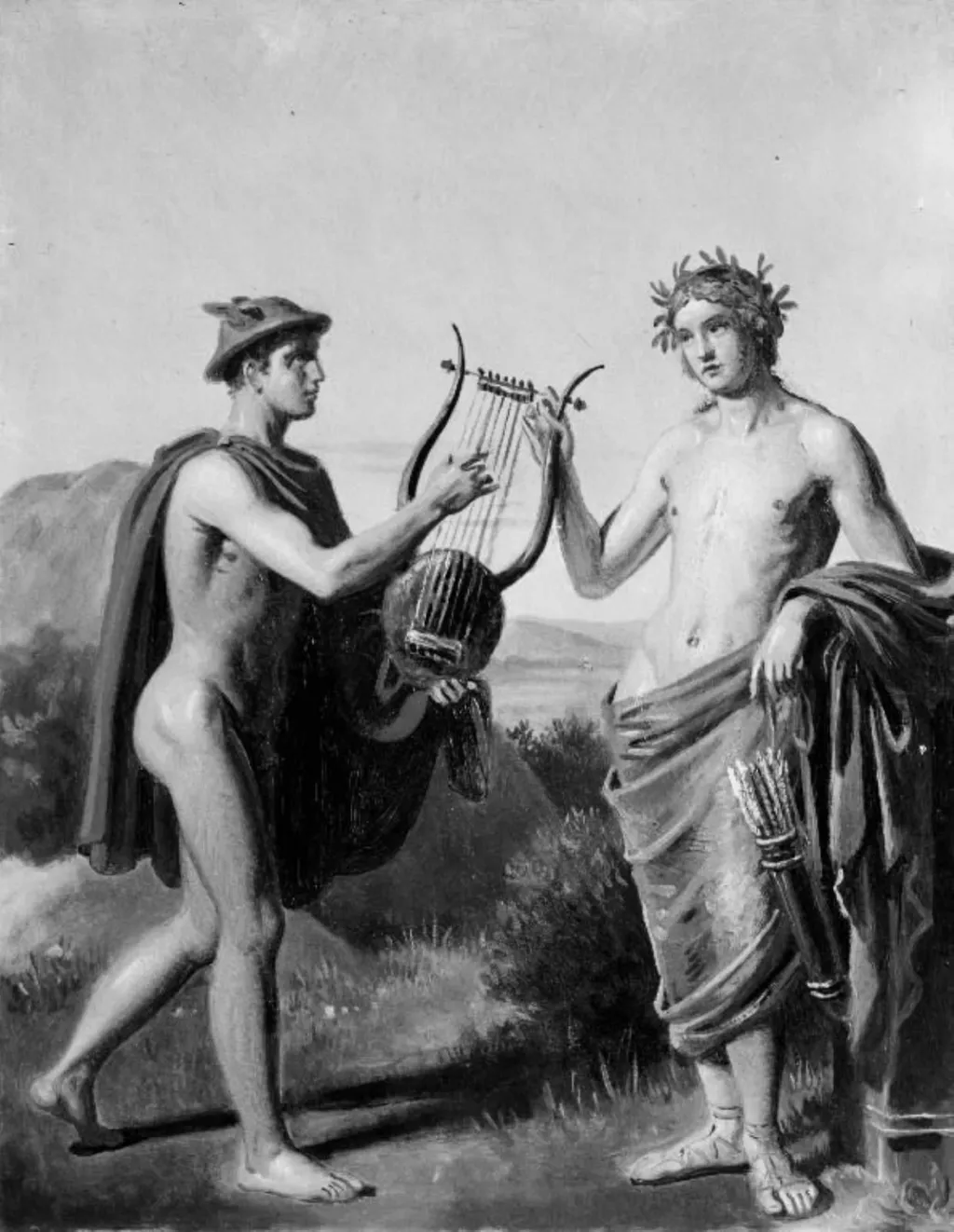
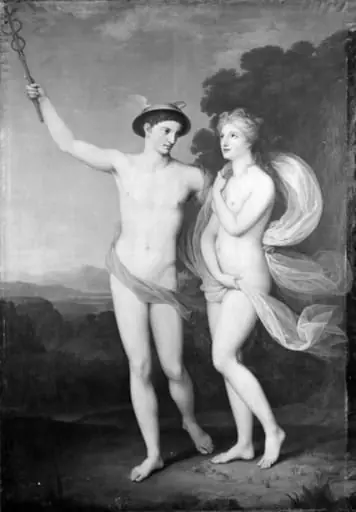
Apollon og Hermes is a photography by Unknown. It dates from 1849 and is held in the collection of the Statens Museum for Kunst. Created around 1849 by the artist identified as 181_person, this work presents a classical mythological scene rendered in photographic form.
About this work
Overview
The piece is part of the collection at the Museum of Ethnography, where it stands as an atypical example of photographic art engaging with ancient themes.
Created around 1849 by the artist identified as 181_person, this work presents a classical mythological scene rendered in photographic form. Unlike typical paintings of the period, it uses the emerging medium of photography to depict two figures from Greek myth. The piece is part of the collection at the Museum of Ethnography, where it stands as an atypical example of photographic art engaging with ancient themes.
Subject & Meaning
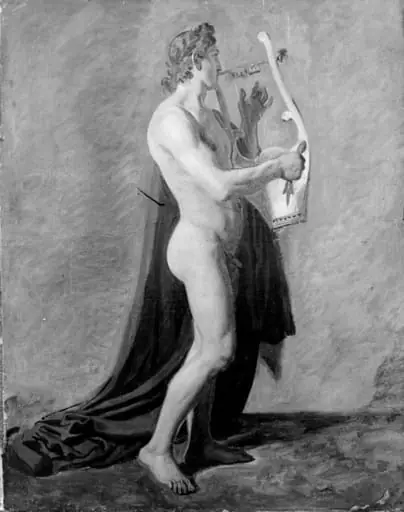
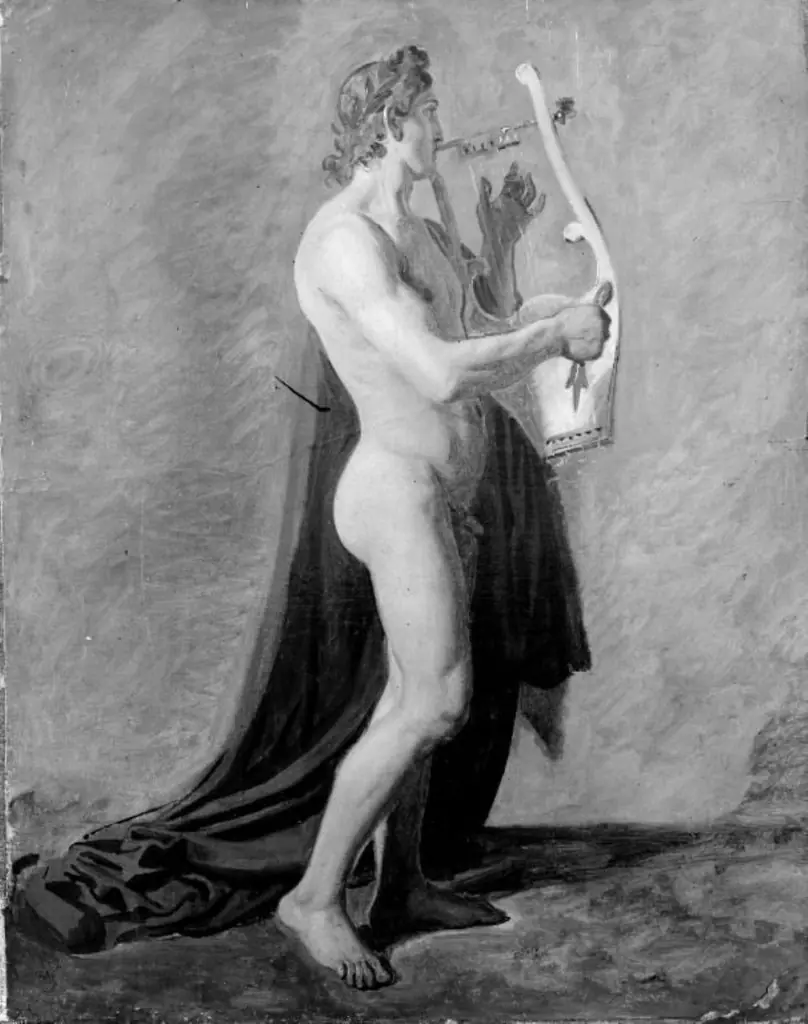
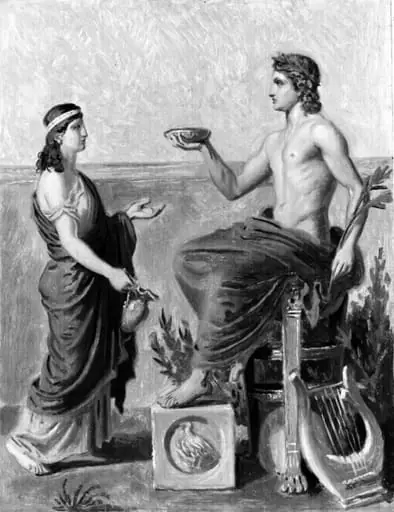
The two figures are identified as Apollo and Hermes, deities from Greek mythology. Apollo, on the left, holds a lyre and wears a hat and draped cape, while Hermes, on the right, carries a bow and quiver, adorned with a wreath. Their postures suggest an exchange, possibly referencing their mythological encounter after Hermes stole Apollo’s cattle. The scene evokes a moment of reconciliation or negotiation between the gods.
Technique & Style
The image employs photographic techniques to mimic the clarity and detail of classical sculpture and painting. The figures are posed with anatomical precision, and the landscape background is softly rendered to suggest depth without distraction. The use of photography to recreate mythological subjects was unconventional at the time, blending documentary realism with idealized form in a manner uncommon for mid-19th-century visual culture.
History & Provenance
The work was produced in the late 1840s, during a period when photography was being explored for artistic and historical purposes beyond mere portraiture. It entered the collection of the Museum of Ethnography, suggesting its initial reception as an anthropological or cultural artifact rather than fine art. Its provenance remains tied to the artist’s personal or academic interests in classical antiquity.
Context
In the mid-19th century, European artists and scholars increasingly turned to photography to document and reinterpret classical themes. This work reflects a broader trend of using new technology to engage with ancient narratives, often in academic or ethnographic settings. The choice of Apollo and Hermes aligns with contemporary fascination with Greek mythology as a foundation for Western cultural identity.
Legacy
As one of the early photographic attempts to reconstruct mythological scenes, the work contributes to the evolving dialogue between technology and classical tradition. Though not widely exhibited or studied, it represents a quiet innovation in how photography was adapted to serve historical and symbolic narratives, influencing later experiments in staged photographic composition.
Artist & collection

 Domestic Scene
 Giacomo and Cardinal Marco, investing Andrea, Abbot of San Zeno, with his Benefice
 The Nymph of Fontainebleau
 Portrait of a Woman
 Madonna and Child with Saints in the Enclosed Garden
 Venus and Minerva
 Family Group of Four on Sofa
 Wall painting from Room H of the Villa of P. Fannius Synistor at Boscoreale