Artwork
Martinus Rørbye
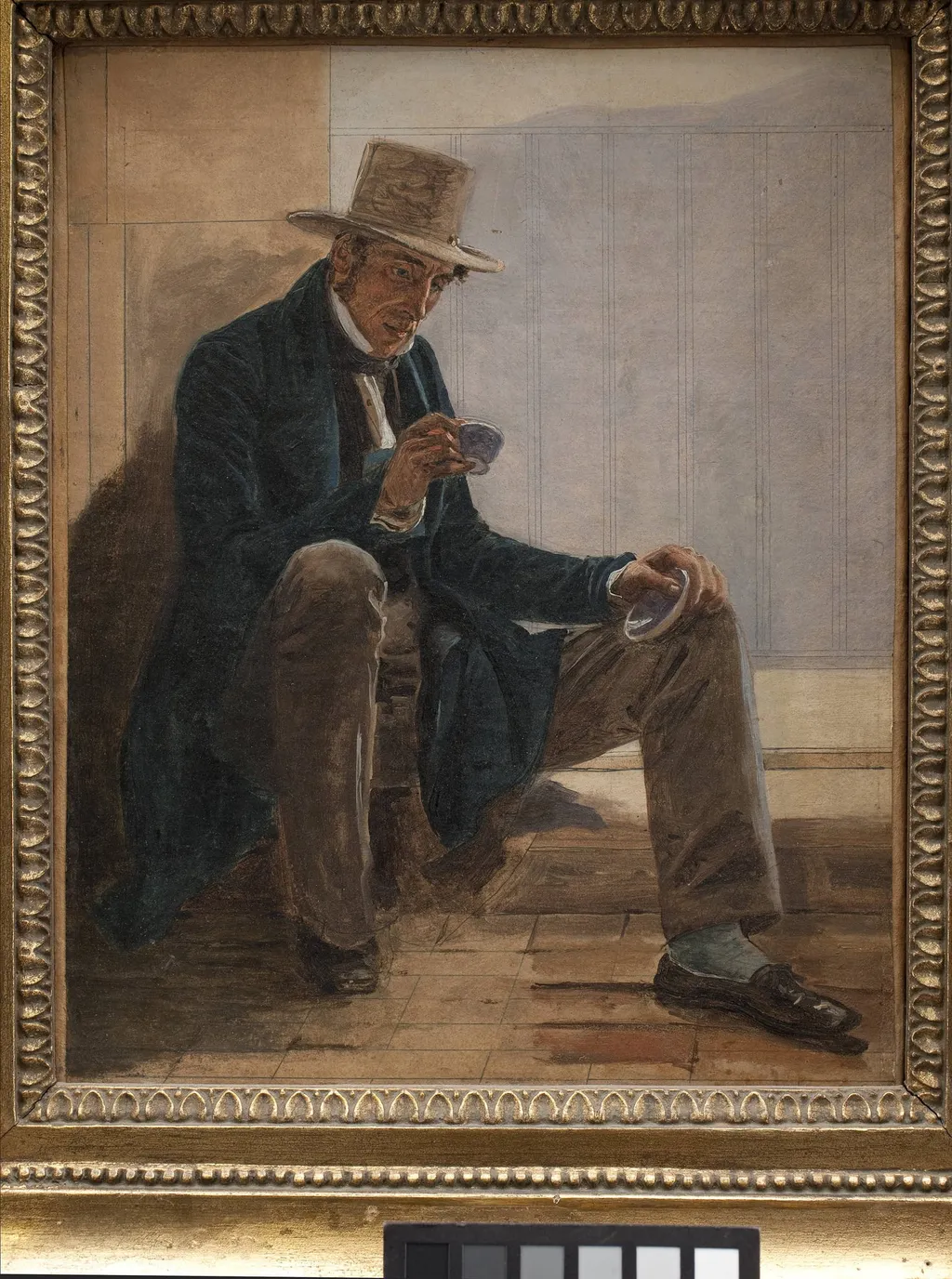
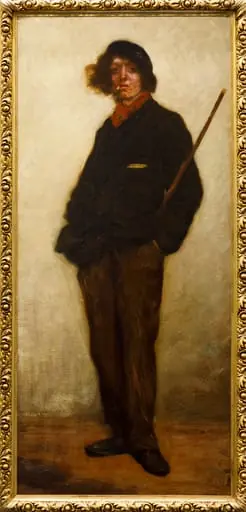
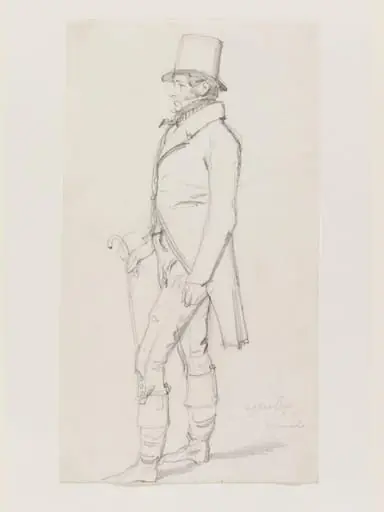
Martinus Rørbye is a photography by the Romanticist artist Unknown. It dates from 1837 and is held in the collection of the Statens Museum for Kunst.
About this work
Overview
The composition emphasizes quietude and observation, reflecting the artist’s interest in ordinary life rather than grand narratives.
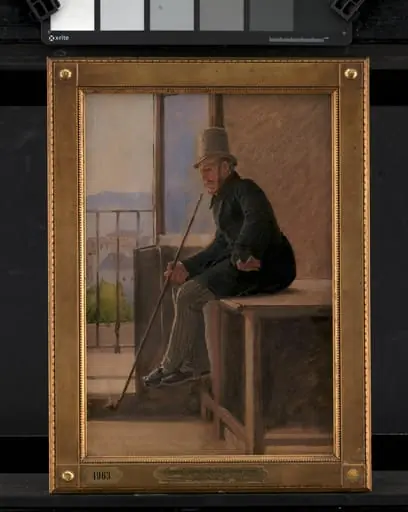
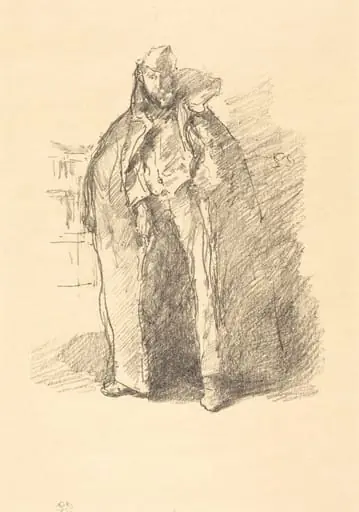
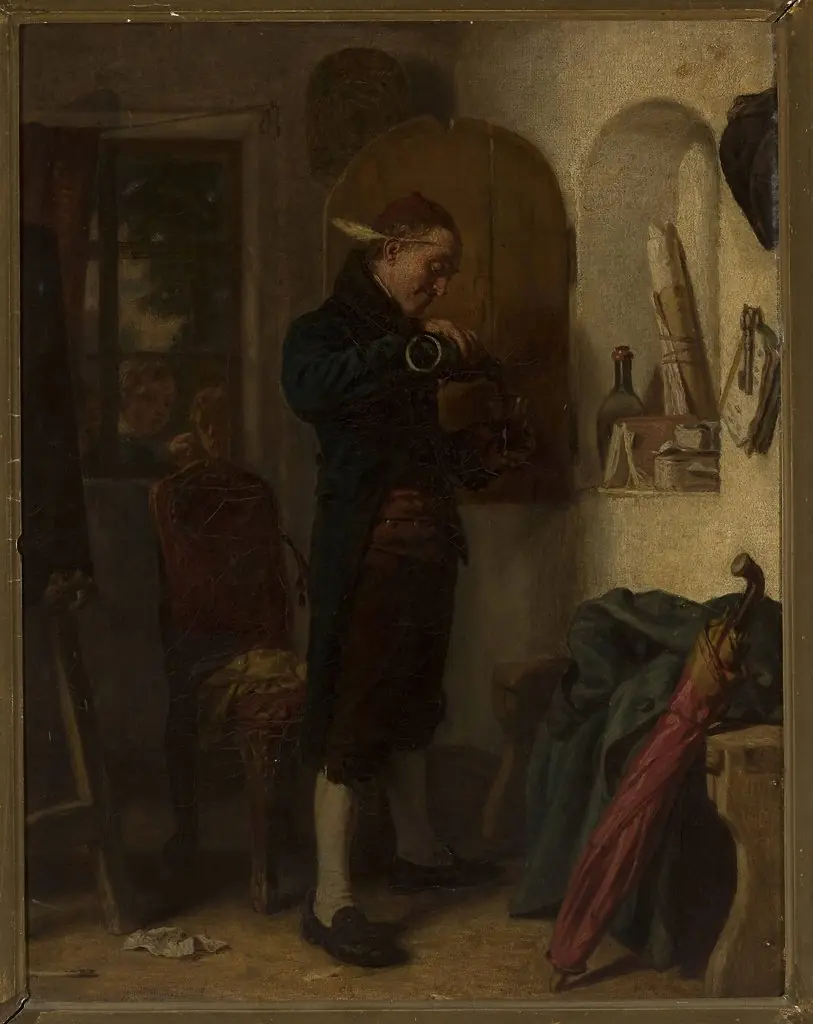
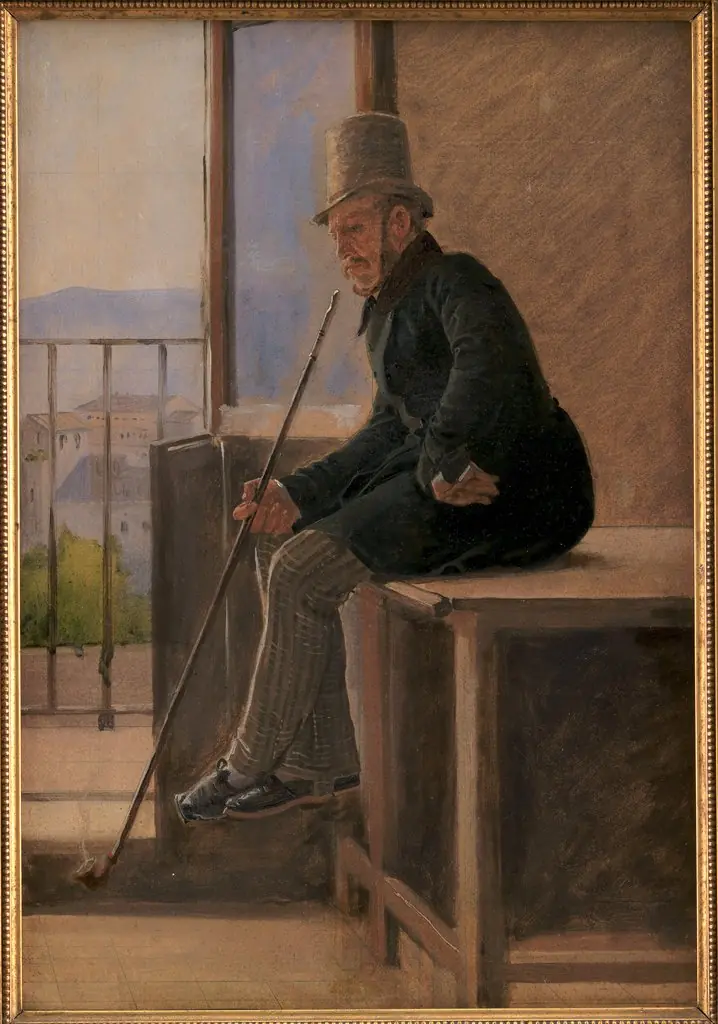
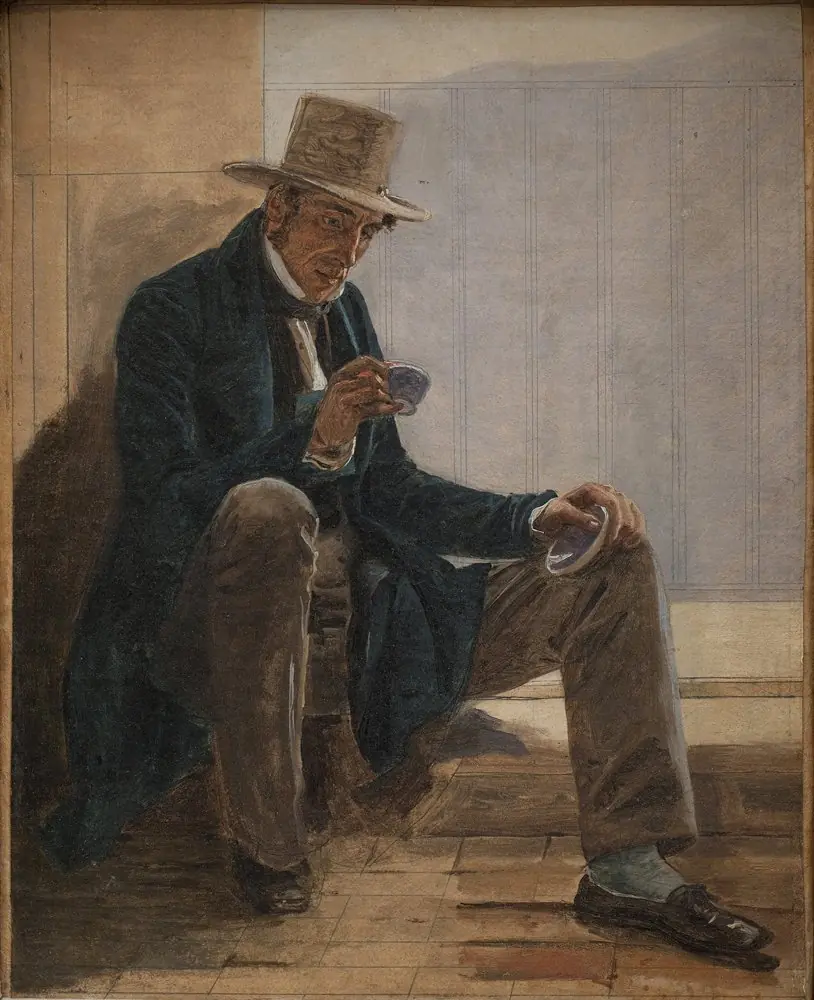
Painted in 1837 by Martinus Rørbye, this work depicts an elderly man in a moment of stillness outside a modest dwelling. Executed in oil on canvas, it is part of the collection at the Museum of Ethnography. The composition emphasizes quietude and observation, reflecting the artist’s interest in ordinary life rather than grand narratives. Rørbye’s approach aligns with the broader Nordic interest in intimate, everyday scenes during the early 19th century.
Subject & Meaning
The figure, an older man dressed in simple, worn clothing, sits on a stone step with a small cup in his hands. His posture suggests fatigue or contemplation, and the barred window behind him hints at confinement or isolation. The absence of narrative context invites interpretation of solitude, aging, or domestic routine. The painting avoids sentimentality, instead presenting a restrained portrait of a life lived quietly, without drama or idealization.
Technique & Style
Rørbye employs soft, blended brushwork to render light falling across the man’s coat and hat, creating subtle tonal shifts that suggest natural illumination. The palette is muted—grays, browns, and muted ochres—enhancing the scene’s somber tone. Details like the texture of fabric and the grain of the stone step are rendered with quiet precision, avoiding theatricality. This technique reflects a shift toward observational realism within Romantic-era Danish painting.
History & Provenance
The painting entered the Museum of Ethnography’s collection in the late 19th century, likely through institutional acquisitions focused on cultural documentation. Its attribution to Rørbye is well established through stylistic analysis and archival records. While not widely exhibited in his lifetime, the work gained recognition later as part of broader efforts to preserve Nordic genre painting from the 1830s.
Context
Created during a period when Danish artists turned from historical and mythological themes toward domestic and rural subjects, this work reflects the influence of Romanticism’s emphasis on emotion and authenticity. Rørbye, trained in Copenhagen and influenced by German and French realism, contributed to a movement that valued the dignity of ordinary people. The painting’s setting and subject align with similar works by contemporaries like Christen Købke.
Legacy
Though not among Rørbye’s most famous works, this painting exemplifies his commitment to understated observation. It contributes to the historical record of 19th-century Nordic visual culture, where everyday life became a legitimate subject for art. Its preservation in an ethnographic museum underscores its value as a document of social appearance and material culture, rather than solely as an aesthetic object.
Artist & collection

 Domestic Scene
 Giacomo and Cardinal Marco, investing Andrea, Abbot of San Zeno, with his Benefice
 The Nymph of Fontainebleau
 Portrait of a Woman
 Madonna and Child with Saints in the Enclosed Garden
 Venus and Minerva
 Family Group of Four on Sofa
 Wall painting from Room H of the Villa of P. Fannius Synistor at Boscoreale