Artwork
The Painter Albert Küchler
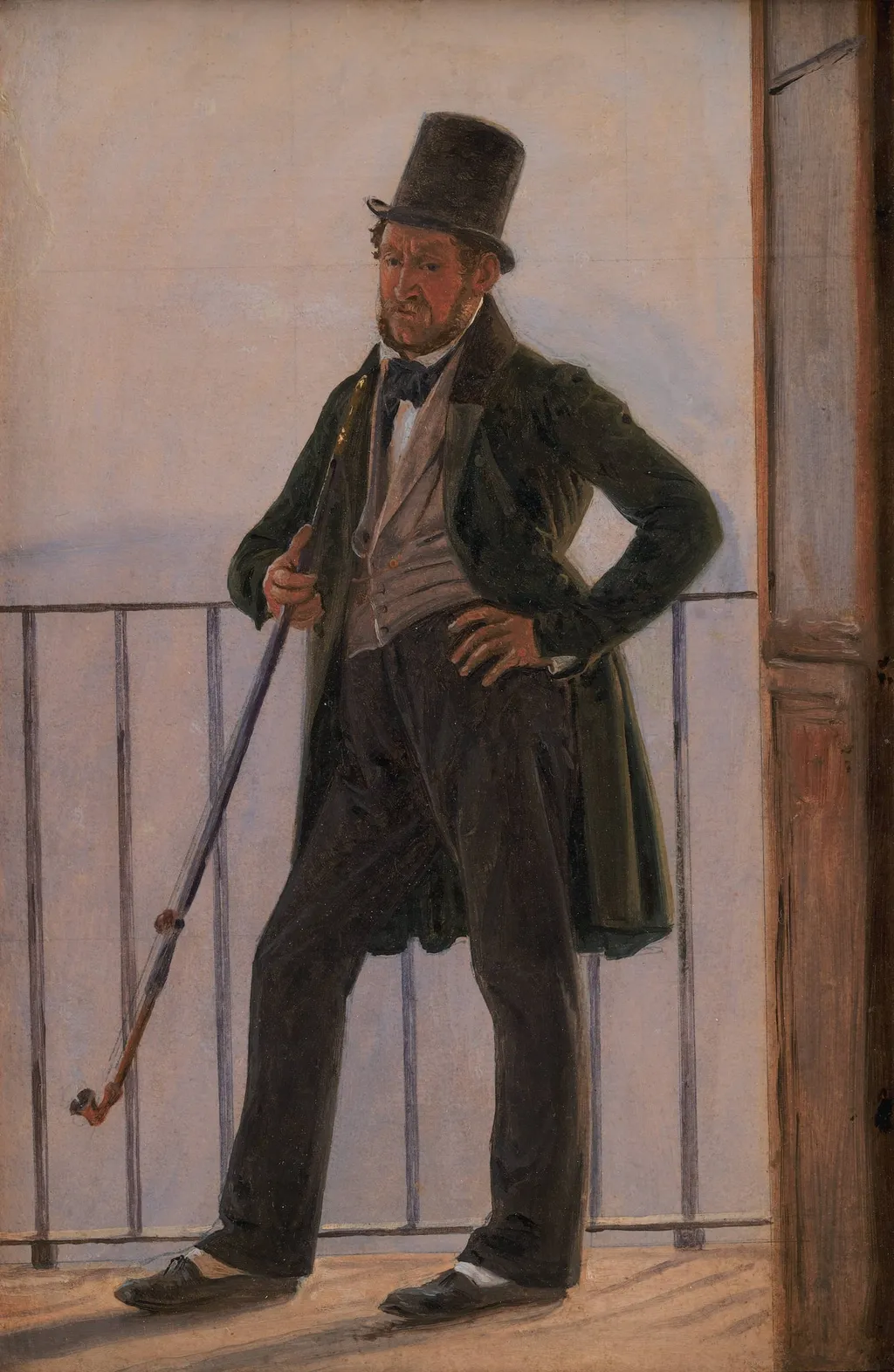
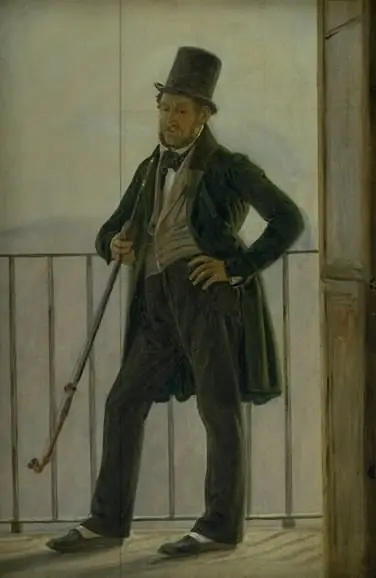
The Painter Albert Küchler is a photography by the Romanticist artist Unknown. It dates from 1837 and is held in the collection of the Statens Museum for Kunst. Painted in 1837, this portrait depicts Albert Küchler, a Danish artist known for his genre scenes and religious subjects.
About this work
Overview
Painted in 1837, this portrait depicts Albert Küchler, a Danish artist known for his genre scenes and religious subjects. The work is attributed to an anonymous contemporary, likely a fellow artist or acquaintance. It resides in the Museum of Ethnography, where it serves as a record of a lesser-known figure in 19th-century Nordic art rather than as a central collection piece.
Subject & Meaning
Küchler is portrayed in formal attire—black top hat, long coat, bow tie, and vest—suggesting his professional identity as a painter. His stance, with one hand on his hip and a cane in the other, conveys quiet authority rather than grandeur. The serious expression and plain background emphasize introspection, aligning with Romantic ideals of individual character over theatrical display.
Technique & Style
The brushwork is deliberately loose and unpolished, with visible strokes that suggest immediacy over finish. This sketch-like quality reflects a preference for expressive truth over academic refinement, common among artists reacting against rigid Neoclassical norms. The muted palette and minimal background focus attention on the figure’s presence and demeanor.
History & Provenance
The painting’s early ownership is undocumented, but it entered the Museum of Ethnography’s collection in the late 19th or early 20th century. Its inclusion there, rather than in a fine arts institution, may reflect its role as a cultural artifact of artistic identity rather than a celebrated work of art at the time of acquisition.
Context
Created during the height of Romanticism in Northern Europe, the portrait aligns with the movement’s interest in individuality and emotional authenticity. Unlike grand historical scenes, it captures a quiet, everyday moment of self-presentation, mirroring broader trends in portraiture that valued psychological depth over social spectacle.
Legacy
Though not widely exhibited outside institutional archives, the portrait remains a tangible link to Küchler’s life and the artistic circles of 1830s Denmark. It offers insight into how artists represented themselves and each other during a period of shifting aesthetic values, preserving a modest but meaningful record of artistic identity.
Artist & collection

 Domestic Scene
 Giacomo and Cardinal Marco, investing Andrea, Abbot of San Zeno, with his Benefice
 The Nymph of Fontainebleau
 Portrait of a Woman
 Madonna and Child with Saints in the Enclosed Garden
 Venus and Minerva
 Family Group of Four on Sofa
 Wall painting from Room H of the Villa of P. Fannius Synistor at Boscoreale
 The Painter Jørgen Sonne
 The Painter Ditlev Blunck
 The Painter Ditlev Blunck
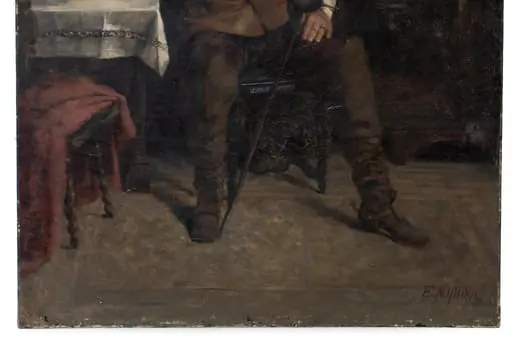 Un cavaler - Porthos
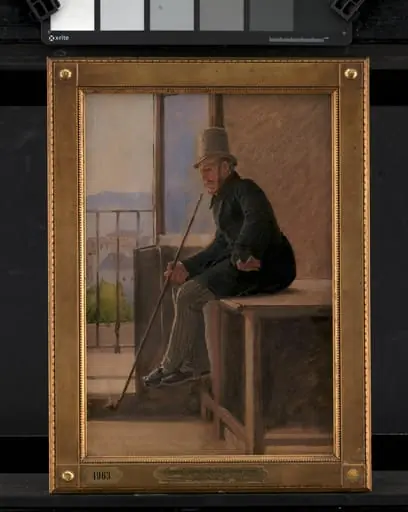 The Painter Jørgen Sonne
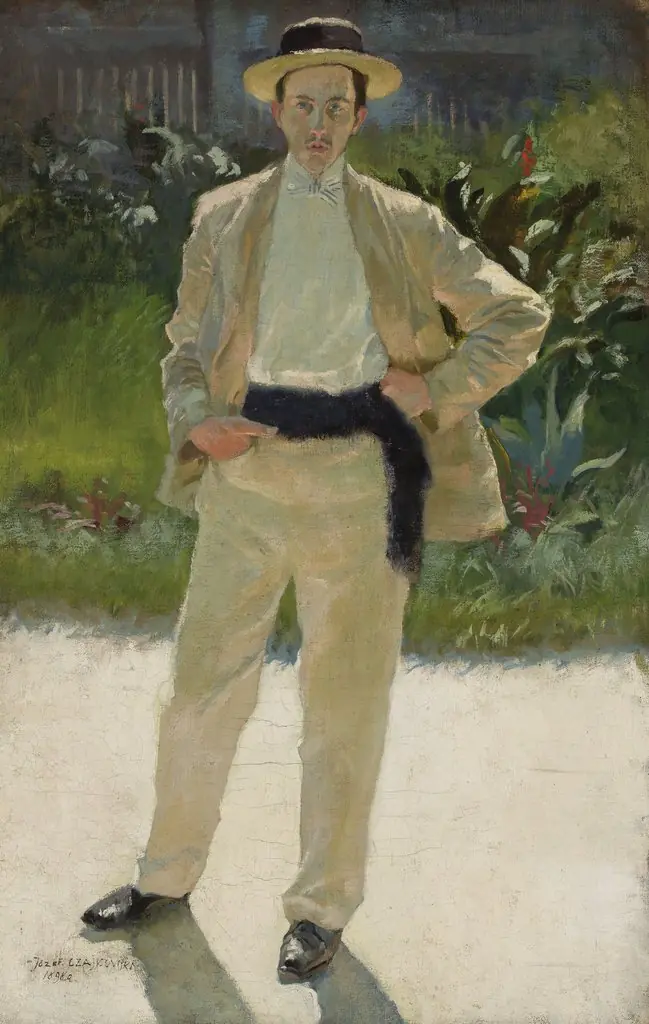 Portrait of Stanisław Czajkowski, painter, artist’s brother
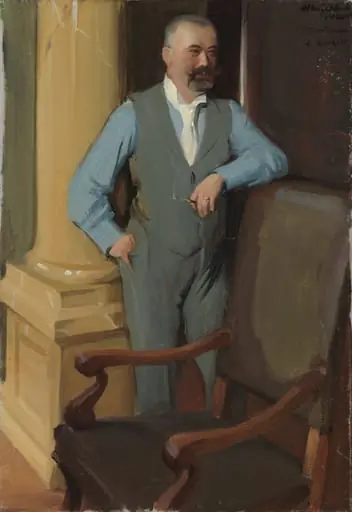 Ruukinpatruuna A.N:son Keirkner, muotokuvaharjoitelma
 Postimies
 The Painter Constantin Hansen
 Portrait of Monsieur Brun
 Albert Edelfelt
 The Painter Albert Küchler