Artwork
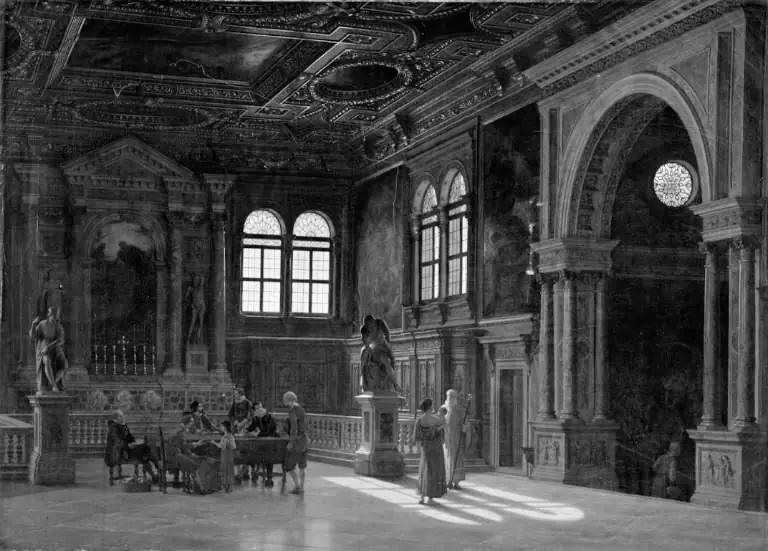
En sal i Dogepaladset i Venedig
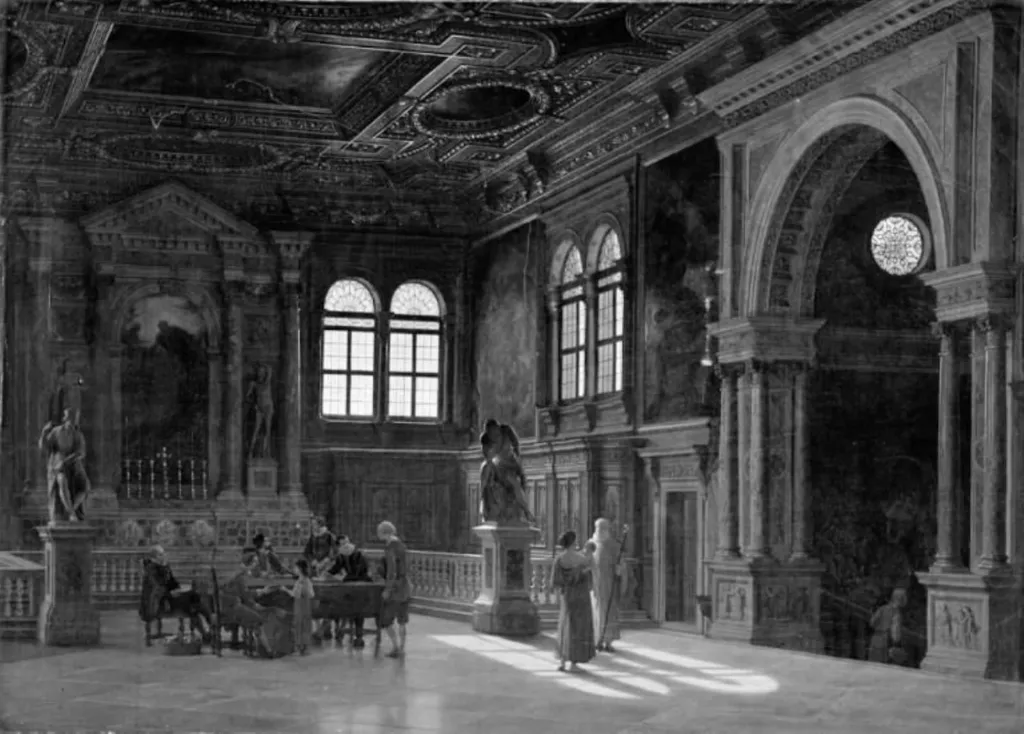
En sal i Dogepaladset i Venedig is a photography by the Impressionist artist Unknown. It dates from 1885 and is held in the collection of the Statens Museum for Kunst. This photograph captures an interior space within the Doge’s Palace in Venice, taken in 1885.
About this work
Overview
The image records the architectural grandeur of the hall with precise detail, including ornate moldings, carved stone panels, and large arched windows.
This photograph captures an interior space within the Doge’s Palace in Venice, taken in 1885. The image records the architectural grandeur of the hall with precise detail, including ornate moldings, carved stone panels, and large arched windows. Figures in 19th-century attire move through the space, suggesting a moment of everyday activity rather than a staged scene. The work is held in the collection of the Museum of Ethnography, where it serves as a documentary record of historical architecture and social life.
Subject & Meaning
The scene depicts a ceremonial hall of the Doge’s Palace, a symbol of Venetian political power. The presence of people in period dress implies a continuation of tradition, though the setting is no longer an active seat of governance. The composition invites contemplation of how public spaces retain cultural memory even after their original function fades. The figures, neither central nor dramatic, ground the image in realism rather than idealization.
Technique & Style
The photograph employs natural light streaming through tall windows to model the architecture in soft contrasts. Shadows deepen the texture of carved stonework and polished floors, enhancing spatial depth. The camera’s fixed perspective emphasizes symmetry and scale, aligning with 19th-century documentary practices. No artificial lighting or staging is evident, reflecting a commitment to recording the space as it appeared in daily use.
History & Provenance
Taken in 1885, the image was likely made during a period of renewed interest in Venice’s historical heritage. It entered the Museum of Ethnography’s collection as part of a broader effort to document global cultural spaces through photography. The work’s preservation reflects early institutional recognition of architectural photography as a tool for anthropological study, rather than mere artistic expression.
Context
In the late 19th century, photography became a key medium for recording historic buildings as Europe underwent rapid modernization. Venice, with its fading republic and growing tourism, was frequently documented by scholars and travelers. This image aligns with efforts to preserve visual records of pre-industrial urban environments, capturing a space that had once been the heart of a maritime empire now reduced to ceremonial use.
Legacy
The photograph remains a valuable reference for architectural historians studying the Doge’s Palace’s interior conditions in the late 1800s. Its unembellished style distinguishes it from romanticized paintings of the same location, offering instead a neutral, observational record. As such, it contributes to ongoing research into how historical spaces were experienced and maintained in the modern era.
Artist & collection

 Domestic Scene
 Giacomo and Cardinal Marco, investing Andrea, Abbot of San Zeno, with his Benefice
 The Nymph of Fontainebleau
 Portrait of a Woman
 Madonna and Child with Saints in the Enclosed Garden
 Venus and Minerva
 Family Group of Four on Sofa
 Wall painting from Room H of the Villa of P. Fannius Synistor at Boscoreale
 Christ Instructing Nicodemus
 Christ Instructing Nicodemus
 Musikalische Unterhaltung
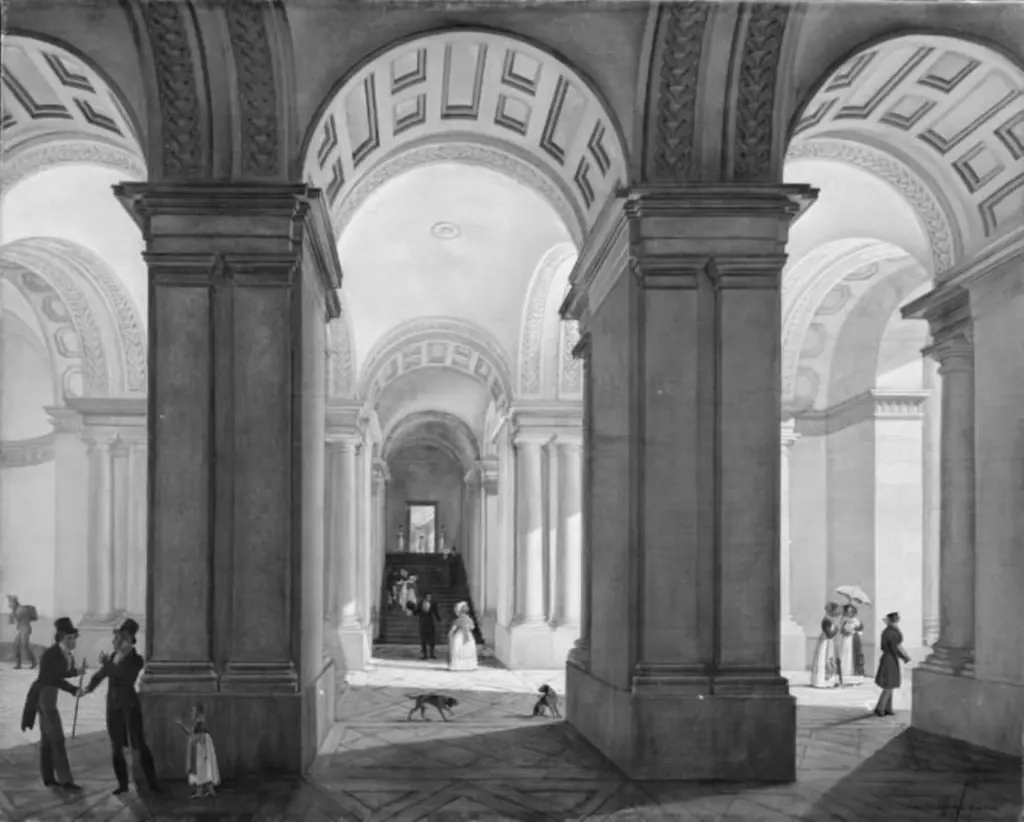 Christiansborg Slots vestibule
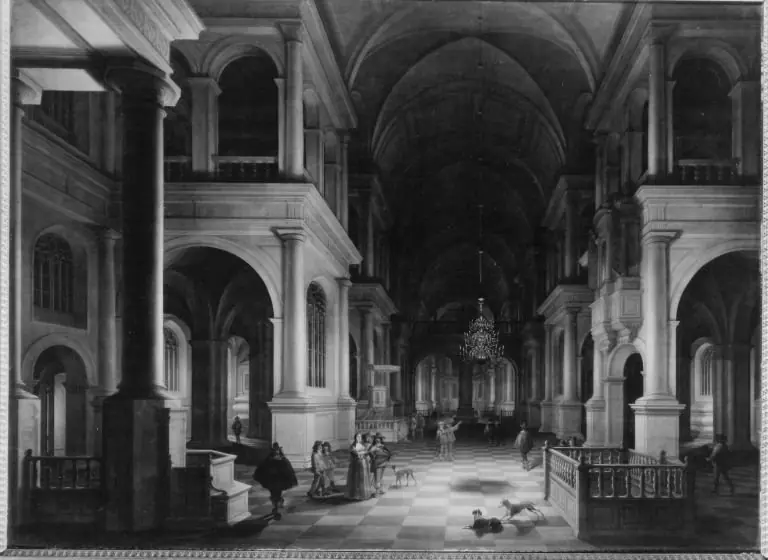 Nächtliches Interieur einer Kirche im Renaissancestil
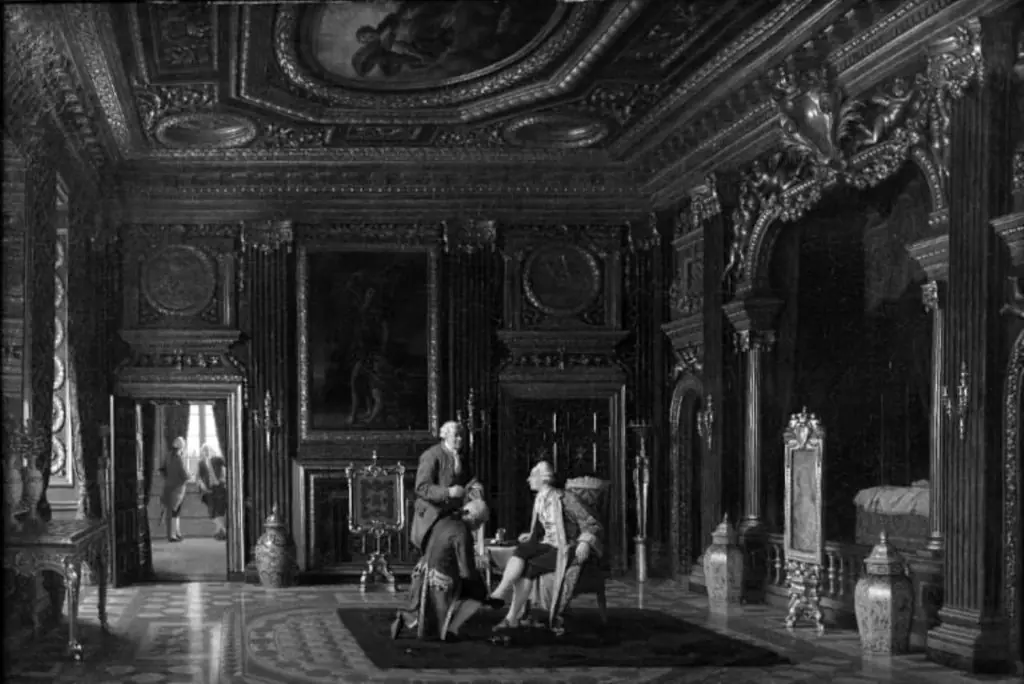 Gustav III's soveværelse på Drottningholm
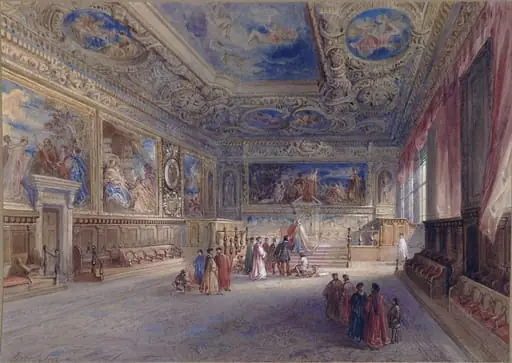 The hall of the council, Doge's Palace, Venice
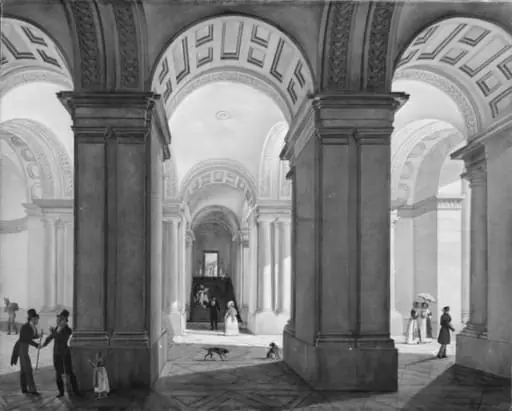 The Vestibule of Christiansborg Palace
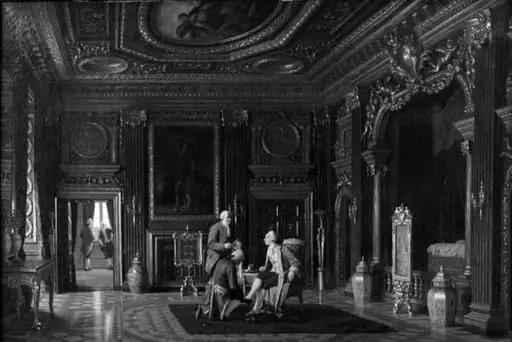 Gustav III's soveværelse på Drottningholm
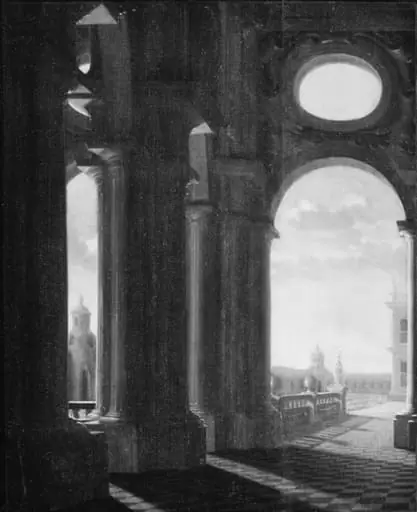 A Colonnade
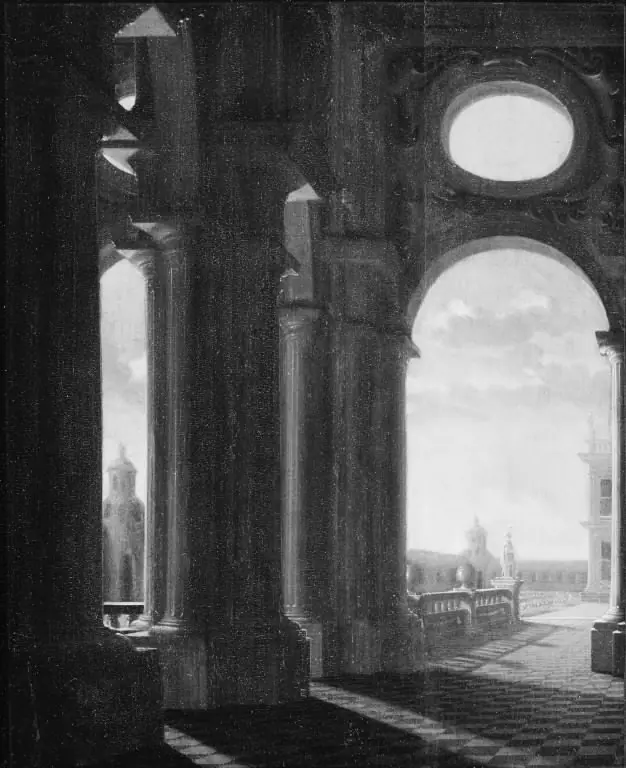 A Colonnade
 En sal i Dogepaladset i Venedig