Artwork
A Colonnade
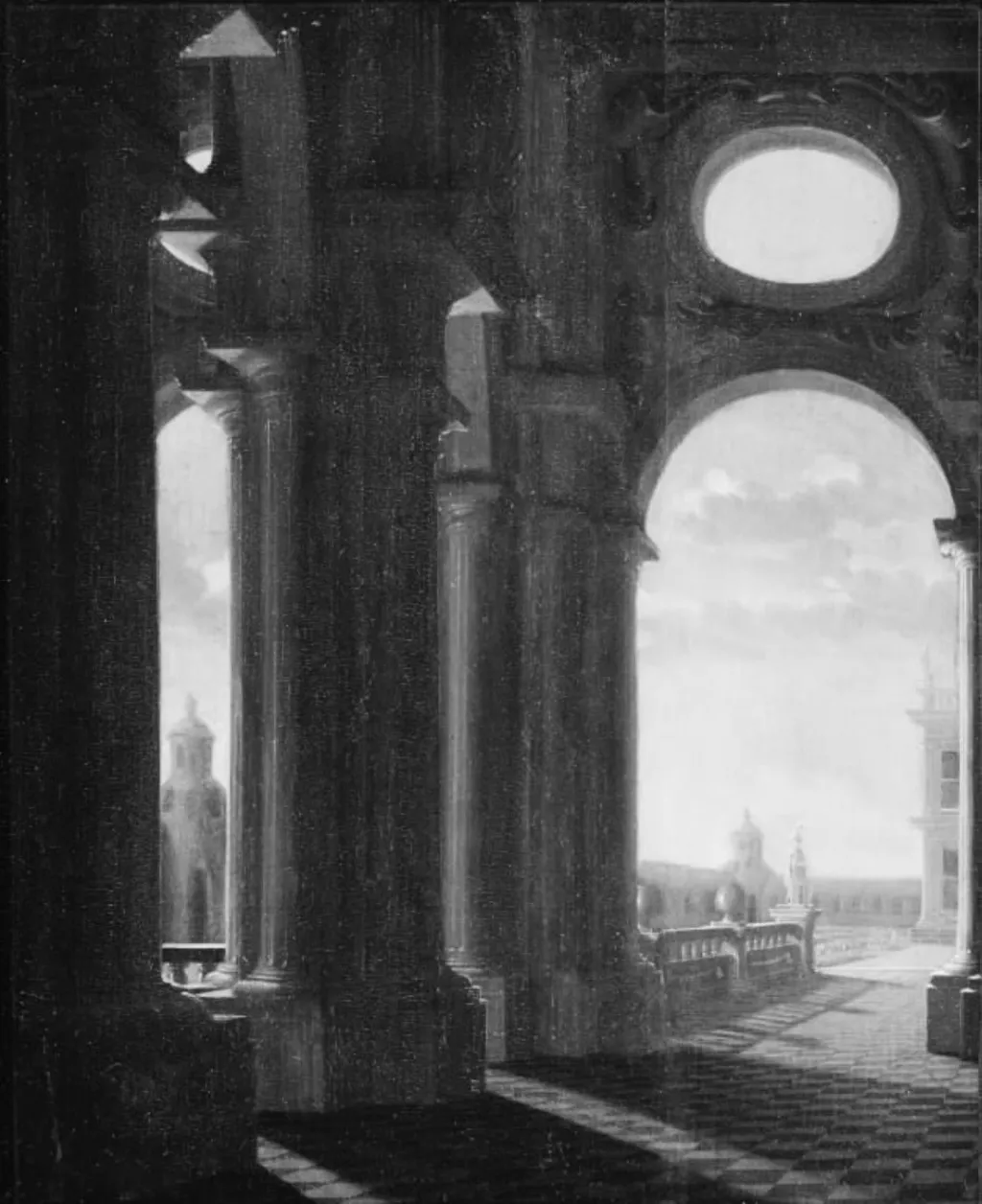
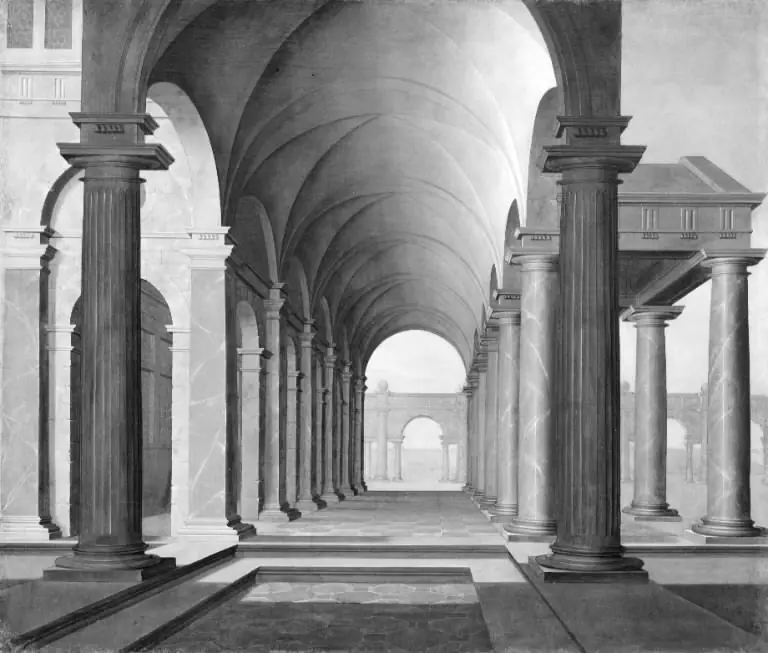
A Colonnade is a photography by the Baroque artist Unknown. It dates from 1658 and is held in the collection of the Statens Museum for Kunst. Created in 1658 by 38091_person, this image depicts a sequence of tall, dark columns framing a luminous exterior view.
About this work
Overview
Created in 1658 by 38091_person, this image depicts a sequence of tall, dark columns framing a luminous exterior view. The work is part of the Museum of Ethnography’s collection. The composition emphasizes a stark division between the shadowed interior space and the brightly lit landscape beyond, using contrast to structure the viewer’s perception of depth and atmosphere.
Subject & Meaning
The colonnade serves as a threshold between enclosed space and the open world beyond. The architectural frame directs attention to distant elements—a bridge, buildings, and a dome—suggesting a passage from the artificial to the natural or civic realm. The absence of human figures heightens the sense of quiet observation, inviting contemplation of space and perspective rather than narrative.
Technique & Style
The artist employs strong chiaroscuro to define form and spatial depth. The dark, solid columns contrast sharply with the radiant exterior, achieved through careful modulation of tone rather than color. This method, common in 17th-century visual practice, uses light not merely for illumination but as a compositional force to guide the eye and evoke atmosphere.
History & Provenance
The work has been held since its creation by the Museum of Ethnography, though its original context or commission remains undocumented. Its survival into the modern era suggests it was preserved as a study or record of architectural form and light, possibly linked to scholarly or artistic circles interested in perspective and spatial representation.
Context
In mid-17th-century Europe, artists increasingly explored the interplay of interior and exterior spaces, often using architecture to frame views and manipulate light. This image aligns with broader trends in Northern European painting, where controlled lighting and architectural order conveyed intellectual and aesthetic ideals, even in non-narrative compositions.
Legacy
The image endures as an example of how light and structure could be used to evoke spatial complexity without figural drama. Its quiet precision influenced later studies of architectural perspective and the psychological effects of light in visual art, contributing to a tradition that valued subtlety over spectacle.
Artist & collection

 Domestic Scene
 Giacomo and Cardinal Marco, investing Andrea, Abbot of San Zeno, with his Benefice
 The Nymph of Fontainebleau
 Portrait of a Woman
 Madonna and Child with Saints in the Enclosed Garden
 Venus and Minerva
 Family Group of Four on Sofa
 Wall painting from Room H of the Villa of P. Fannius Synistor at Boscoreale