Artwork
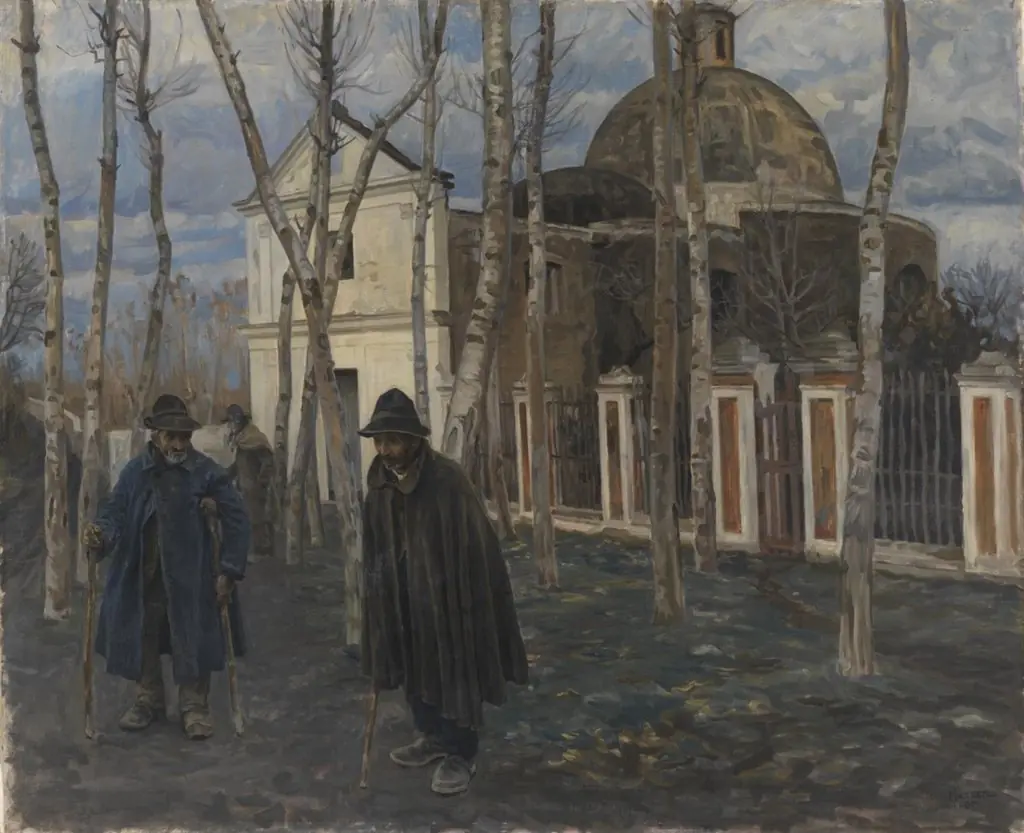
Beggars outside S. Giuliano, near Pompeii. 1904-05
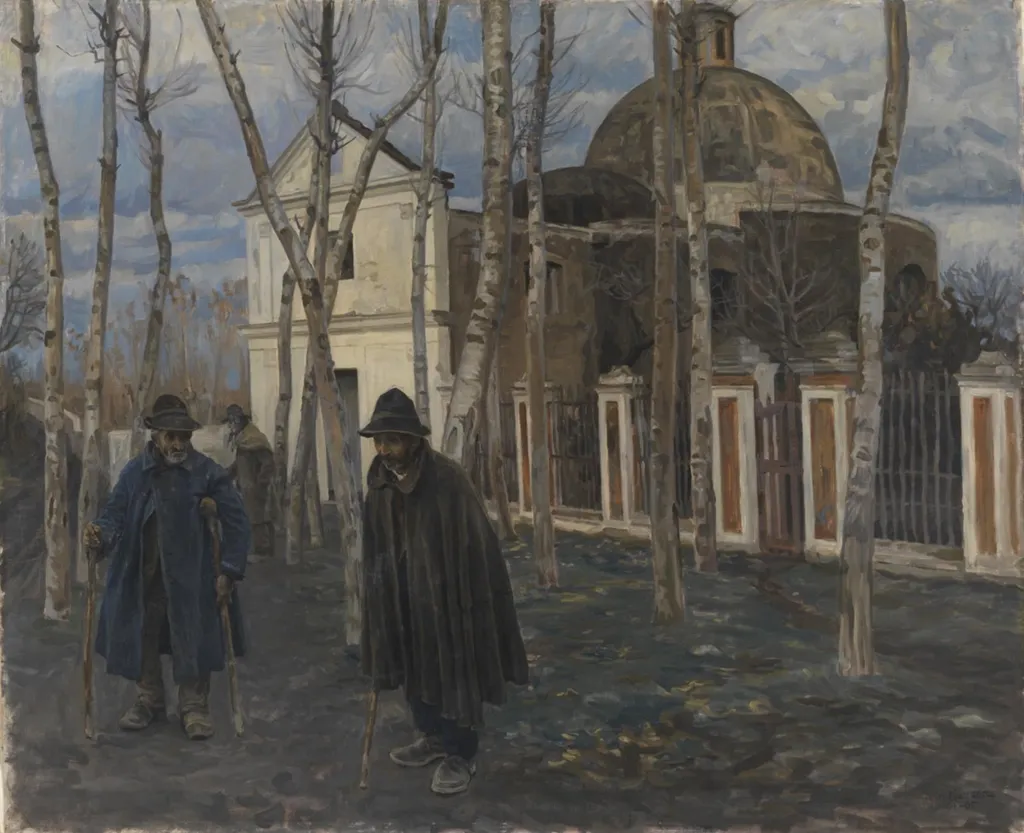
Beggars outside S. Giuliano, near Pompeii. 1904-05 is a photography by Unknown. It dates from 1904 and is held in the collection of the Statens Museum for Kunst. Painted between 1904 and 1905, this work depicts a quiet, wintry scene outside the church of S.
About this work
Overview
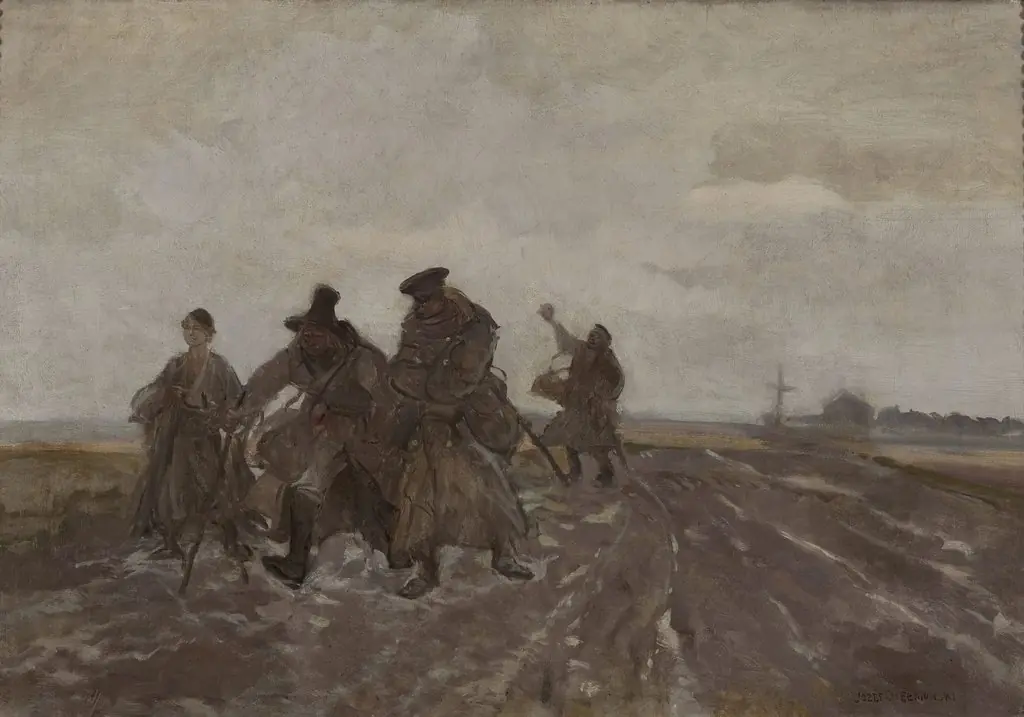
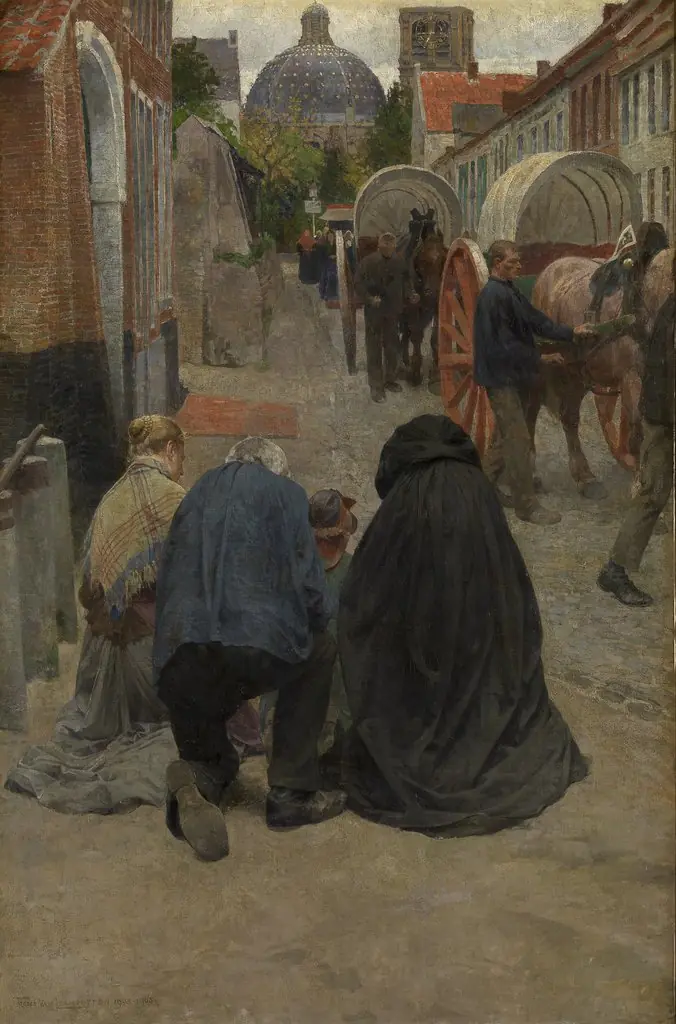
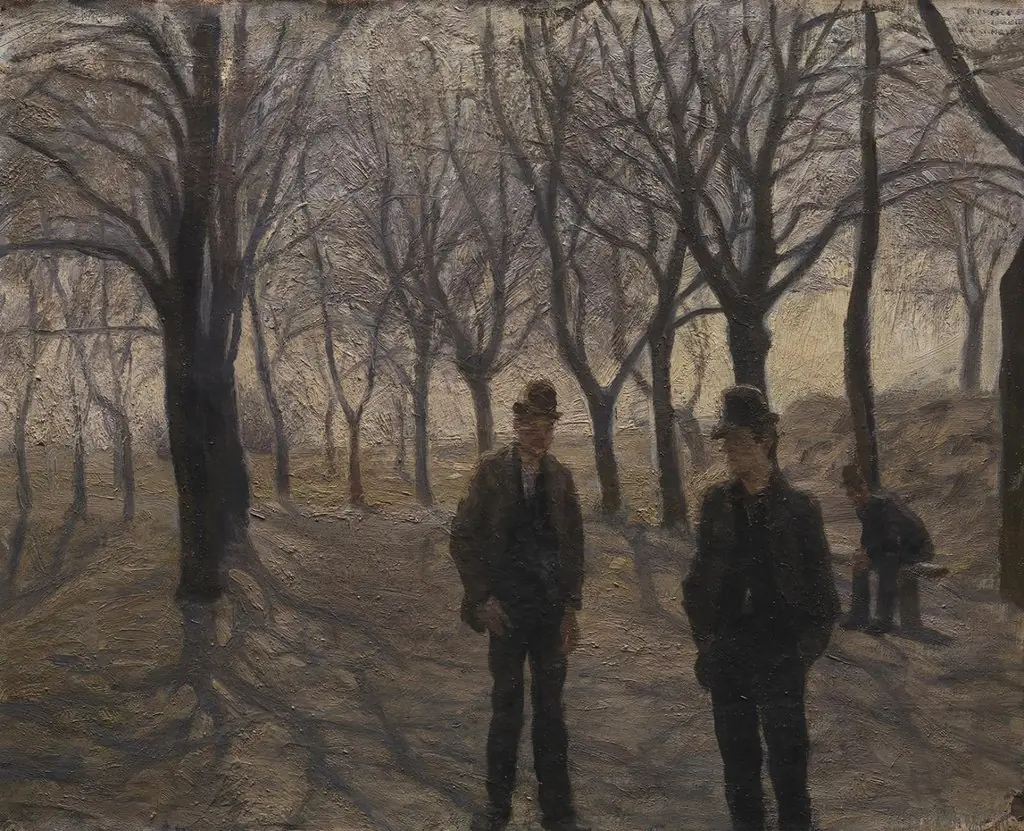
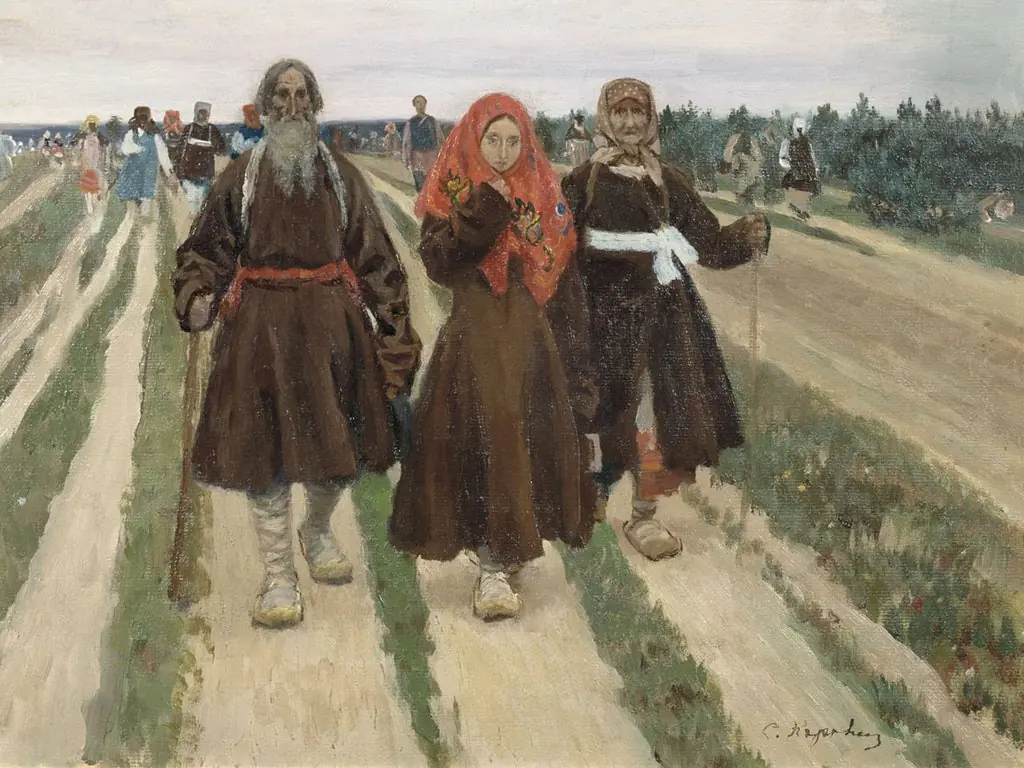
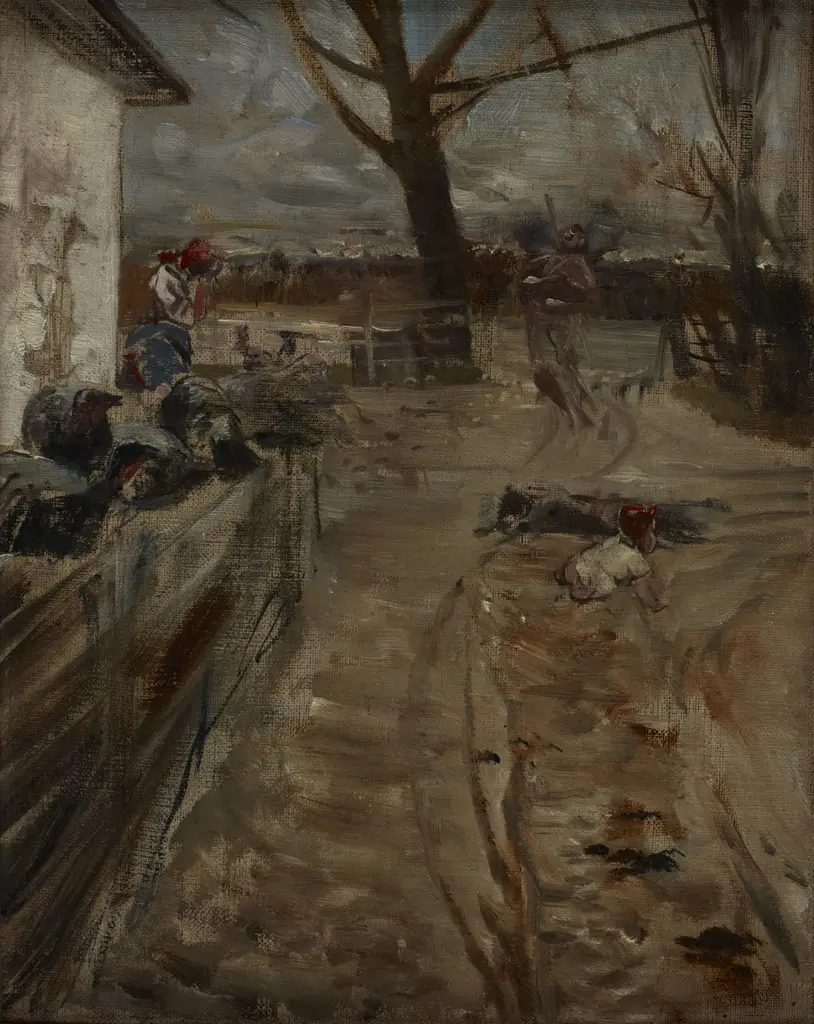
It captures three figures in worn clothing, standing in a muddy courtyard under bare trees and a pale sky.
Painted between 1904 and 1905, this work depicts a quiet, wintry scene outside the church of S. Giuliano near Pompeii. It captures three figures in worn clothing, standing in a muddy courtyard under bare trees and a pale sky. The painting is held in the Museum of Ethnography and reflects the artist’s interest in everyday life in southern Italy during the early 20th century, rendered with a focus on texture and atmosphere rather than narrative.
Subject & Meaning
The three figures—each isolated in posture and gesture—suggest vulnerability and endurance. One leans on a cane, another clutches a bundle, and the third stands apart, detached. Their presence against the decaying church wall implies a contrast between spiritual architecture and human hardship. The scene avoids sentimentality, instead presenting dignity in stillness and the quiet persistence of poverty in a landscape marked by time and neglect.
Technique & Style
Thick, textured brushwork defines the heavy coats and uneven ground, using impasto to convey the physical weight of fabric and mud. The building’s cracked walls and peeling doors are rendered with layered strokes that emphasize erosion and age. Light falls unevenly across the façade, deepening shadows and highlighting weathered surfaces. The palette is muted—grays, browns, and dull reds—reinforcing the cold, subdued tone of the winter day.
History & Provenance
The painting was created during the artist’s travels in southern Italy, where he observed rural and marginalized communities. It entered the Museum of Ethnography’s collection in the early 20th century, likely acquired as part of a broader effort to document regional life. Its preservation reflects an interest in ethnographic realism rather than aesthetic idealization, aligning with scholarly collecting practices of the period.
Context
At the turn of the century, artists increasingly turned to everyday subjects outside urban centers, drawn to the rawness of rural existence. This work aligns with a broader movement in Italian art that sought to portray the lives of the poor without romanticism. The proximity to Pompeii—a site of ancient ruin—adds an implicit layer of historical continuity, where human struggle endures across centuries.
Legacy
Though not widely exhibited, the painting remains a quiet example of early 20th-century Italian realism. Its emphasis on material texture and emotional restraint influenced later artists interested in social observation over dramatic narrative. It continues to be studied for its unembellished portrayal of marginal lives and its technical use of impasto to convey environmental and human wear.
Artist & collection

 Domestic Scene
 Giacomo and Cardinal Marco, investing Andrea, Abbot of San Zeno, with his Benefice
 The Nymph of Fontainebleau
 Portrait of a Woman
 Madonna and Child with Saints in the Enclosed Garden
 Venus and Minerva
 Family Group of Four on Sofa
 Wall painting from Room H of the Villa of P. Fannius Synistor at Boscoreale