Artwork
Arrival of the Procession
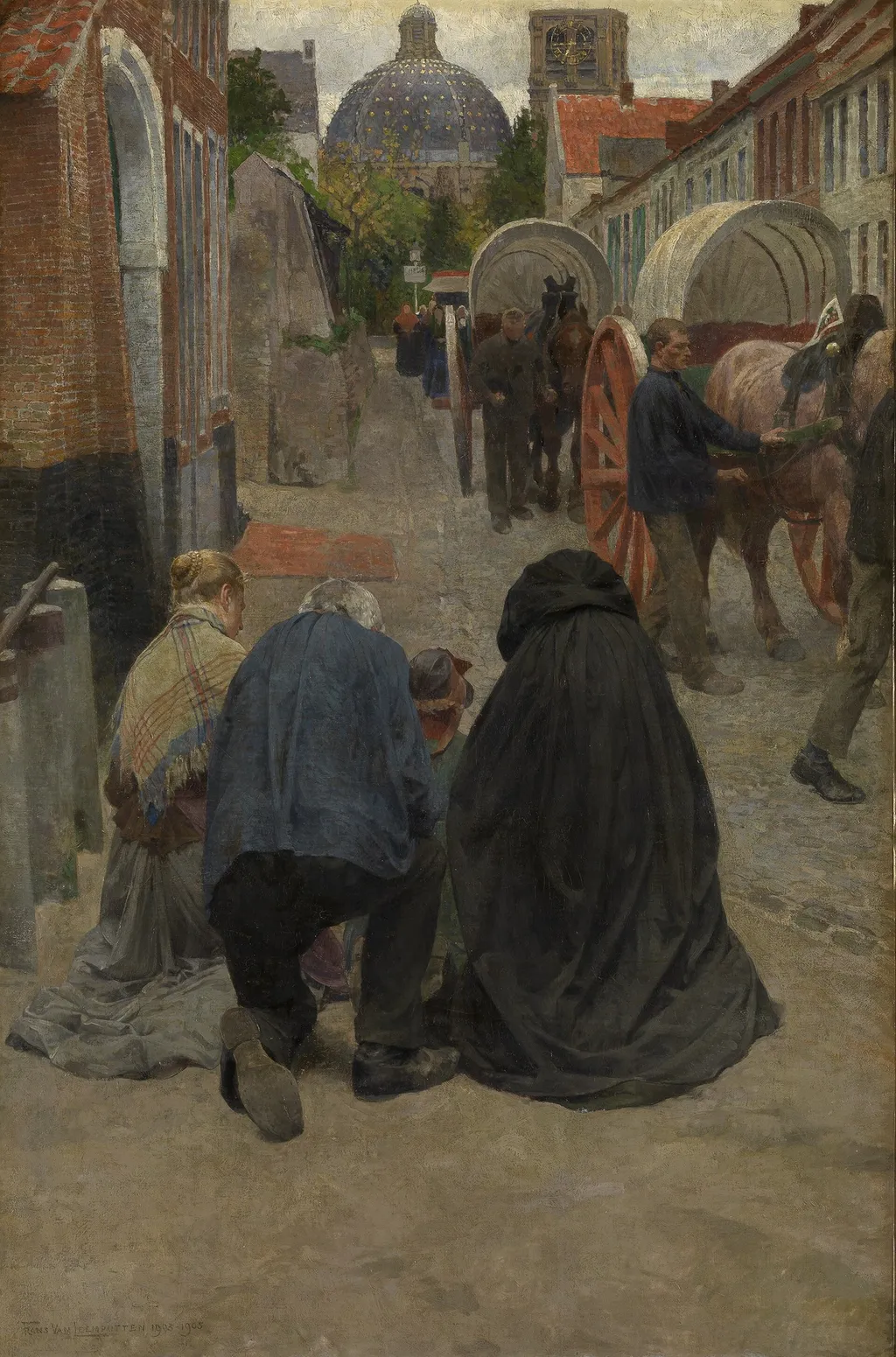
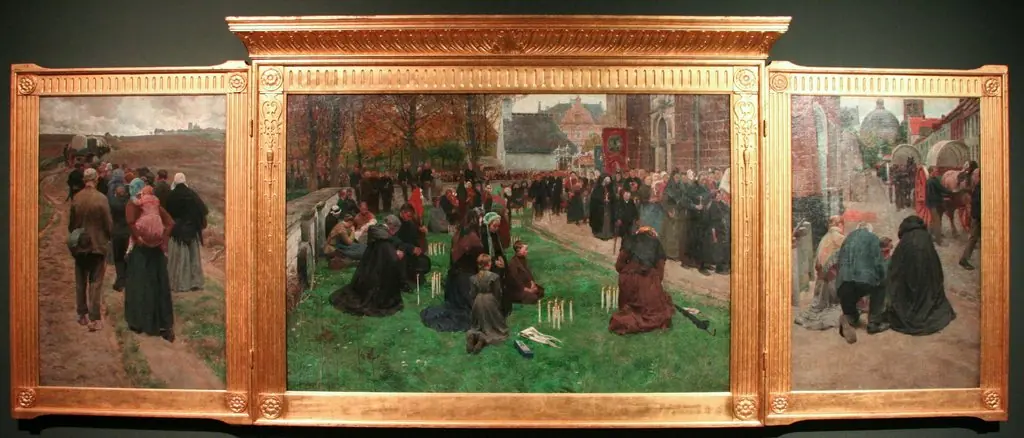
Arrival of the Procession is an oil painting by the Post-Impressionist artist Frans van Leemputten. It dates from 1904 and is held in the collection of the Royal Museum of Fine Arts Antwerp.
About this work
Overview
Van Leemputten, known for his depictions of everyday life in the Campine region, focused here on collective anticipation rather than ceremonial spectacle.
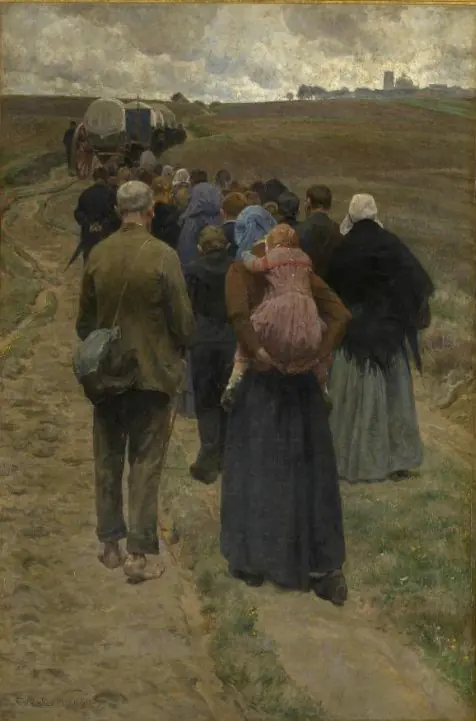
Frans van Leemputten painted *Arrival of the Procession* in 1904 using oil on canvas. The work captures a quiet moment in a rural Belgian village as a religious or civic procession approaches. Van Leemputten, known for his depictions of everyday life in the Campine region, focused here on collective anticipation rather than ceremonial spectacle. The painting resides in the Royal Museum of Fine Arts Antwerp, reflecting its significance in regional art history.
Subject & Meaning
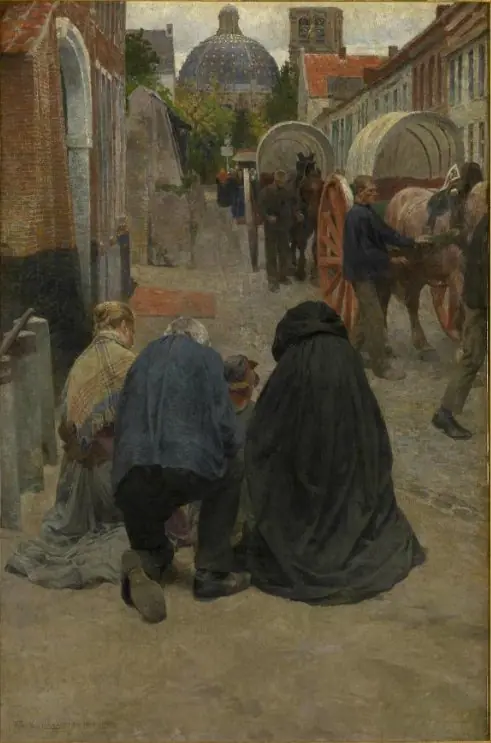
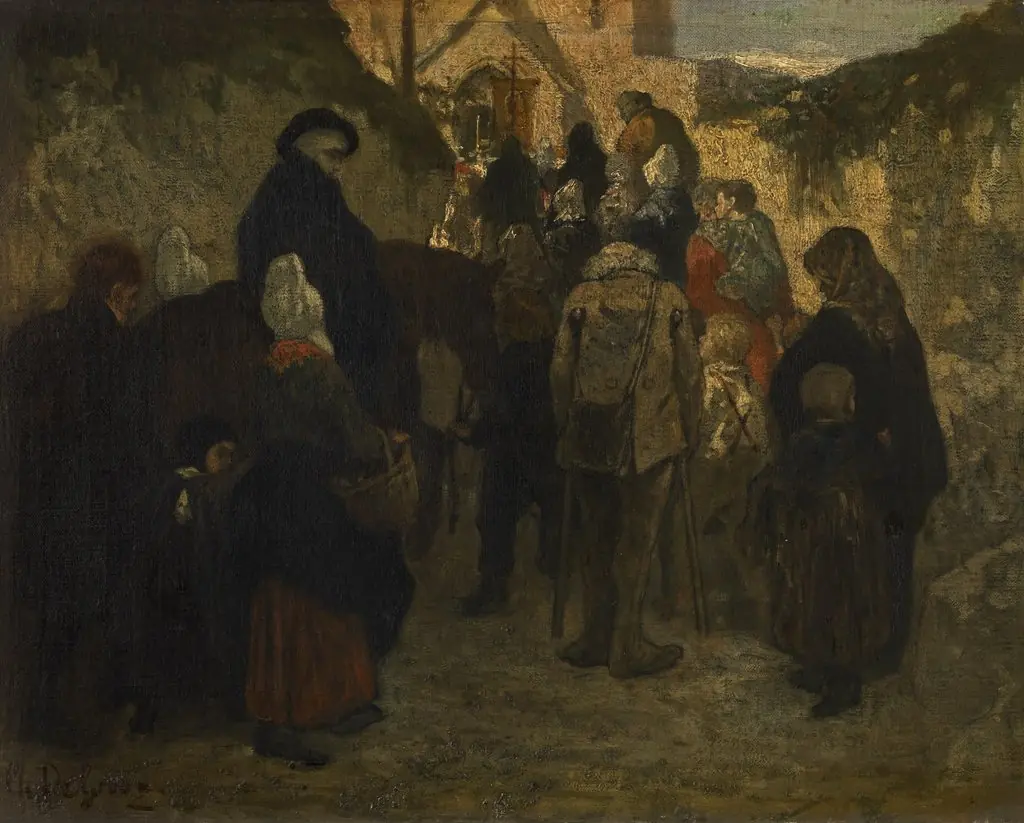
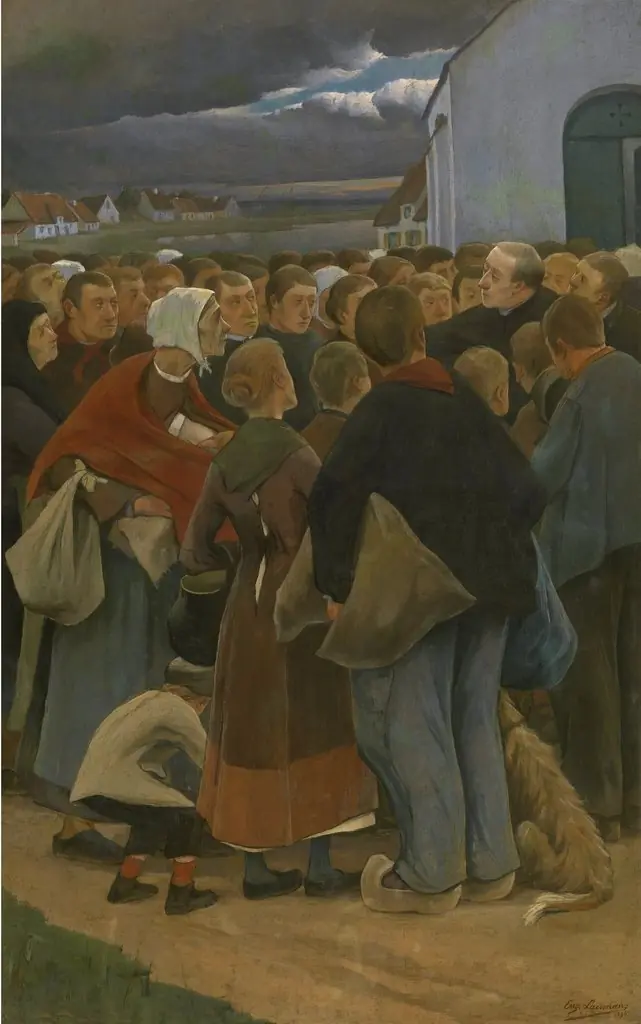
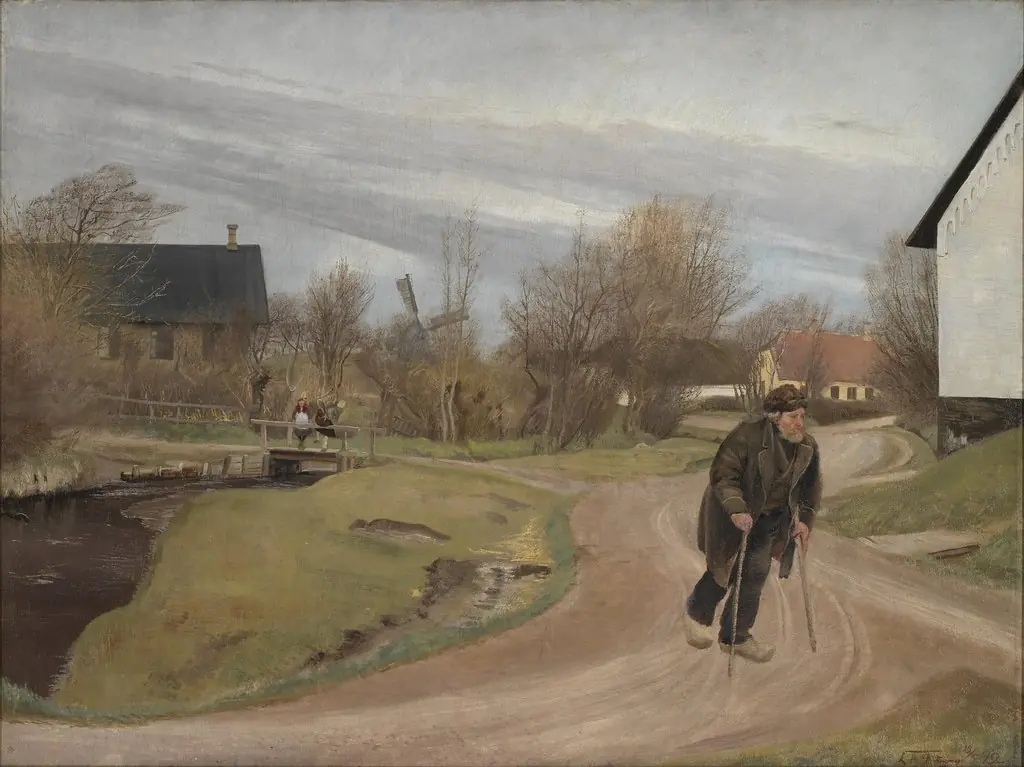
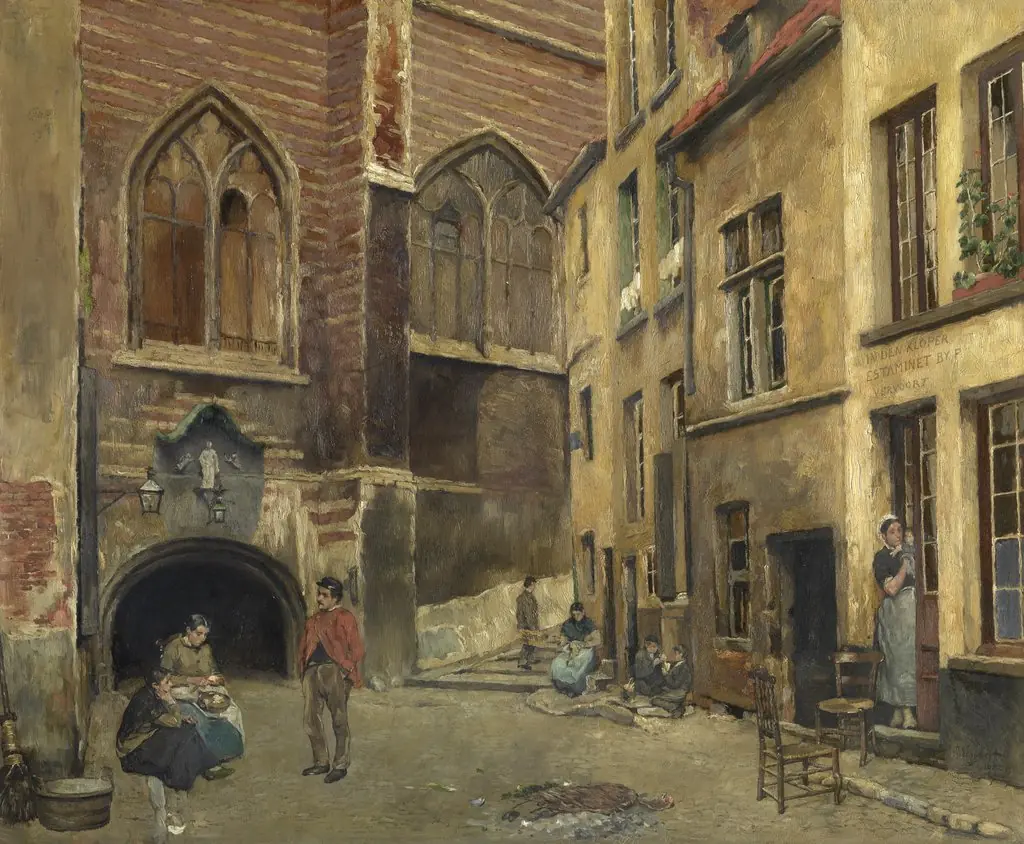
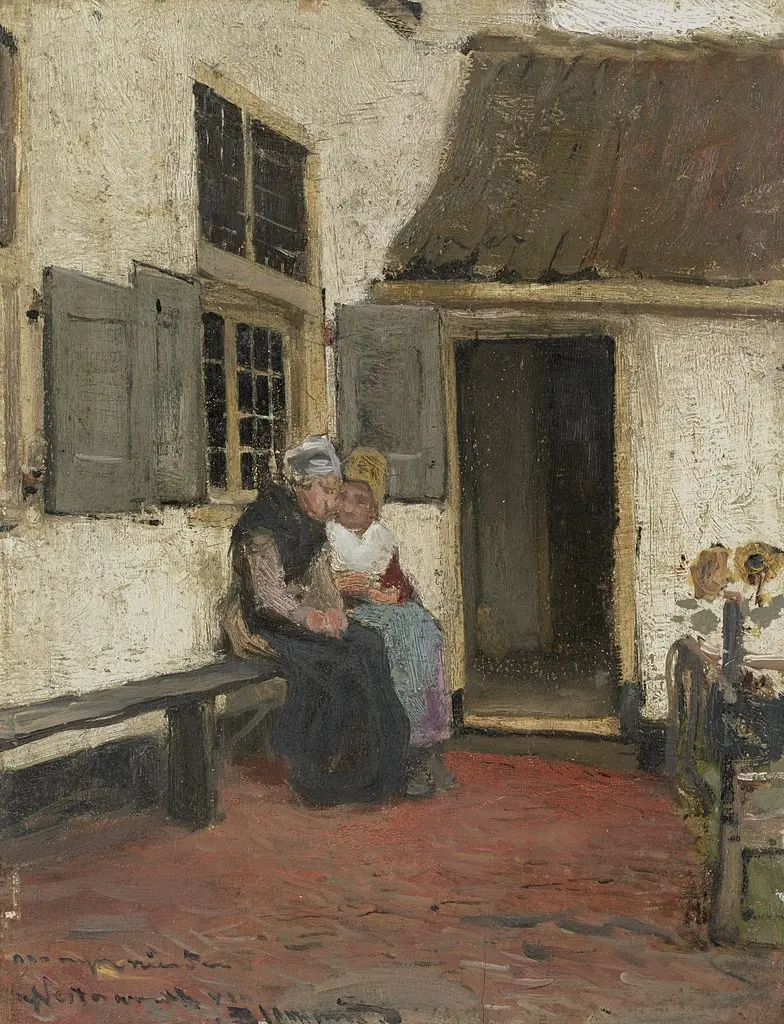
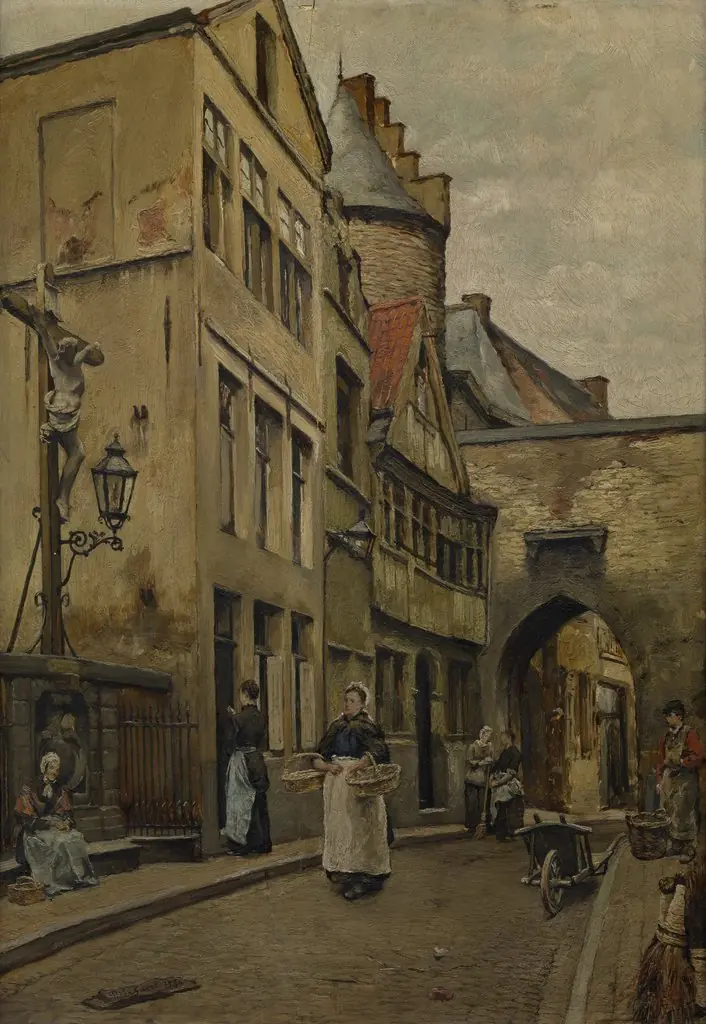
The scene portrays villagers gathered along a street, awaiting the arrival of a procession. Figures are arranged in a loose, naturalistic grouping, with no single focal point. A woman kneels in the foreground, suggesting devotion or humility, while a man beside her stands alert. The absence of the procession itself heightens the sense of suspended expectation, emphasizing communal ritual over its visual climax.
Technique & Style
Van Leemputten employed loose, visible brushwork to convey movement and atmosphere, aligning with Post-Impressionist tendencies. The palette is restrained, dominated by earthy browns, grays, and muted greens, reinforcing the somber tone of rural life. Light falls evenly across the scene, avoiding dramatic contrasts, while the composition directs attention toward the distant domed structure, hinting at the procession’s destination.
History & Provenance
Painted in 1904, the work entered the collection of the Royal Museum of Fine Arts Antwerp shortly after its completion. Van Leemputten’s focus on regional life earned him recognition in Belgian art circles, and this painting reflects his consistent interest in documenting local customs. Its preservation in a major public institution underscores its value as a record of early 20th-century rural Belgium.
Context
In early 1900s Belgium, rural communities maintained strong religious and seasonal traditions. Van Leemputten’s choice to depict a procession reflects a broader cultural interest in preserving vanishing customs amid industrialization. Unlike urban-focused artists, he turned to the countryside, portraying quiet dignity in ordinary moments, offering a counterpoint to the era’s rapid modernization.
Legacy
Though not widely known outside Belgium, *Arrival of the Procession* remains a representative example of regional Realism infused with Post-Impressionist technique. It contributes to the understanding of how Belgian artists documented social rituals with empathy and restraint. The painting continues to inform scholarly study of rural identity and visual culture in pre-war Europe.
Artist & collection
Artist
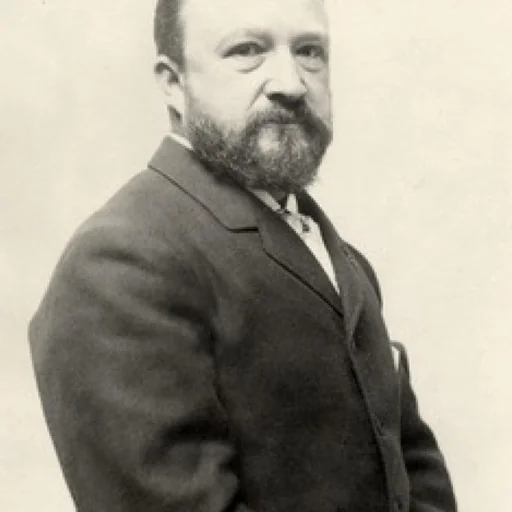
Frans Van Leemputten or Frans van Leemputten (29 December 1850 – 26 November 1914) was a Belgian Realist painter who specialized in landscape paintings of the Campine and Brabantine regions in Belgium as well as scenes with villagers and…