Artwork
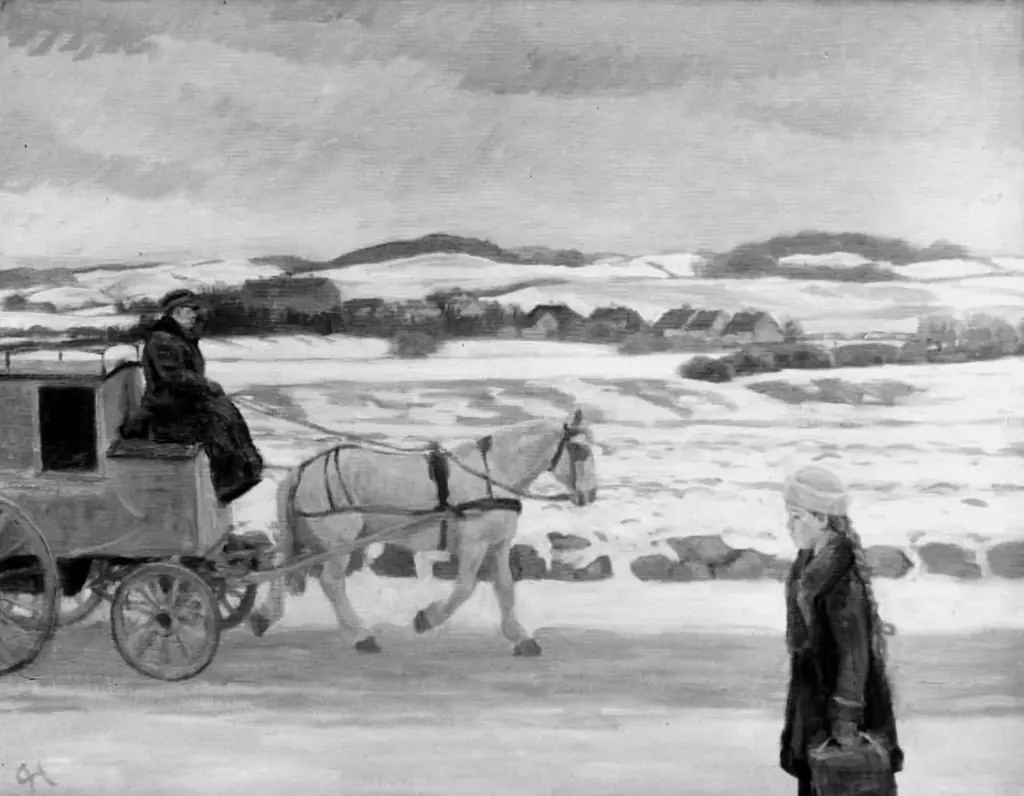
Postvognen. Assens Landevej
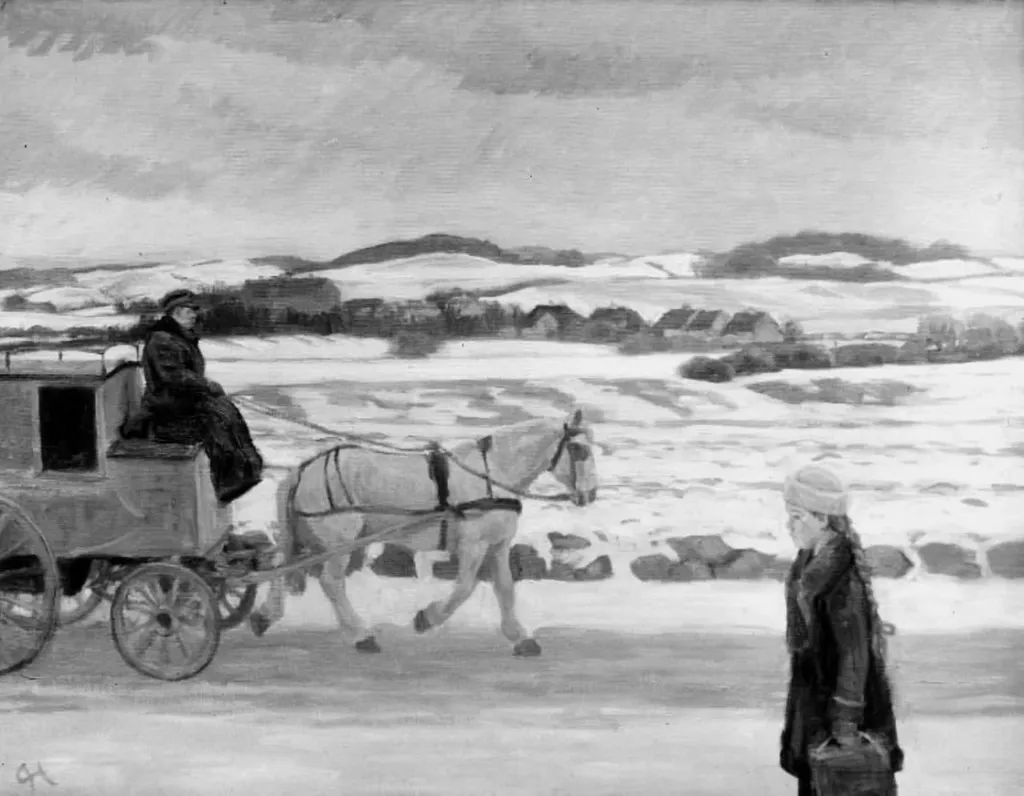
Postvognen. Assens Landevej is a photography by Unknown. It dates from 1917 and is held in the collection of the Statens Museum for Kunst. This black-and-white photograph, dated 1917, captures a rural Danish winter scene along the Assens Road.
About this work
Overview
This black-and-white photograph, dated 1917, captures a rural Danish winter scene along the Assens Road.
This black-and-white photograph, dated 1917, captures a rural Danish winter scene along the Assens Road. It depicts a horse-drawn postal wagon halted in snow-covered terrain, with two figures present: one seated as driver, another standing nearby in heavy winter attire. The image is held in the collection of the Museum of Ethnography, reflecting its documentary value in recording everyday transport and rural life in early 20th-century Denmark.
Subject & Meaning
The scene portrays a moment of pause in the routine of rural postal delivery, emphasizing the quiet endurance of seasonal labor. The presence of the wagon and its occupants suggests the persistence of traditional transport methods before motorization. The stillness of the landscape and the bundled figures convey the physical demands of winter travel, grounding the image in the rhythms of provincial life rather than grand narrative.
Technique & Style
The photograph employs natural lighting to render the snowy landscape in subtle tonal gradations. Shadows cast by the wagon and figures enhance spatial depth, while the breath of the horses, faintly visible in the cold air, adds a transient, human detail. The composition is unembellished, favoring clarity and atmospheric realism over dramatic effect, characteristic of documentary photography of the period.
History & Provenance
Created in 1917 by an unnamed photographer, the image entered the Museum of Ethnography’s collection as part of a broader effort to preserve visual records of Danish rural culture. Its preservation reflects early 20th-century interest in ethnographic documentation, where photography served as a tool for recording vanishing modes of life, particularly in outlying regions like Funen.
Context
In 1917, Denmark’s rural areas still relied heavily on horse-drawn transport for mail and goods, especially in winter when roads were impassable for motor vehicles. This image aligns with a national movement to document folk traditions and regional livelihoods, occurring alongside broader European efforts to archive cultural practices threatened by industrialization and modernization.
Legacy
The photograph remains a quiet testament to pre-motorized rural Denmark, valued for its unvarnished depiction of daily life. It contributes to historical understanding of transportation, climate adaptation, and social structure in early 20th-century Denmark, serving as a reference for scholars studying the transition from agrarian to modern society.
Artist & collection

 Domestic Scene
 Giacomo and Cardinal Marco, investing Andrea, Abbot of San Zeno, with his Benefice
 The Nymph of Fontainebleau
 Portrait of a Woman
 Madonna and Child with Saints in the Enclosed Garden
 Venus and Minerva
 Family Group of Four on Sofa
 Wall painting from Room H of the Villa of P. Fannius Synistor at Boscoreale
 Sunny Winter Day in Dalecarlia
 Sunny Winter Day in Dalecarlia
 In a Polish Village
 The Plains of Hungary
 En hestevogn i en grusgrav
 En hestevogn i en grusgrav
 Winterlandscape in Gentofte with Copenhagen in the Distance
 The Beginning of Winter
 The Beginning of Winter
 The sleighing to Fussingöe
 Winterlandscape in Gentofte with Copenhagen in the Distance
 Postvognen. Assens Landevej