Artwork
Landscape with a Bull, Sheep and Goats
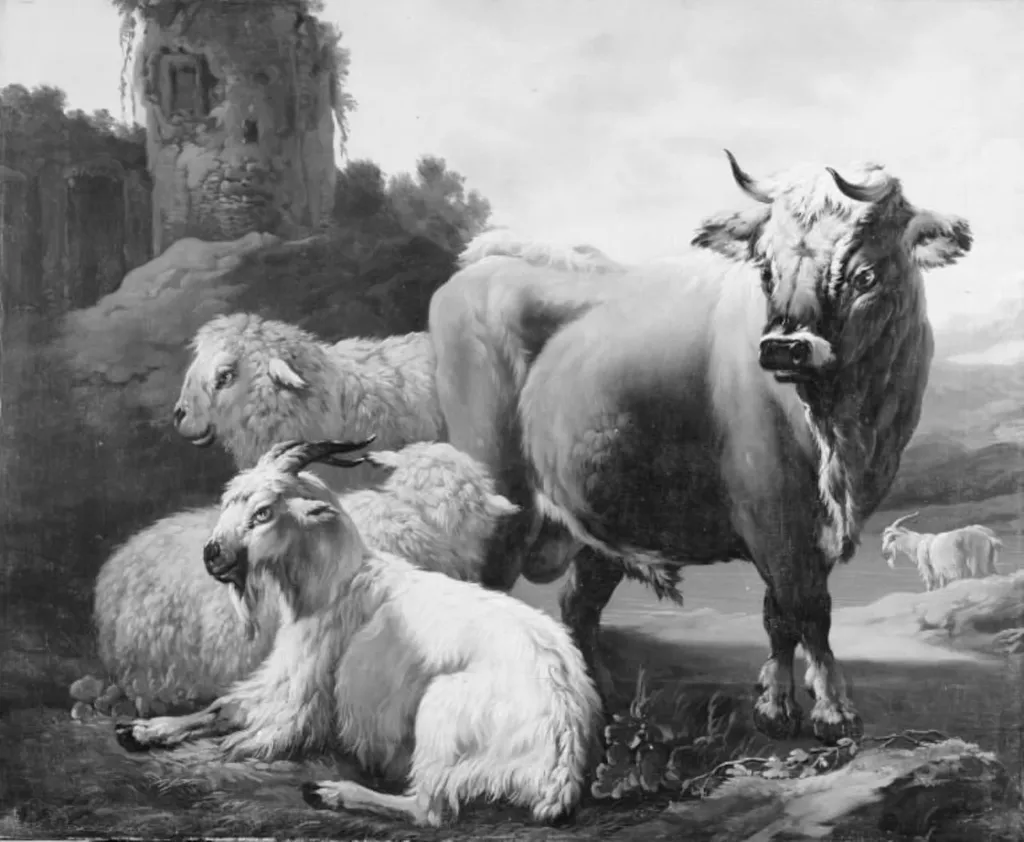
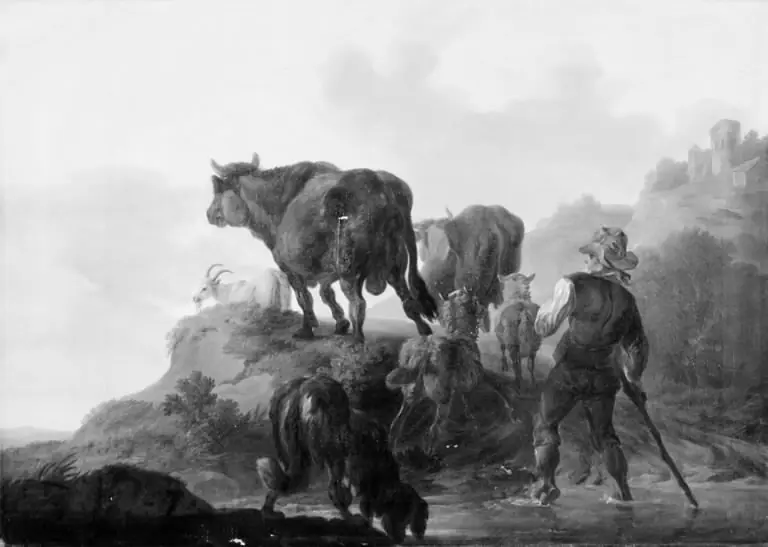
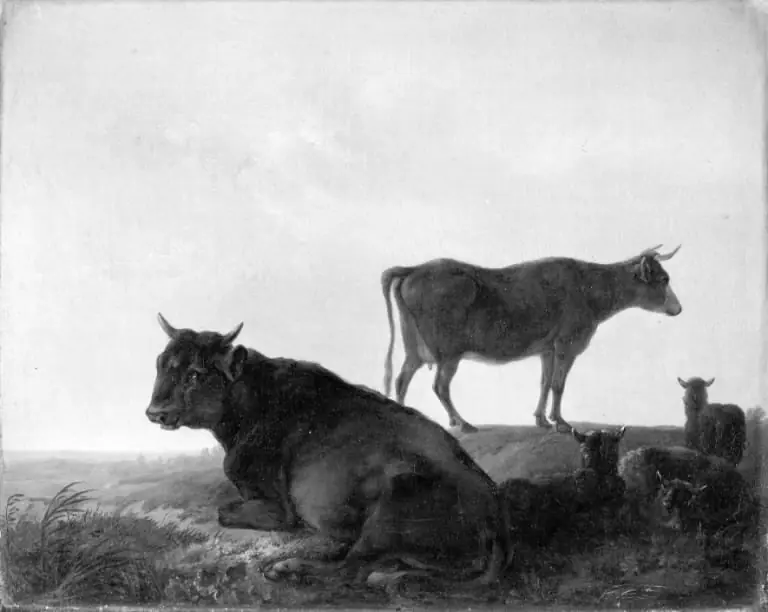
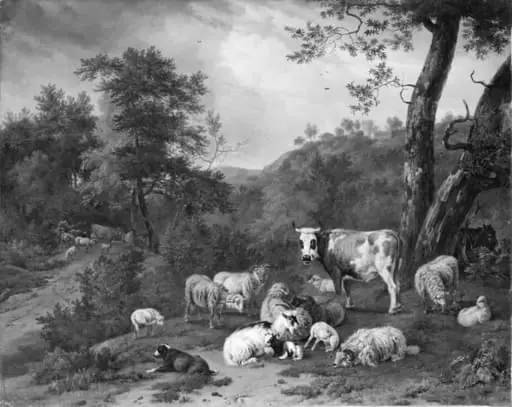
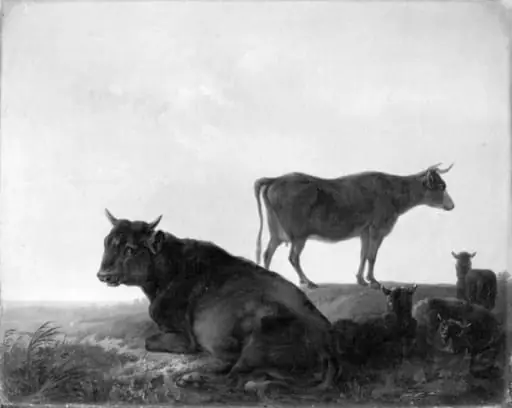
Landscape with a Bull, Sheep and Goats is an unspecified painting by Unknown. It dates from 1688 and is held in the collection of the Statens Museum for Kunst. Painted around 1688, this landscape depicts a bull flanked by sheep and a goat in a rugged natural setting.
About this work
Overview
Painted around 1688, this landscape depicts a bull flanked by sheep and a goat in a rugged natural setting. The work is attributed to an artist active in the late 17th century, though the identity remains uncertain. It is currently held in the collection of the Museum of Ethnography, where it is preserved as an example of early pastoral imagery in European painting.
Subject & Meaning
The composition centers on a vigilant bull, its posture suggesting alertness, while the sheep and goat appear at rest. This contrast may reflect a quiet observation of animal behavior rather than symbolic narrative. The scene avoids human presence, focusing instead on the dignity and stillness of livestock within an untamed environment, possibly evoking themes of rural life or natural order.
Technique & Style
This handling suggests a focus on material presence over idealized beauty, aligning with observational traditions of the period.
The artist employs thick, textured brushwork to render the animals’ coats and the rocky terrain, emphasizing tactile surfaces. Strong chiaroscuro contrasts define forms, with light falling sharply across the bull’s flank and the cliff face, while shadows deepen the crevices of the landscape. This handling suggests a focus on material presence over idealized beauty, aligning with observational traditions of the period.
History & Provenance
The painting’s early ownership is undocumented, but it entered the Museum of Ethnography’s collection in the 19th century. Its attribution to a specific artist remains tentative, as no signed or dated counterparts are known. The work was likely acquired as part of a broader effort to preserve regional artistic expressions, though its exact origin within Europe is unconfirmed.
Context
Created during a time when landscape painting in Northern Europe increasingly valued naturalism, this work diverges from mythological or grand scenic traditions. Its intimate scale and focus on domestic animals reflect a growing interest in everyday rural life, paralleling developments in Dutch and Flemish genre painting, though without the narrative or moralizing elements common in those traditions.
Legacy
Though not widely exhibited or studied, the painting contributes to understanding how non-urban subjects were rendered in late 17th-century art. Its unembellished approach and emphasis on animal presence offer a quiet counterpoint to more dramatic landscapes of the era, preserving a moment of observational realism that resonates with later naturalist tendencies.
Artist & collection

 Domestic Scene
 Giacomo and Cardinal Marco, investing Andrea, Abbot of San Zeno, with his Benefice
 The Nymph of Fontainebleau
 Portrait of a Woman
 Madonna and Child with Saints in the Enclosed Garden
 Venus and Minerva
 Family Group of Four on Sofa
 Wall painting from Room H of the Villa of P. Fannius Synistor at Boscoreale