Artwork
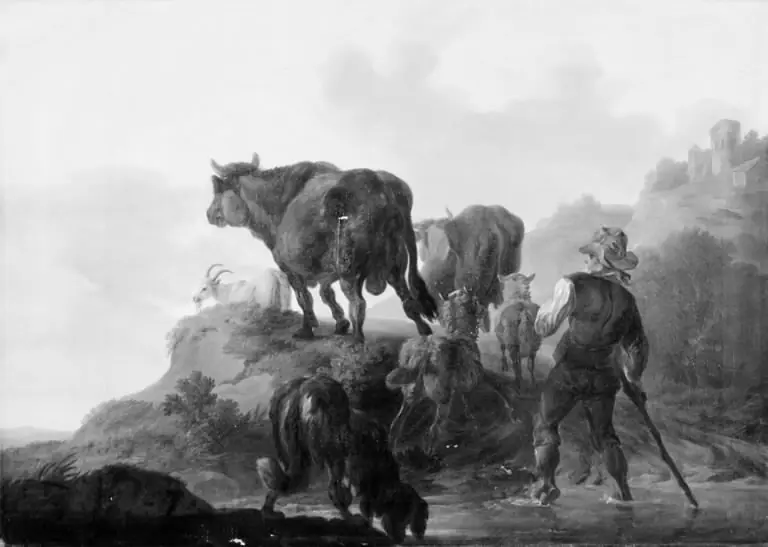
En hyrde driver okser, geder og får
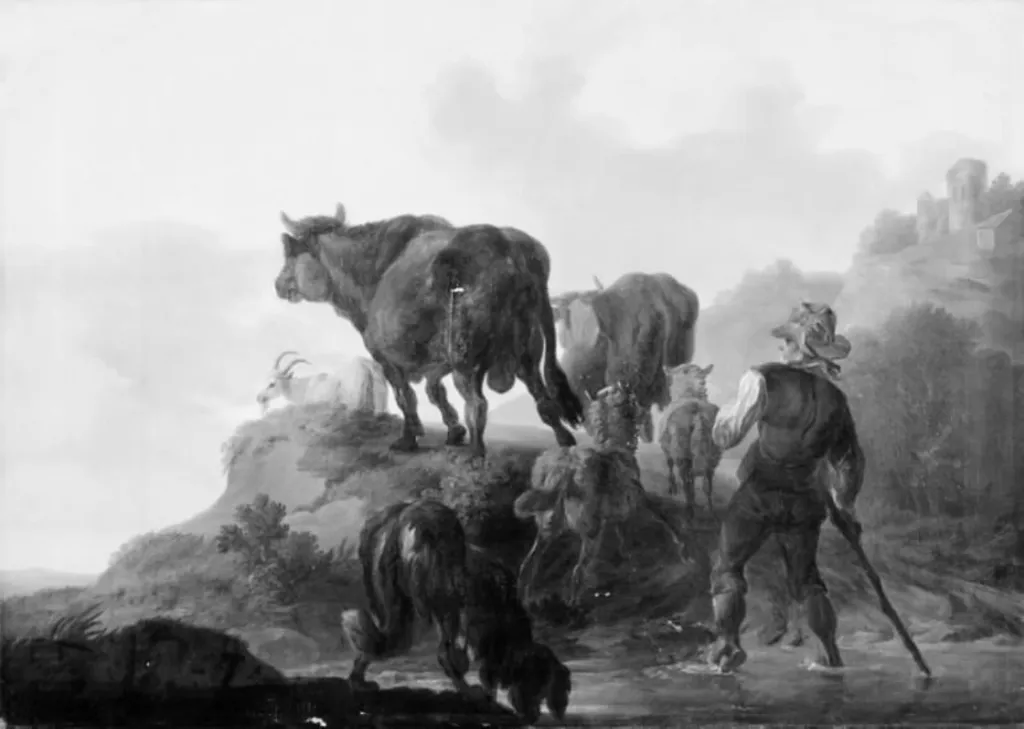
En hyrde driver okser, geder og får is a photography by Unknown. It dates from 1750 and is held in the collection of the Statens Museum for Kunst. Created around 1750, this image depicts a shepherd guiding cattle, goats, and sheep across a rugged slope.
About this work
Overview
The work resides in the Museum of Ethnography, where it serves as a record of agrarian life in its historical context.
Created around 1750, this image depicts a shepherd guiding cattle, goats, and sheep across a rugged slope. Executed in a straightforward visual style, it captures an ordinary rural moment without idealization. The work resides in the Museum of Ethnography, where it serves as a record of agrarian life in its historical context. The composition emphasizes movement and spatial depth through subtle shifts in light and form.
Subject & Meaning
The scene portrays a shepherd managing a mixed herd of livestock, a common task in pre-industrial farming communities. The animals are dispersed naturally, suggesting real-time activity rather than staged composition. The distant structure, possibly a manor or fortress, hints at the social hierarchy of the era. The work conveys quiet endurance, focusing on labor rather than spectacle.
Technique & Style
The artist employs chiaroscuro to model forms with soft contrasts between light and shadow, giving volume to the figures and terrain without dramatic intensity. The foggy atmosphere blurs the background, directing focus to the shepherd and animals. Lines are restrained, and details are minimized, prioritizing overall mood over precision. The handling suggests observational realism rather than academic convention.
History & Provenance
The work entered the collection of the Museum of Ethnography as part of a broader effort to document rural life in the 18th century. Its origins are not fully documented, but stylistic elements align with regional visual traditions of the period. It was likely produced for private or educational use, not public display, and survived as a personal or archival record rather than a commissioned piece.
Context
In mid-18th-century Europe, pastoral life remained central to many economies, even as urbanization grew. This image reflects a world still governed by seasonal rhythms and manual labor. The presence of a large building in the distance underscores the relationship between landowners and those who worked the land. Such images were rare outside official records, making this a valuable glimpse into everyday existence.
Legacy
Though not widely known outside ethnographic circles, the work contributes to the historical record of rural labor practices. Its unembellished depiction of herding offers a counterpoint to romanticized pastoral art of the period. Today, it is studied for its documentation of animal husbandry, landscape use, and the quiet dignity of subsistence work in early modern Europe.
Artist & collection

 Domestic Scene
 Giacomo and Cardinal Marco, investing Andrea, Abbot of San Zeno, with his Benefice
 The Nymph of Fontainebleau
 Portrait of a Woman
 Madonna and Child with Saints in the Enclosed Garden
 Venus and Minerva
 Family Group of Four on Sofa
 Wall painting from Room H of the Villa of P. Fannius Synistor at Boscoreale
 Et kvægstykke
 Landscape with a Bull, Sheep and Goats
 Landscape with fishermen and shepherds with their cattle
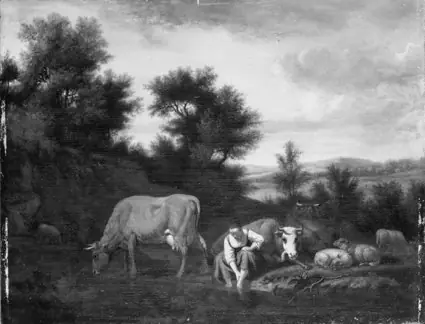 Shepherdess with Cattle
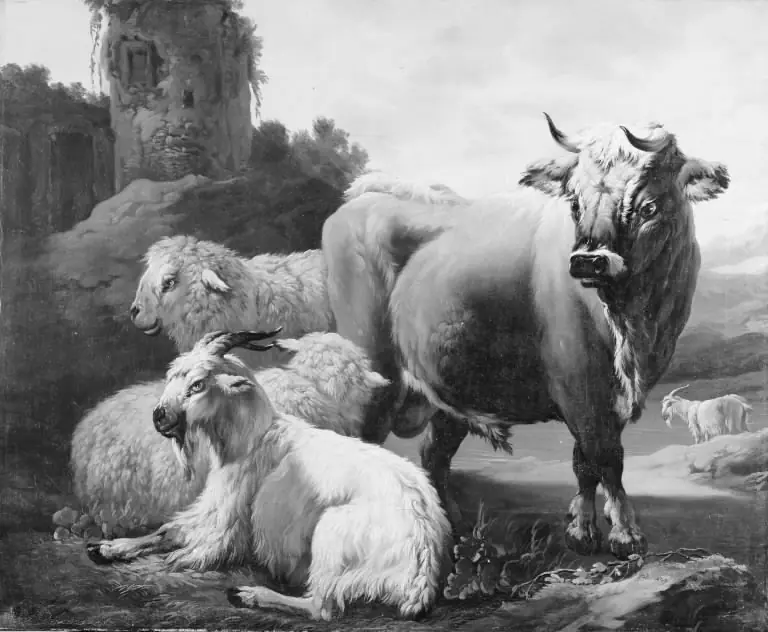 Landscape with a Bull, Sheep and Goats
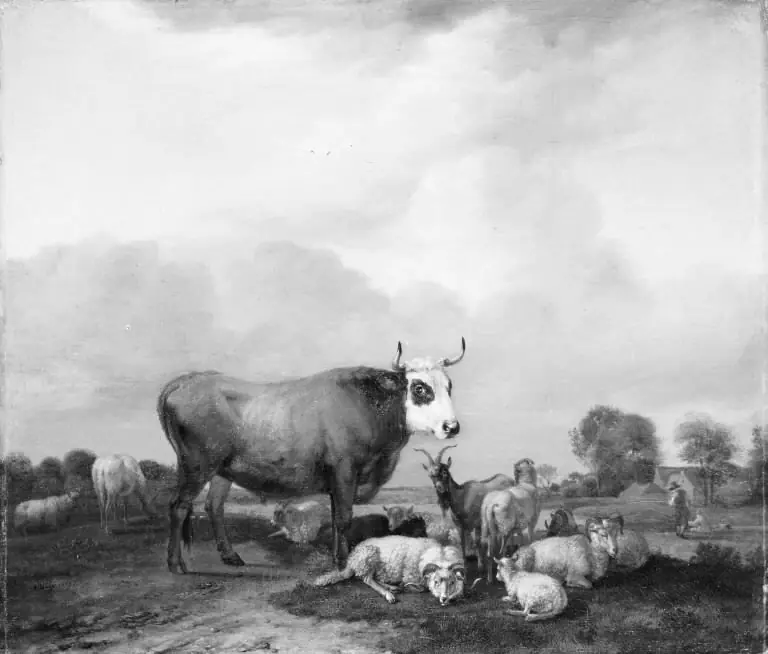 Cattle in the Field
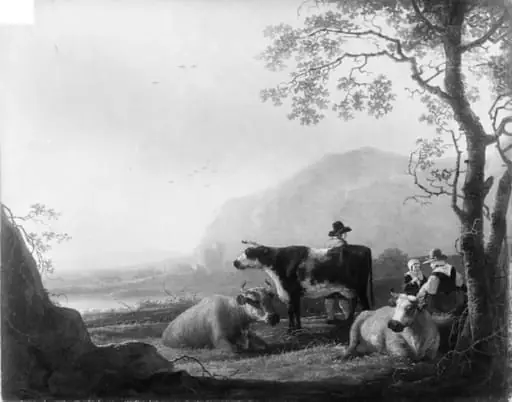 Landscape with Three Cows and Shepherds
 Family of Shepherds in a Mountainous Landscape
 En hyrde driver okser, geder og får