Artwork
Tulips and Other Flowers in a Rummer
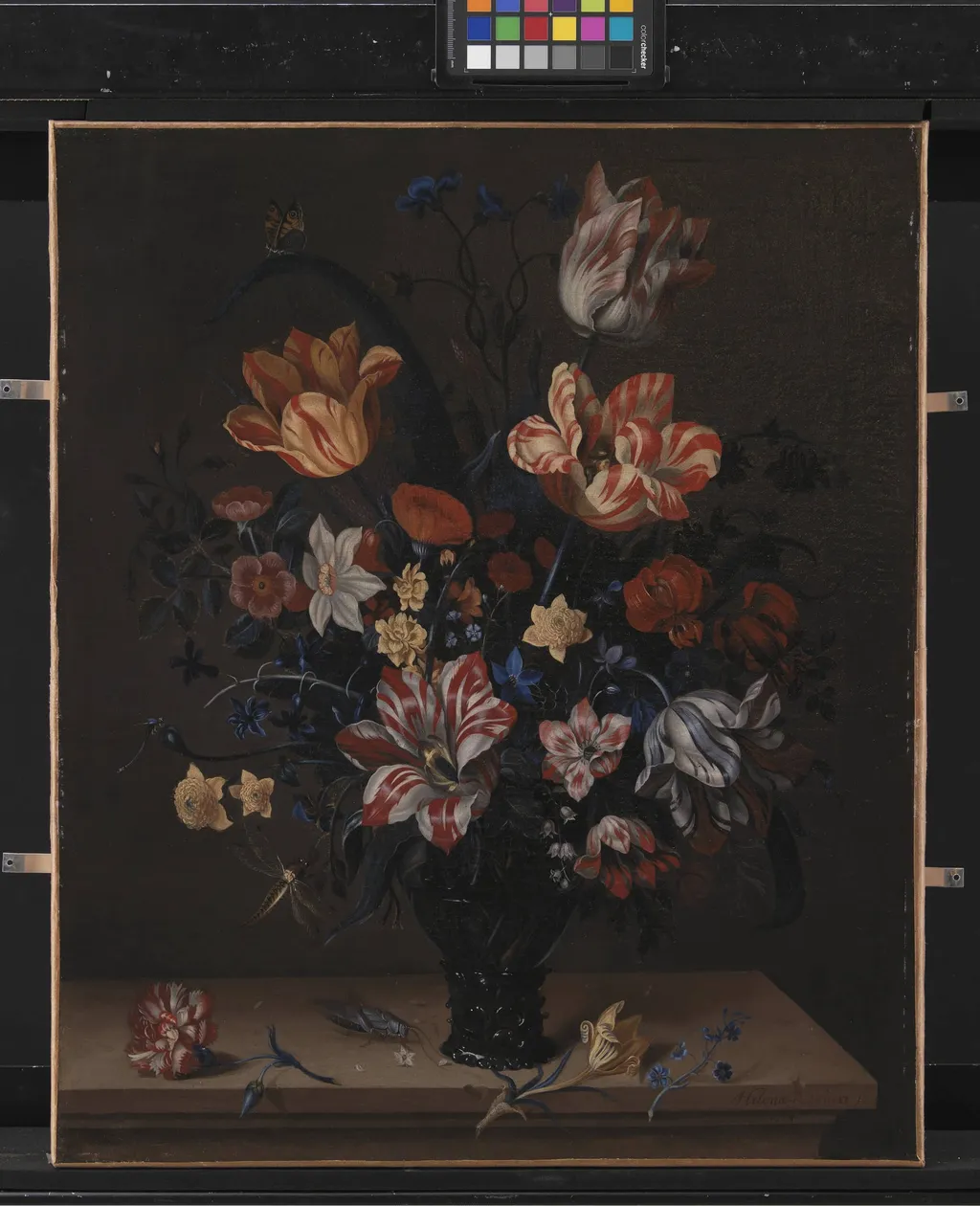
Tulips and Other Flowers in a Rummer is a photography by the Baroque artist Unknown. It dates from 1663 and is held in the collection of the Statens Museum for Kunst.
About this work
Overview
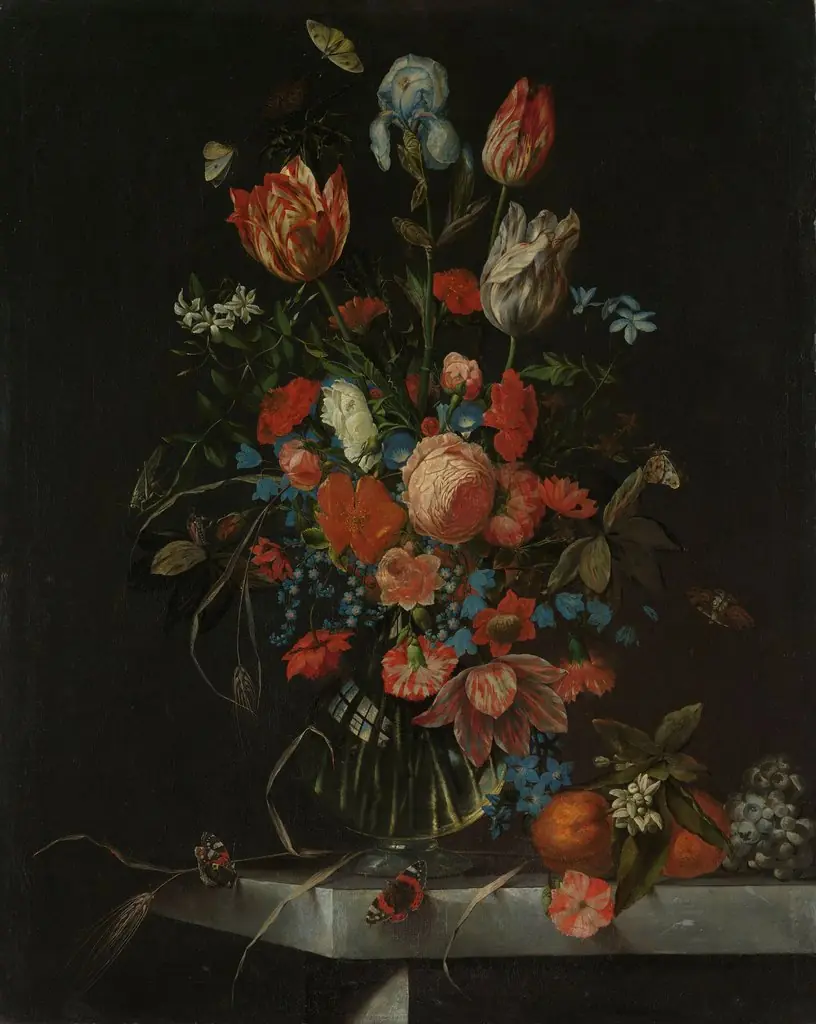
Painted in 1663, this still life depicts a glass vessel filled with a variety of blooming flowers, prominently featuring tulips in vivid red and yellow. Set against a deep, unbroken background, the arrangement is minimal—just the vase and a surface below—yet the composition draws intense focus to the flora. The lighting enhances the translucency of petals, creating a sense of quiet luminosity.
Subject & Meaning
The selection of flowers—tulips alongside smaller blooms in white, blue, and gold—reflects the horticultural curiosity of the Dutch Golden Age. Tulips, recently introduced and highly prized, carried associations with wealth and transience. The scattered petals and leaves suggest the fleeting nature of beauty, a common theme in vanitas symbolism of the period.
Technique & Style
The artist employs chiaroscuro to heighten the three-dimensionality of the blooms, with light appearing to emanate from behind the petals. Brushwork is precise yet fluid, capturing the delicate texture of petals and the glassy sheen of the vessel. The dark background isolates the flowers, eliminating distraction and emphasizing their form and color with dramatic contrast.
History & Provenance
The painting entered the collection of the Museum of Ethnography in the late 19th century, though its earlier ownership remains undocumented. Its attribution to a specific artist from 1892 is likely a cataloging error; stylistic analysis aligns it with Dutch still-life painters active in the mid-17th century, possibly from Haarlem or Amsterdam.
Context
Created during the height of the Dutch Golden Age, this work reflects the era’s fascination with botany, trade, and the material culture of abundance. Tulips, imported from the Ottoman Empire, were symbols of both luxury and economic speculation. Still lifes like this served not merely as decoration but as meditations on nature’s impermanence.
Legacy
Though not widely exhibited, the painting contributes to the understanding of 17th-century Dutch floral painting beyond its most famous examples. Its restrained composition and emphasis on light reveal how even modest arrangements could convey complex themes. It remains a quiet example of how everyday objects were elevated through careful observation and technique.
Artist & collection

 Domestic Scene
 Giacomo and Cardinal Marco, investing Andrea, Abbot of San Zeno, with his Benefice
 The Nymph of Fontainebleau
 Portrait of a Woman
 Madonna and Child with Saints in the Enclosed Garden
 Venus and Minerva
 Family Group of Four on Sofa
 Wall painting from Room H of the Villa of P. Fannius Synistor at Boscoreale
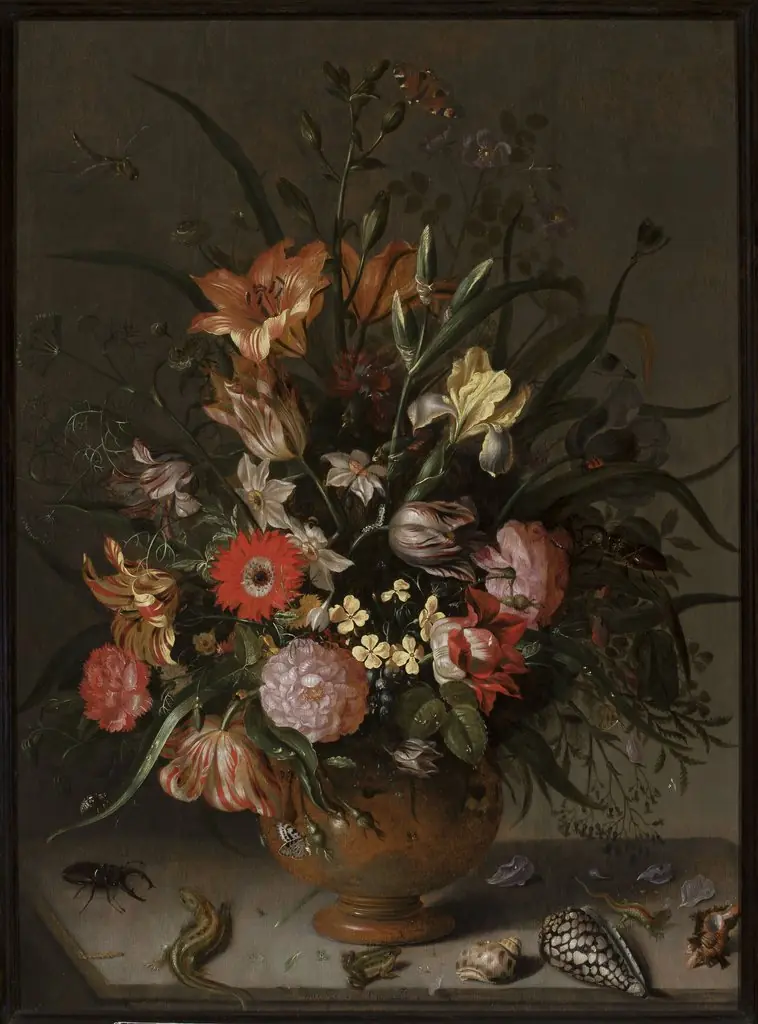 Bouquet of flowers in a vase, insects and tiny creatures
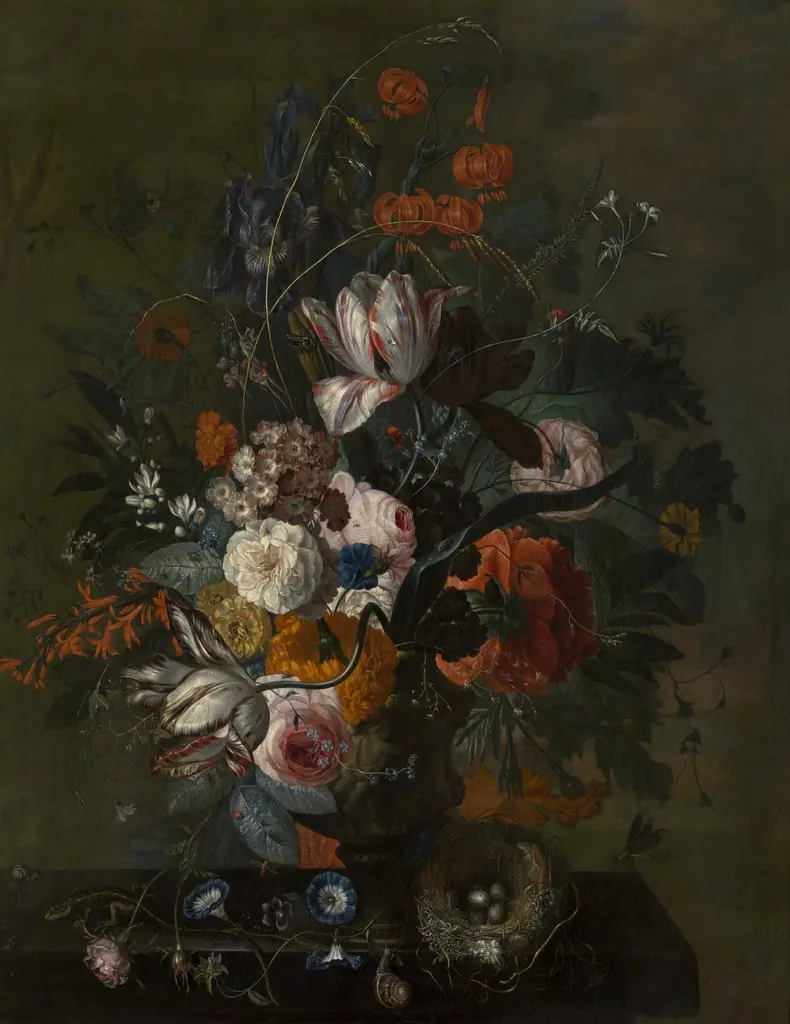 Still Life of flowers in a terracotta vase on a stone plinth
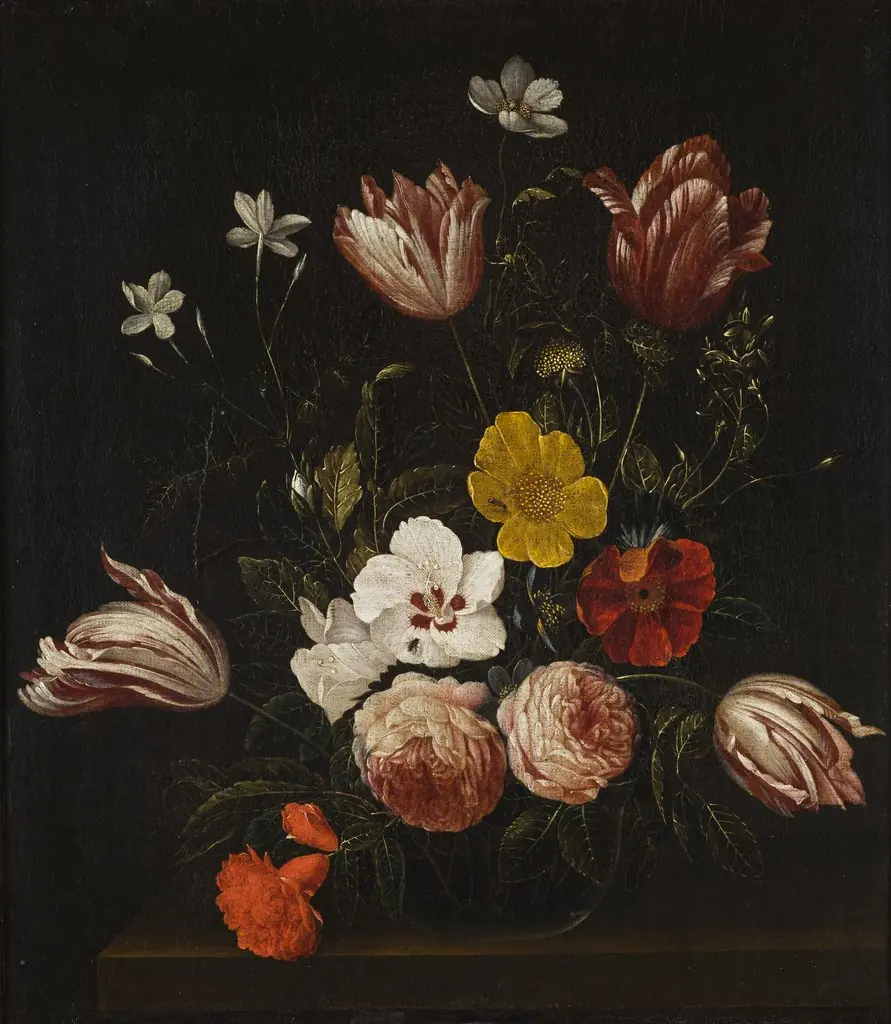 Bouquet of Flowers
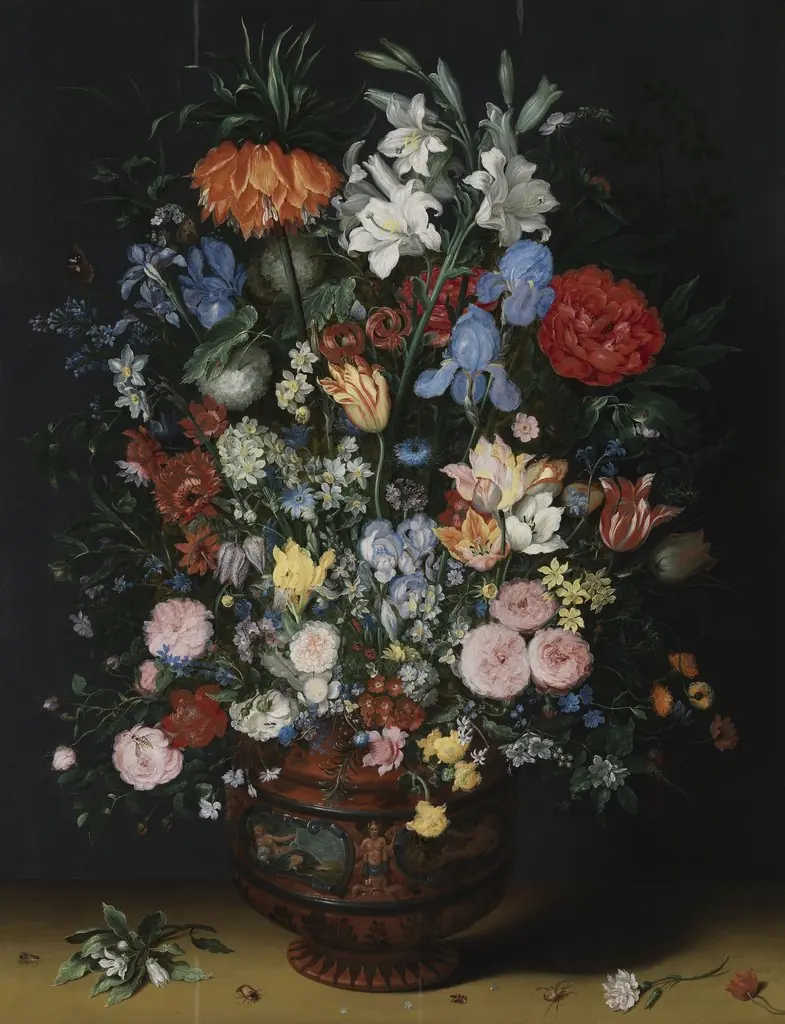 Flowers in a Vase
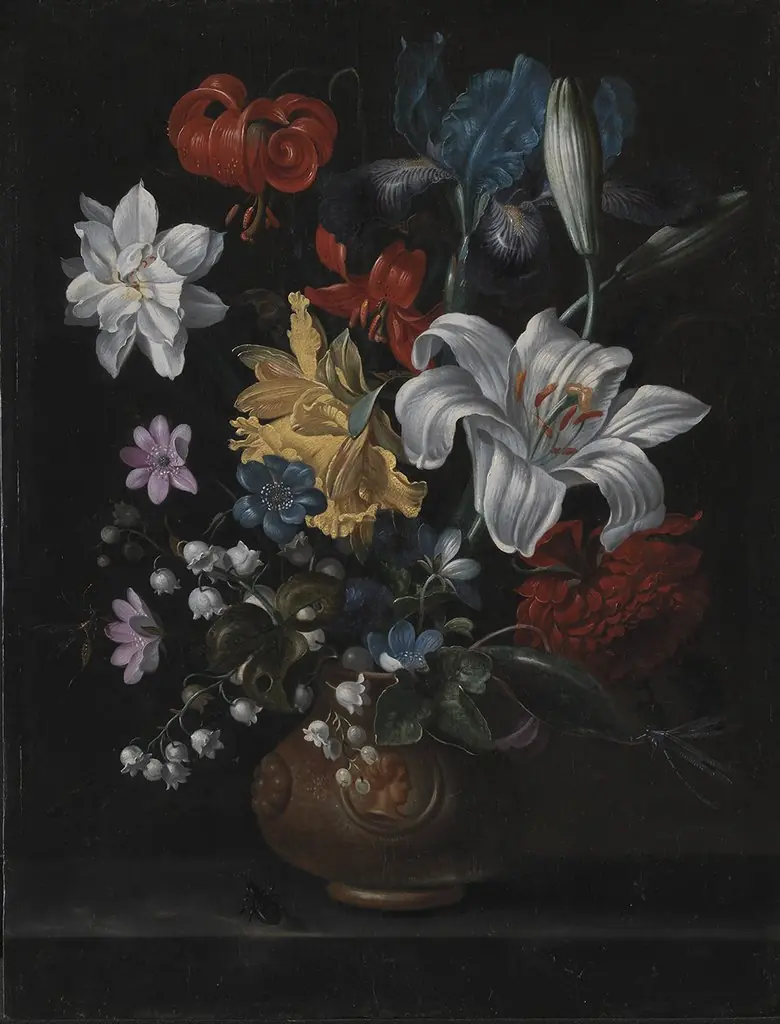 En stentøjskrukke med blomster
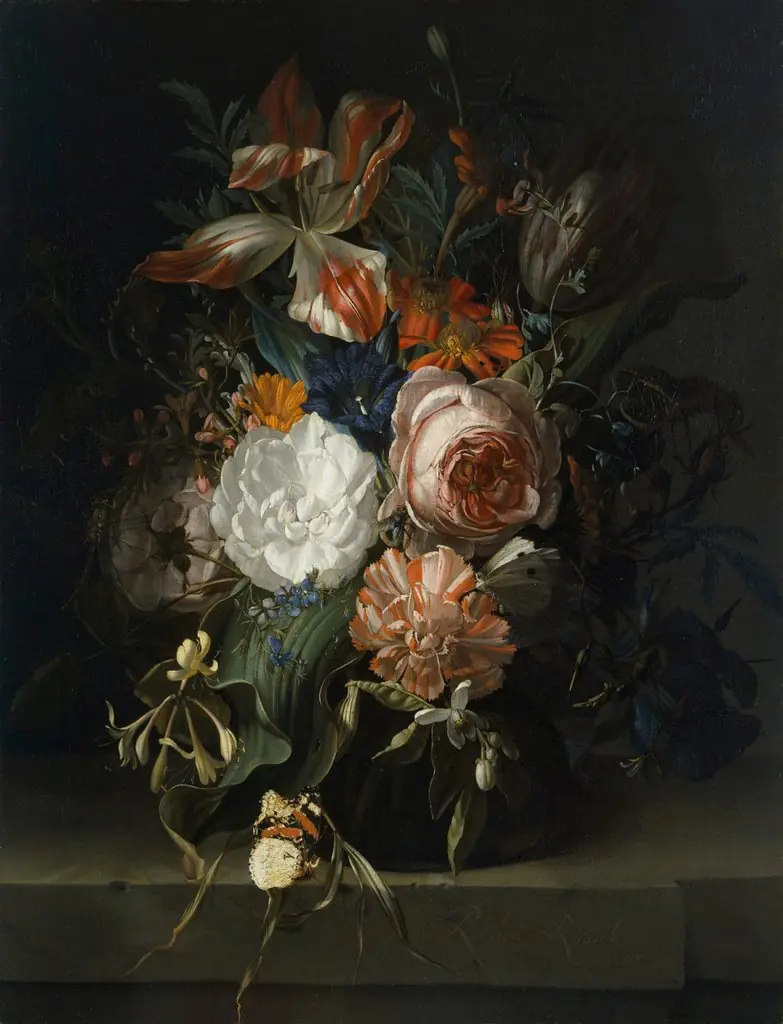 Flowers in a glass vase on a marble ledge, 1691
 Flowers in a Vase
 Vase of Flowers
 Still life with flowers
 A Bunch of Flowers