Artwork
Christ Driving the Traders from the Temple
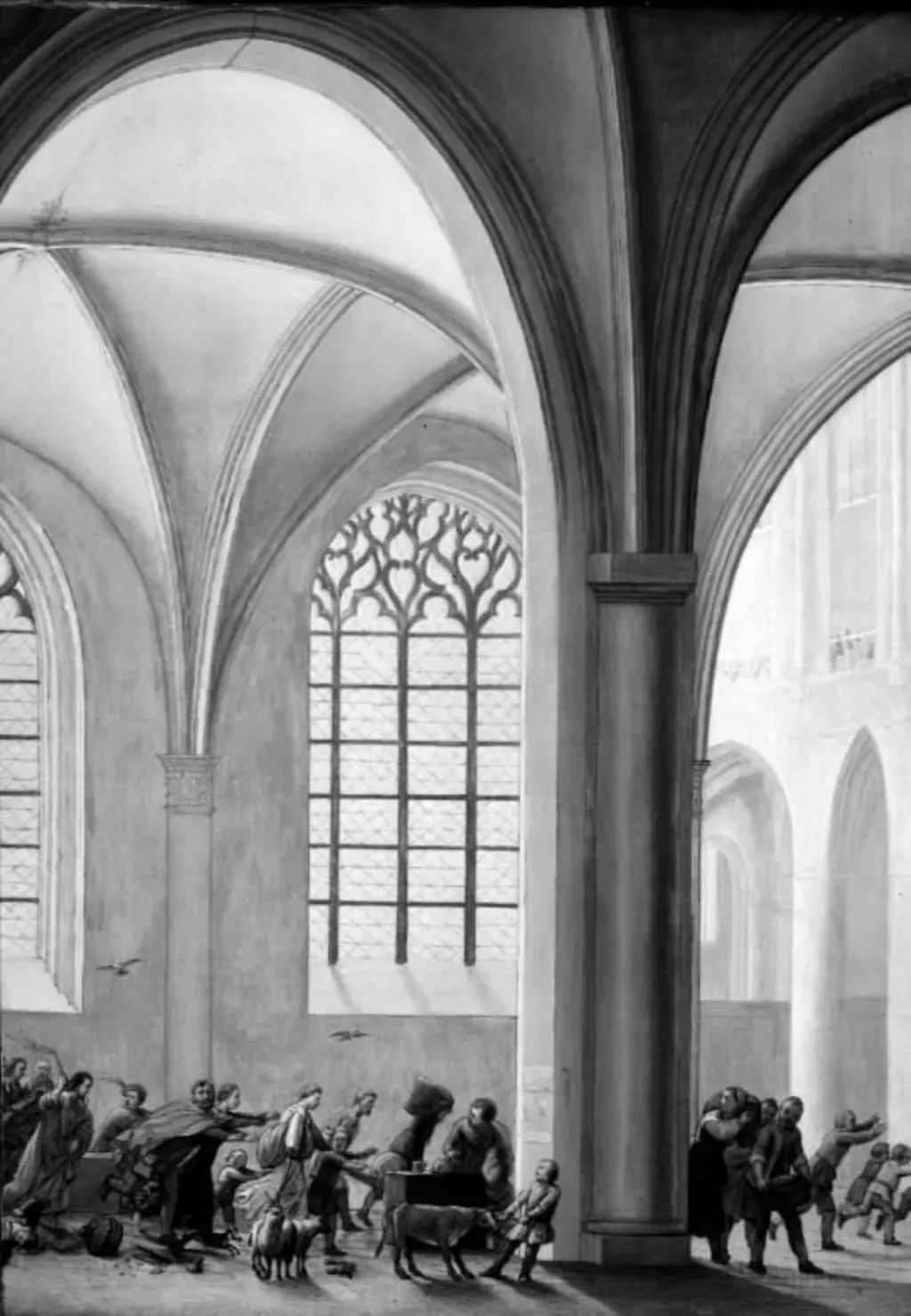
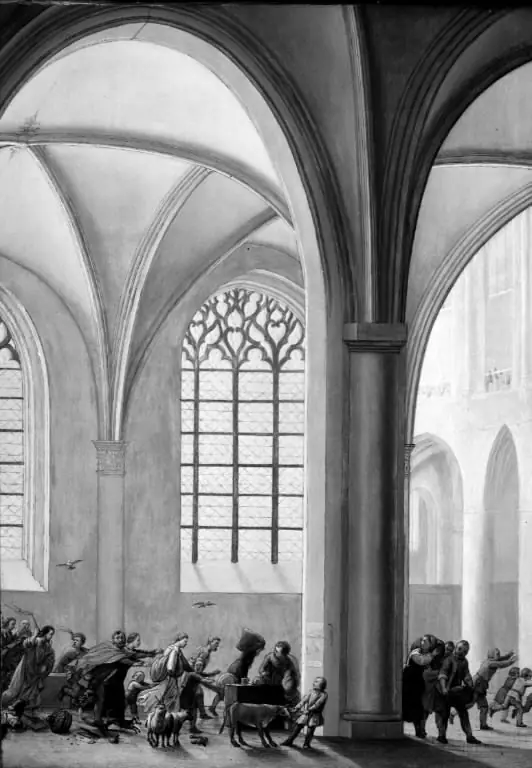
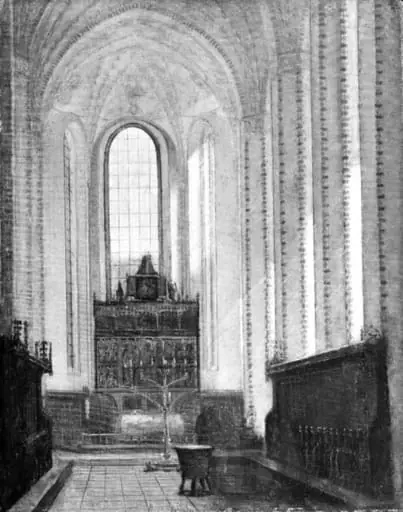
Christ Driving the Traders from the Temple is a photography by the Baroque artist Unknown. It dates from 1636 and is held in the collection of the Statens Museum for Kunst. Painted in 1636, this work depicts the biblical episode of Christ expelling merchants from the Temple.
About this work
Overview
Painted in 1636, this work depicts the biblical episode of Christ expelling merchants from the Temple. Executed in monochrome, the image captures a moment of sacred disruption within a vast, stone-walled interior. The composition emphasizes contrast between chaotic human motion and the stillness of architectural space, suggesting spiritual conflict through visual tension rather than color.
Subject & Meaning
The central group around the overturned table symbolizes divine authority confronting commercialization of sacred space.
The scene illustrates Christ’s purification of the Temple, as described in the Gospels, where he overturns the tables of money changers and drives out those selling sacrificial animals. The central group around the overturned table symbolizes divine authority confronting commercialization of sacred space. A dog resting near the base of the stairs adds an unobtrusive note of earthly life amid the upheaval.
Technique & Style
The artist employs chiaroscuro to heighten emotional intensity, using sharp contrasts between light and shadow to define forms and direct the viewer’s gaze. The architectural setting, with its high arched ceilings and plain stonework, frames the action with solemn grandeur. Figures are rendered with varied postures—kneeling, gesturing, turning—to convey disorder without narrative clarity, typical of early Baroque religious scenes.
History & Provenance
The painting entered the collection of the Museum of Ethnography in the early 20th century, though its origins prior to that remain undocumented. Its monochrome condition suggests it may have been a preparatory study or a copy made after a lost original. No signatures or inscriptions are visible, and its attribution to a specific artist has not been conclusively established.
Context
Created during the height of the Baroque period, the work reflects broader religious tensions in Europe following the Reformation. Depictions of Christ’s cleansing of the Temple were common in Catholic art as symbols of spiritual renewal and institutional reform. The emphasis on architectural space and dramatic lighting aligns with contemporaneous devotional imagery intended to evoke awe and moral reflection.
Legacy
Though not widely exhibited or reproduced, the painting offers a quiet example of how Baroque visual language was adapted in smaller-scale or lesser-known works. Its focus on light, movement, and sacred space influenced later interpretations of biblical narratives in religious art, particularly in regions where color was less accessible or deemed inappropriate for devotional use.
Artist & collection

 Domestic Scene
 Giacomo and Cardinal Marco, investing Andrea, Abbot of San Zeno, with his Benefice
 The Nymph of Fontainebleau
 Portrait of a Woman
 Madonna and Child with Saints in the Enclosed Garden
 Venus and Minerva
 Family Group of Four on Sofa
 Wall painting from Room H of the Villa of P. Fannius Synistor at Boscoreale
 Interior of the Buurkerk, Utrecht
 Interior of a Gothic Church by Candlelight
 The Transept of Århus Cathedral
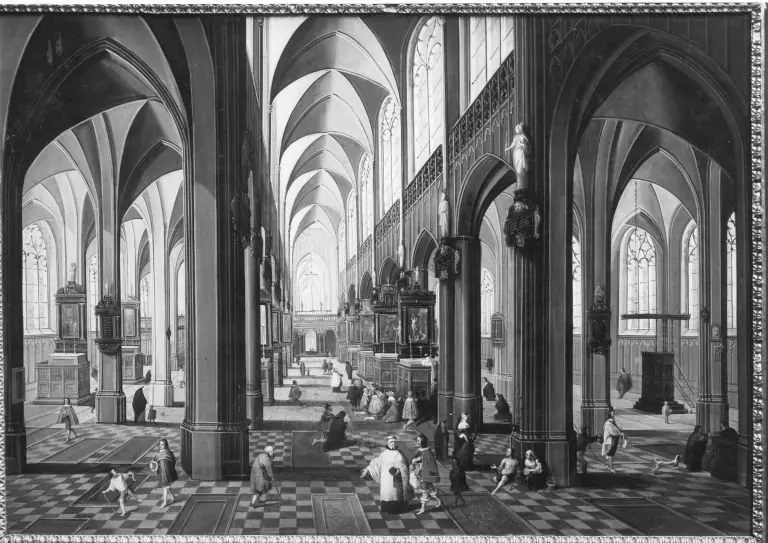 Gothic Church Interior
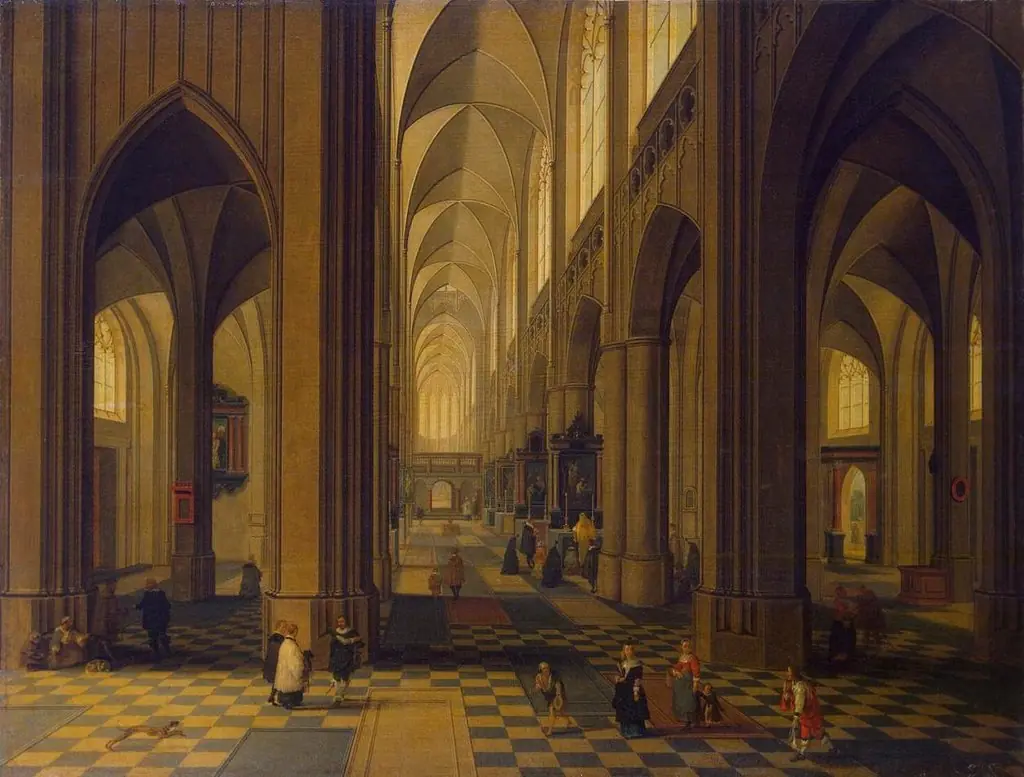 Interior of the Antwerp Cathedral
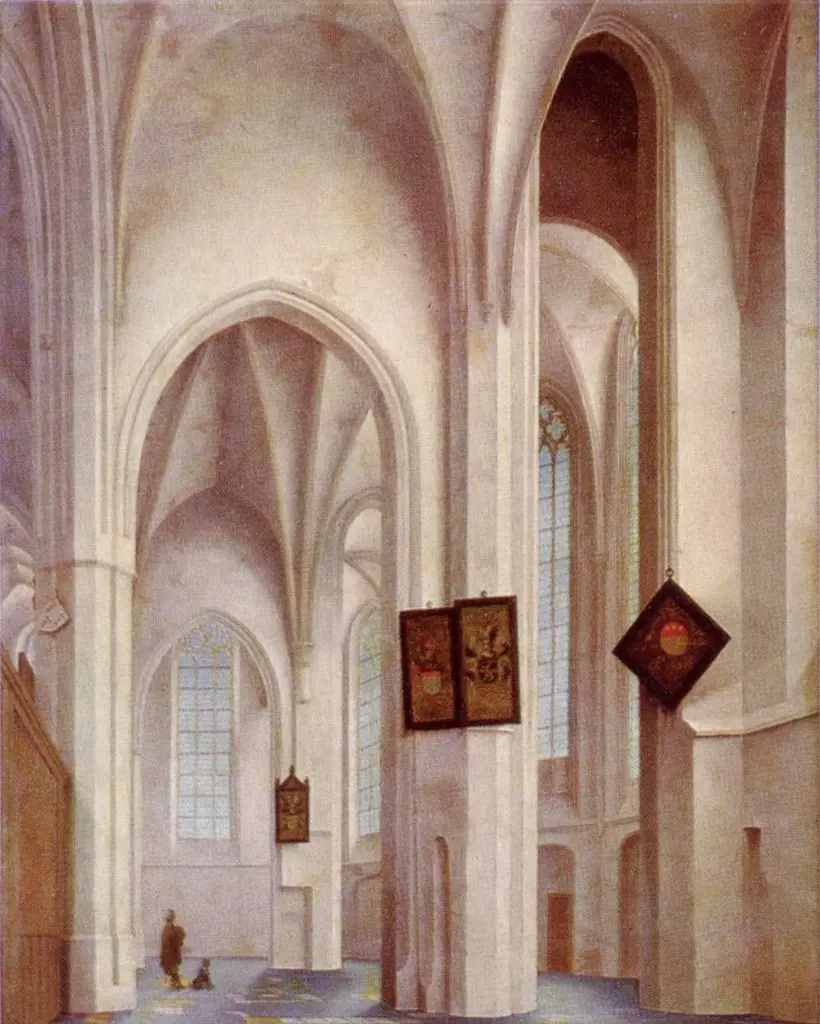 interior view of the church St. Jacobs in Utrecht
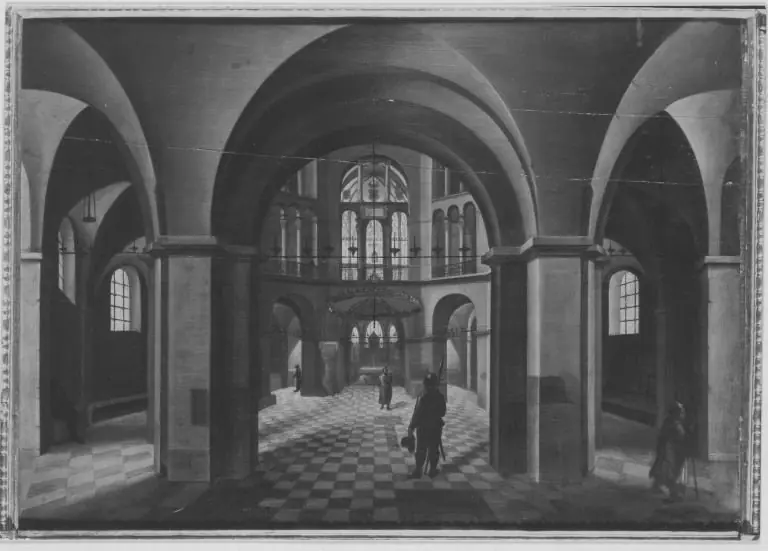 The Interior of Aachen Cathedral
 Interior of the Saint Paul's church of Antwerp
 Interior of the Mariakerk, Utrecht
 Viaticum inside a church
 Christ Driving the Traders from the Temple
 Koret i Århus Domkirke