Artwork
Interior of a Kitchen
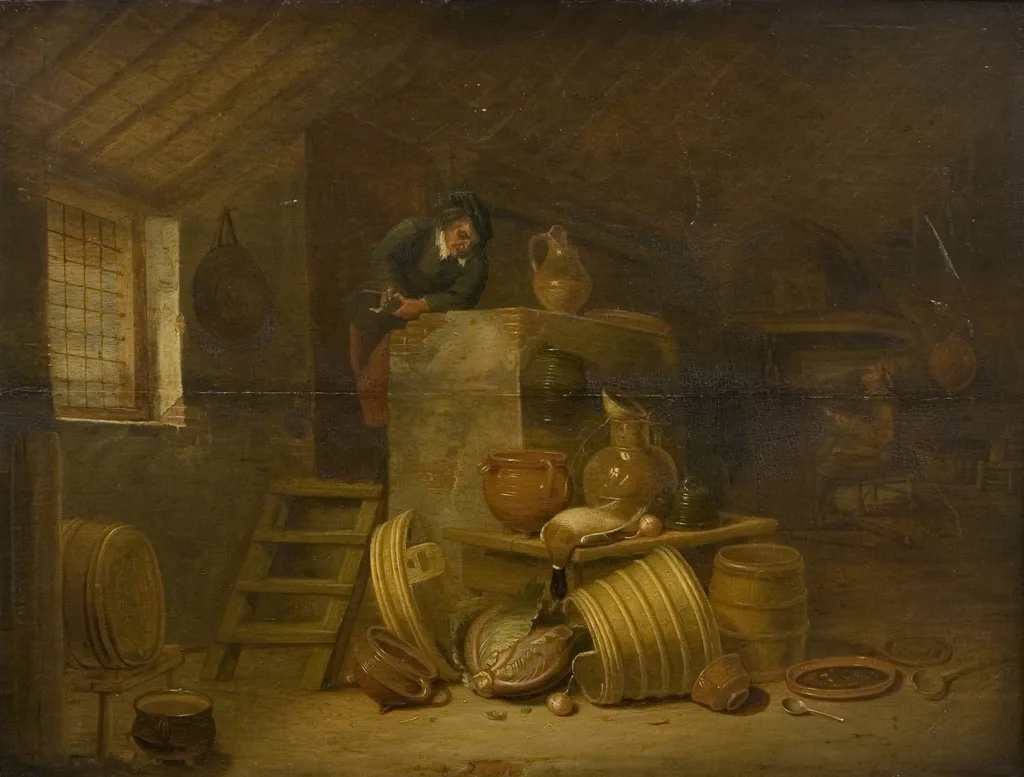
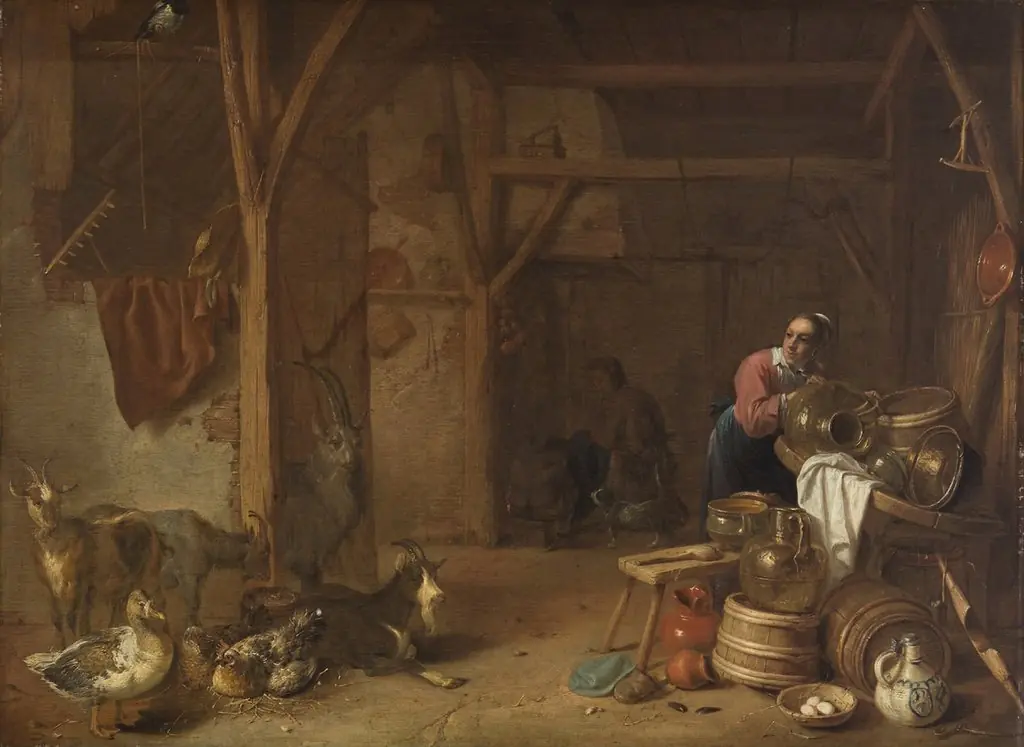
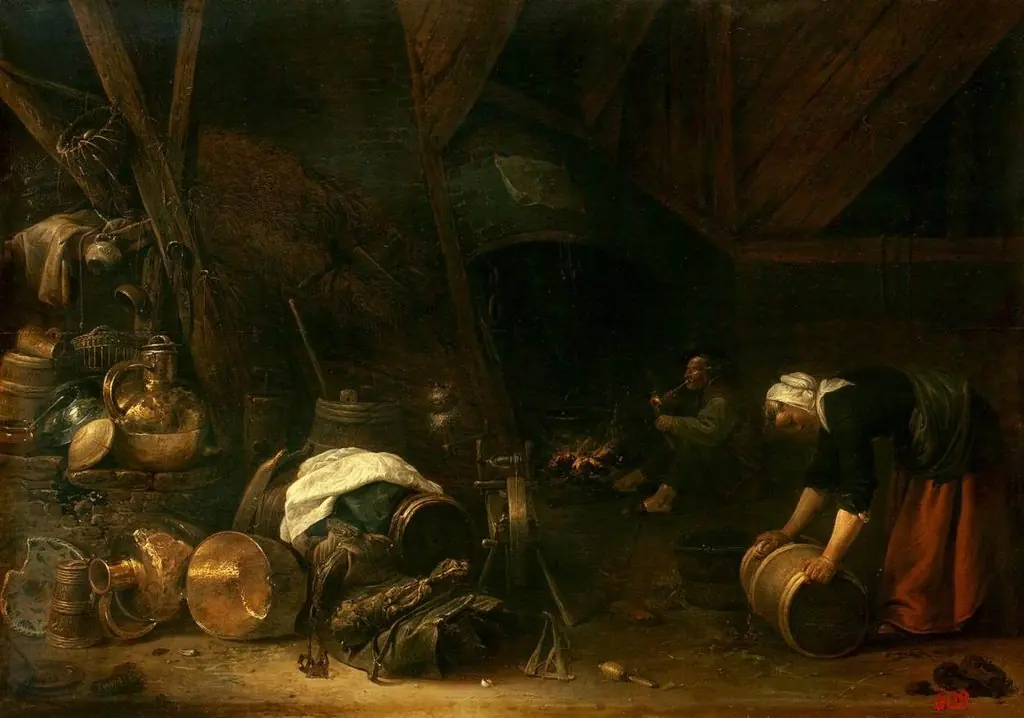
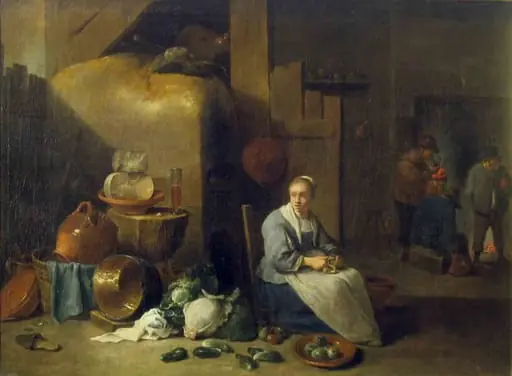
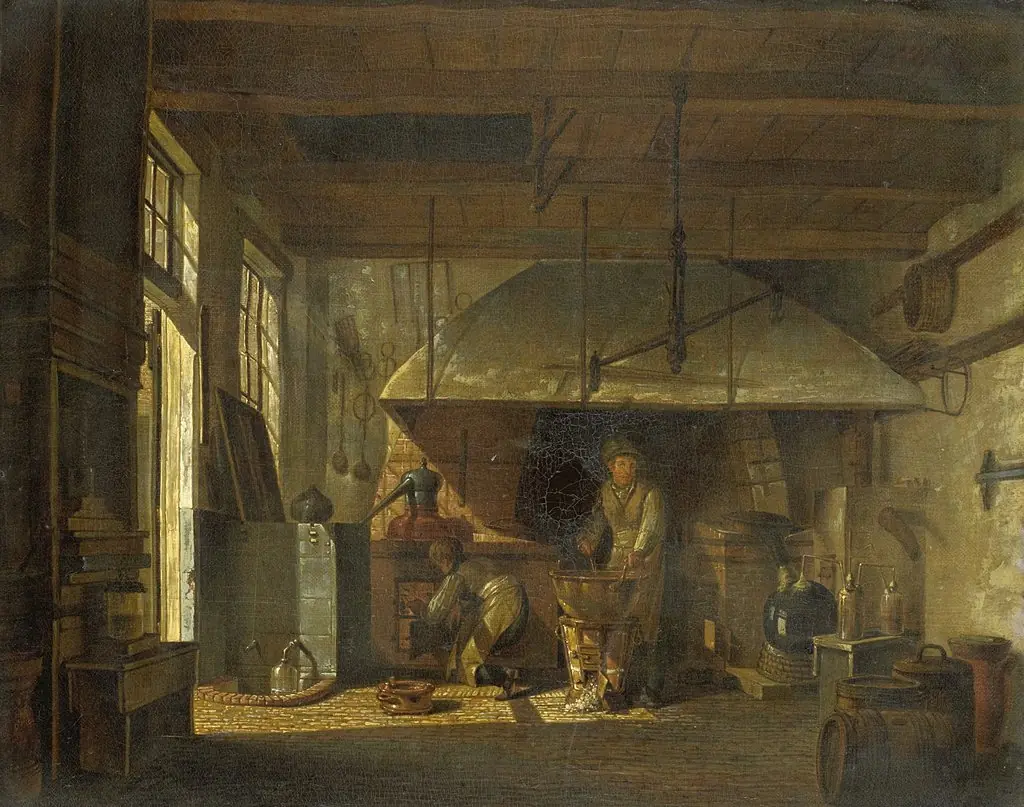
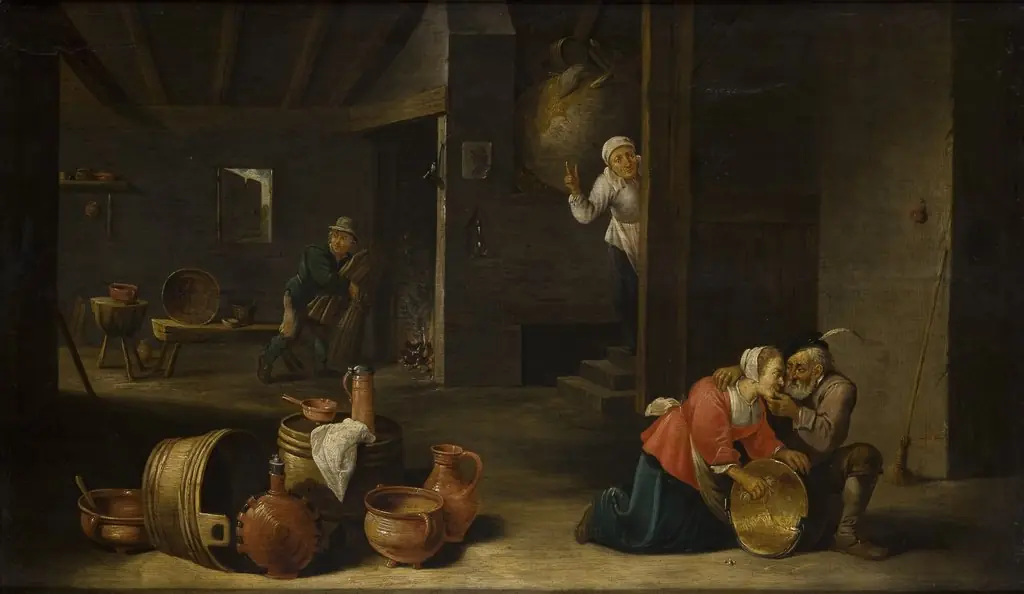
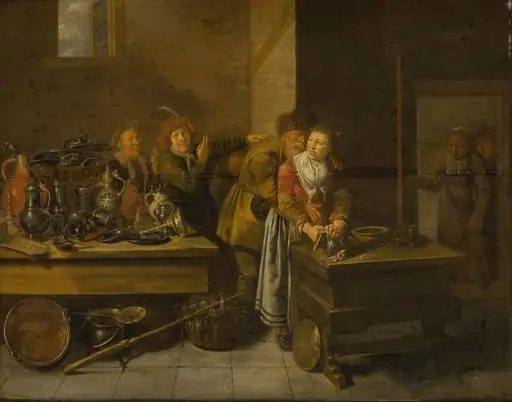
Interior of a Kitchen is a photography by Unknown. It dates from 1650 and is held in the collection of the Statens Museum for Kunst. Painted around 1650, this interior scene captures a quiet moment in a domestic kitchen.
About this work
Overview
Painted around 1650, this interior scene captures a quiet moment in a domestic kitchen. The work is attributed to an artist active in the Dutch Golden Age, though the specific identity remains uncertain. It is currently held in the collection of the Museum of Ethnography, where it is studied for its depiction of everyday life in 17th-century Northern Europe.
Subject & Meaning
A woman stands behind a wooden counter, her gaze directed outward, as if aware of the viewer’s presence. Around her, the counter holds utilitarian objects—earthenware jugs, copper pots, and a large fish, likely recently caught. The scene suggests routine labor, not grandeur, emphasizing the dignity of domestic work without overt symbolism or narrative.
Technique & Style
The artist employs chiaroscuro to model forms with subtle gradations of light and shadow, giving volume to the rounded vessels and textured surfaces. A soft, slanted light enters from the left window, illuminating the woman’s arm and the fish while leaving corners in muted tone. Details like the weave of a basket or the glaze on pottery are rendered with quiet precision.
History & Provenance
The painting’s early ownership is undocumented, but it entered the Museum of Ethnography in the late 19th or early 20th century as part of a broader collection of European folk and domestic artifacts. Its attribution has been revised over time, with scholars increasingly linking it to regional Dutch painters rather than a single named master.
Context
This work reflects the Dutch Golden Age’s fascination with ordinary interiors, where domestic spaces became subjects of artistic inquiry. Unlike religious or mythological scenes, such kitchens celebrated the quiet rhythms of daily life, aligning with Protestant values that honored labor and modesty over spectacle.
Legacy
Though not widely exhibited, the painting contributes to scholarly understanding of how ordinary spaces were rendered with psychological nuance in 17th-century Dutch art. Its preservation in an ethnographic context underscores its value as a record of material culture, influencing later studies of domestic life in early modern Europe.
Artist & collection

 Domestic Scene
 Giacomo and Cardinal Marco, investing Andrea, Abbot of San Zeno, with his Benefice
 The Nymph of Fontainebleau
 Portrait of a Woman
 Madonna and Child with Saints in the Enclosed Garden
 Venus and Minerva
 Family Group of Four on Sofa
 Wall painting from Room H of the Villa of P. Fannius Synistor at Boscoreale