Artwork
Still life in a stable
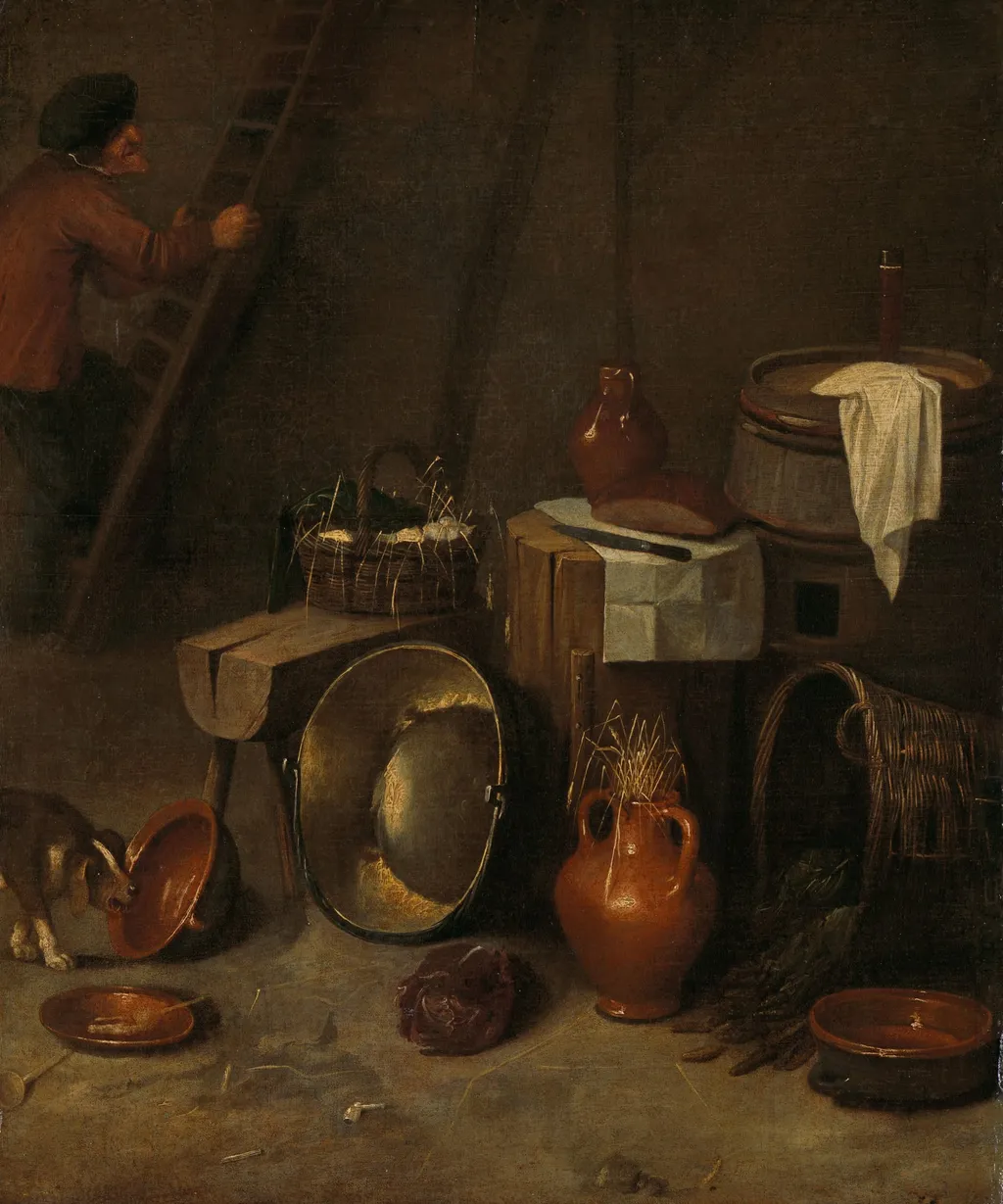
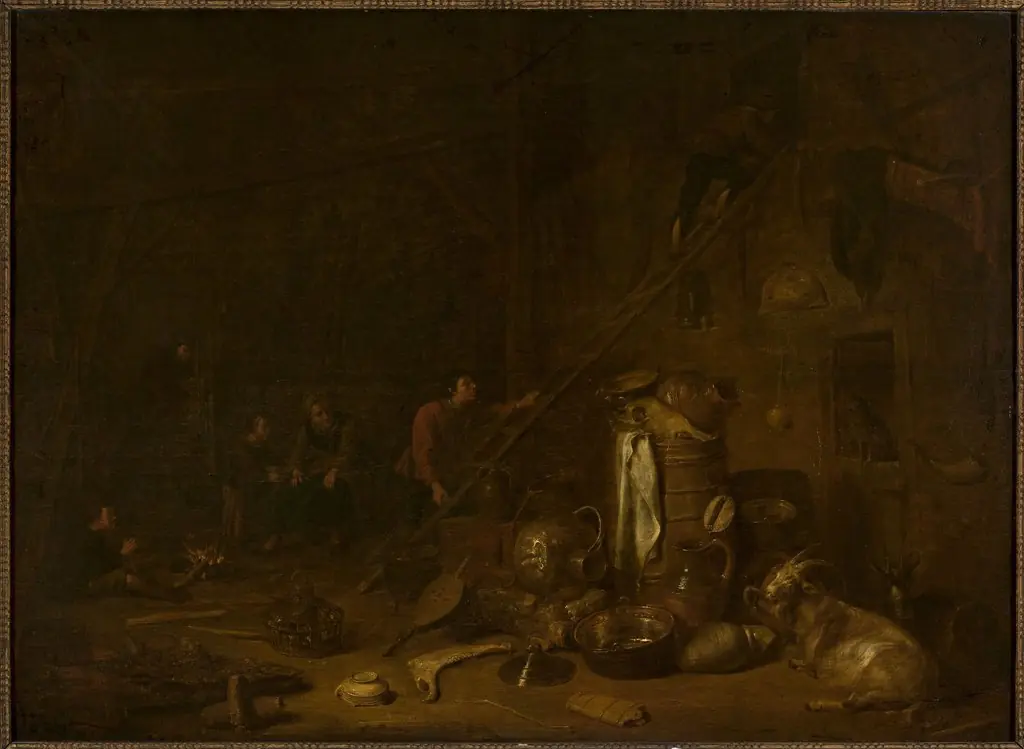
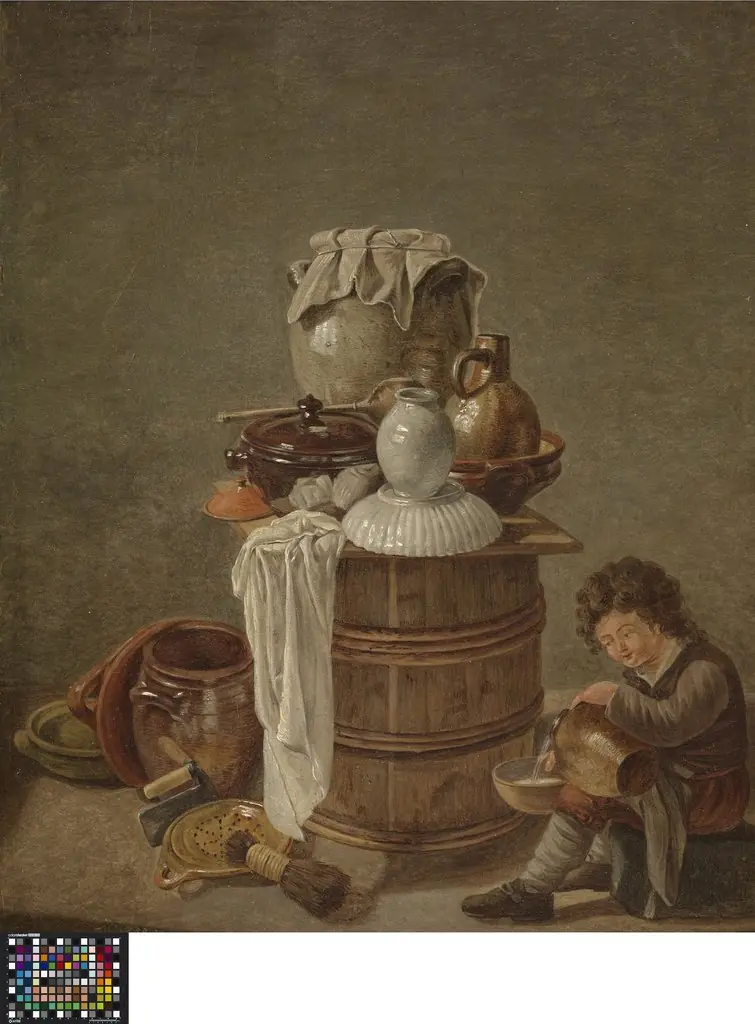
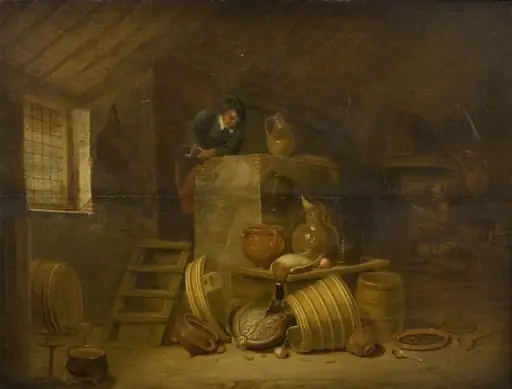
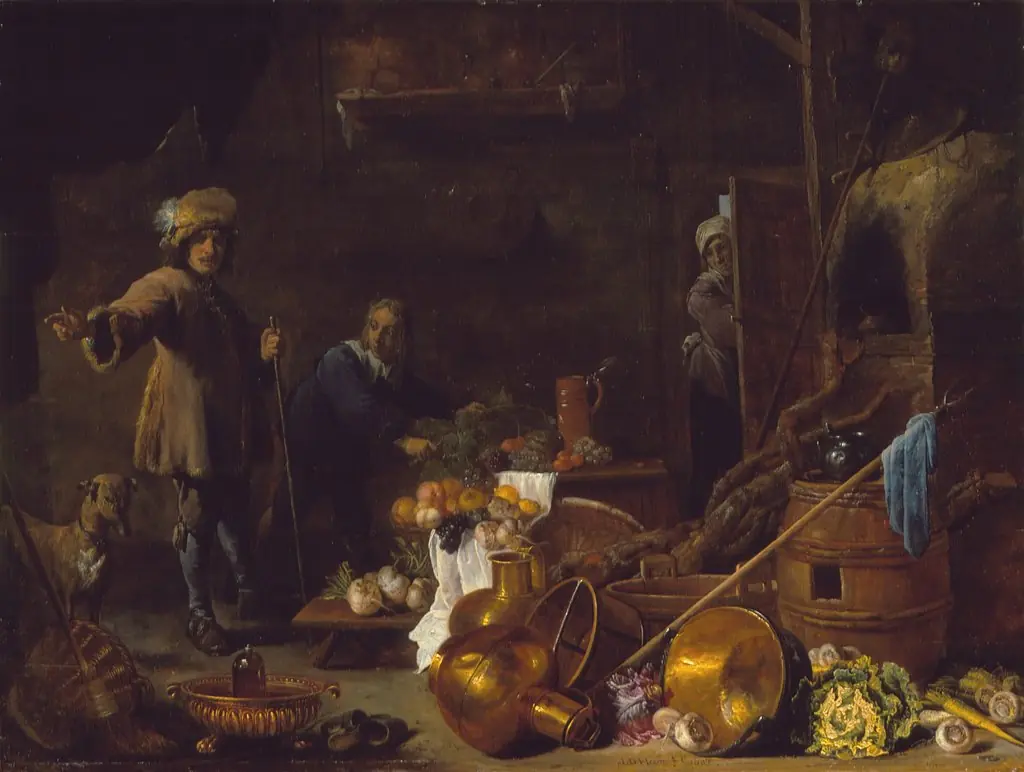
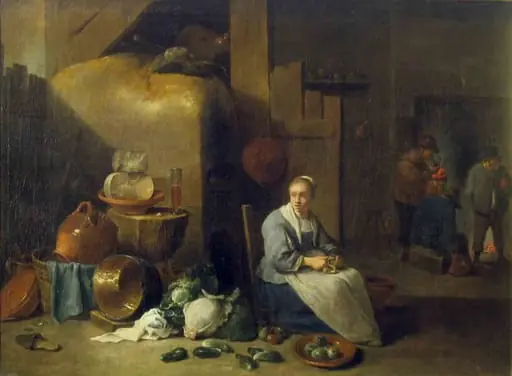
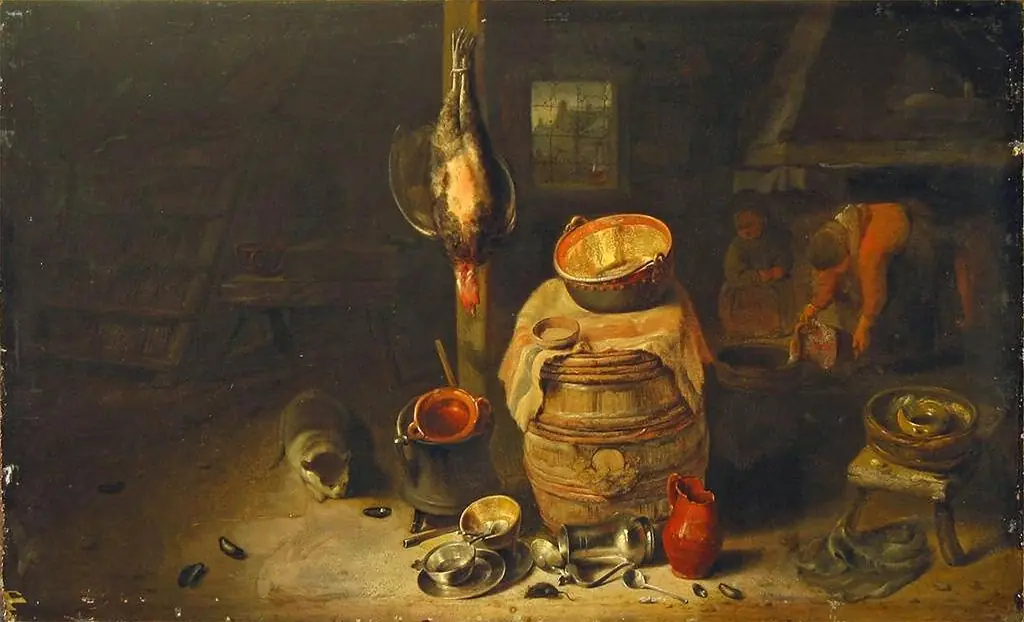
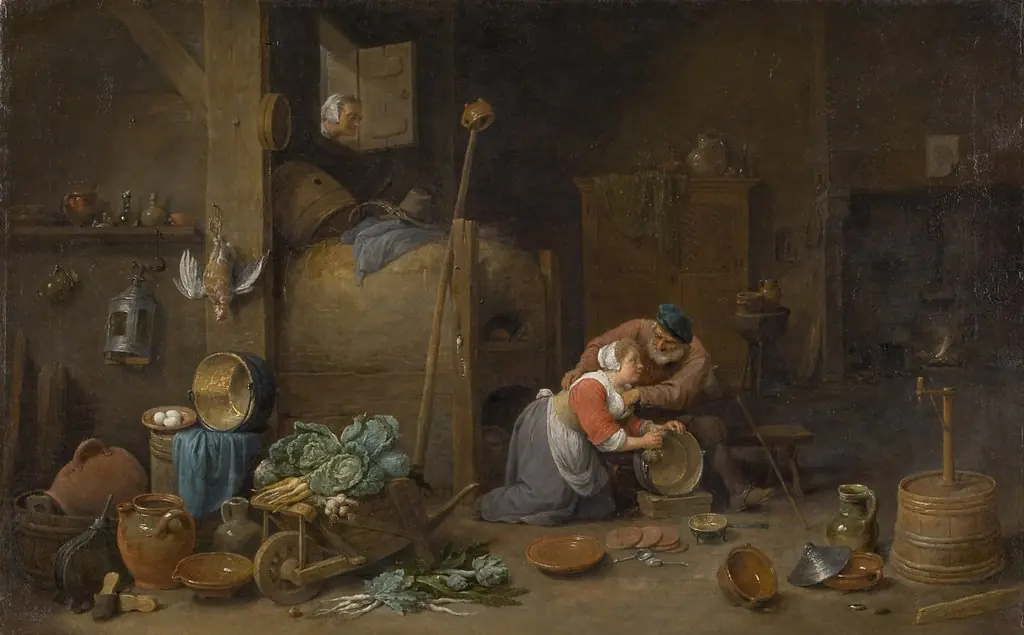
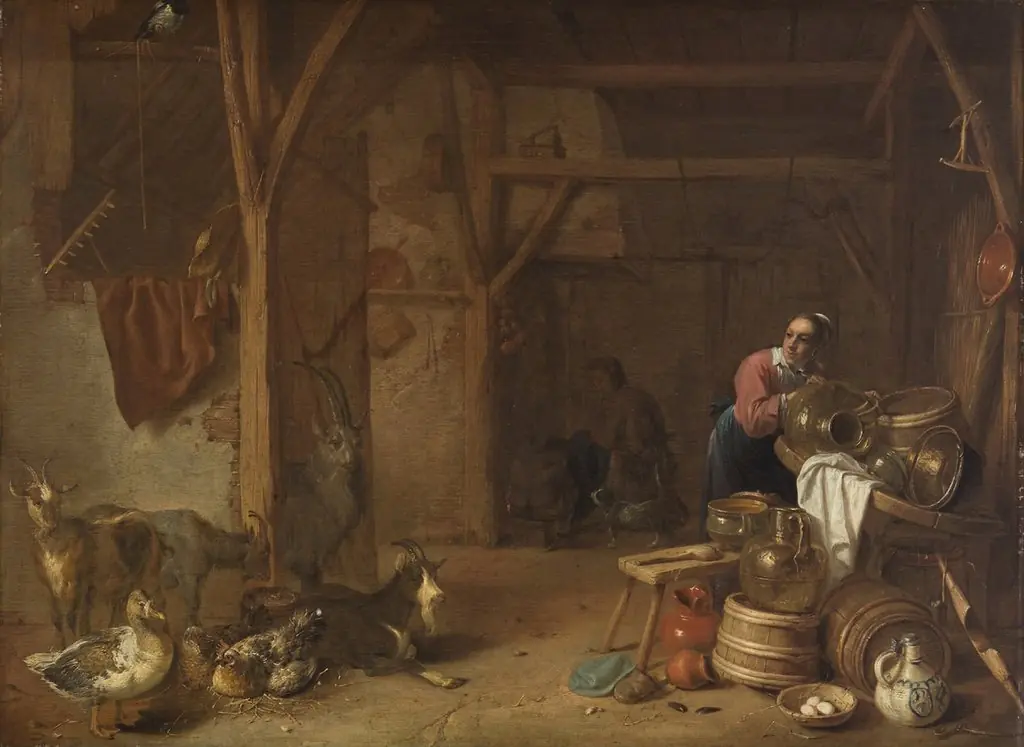
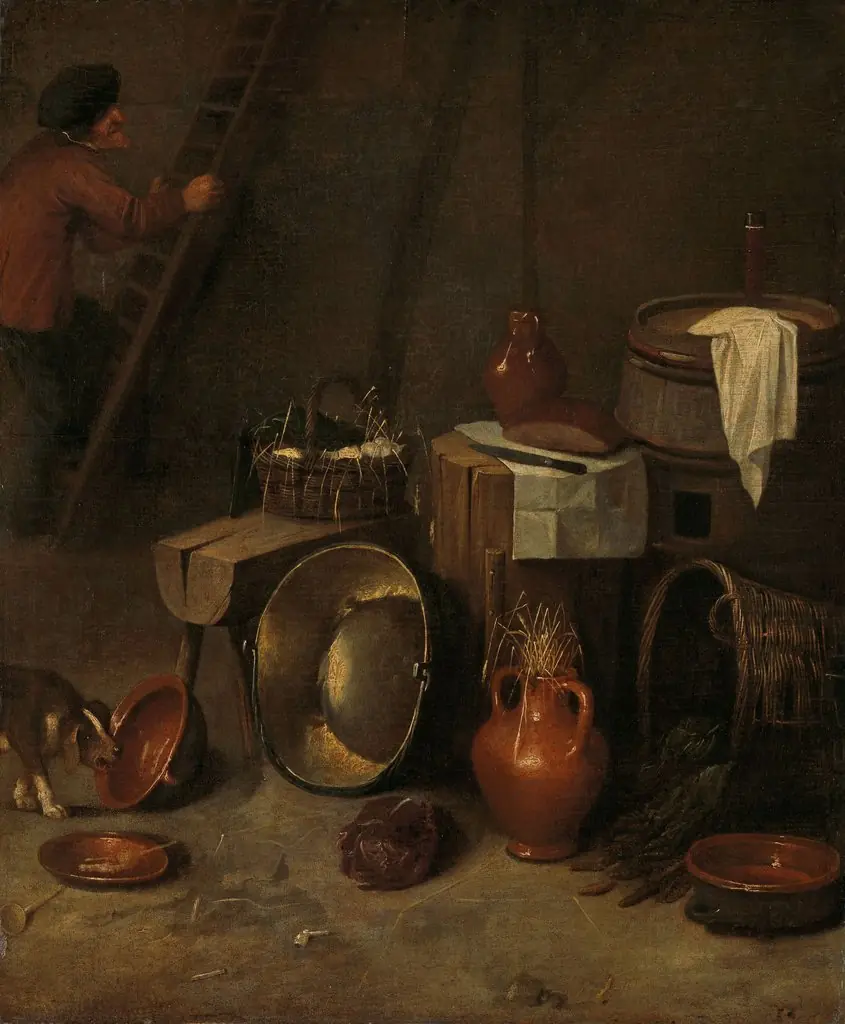
Still life in a stable is an unspecified painting by Hendrik Potuyl. It dates from 1644 and is held in the collection of the Rijksmuseum. This painting depicts a cluttered stable interior filled with common domestic objects arranged haphazardly on a wooden block and barrel.
About this work
Overview
This painting depicts a cluttered stable interior filled with common domestic objects arranged haphazardly on a wooden block and barrel.
This painting depicts a cluttered stable interior filled with common domestic objects arranged haphazardly on a wooden block and barrel. Items include copper vessels, straw-wrapped jugs, woven baskets, earthenware pots, a cabbage, a loaf of bread with a knife embedded in it, and a half-filled glass with a napkin beside it. The scene lacks formal composition, suggesting an unposed moment in daily rural life.
Subject & Meaning
The painting captures mundane rural existence without idealization. The dog snarling at its reflection introduces a subtle tension, perhaps hinting at instinct or confusion within the orderly chaos. The farmer ascending a ladder in the background adds a vertical narrative, implying labor or access to higher spaces, yet neither figure dominates the scene. The focus remains on the quiet accumulation of everyday tools and food.
Technique & Style
Rendered with careful attention to texture and material, the artist renders copper, straw, clay, and bread with tactile precision. Light falls unevenly across surfaces, emphasizing the roughness of wood and the sheen of wet glass. The composition is deliberately unbalanced, avoiding symmetry to enhance the sense of spontaneity. Brushwork is restrained, favoring observation over embellishment.
History & Provenance
The painting originates from the Dutch Golden Age, likely created in the early 17th century by an artist associated with still-life traditions in the northern provinces. Its survival suggests it was valued by collectors interested in domestic realism rather than religious or mythological themes. Early records place it in private Dutch collections before entering a public museum.
Context
During the 17th century, Dutch artists increasingly turned to secular subjects as religious imagery declined. Still lifes and genre scenes reflected rising middle-class pride in domesticity and material culture. This painting aligns with a broader trend of depicting humble interiors with unembellished honesty, contrasting with the grandeur of aristocratic portraiture or religious altarpieces.
Legacy
The work exemplifies a quiet shift in artistic priorities, where ordinary objects and unremarkable moments gained cultural weight. It influenced later genre painters who sought truth in the everyday. Its endurance in museum collections underscores its role as a document of material life, valued not for spectacle but for its unvarnished record of rural domesticity.
Own this work as a print
Artist & collection