Artwork
Landscape with Travellers
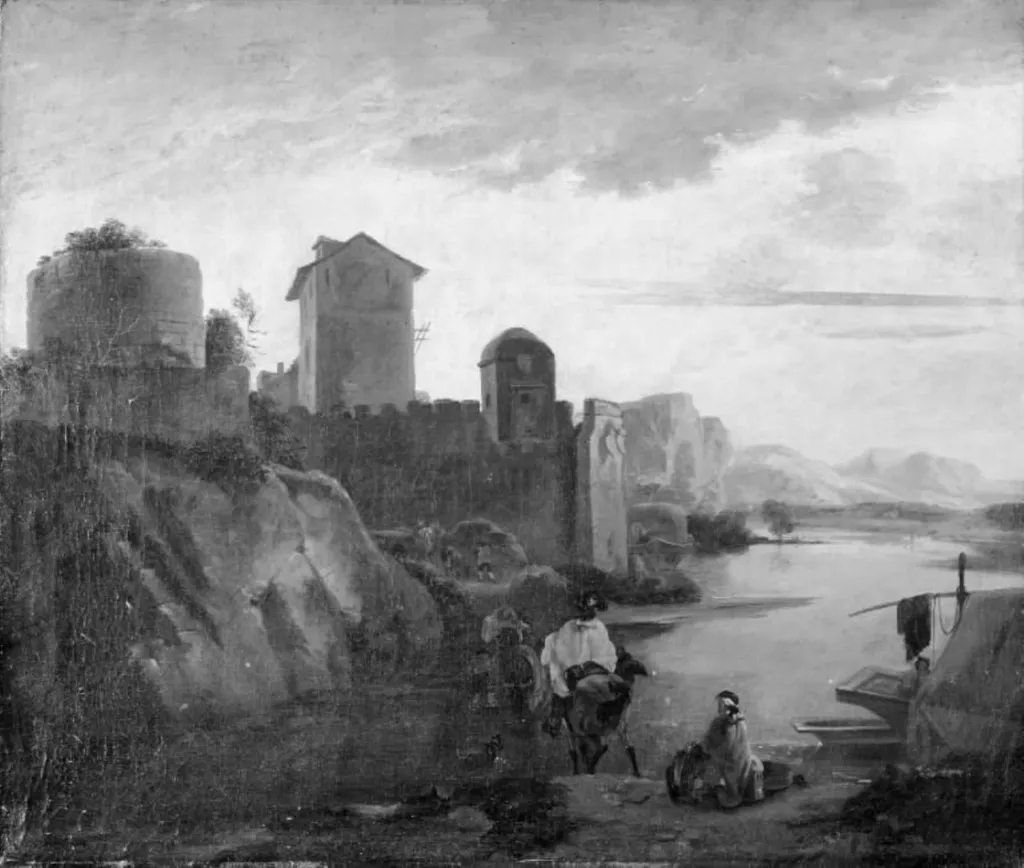
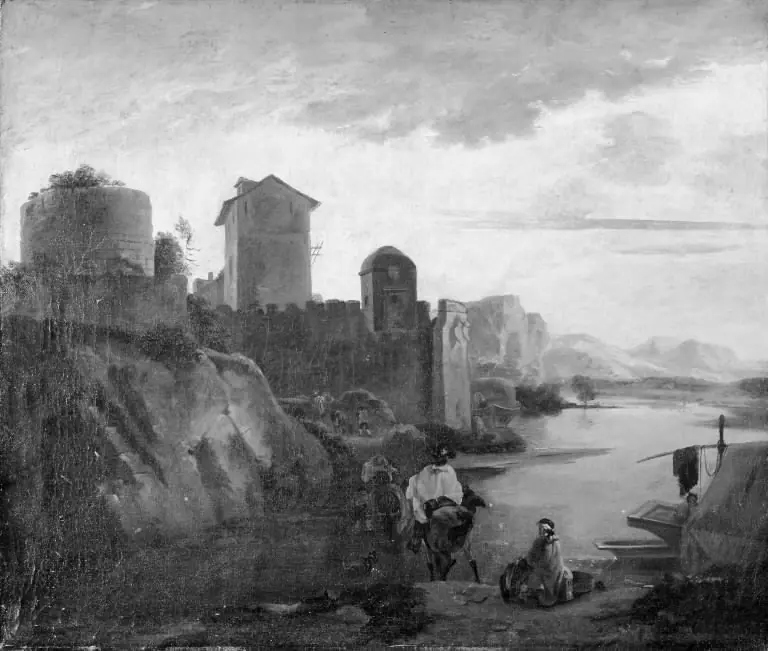
Landscape with Travellers is an unspecified painting by Unknown. It dates from 1750 and is held in the collection of the Statens Museum for Kunst. Painted around 1750, this landscape depicts a quiet, remote stretch of countryside with minimal human presence.
About this work
Overview
The scene centers on a winding path where two figures move slowly—one walking, the other guiding a donkey—alongside a river and ancient stone structures.
Painted around 1750, this landscape depicts a quiet, remote stretch of countryside with minimal human presence. The scene centers on a winding path where two figures move slowly—one walking, the other guiding a donkey—alongside a river and ancient stone structures. The atmosphere is subdued, with overcast skies and muted tones reinforcing a sense of solitude and timelessness. The work is currently held by the Museum of Ethnography.
Subject & Meaning
The two travelers, one on foot and the other with a laden donkey, suggest movement through an indifferent landscape—possibly merchants, pilgrims, or laborers. Their small scale relative to the terrain emphasizes human transience against enduring natural and architectural forms. The crumbling walls and towers hint at abandoned settlements, reinforcing themes of decay and quiet endurance rather than narrative drama.
Technique & Style
The artist employs soft chiaroscuro to model the rocky cliffs and stone structures, using gradual tonal shifts rather than sharp lines to suggest volume and depth. The sky is rendered in diffused grays, blending seamlessly with the land to create a unified, hazy atmosphere. Brushwork is restrained, avoiding detail in favor of broad, atmospheric effects that prioritize mood over precision.
History & Provenance
The painting’s early history is undocumented, but it entered the collection of the Museum of Ethnography in the late 19th century. Its classification within an ethnographic context suggests it was acquired for its depiction of rural life and material culture, particularly the donkey’s pack and the travelers’ attire, rather than for its landscape aesthetics alone.
Context
Created during the mid-18th century, the work reflects a growing interest in unidealized natural scenes, distinct from grand classical landscapes. While contemporaries often emphasized drama or myth, this piece favors quiet observation. Its focus on ordinary travelers and decaying architecture aligns with emerging regional sensibilities that valued authenticity over ornamentation.
Legacy
Though not widely exhibited or reproduced, the painting contributes to a quieter strand of 18th-century landscape art that valued stillness and subtlety. Its inclusion in an ethnographic museum underscores how such works were later interpreted as records of daily life, influencing how rural travel and material culture were studied in the 19th century.
Artist & collection

 Domestic Scene
 Giacomo and Cardinal Marco, investing Andrea, Abbot of San Zeno, with his Benefice
 The Nymph of Fontainebleau
 Portrait of a Woman
 Madonna and Child with Saints in the Enclosed Garden
 Venus and Minerva
 Family Group of Four on Sofa
 Wall painting from Room H of the Villa of P. Fannius Synistor at Boscoreale
 Italian Landscape
 Italian Landscape
 Southern Landscape with Angler
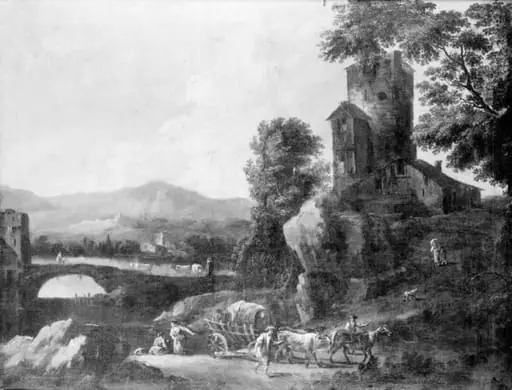 Mountain Landscape with Picturesque Buildings
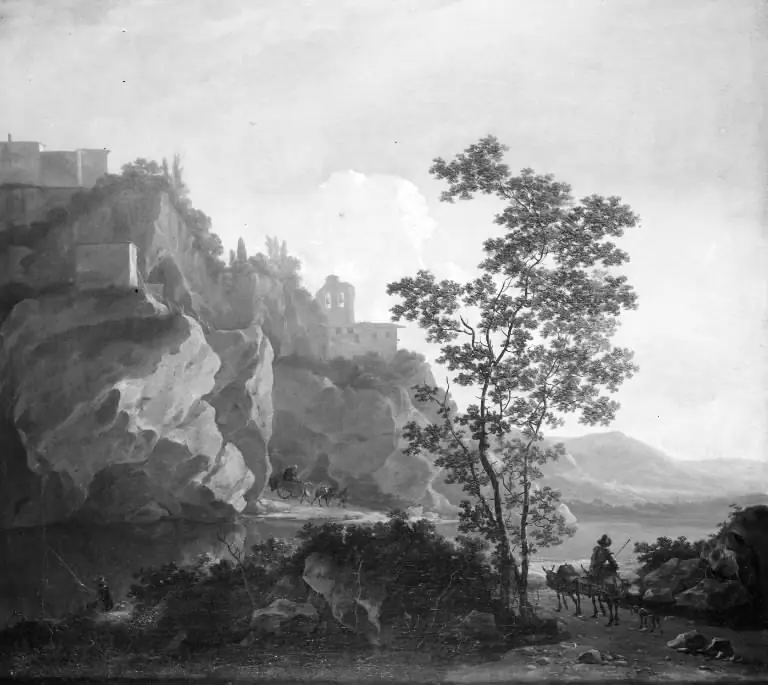 Southern Landscape with Angler
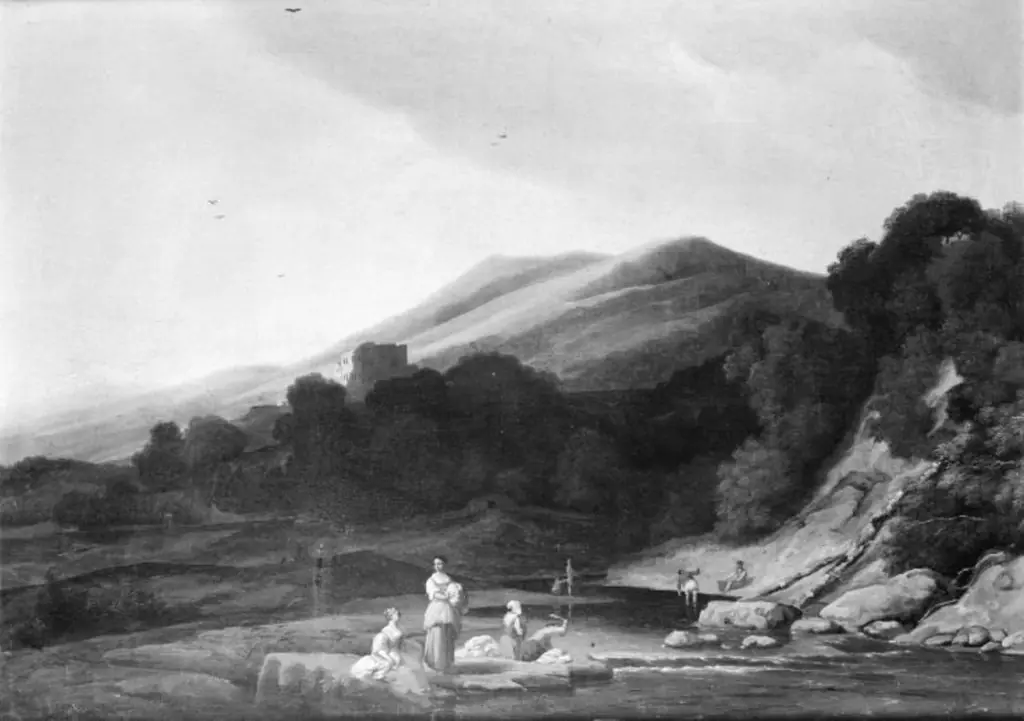 Mountainous Landscape with Washerwomen
 Mountainous Landscape with Washerwomen
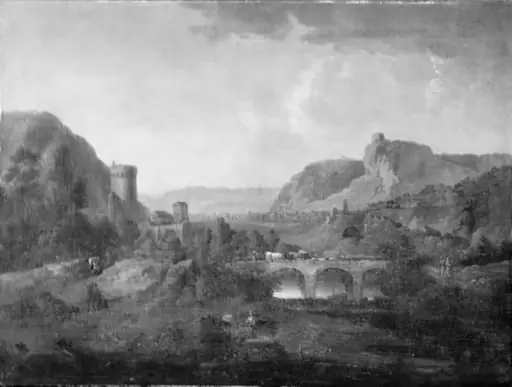 Mountain Scenery with a River and a Bridge
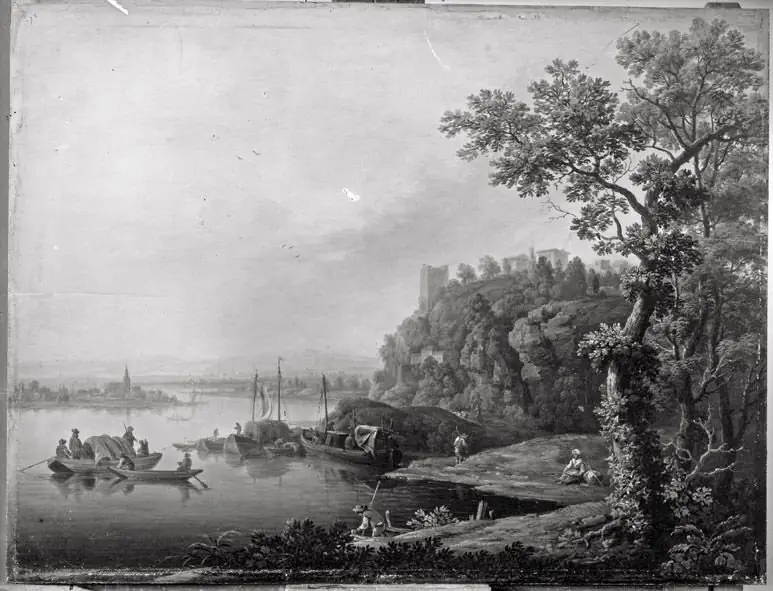 Rhine Landscape
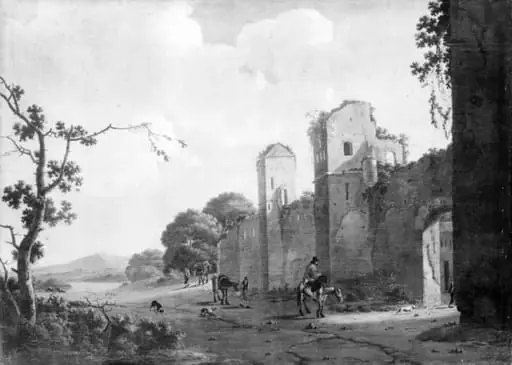 Landscape with Ruins
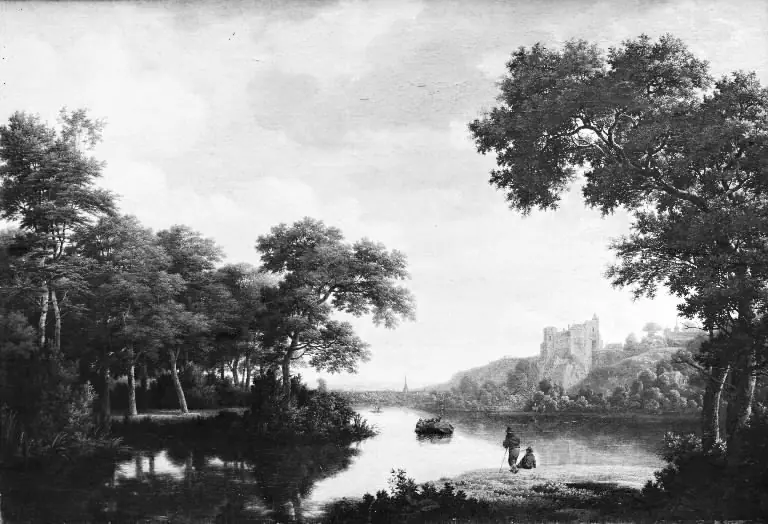 River Landscape
 Landscape with Travellers