Artwork
The Holy Family with the Infant St John, St Elizabeth and St Anna
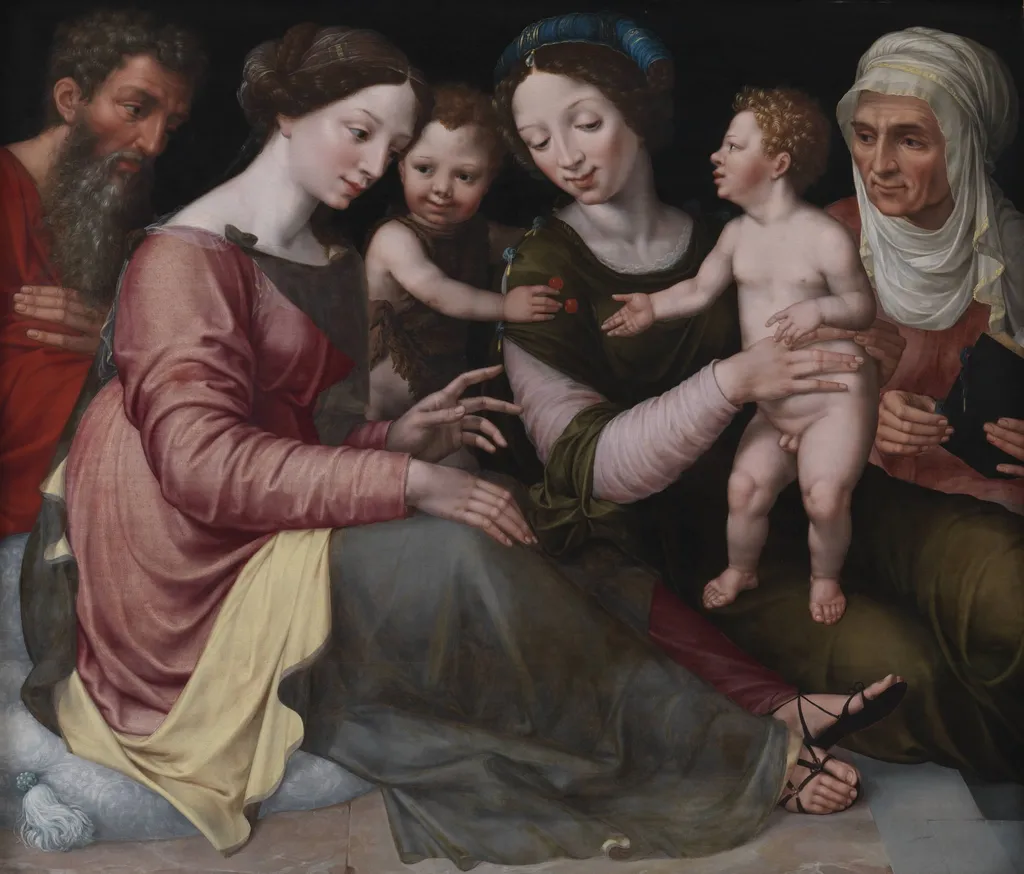
The Holy Family with the Infant St John, St Elizabeth and St Anna is a photography by Unknown. It dates from 1541 and is held in the collection of the Statens Museum for Kunst.
About this work
Overview
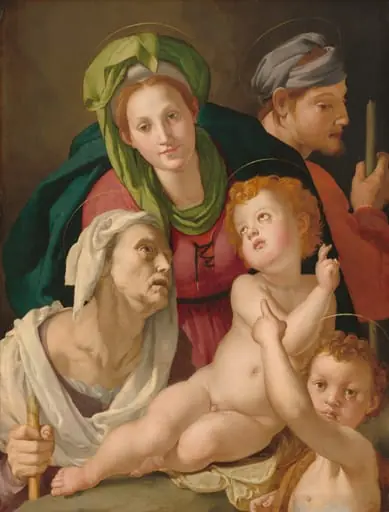
Painted around 1541, this religious work depicts the Holy Family accompanied by Saint Elizabeth, Saint Anna, and the infant Saint John the Baptist.
Painted around 1541, this religious work depicts the Holy Family accompanied by Saint Elizabeth, Saint Anna, and the infant Saint John the Baptist. The composition centers on the Virgin Mary holding the Christ child, surrounded by figures connected through kinship and faith. Though attributed to an artist active in the mid-16th century, the painting’s current location is the Museum of Ethnography, where it is preserved as part of a broader collection of devotional imagery.
Subject & Meaning
The scene illustrates a moment of familial and spiritual intimacy, drawing from apocryphal traditions that place Saint Anna, Mary’s mother, and Saint Elizabeth, John’s mother, together with the Holy Family. The presence of the infant John, often shown as a precursor to Christ, reinforces themes of divine lineage and prophetic recognition. The quiet gathering suggests contemplation rather than spectacle, emphasizing sacred kinship over dramatic narrative.
Technique & Style
The artist employs soft, diffused lighting to model the faces and hands of the figures, creating a sense of stillness and reverence. Dark, unmodeled backgrounds isolate the group, focusing attention on their gestures and expressions. Clothing is rendered with subtle detail, reflecting contemporary 16th-century dress rather than idealized biblical attire, grounding the sacred in the familiar. The brushwork remains restrained, avoiding theatricality in favor of quiet dignity.
History & Provenance
The painting’s early history is undocumented, and its journey to the Museum of Ethnography remains unclear. It was likely created for private devotion, possibly in a northern European context, before entering institutional collection in the 20th century. Its classification within an ethnographic museum suggests its value was later interpreted through cultural rather than purely religious lenses, reflecting shifting museum practices.
Context
Created during the Reformation, this image reflects enduring Catholic devotional practices despite rising Protestant critiques of religious imagery. The inclusion of Saint Anna and Saint Elizabeth—figures not central to canonical scripture—points to popular piety and the persistence of medieval traditions. Such compositions were common in regions where Catholic devotion remained strong, serving as aids to personal prayer and familial reflection.
Legacy
Though not widely reproduced or studied in major art historical narratives, the painting offers insight into regional devotional art of the mid-16th century. Its preservation in an ethnographic setting highlights how religious objects were reclassified in modern institutions, shifting from sacred artifacts to cultural artifacts. It remains a quiet testament to the domestic and familial dimensions of Renaissance spirituality.
Artist & collection

 Domestic Scene
 Giacomo and Cardinal Marco, investing Andrea, Abbot of San Zeno, with his Benefice
 The Nymph of Fontainebleau
 Portrait of a Woman
 Madonna and Child with Saints in the Enclosed Garden
 Venus and Minerva
 Family Group of Four on Sofa
 Wall painting from Room H of the Villa of P. Fannius Synistor at Boscoreale
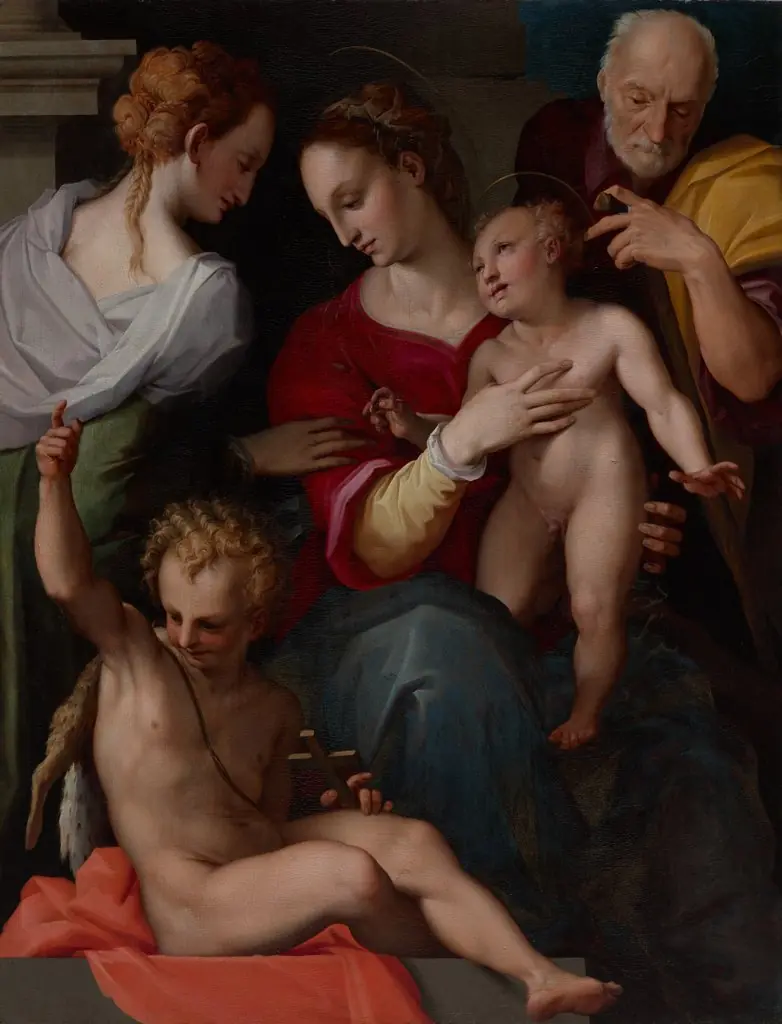 Holy Family with the Mystic Marriage of Saint Catherine
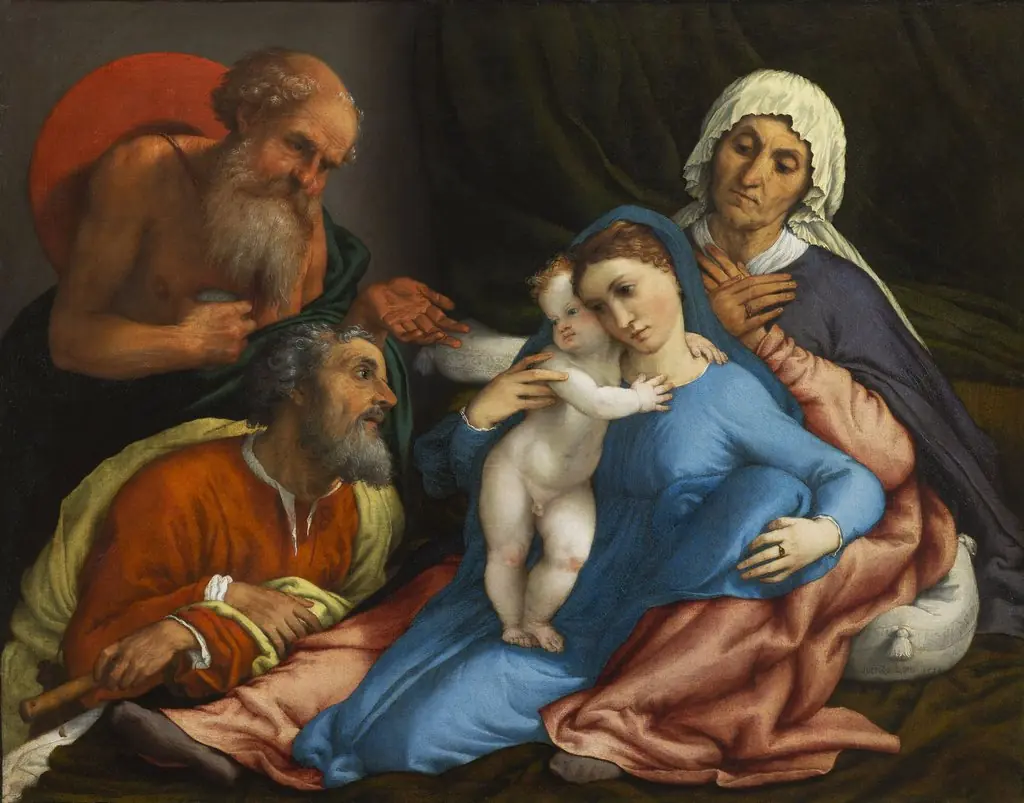 Madonna and Child with Saints
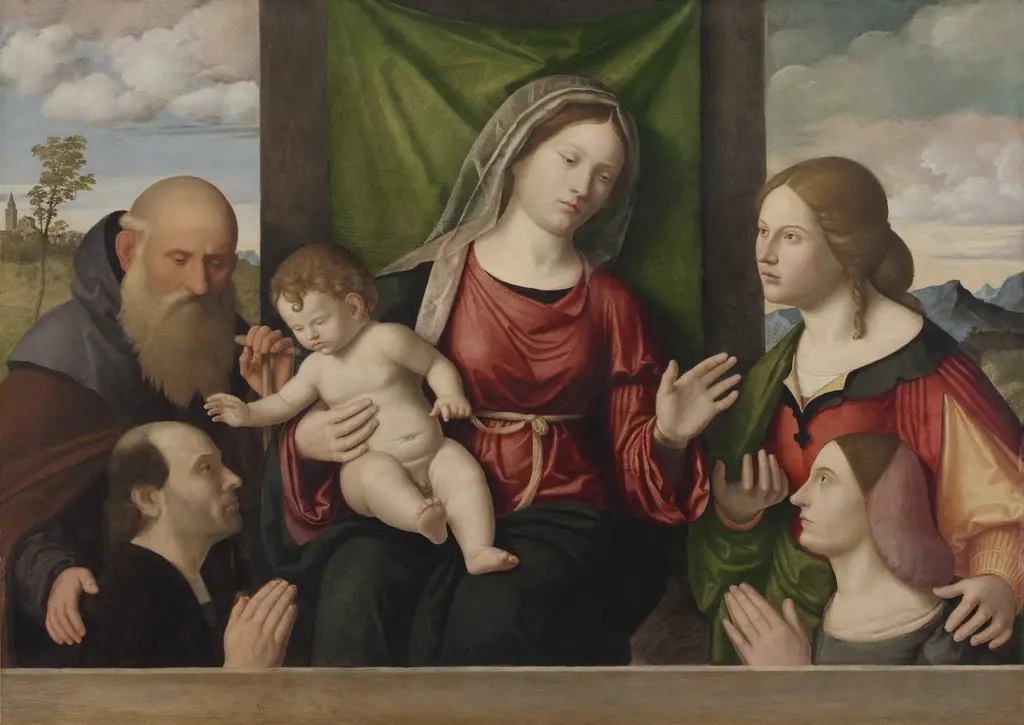 Virgin and Child with Saints and Donors
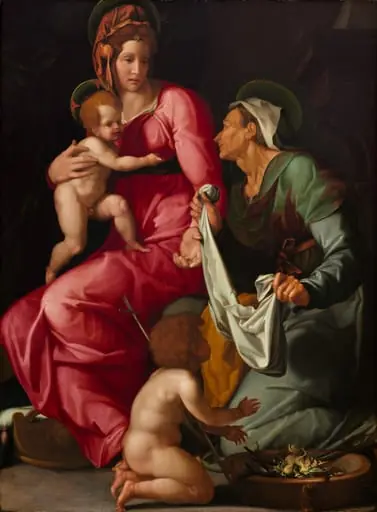 Madonna and Child with Saint Elizabeth and Saint John the Baptist
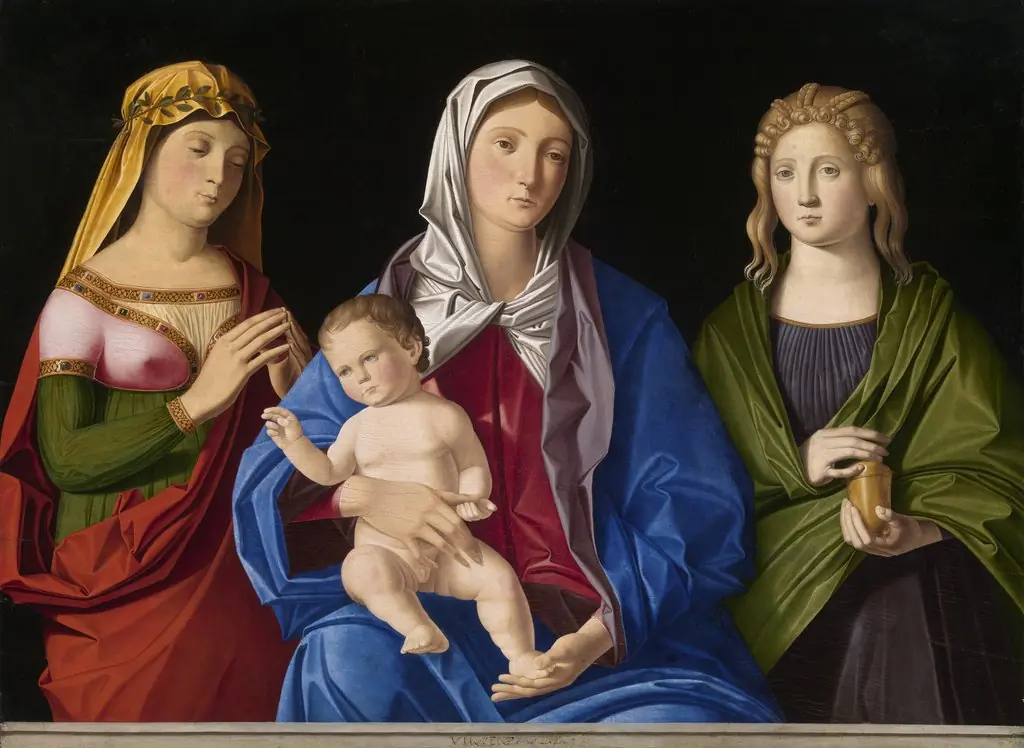 Virgin and Child with Saint Mary Magdalene and Another Female Saint
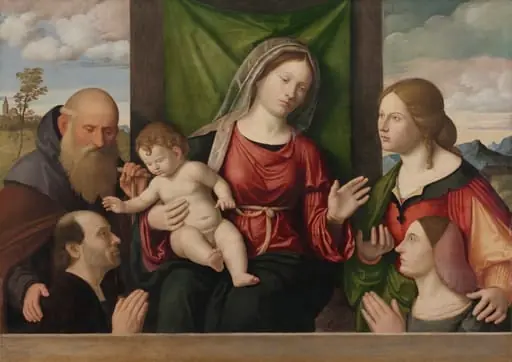 Virgin and Child with Saints and Donors
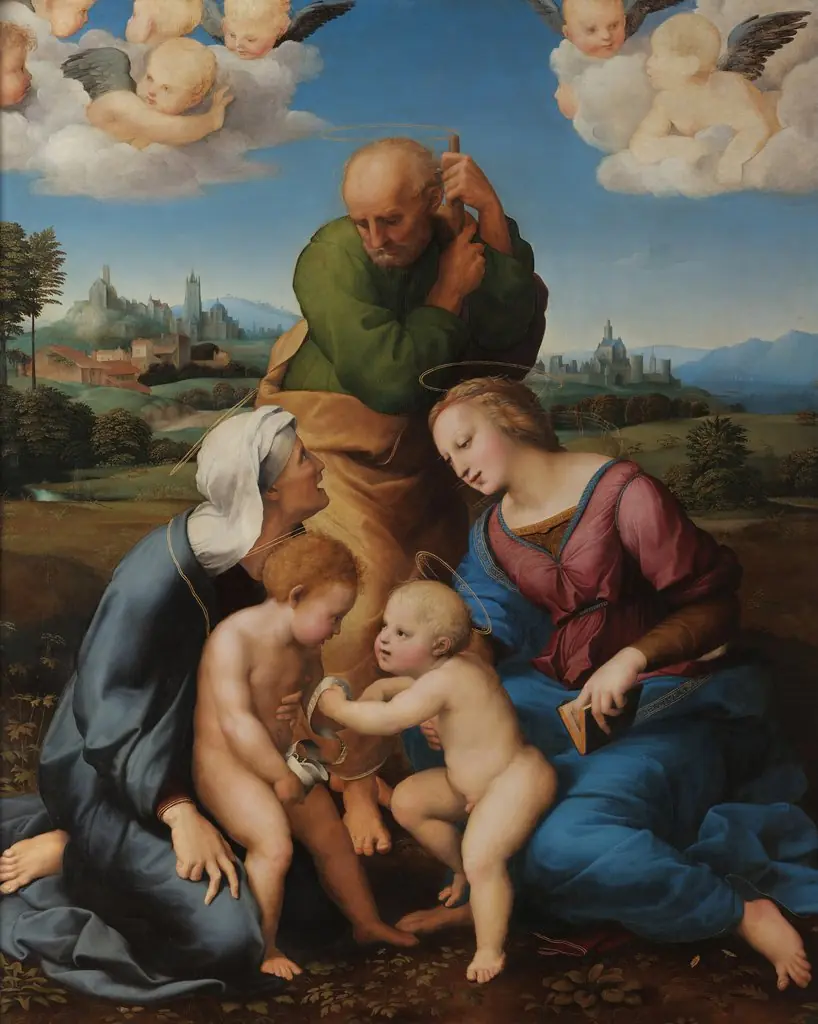 Canigiani Holy Family
 The Holy Family