Artwork
Stone Cartouche with Fruit and Flower Garland
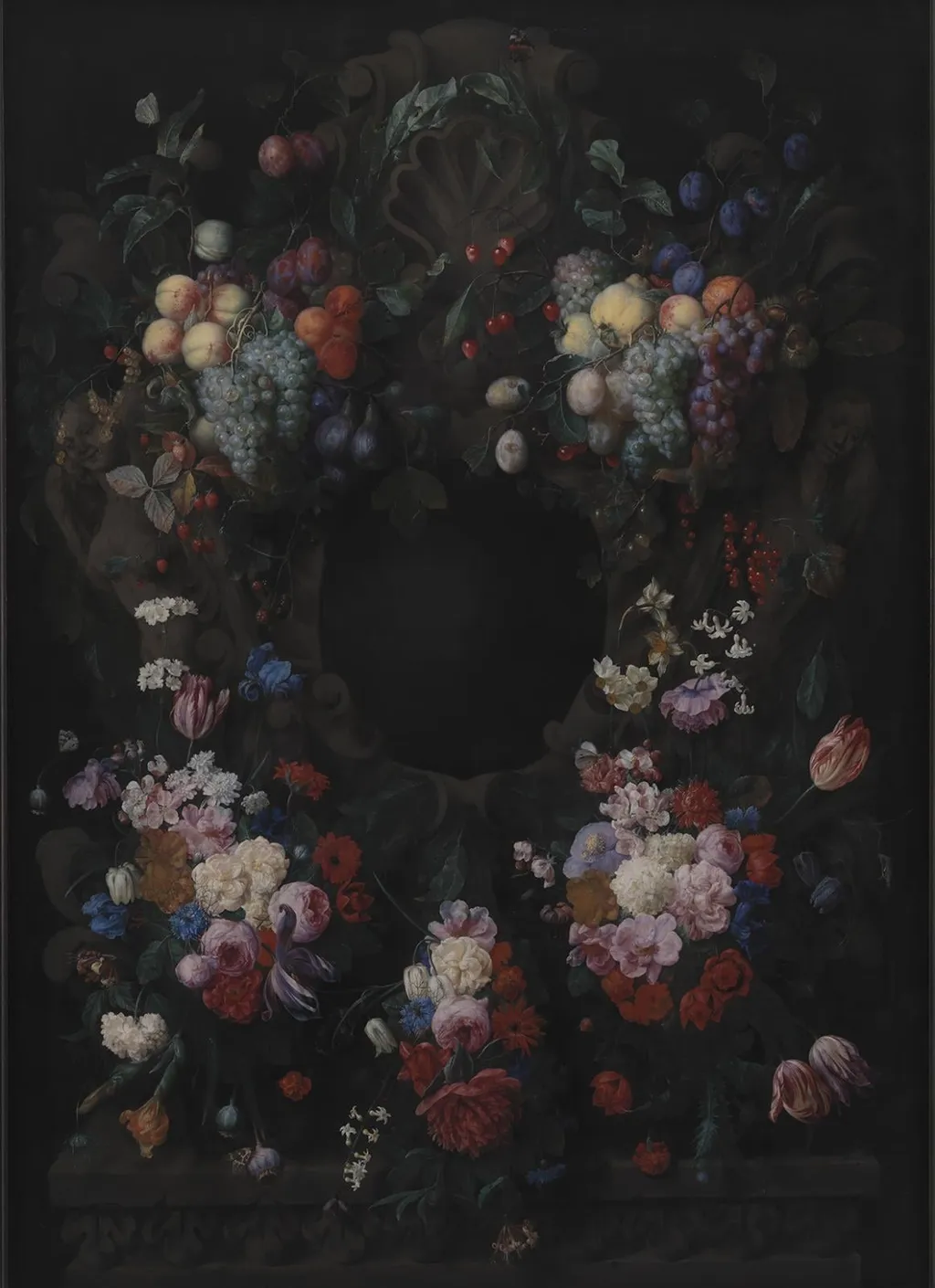
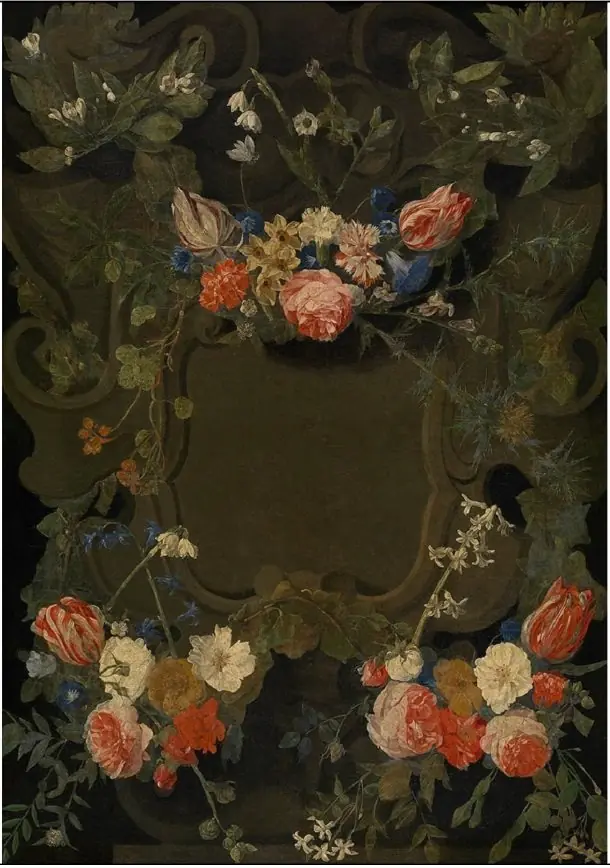
Stone Cartouche with Fruit and Flower Garland is a photography by the Baroque artist Unknown. It dates from 1665 and is held in the collection of the Statens Museum for Kunst. This stone cartouche, dated 1665, is a carved relief depicting a shield-like form adorned with a naturalistic garland of fruit and flowers.
About this work
Overview
This stone cartouche, dated 1665, is a carved relief depicting a shield-like form adorned with a naturalistic garland of fruit and flowers.
This stone cartouche, dated 1665, is a carved relief depicting a shield-like form adorned with a naturalistic garland of fruit and flowers. Executed in a muted palette of greens, browns, and grays, the work emphasizes texture and subtle tonal variation. Though labeled as a painting, the medium is stone, suggesting it was likely part of architectural decoration. It resides in the Museum of Ethnography, where its function as a decorative element in a non-European context is under study.
Subject & Meaning
The cartouche frames a central design with a garland of grapes, apples, berries, tulips, and roses, arranged in a balanced, symmetrical pattern. These elements evoke abundance and seasonal cycles, common motifs in early modern European ornamentation. The use of stone implies permanence, possibly signifying enduring prosperity or commemorative intent. The absence of figural elements directs focus to the natural forms, suggesting a quiet celebration of nature’s bounty.
Technique & Style
The relief is carved with precise detail, capturing the veining of leaves, the dimpled skin of fruit, and the curl of petals. The artist employed low relief to maintain a flat surface while suggesting depth through subtle modeling. Colors are restrained, relying on the natural tones of stone and minimal pigmentation. The scalloped border and central motif reflect influences from Renaissance and Baroque decorative traditions, adapted into a monochromatic, tactile form.
History & Provenance
Created in 1665, the cartouche’s origins are tied to a European artistic context, though its current home in the Museum of Ethnography suggests it entered a non-European collection, possibly through colonial acquisition or trade. Its attribution to 1951_person remains unverified in public records, and its early history is undocumented. The work’s journey to the museum reflects broader patterns of artifact migration in the 19th and 20th centuries.
Context
In mid-17th-century Europe, stone cartouches with floral and fruit garlands were common in architectural settings—adorning facades, fireplaces, or tombs. This piece aligns with a broader trend of naturalism in decorative arts, where botanically accurate renderings signaled refinement. Its presence in an ethnographic museum, however, raises questions about its cultural reception outside its original context, possibly as an exoticized object rather than a domestic ornament.
Legacy
Though not widely published or studied, the cartouche contributes to understanding how European decorative motifs were transmitted and recontextualized. Its preservation in an ethnographic collection highlights shifting museum practices regarding the classification of art and artifact. The work remains a quiet example of cross-cultural material exchange, offering insight into how aesthetic forms traveled beyond their origins.
Artist & collection

 Domestic Scene
 Giacomo and Cardinal Marco, investing Andrea, Abbot of San Zeno, with his Benefice
 The Nymph of Fontainebleau
 Portrait of a Woman
 Madonna and Child with Saints in the Enclosed Garden
 Venus and Minerva
 Family Group of Four on Sofa
 Wall painting from Room H of the Villa of P. Fannius Synistor at Boscoreale
 Stone Cartouche with Fruit and Flower Garland
 Stone Cartouche with Fruit and Flower Garland
 Stone Cartouche with Fruit and Flower Garland
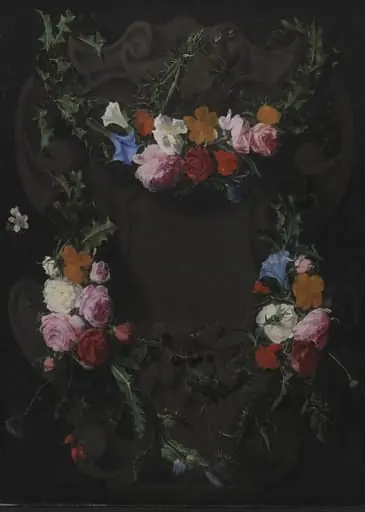 A Stone Cartouche with a Garland of Flowers
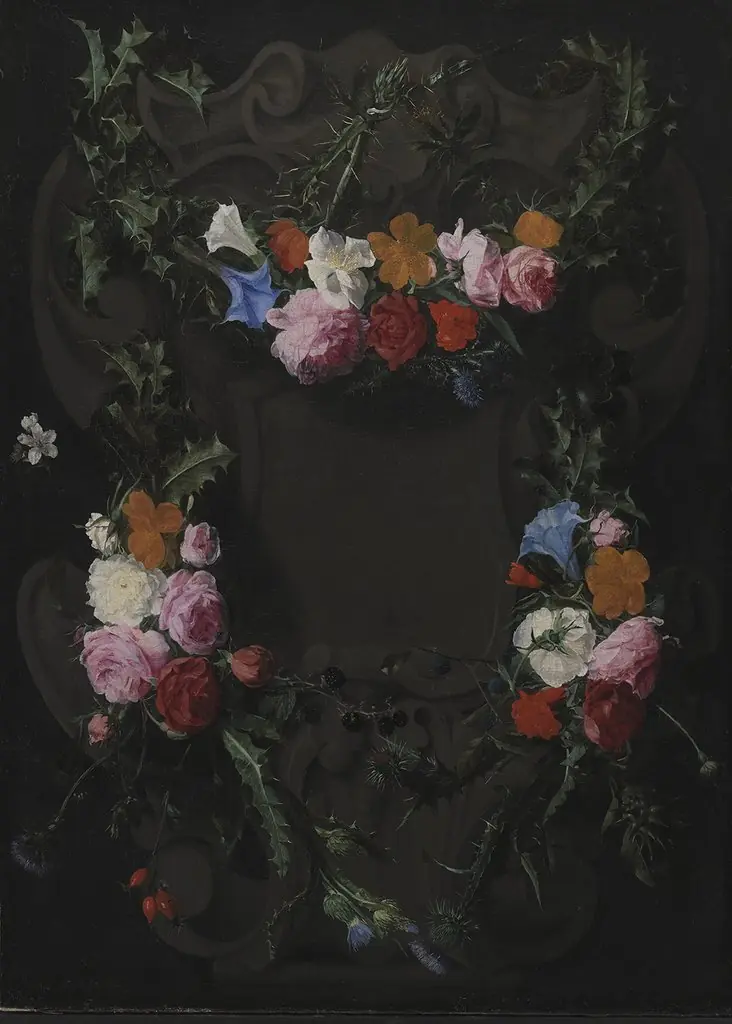 A Stone Cartouche with a Garland of Flowers
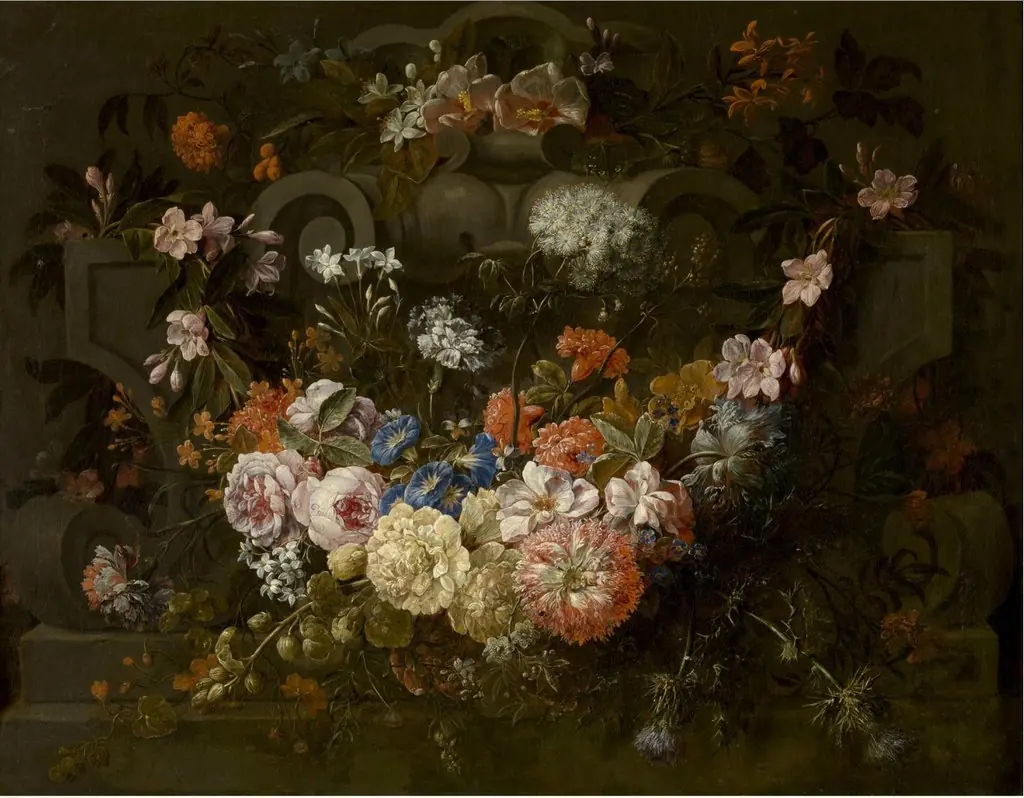 Cartouche with Flowers
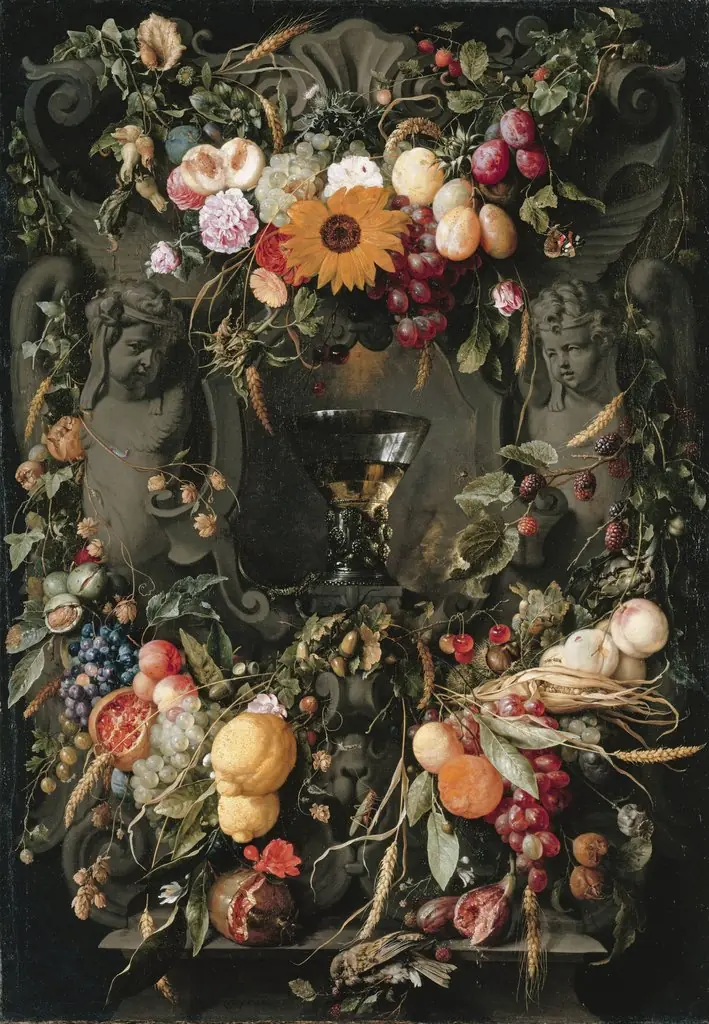 Cartouche with fruit and flowers and wine glass
 Flower garland
 Flower Garland
 A Garland of Flowers