Artwork
A Stone Cartouche with a Garland of Flowers
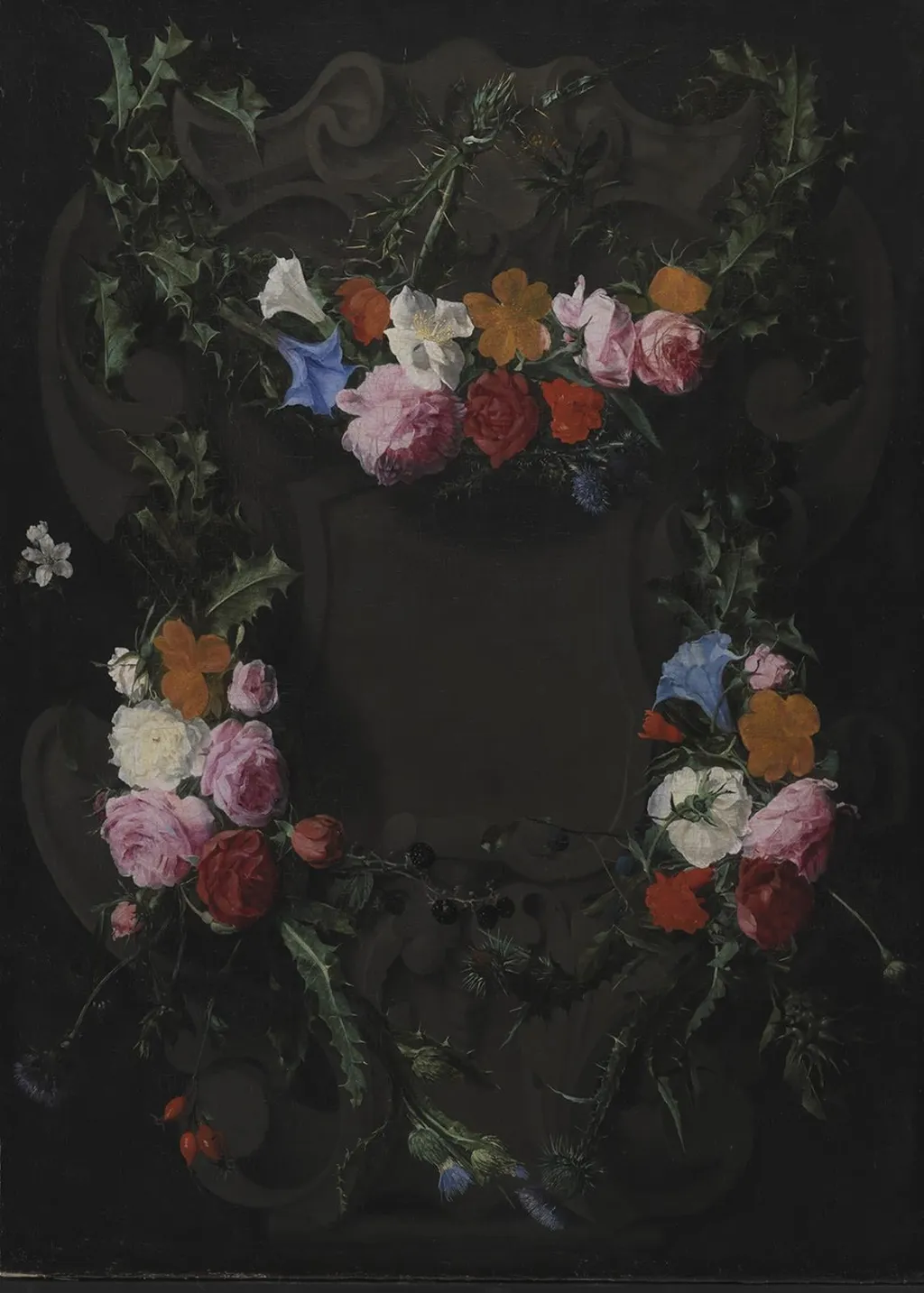
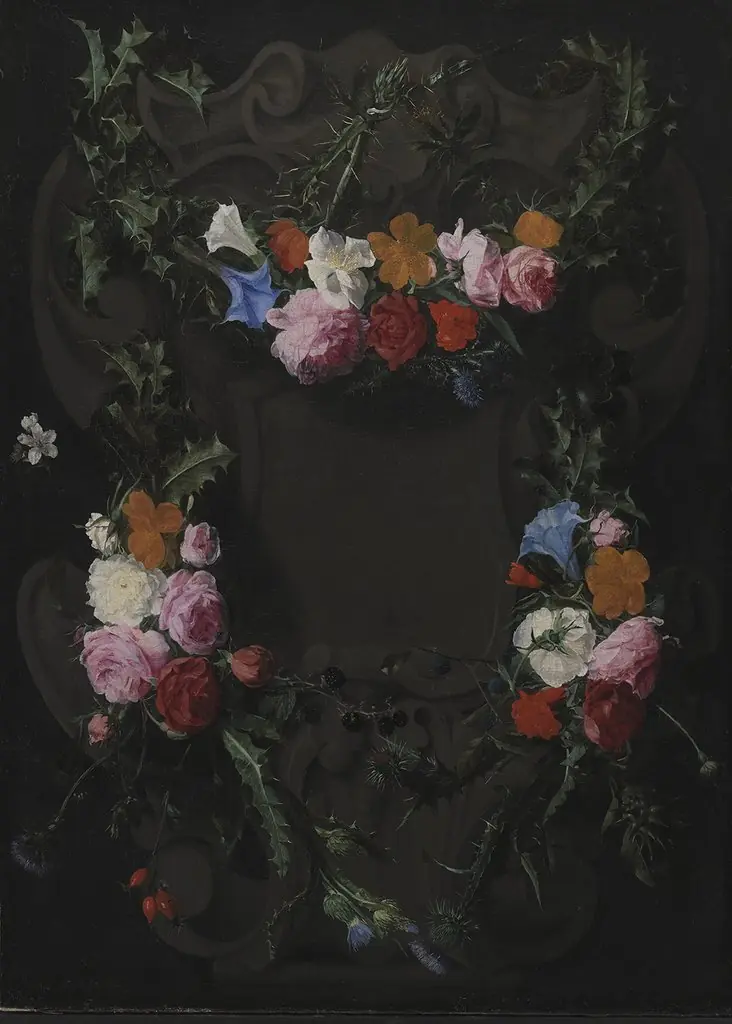
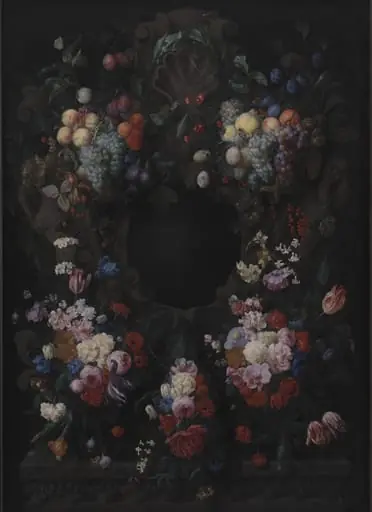
A Stone Cartouche with a Garland of Flowers is a photography by Unknown. It dates from 1650 and is held in the collection of the Statens Museum for Kunst. Created around 1650, this work presents a floral arrangement rendered to resemble a carved stone cartouche.
About this work
Overview
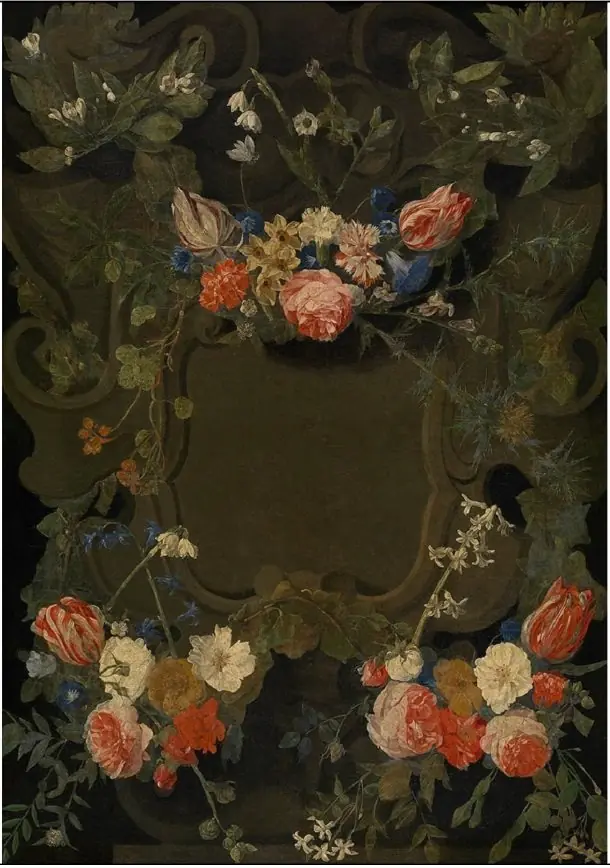
The composition features densely packed flowers and foliage pressed against a dark, flat background, mimicking the appearance of a relief carved from stone.
Created around 1650, this work presents a floral arrangement rendered to resemble a carved stone cartouche. The composition features densely packed flowers and foliage pressed against a dark, flat background, mimicking the appearance of a relief carved from stone. Though executed as a two-dimensional image, the tight arrangement of botanical elements suggests a tactile, almost sculptural quality, blurring the line between painting and relief.
Subject & Meaning
The floral garland encircles a central void where a cartouche would typically hold text or emblem, suggesting a symbolic frame rather than a literal one. The variety of blooms—roses, daisies, and less common hues—may reflect seasonal abundance or the transience of life. The absence of text or figure shifts focus to nature itself, inviting contemplation of beauty, decay, and the passage of time through botanical form.
Technique & Style
The artist employed a method resembling pressed-flower collage, arranging petals and leaves with precision to create a flat yet volumetric effect. High contrast between the vivid floral tones and the dark background enhances visual depth without using modeling or shadow gradients. The rigid composition and lack of perspective suggest a decorative intent, prioritizing pattern and color harmony over naturalistic illusion.
History & Provenance
The work resides in the Museum of Ethnography, indicating its acquisition as part of a broader collection of material culture rather than fine art. Its origin is undocumented beyond the approximate date and maker, suggesting it may have been produced for private or domestic use, possibly as a devotional object or decorative panel. Its preservation implies value placed on its craftsmanship rather than its authorship.
Context
In mid-17th-century Europe, floral still lifes and cartouche designs were common in decorative arts, often symbolizing wealth, piety, or the fleeting nature of life. This piece aligns with regional traditions of naturalistic botanical representation but diverges by eliminating narrative or human elements. Its stone-like border reflects a broader fascination with imitating architectural forms in painted or crafted surfaces.
Legacy
Though not widely attributed or exhibited beyond institutional holdings, the work exemplifies a quiet, localized tradition of floral ornamentation that prioritized texture and color over dramatic lighting or perspective. It stands as a quiet counterpoint to the chiaroscuro-driven still lifes of its era, offering insight into how botanical beauty was preserved and framed in non-painting media.
Artist & collection

 Domestic Scene
 Giacomo and Cardinal Marco, investing Andrea, Abbot of San Zeno, with his Benefice
 The Nymph of Fontainebleau
 Portrait of a Woman
 Madonna and Child with Saints in the Enclosed Garden
 Venus and Minerva
 Family Group of Four on Sofa
 Wall painting from Room H of the Villa of P. Fannius Synistor at Boscoreale