Artwork
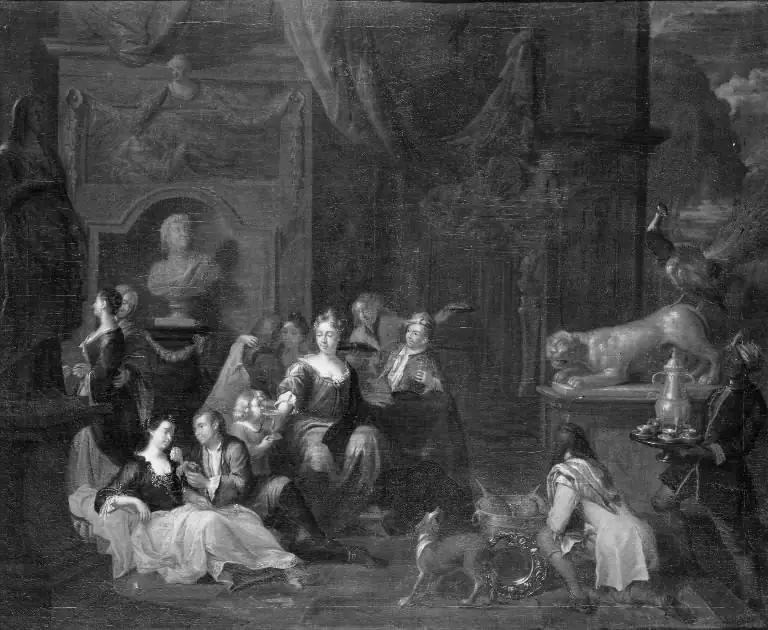
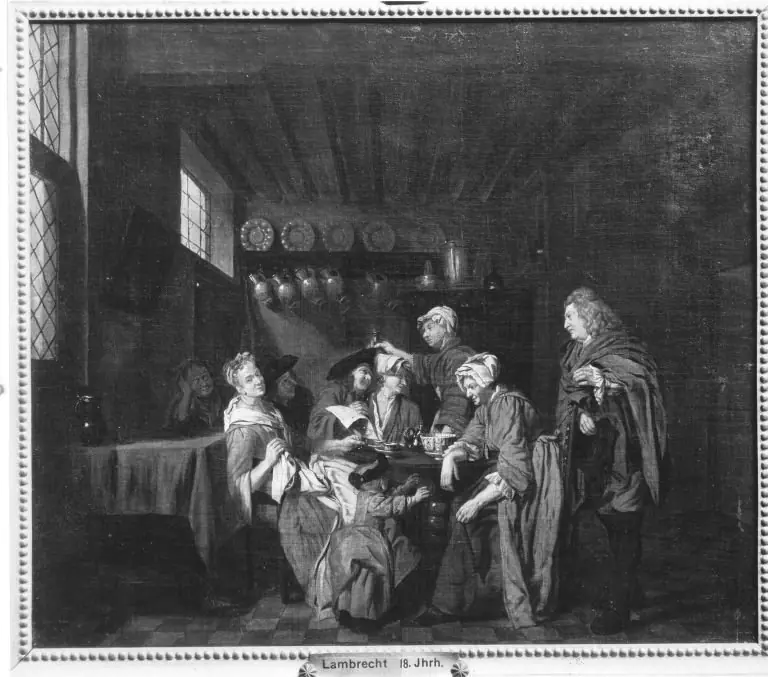
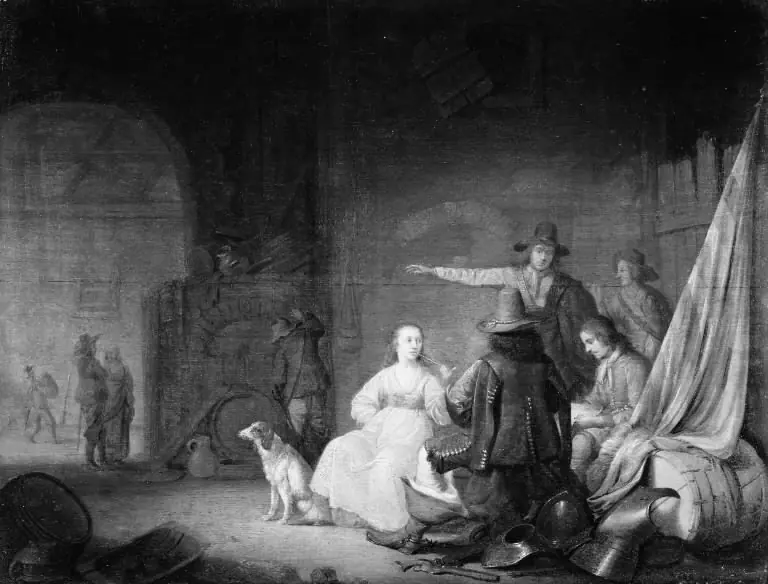
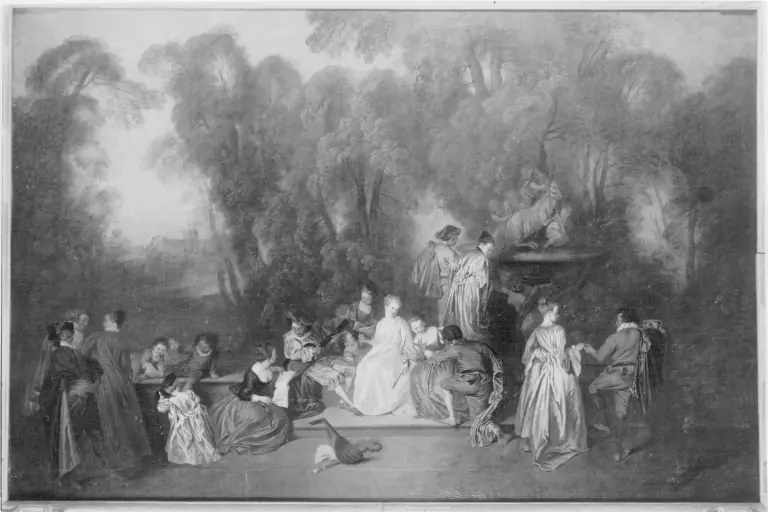
Merry Company
Merry Company is a photography by Unknown. It dates from 1650 and is held in the collection of the Statens Museum for Kunst.
About this work
Overview
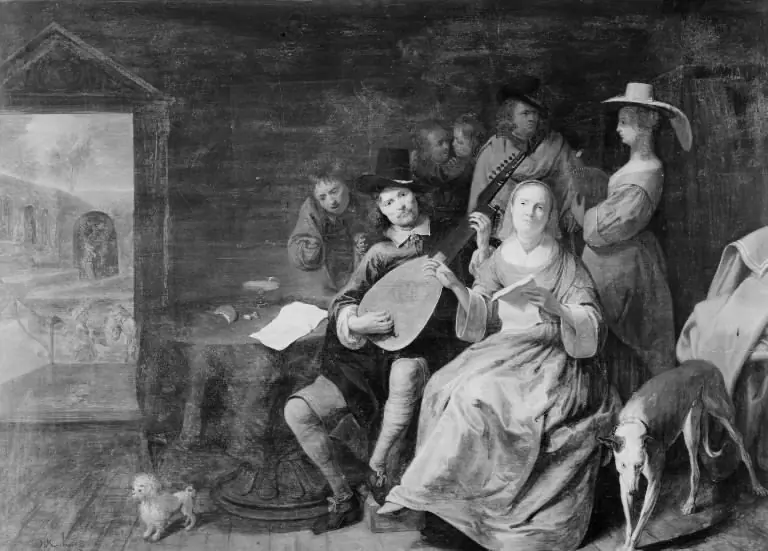
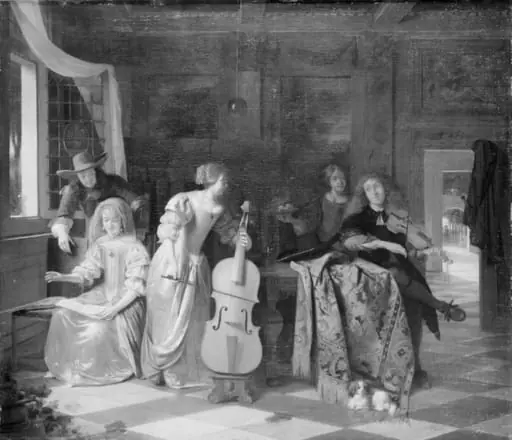
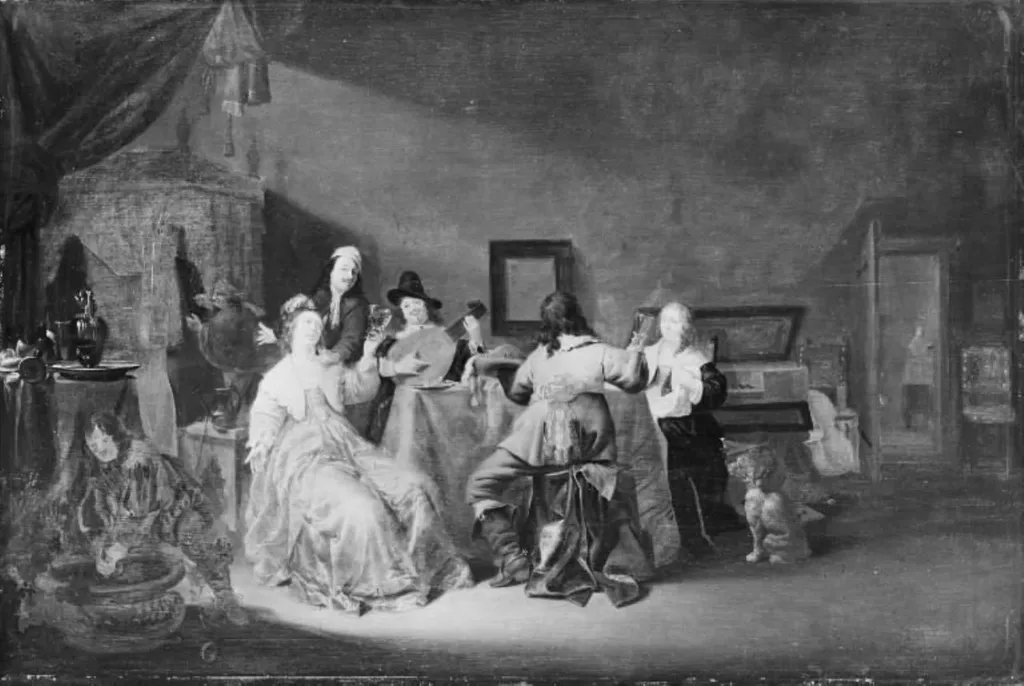
Created around 1650, this black-and-white photograph captures a domestic scene titled Merry Company, attributed to an artist active in the mid-17th century.
Created around 1650, this black-and-white photograph captures a domestic scene titled Merry Company, attributed to an artist active in the mid-17th century. The image is part of the Museum of Ethnography’s collection. It depicts a group of six individuals in an intimate interior, their interactions suggesting a moment of informal celebration. The composition emphasizes warmth and movement, framed by everyday objects and soft contrasts of light and dark.
Subject & Meaning
The scene portrays a casual gathering, likely a musical or social evening among acquaintances. A seated woman, dressed in a long garment, appears central, while others engage with instruments, conversation, or the space around them. The presence of a dog, a globe, and a lamp hints at domestic life enriched by curiosity and leisure. The atmosphere conveys quiet camaraderie rather than grand festivity, reflecting ordinary moments of human connection.
Technique & Style
The photograph employs chiaroscuro to define form and depth, with strong contrasts between light and shadow shaping faces, clothing, and objects. The lighting draws attention to expressive gestures and textures—fabric folds, wooden surfaces, metal fixtures—enhancing the tactile quality of the scene. The composition is unposed, suggesting spontaneity, while the cluttered interior adds narrative richness without overwhelming the figures.
History & Provenance
The photograph was likely made in the late 19th or early 20th century as a reproduction of a painted original, now lost or unidentified. It entered the Museum of Ethnography’s holdings through documented acquisitions, possibly as part of a broader effort to preserve visual records of historical domestic life. Its attribution to a 1969_person reflects a later cataloging convention, not the original maker’s identity.
Context
This image echoes 17th-century Dutch genre painting traditions, where intimate interiors and everyday activities were rendered with psychological nuance. Though the medium is photographic, its composition and subject matter align with works by artists like Pieter de Hooch or Jan Steen. The inclusion of musical instruments and domestic artifacts reflects contemporary values around leisure, literacy, and material culture in middle-class households.
Legacy
As a preserved visual record, the photograph serves as a reference for studies of domestic life, lighting techniques, and the transmission of artistic themes across media. It illustrates how early photography engaged with older pictorial conventions, bridging painting and realism. Its presence in an ethnographic collection underscores its value as a cultural artifact, not merely an aesthetic object.
Artist & collection

 Domestic Scene
 Giacomo and Cardinal Marco, investing Andrea, Abbot of San Zeno, with his Benefice
 The Nymph of Fontainebleau
 Portrait of a Woman
 Madonna and Child with Saints in the Enclosed Garden
 Venus and Minerva
 Family Group of Four on Sofa
 Wall painting from Room H of the Villa of P. Fannius Synistor at Boscoreale