Artwork
Allegory on the Crowning of Charles II
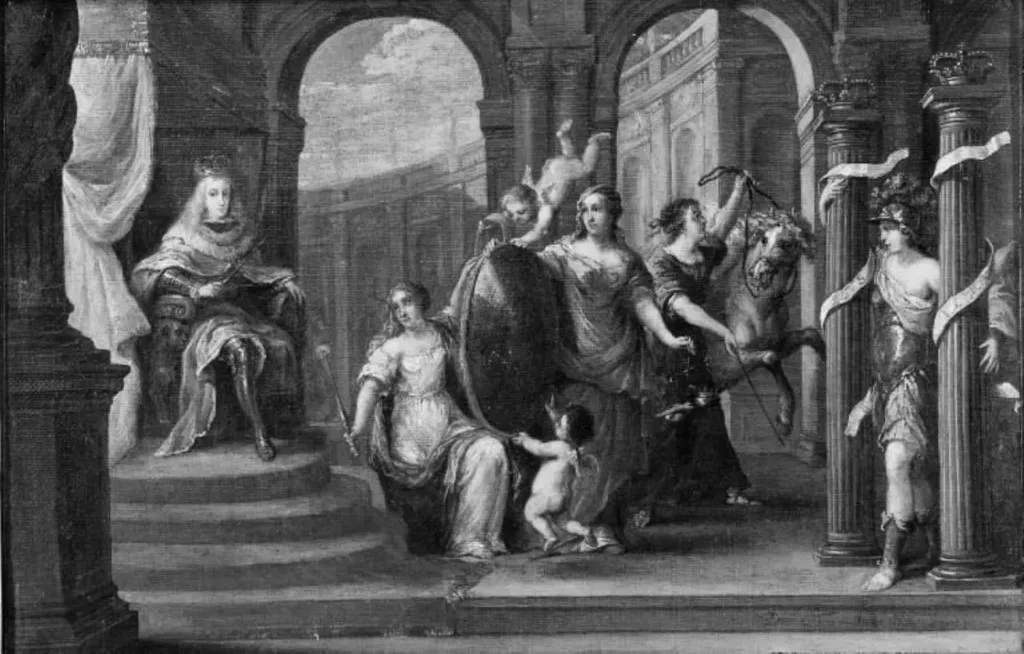
Allegory on the Crowning of Charles II is a photography by Unknown. It dates from 1650 and is held in the collection of the Statens Museum for Kunst.
About this work
Overview
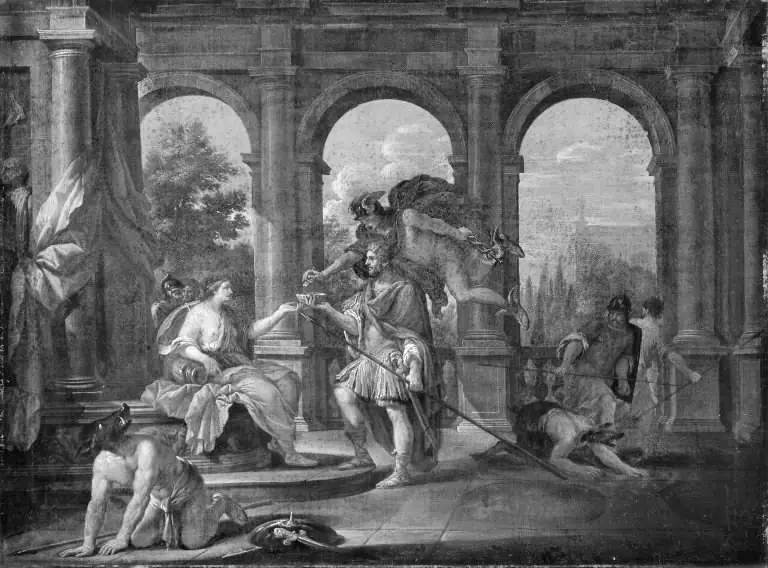
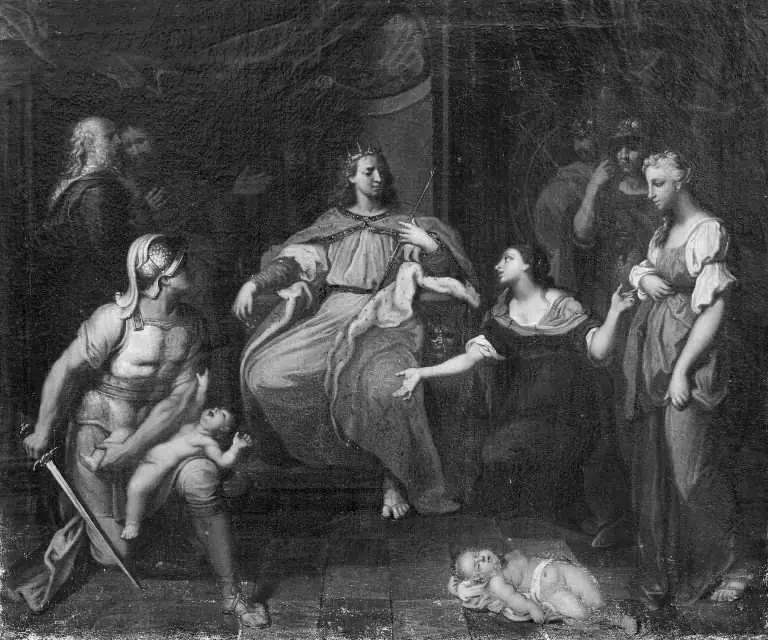
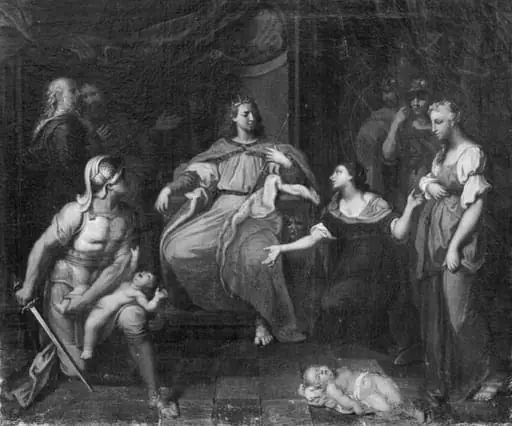
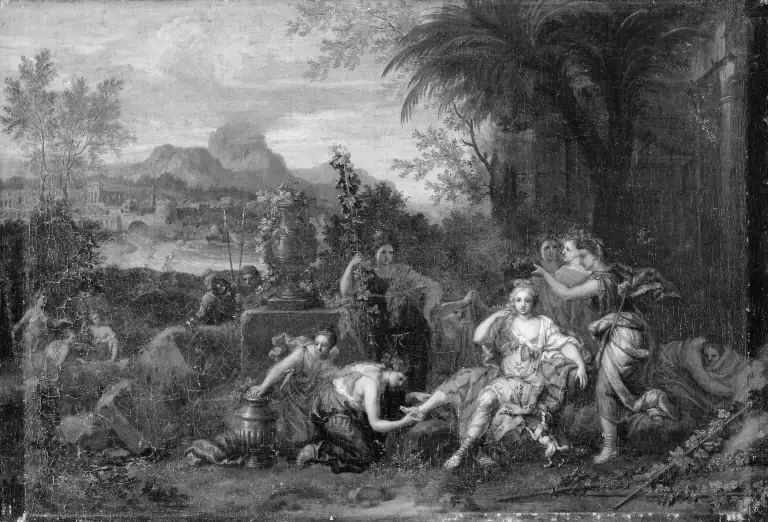
Allegory on the Crowning of Charles II is a mid‑seventeenth‑century work, attributed to an artist identified only as “1978_person.” Executed around 1650, the composition is preserved in the collection of the Museum of Ethnography. The image presents a staged tableau of seven figures arranged within an expansive, arched interior, rendered in monochrome.
Subject & Meaning
To the right, classical‑dressed figures—two men and a woman—pose with attributes such as a scroll and a column, reinforcing themes of legitimacy and governance.
The scene depicts an allegorical representation of Charles II’s coronation. Central to the narrative is a seated female figure cradling a child, flanked by other women who gesture toward her, suggesting a symbolic transmission of authority. To the right, classical‑dressed figures—two men and a woman—pose with attributes such as a scroll and a column, reinforcing themes of legitimacy and governance.
Technique & Style
The work employs a stark chiaroscuro scheme, using pronounced contrasts of light and shadow to model the figures and enhance spatial depth. The dramatic illumination highlights the drapery and facial expressions, while the architectural backdrop of towering arches and columns contributes to a sense of grandeur. The monochrome medium emphasizes tonal variation over color.
History & Provenance
Created circa 1650, the piece entered the Museum of Ethnography’s holdings at an unspecified date, where it remains part of the permanent collection. Its attribution to the enigmatic “1978_person” reflects a later scholarly identification rather than a contemporary signature, indicating ongoing research into its authorship.
Context
The allegorical format aligns with the visual language of Restoration England, when artists frequently employed classical motifs to celebrate the return of the monarchy. The inclusion of symbolic figures—such as the child and the scroll‑bearing man—mirrors contemporary iconography that linked royal authority to divine and historical precedent.
Artist & collection

 Domestic Scene
 Giacomo and Cardinal Marco, investing Andrea, Abbot of San Zeno, with his Benefice
 The Nymph of Fontainebleau
 Portrait of a Woman
 Madonna and Child with Saints in the Enclosed Garden
 Venus and Minerva
 Family Group of Four on Sofa
 Wall painting from Room H of the Villa of P. Fannius Synistor at Boscoreale