Artwork
Ships off the Dutch Coast
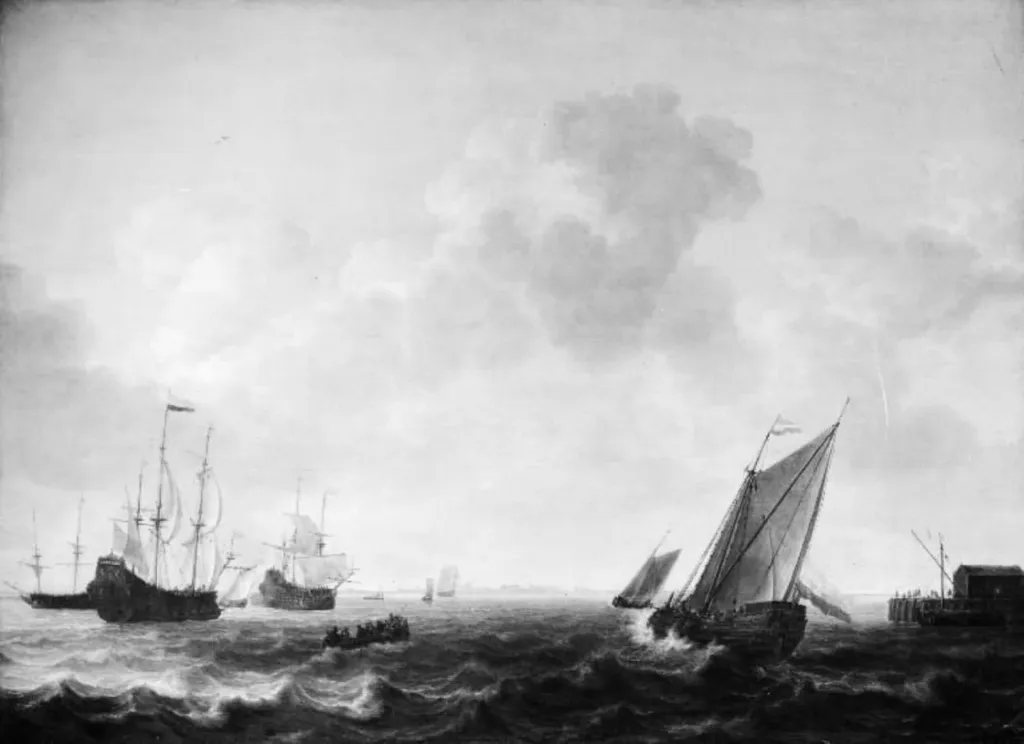
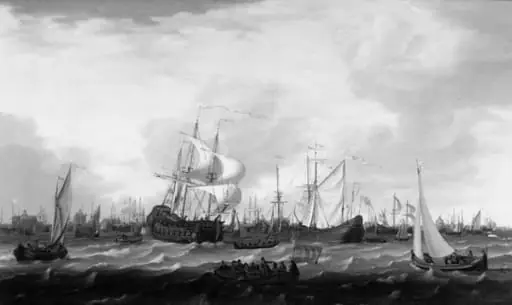
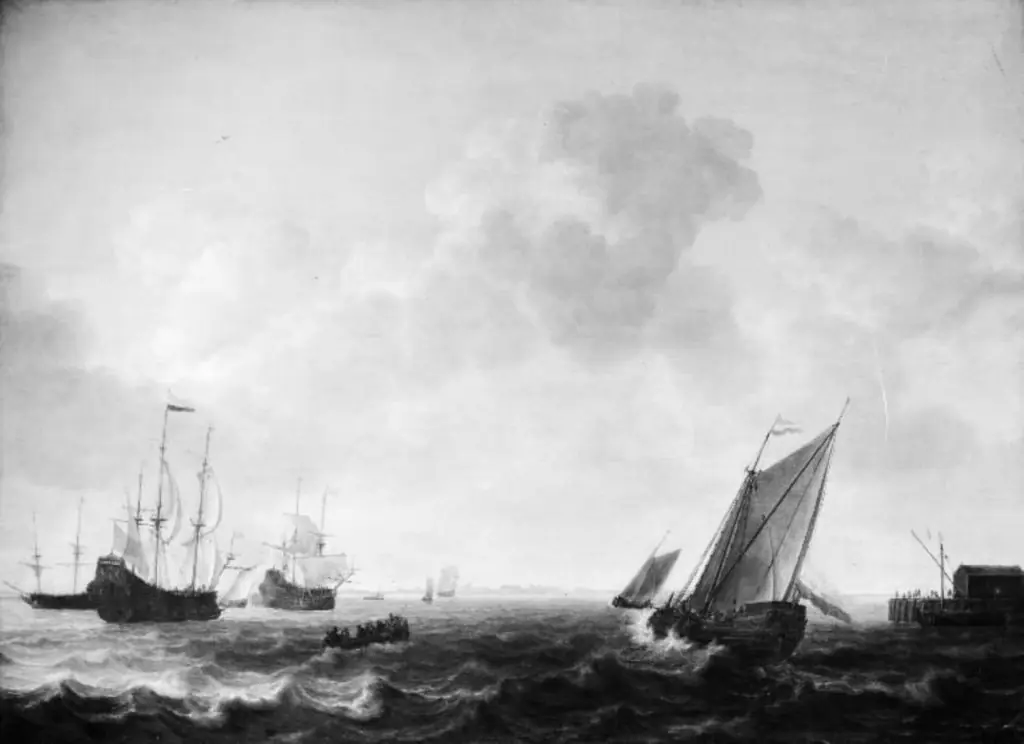
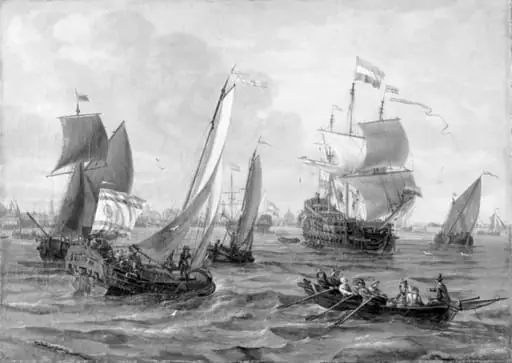
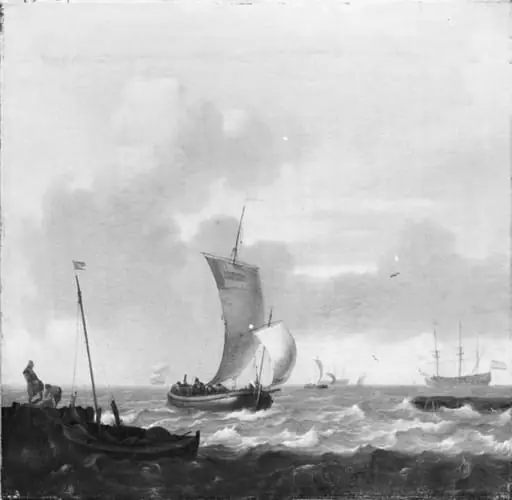
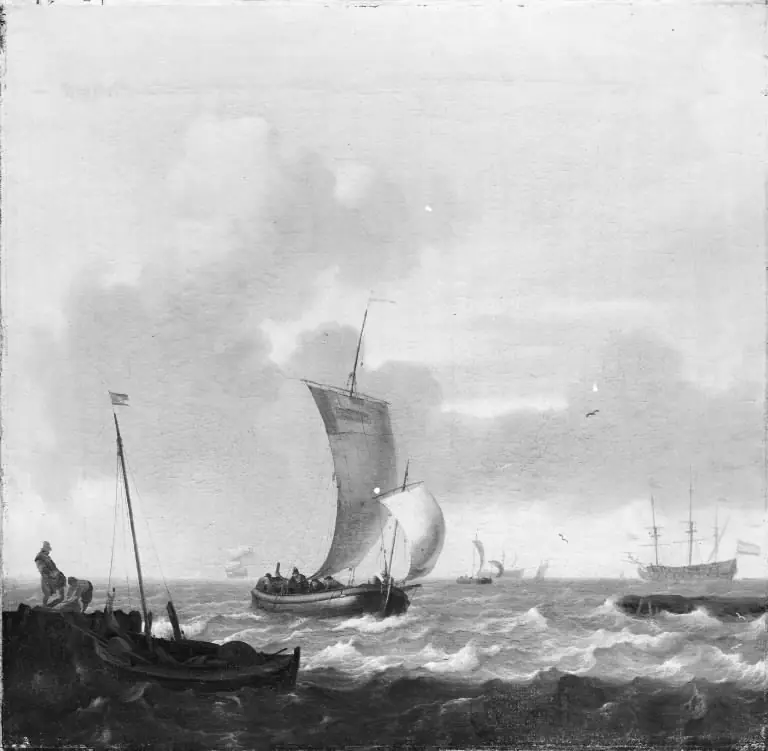
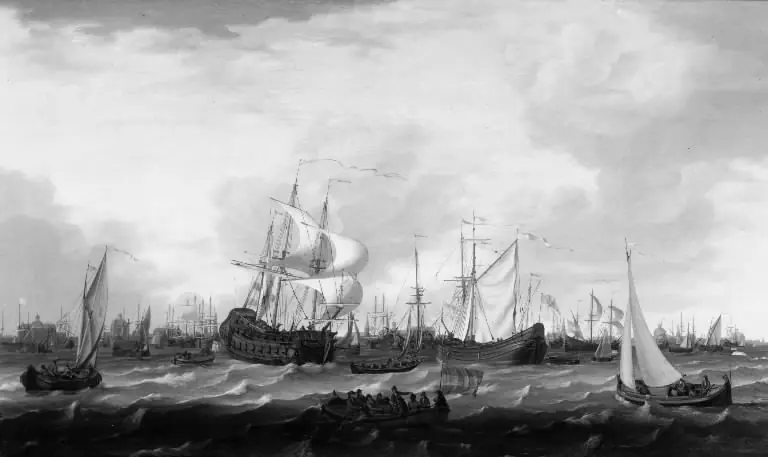
Ships off the Dutch Coast is a photography by Unknown. It dates from 1650 and is held in the collection of the Statens Museum for Kunst. Painted around 1650, this marine work depicts a group of vessels navigating coastal waters under variable wind conditions.
About this work
Overview
The composition captures a moment of dynamic motion, with ships oriented in differing directions, some fully rigged and others at rest.
Painted around 1650, this marine work depicts a group of vessels navigating coastal waters under variable wind conditions. The composition captures a moment of dynamic motion, with ships oriented in differing directions, some fully rigged and others at rest. The contrast between turbulent foreground waves and a calmer, luminous sky establishes a sense of spatial depth and atmospheric tension, characteristic of Dutch seascapes of the period.
Subject & Meaning
The painting presents no narrative or symbolic figures, focusing instead on the everyday activity of maritime trade and travel. The varied states of the ships—sails raised or lowered—suggest shifting winds and the unpredictable nature of sea voyages. This quiet realism reflects the Dutch Republic’s deep cultural and economic ties to the sea, portraying naval life not as heroic, but as a routine, elemental force.
Technique & Style
The artist employs subtle chiaroscuro to model the forms of waves and hulls, enhancing three-dimensionality without dramatic lighting. Color transitions from deep indigo and green in the water to pale gray and white in the sky create a naturalistic horizon. Brushwork varies: loose strokes define the sky, while tighter handling renders rigging and hull details. The effect is one of observed truth rather than idealized spectacle.
History & Provenance
The painting entered the collection of the Museum of Ethnography in the late 19th century, though its earlier ownership remains undocumented. Its attribution to 2049_person is based on stylistic comparison with other known works of the era. Despite its current institutional context, the piece was likely produced for a private Dutch patron interested in maritime realism, not ethnographic display.
Context
Created during the Dutch Golden Age, this work aligns with a broader trend of marine painting that celebrated the Republic’s naval power and commercial reach. Unlike grand historical seascapes, this piece avoids allegory, focusing instead on the physical conditions of sailing—wind, water, and vessel—as subjects worthy of quiet observation, reflecting the era’s empirical sensibility.
Legacy
Though not widely exhibited or reproduced, the painting contributes to the understanding of 17th-century Dutch coastal observation. Its restrained aesthetic influenced later generations of marine artists who prioritized atmospheric accuracy over spectacle. Its presence in an ethnographic museum underscores shifting 19th-century approaches to categorizing visual culture, though its original intent was purely topographical.
Artist & collection

 Domestic Scene
 Giacomo and Cardinal Marco, investing Andrea, Abbot of San Zeno, with his Benefice
 The Nymph of Fontainebleau
 Portrait of a Woman
 Madonna and Child with Saints in the Enclosed Garden
 Venus and Minerva
 Family Group of Four on Sofa
 Wall painting from Room H of the Villa of P. Fannius Synistor at Boscoreale