Artwork
Ships and Rowboats on the Sea off Amsterdam
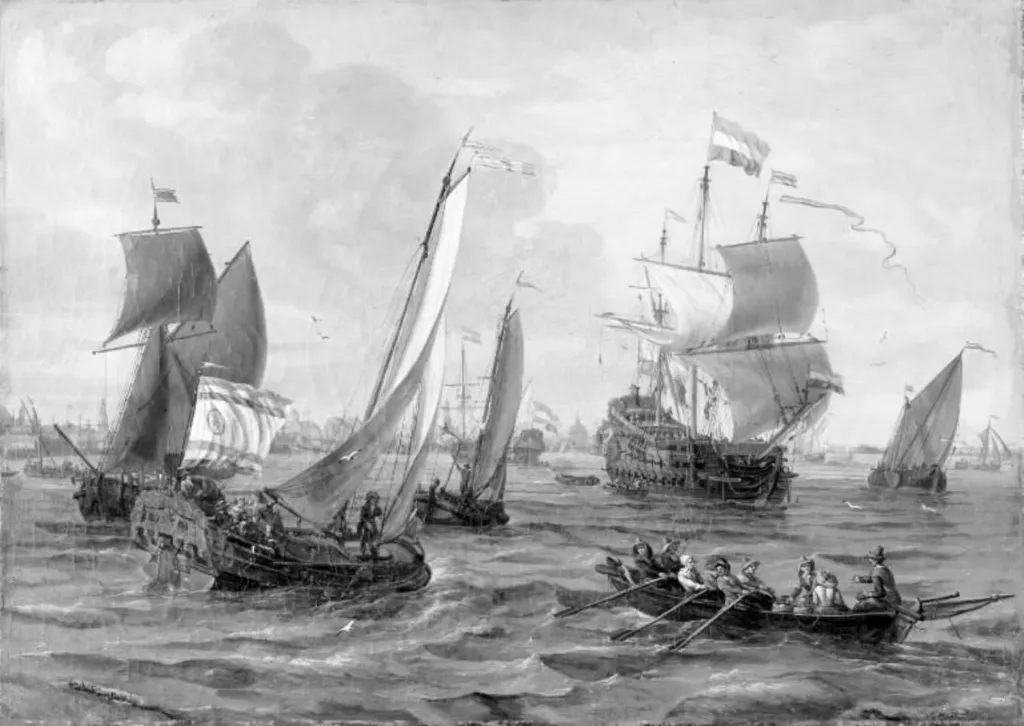
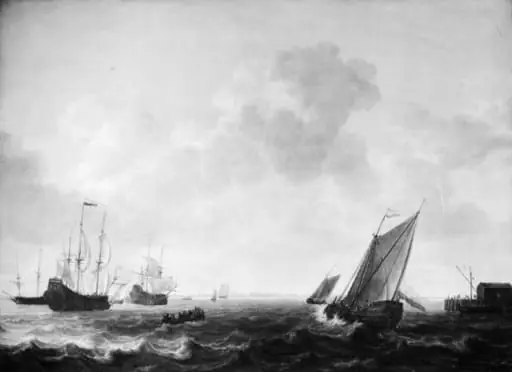
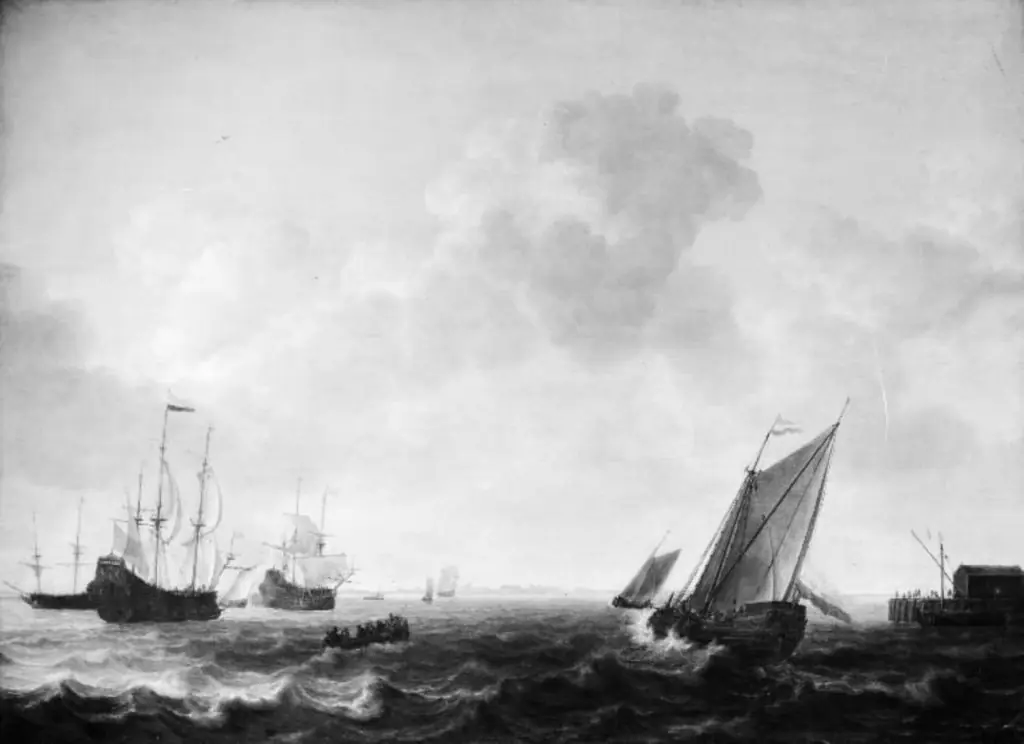
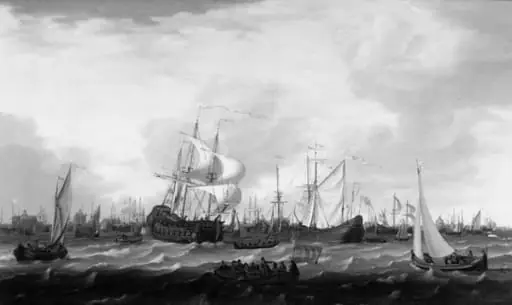
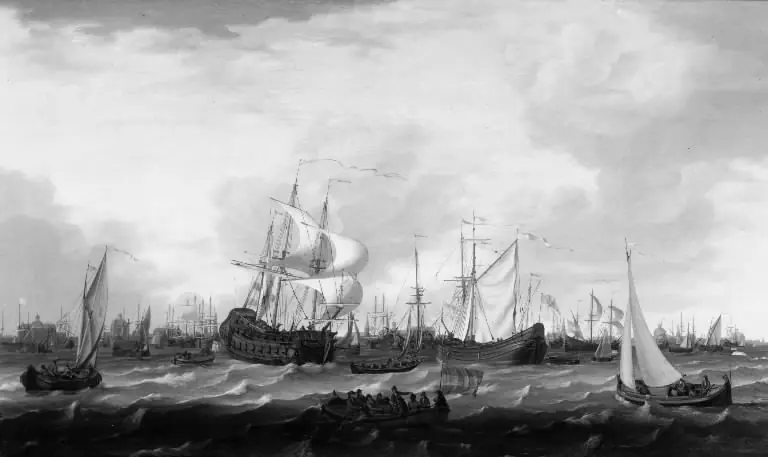
Ships and Rowboats on the Sea off Amsterdam is a photography by Unknown. It dates from 1680 and is held in the collection of the Statens Museum for Kunst. This work depicts a maritime scene off the coast of Amsterdam, dated around 1680.
About this work
Overview
The image captures a bustling harbor with large sailing vessels and smaller rowboats, rendered in monochrome tones that lend an archival appearance.
This work depicts a maritime scene off the coast of Amsterdam, dated around 1680. Though labeled as a photograph in some records, it is in fact a painted composition. The image captures a bustling harbor with large sailing vessels and smaller rowboats, rendered in monochrome tones that lend an archival appearance. It is currently held in the collection of the Museum of Ethnography, where its classification as an image reflects its documentary aesthetic rather than its medium.
Subject & Meaning
The scene portrays everyday maritime activity in late 17th-century Amsterdam, a major commercial hub. Tall-masted ships, likely merchant vessels, share the water with modest rowboats, suggesting a layered economy of trade and local transport. The presence of flags and active oarsmen implies movement, labor, and the vital role of waterways in daily life. The composition avoids idealization, focusing instead on the routine rhythms of port life.
Technique & Style
The artist employs chiaroscuro to model forms through contrasting light and shadow, enhancing the sense of depth and movement in the choppy sea. Brushwork is precise yet unobtrusive, capturing the texture of sails, wood, and water without overt embellishment. The monochrome palette, though not original to the work, aligns with later photographic reproductions that have shaped its modern perception, obscuring its original painted qualities.
History & Provenance
The painting was likely created in the Netherlands during the height of its maritime dominance. Its journey to the Museum of Ethnography remains undocumented in public records, but its inclusion there suggests a 20th-century reclassification, possibly due to its perceived ethnographic value as a record of seafaring life. Mislabeling as a photograph may stem from early 20th-century reproduction practices that obscured its origin.
Context
In the late 1600s, Amsterdam’s harbor was one of the busiest in Europe, central to global trade networks. Marine painting was a respected genre, often commissioned by merchants or civic institutions to document economic vitality. This work fits within that tradition, reflecting a culture that viewed the sea not as a backdrop but as a stage for commerce, labor, and national identity.
Legacy
Though not widely exhibited or studied, the painting contributes to understanding how maritime scenes were recorded and later interpreted. Its misclassification as a photograph highlights evolving perceptions of visual media and the blurring of artistic and documentary categories in museum contexts. It remains a quiet testament to the everyday realities of a seafaring society.
Artist & collection

 Domestic Scene
 Giacomo and Cardinal Marco, investing Andrea, Abbot of San Zeno, with his Benefice
 The Nymph of Fontainebleau
 Portrait of a Woman
 Madonna and Child with Saints in the Enclosed Garden
 Venus and Minerva
 Family Group of Four on Sofa
 Wall painting from Room H of the Villa of P. Fannius Synistor at Boscoreale