Artwork
Dead Wild Fowl
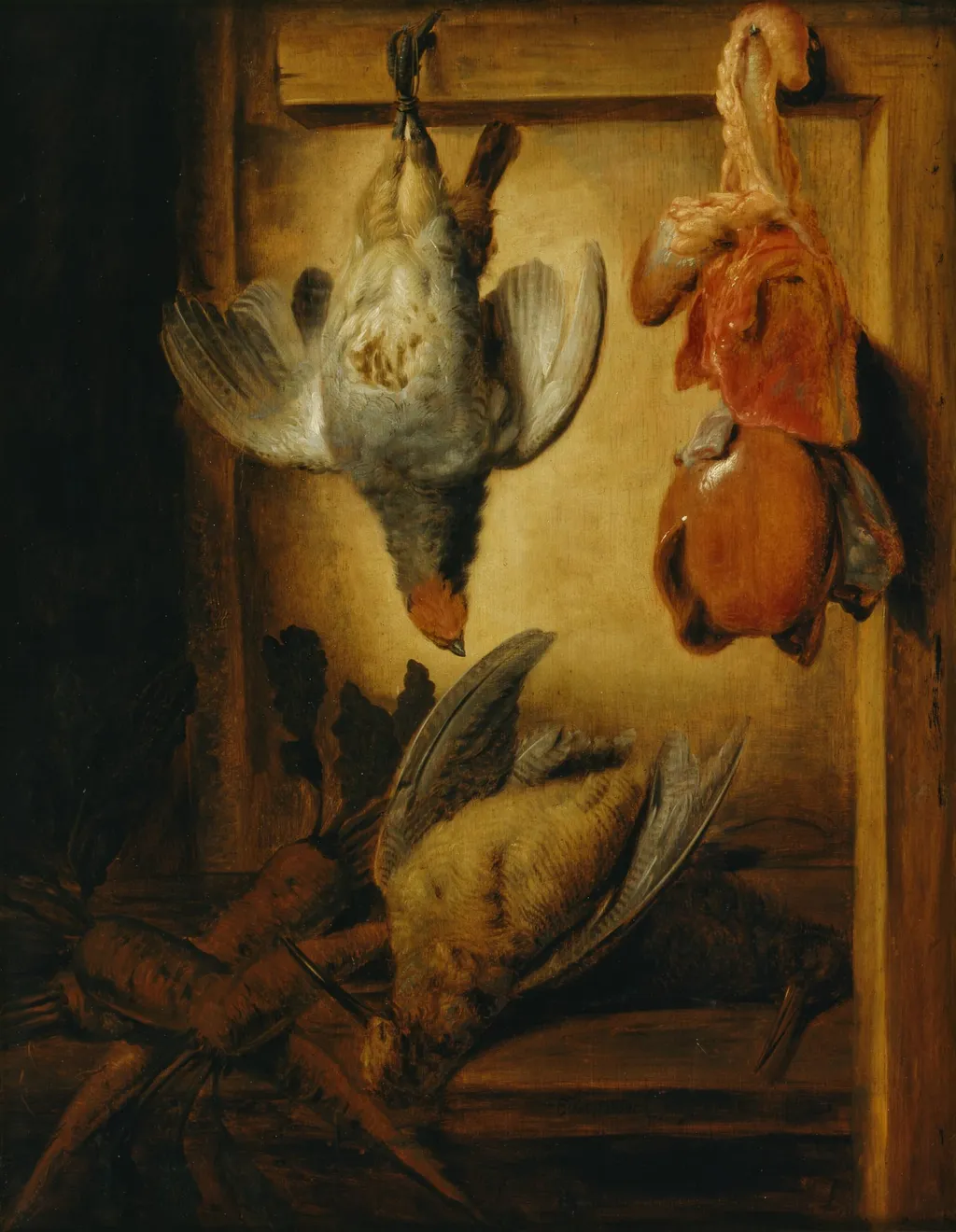
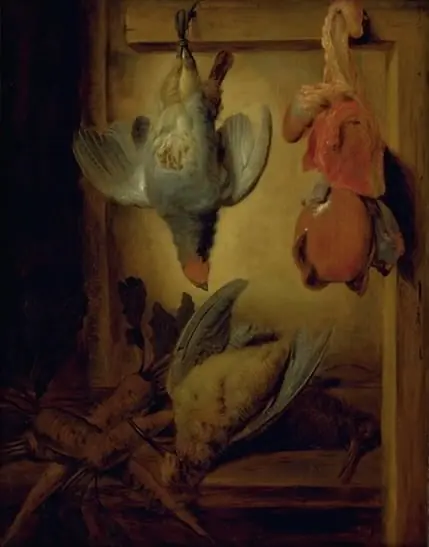
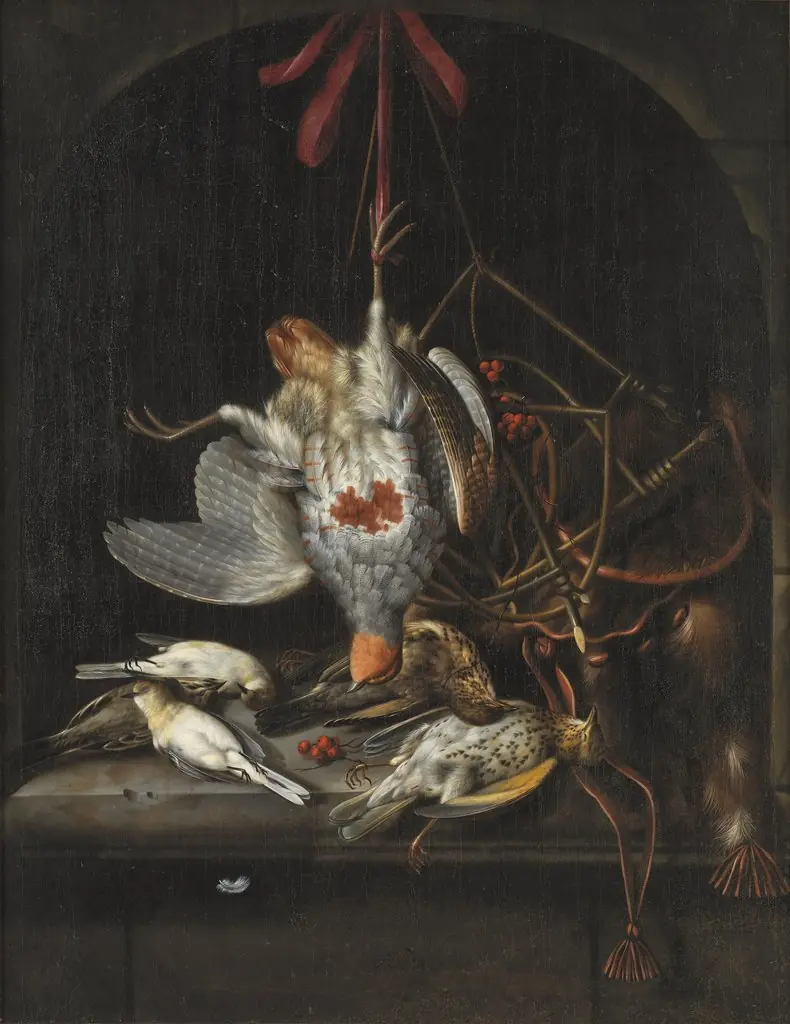
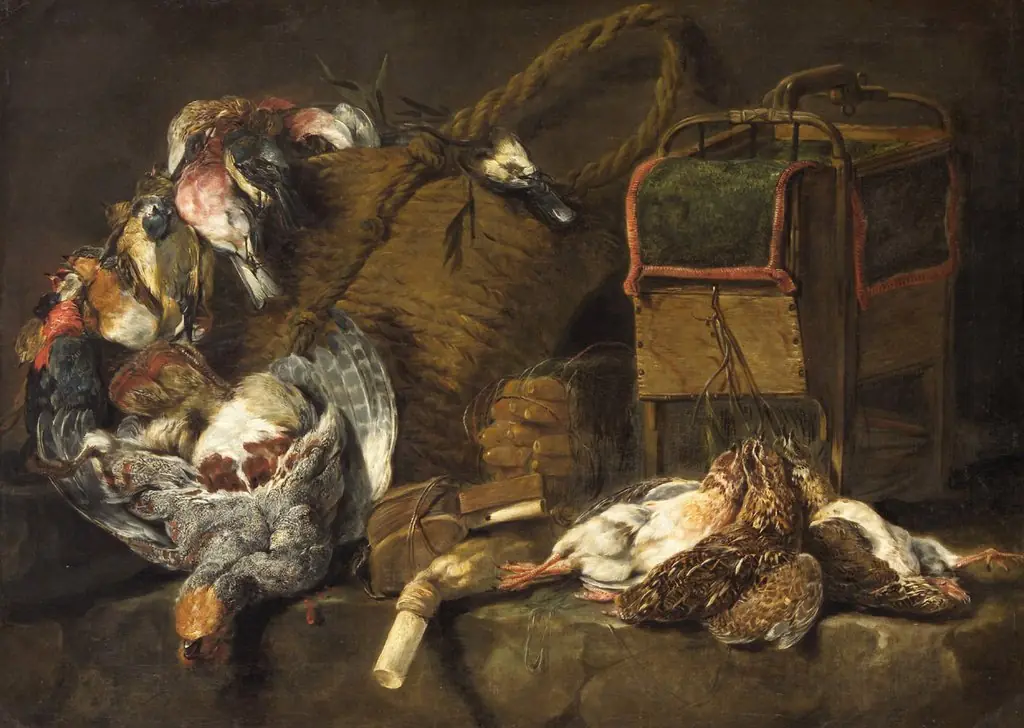
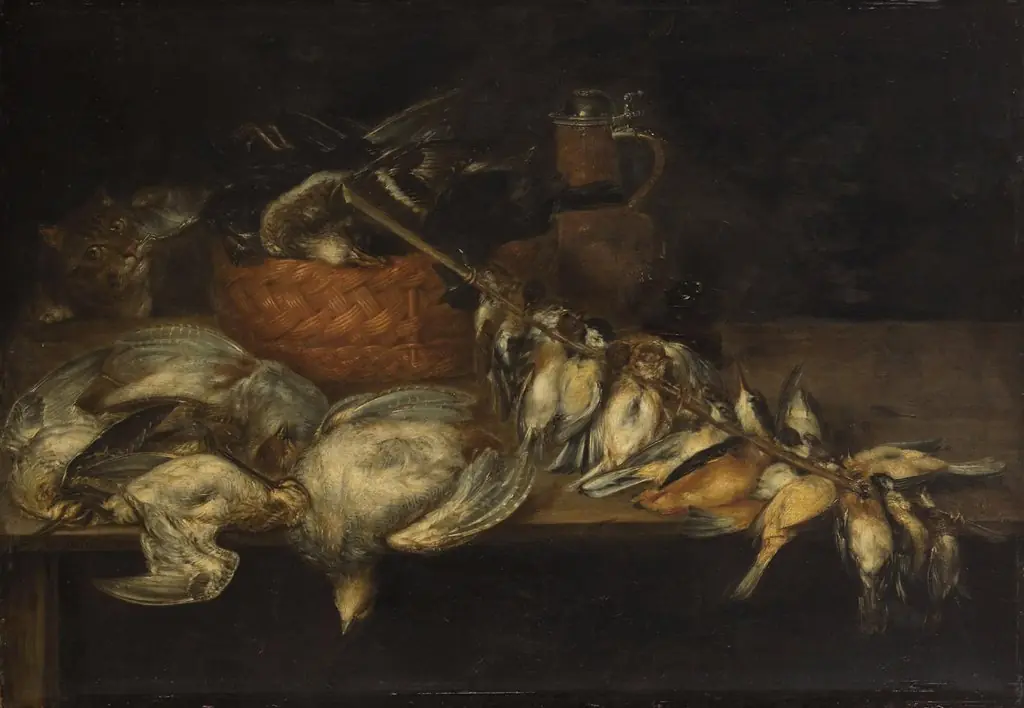
Dead Wild Fowl is a photography by the Baroque artist Unknown. It dates from 1640 and is held in the collection of the Statens Museum for Kunst. Painted in 1640 by 2053_person, this work depicts a row of deceased wild birds suspended from a plain wooden frame.
About this work
Overview
Rendered with precise observation, the birds are arranged symmetrically, wings extended, their stillness emphasizing the moment after death.
Painted in 1640 by 2053_person, this work depicts a row of deceased wild birds suspended from a plain wooden frame. Rendered with precise observation, the birds are arranged symmetrically, wings extended, their stillness emphasizing the moment after death. The composition avoids narrative or symbolism, focusing instead on the physical presence of the specimens. It resides today in the Museum of Ethnography, where its quiet realism invites contemplation of nature and human observation.
Subject & Meaning
The subject is a group of hunted waterfowl, likely gathered during seasonal migration. Their arrangement suggests a hunter’s or naturalist’s display—neither ornamental nor ceremonial, but evidentiary. The absence of landscape or context isolates the birds as objects of study or harvest. The work may reflect early modern interest in natural classification, where death becomes a condition for documentation rather than mourning.
Technique & Style
The artist employs chiaroscuro to model each bird’s form, using subtle gradations of light to define feather texture and surface sheen. Colors are muted yet varied, capturing the iridescence of plumage without embellishment. Brushwork is controlled and detailed, particularly around beaks and talons, reinforcing anatomical accuracy. The wooden frame is rendered with minimal detail, ensuring focus remains on the birds’ physicality.
History & Provenance
The painting entered the Museum of Ethnography’s collection in the late 19th century, likely as part of a broader acquisition of early modern natural history imagery. Its origin prior to that is undocumented, though its style aligns with Dutch and Flemish still-life traditions of the 17th century. No records indicate commission or ownership before institutional acquisition.
Context
Created during a period when natural philosophy was shifting toward empirical study, the painting reflects a growing interest in observing and cataloging the natural world. Similar works by contemporaries often served scientific or aristocratic collections. Unlike decorative still lifes, this piece omits fruit, vessels, or symbolic elements, suggesting a more utilitarian or observational intent.
Legacy
The work remains a quiet example of early scientific realism in art. It contributes to understanding how visual representation supported natural history before photography. While not widely exhibited, it is referenced in studies of 17th-century visual culture and the transition from symbolic to observational modes in depicting nature.
Artist & collection

 Domestic Scene
 Giacomo and Cardinal Marco, investing Andrea, Abbot of San Zeno, with his Benefice
 The Nymph of Fontainebleau
 Portrait of a Woman
 Madonna and Child with Saints in the Enclosed Garden
 Venus and Minerva
 Family Group of Four on Sofa
 Wall painting from Room H of the Villa of P. Fannius Synistor at Boscoreale