Artwork
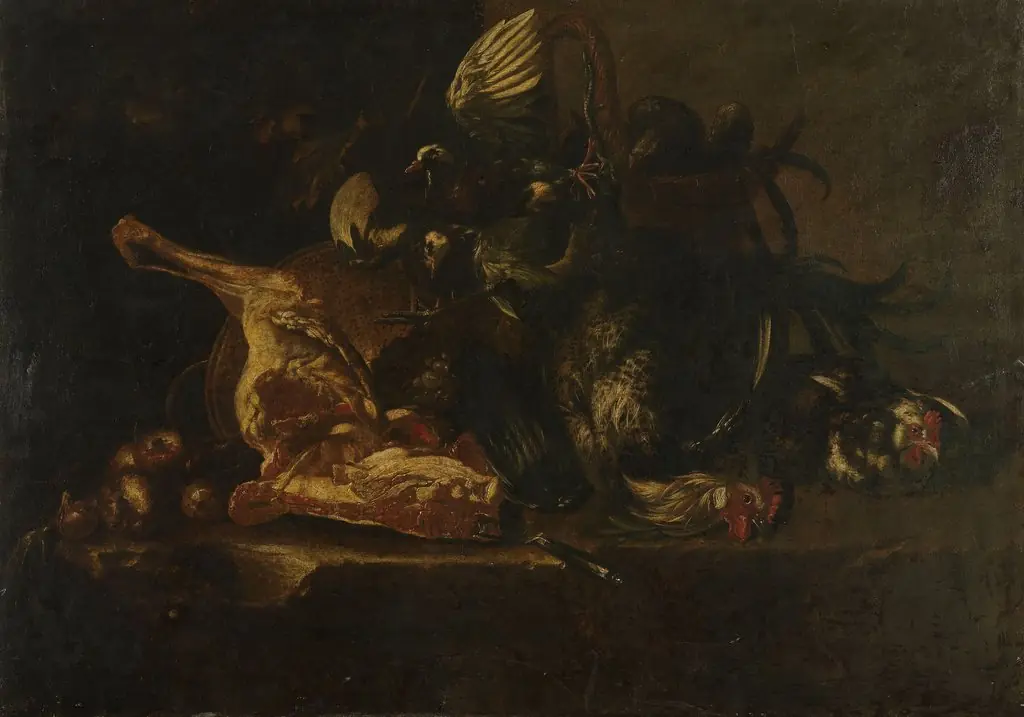
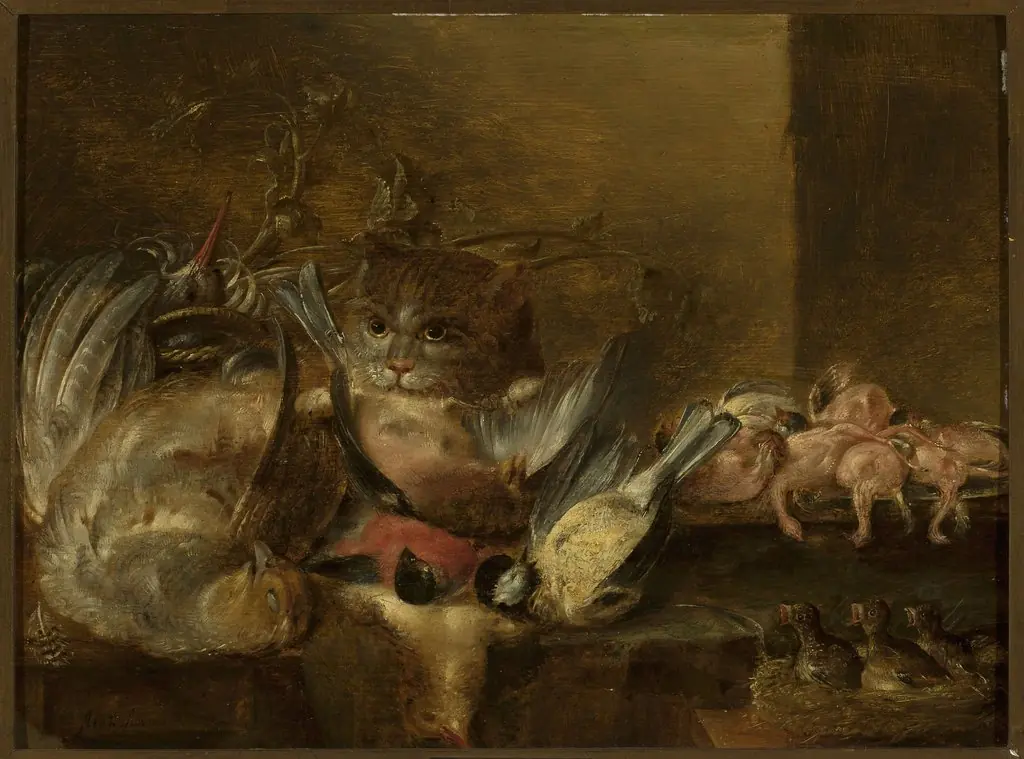
Dead poultry with cat
Dead poultry with cat is an oil painting by the Dutch Golden Age artist Alexander Adriaenssen. It dates from 1634 and is held in the collection of the Kunsthistorisches Museum.
About this work
Overview
It reflects the broader Flemish and Dutch tradition of rendering everyday foodstuffs with precision, emphasizing texture and naturalism over narrative.
Painted around 1634 by the Flemish artist Alexander Adriaenssen, this oil-on-canvas still life presents a quiet arrangement of slaughtered poultry and a watching cat. It reflects the broader Flemish and Dutch tradition of rendering everyday foodstuffs with precision, emphasizing texture and naturalism over narrative. The work is held in the Kunsthistorisches Museum, Vienna, as part of its collection of 17th-century Northern European still lifes.
Subject & Meaning
The painting features dead birds—chickens and possibly other fowl—arranged on a surface with limbs splayed or curled, suggesting recent slaughter. A cat, seated behind them, gazes intently, its posture implying both instinct and stillness. The scene evokes the transition from life to sustenance, without overt moralizing. The absence of human figures shifts focus to the quiet aftermath of consumption, inviting observation rather than interpretation.
Technique & Style
Adriaenssen employs fine brushwork to capture the varied surfaces of feathers, skin, and fur. Light falls subtly across the birds’ bodies, defining volume without dramatic contrast. The dark, neutral background isolates the subjects, enhancing their material presence. The cat’s fur is rendered with soft, directional strokes, contrasting with the brittle sheen of plucked feathers. The composition is tightly contained, emphasizing tactile realism over theatricality.
History & Provenance
The painting entered the Kunsthistorisches Museum’s collection in the 19th century, likely through the Habsburgs’ broader acquisition of Northern European art. Adriaenssen, active in Antwerp, was known for his market scenes and game still lifes, often sold to urban elites interested in the aesthetics of abundance. This work aligns with his documented output from the 1630s, though its early ownership remains undocumented.
Context
In the Dutch and Flemish Golden Age, still lifes of dead game and poultry were common, reflecting both economic prosperity and a fascination with the natural world. Such works often carried subtle references to transience or domestic order. Adriaenssen’s inclusion of a predator cat subtly introduces tension, distinguishing his approach from purely decorative arrangements and aligning him with artists who infused daily objects with quiet psychological presence.
Legacy
Adriaenssen’s work contributed to the codification of still-life conventions in Northern Europe, influencing later artists in their treatment of texture and composition. While not widely celebrated today, his paintings remain valuable for understanding how 17th-century viewers perceived the natural world through the lens of the table. This piece exemplifies a quiet, observational mode of painting that prioritized fidelity over symbolism.
Artist & collection
Artist
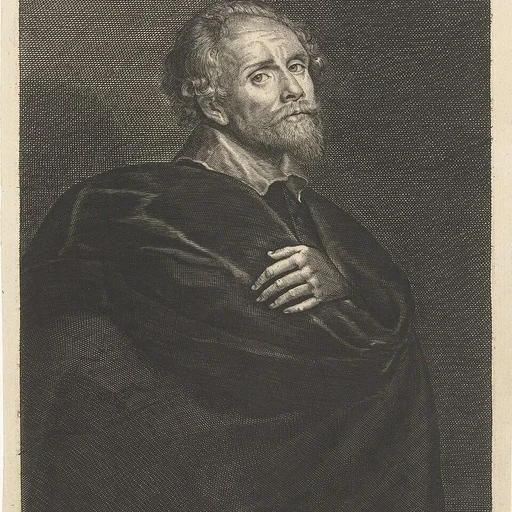
Alexander Adriaenssen (1587–1661) was a Flemish Baroque painter, particularly known for his still-lifes of fish and game pieces. He also painted banquet pieces with food and flower still lifes.

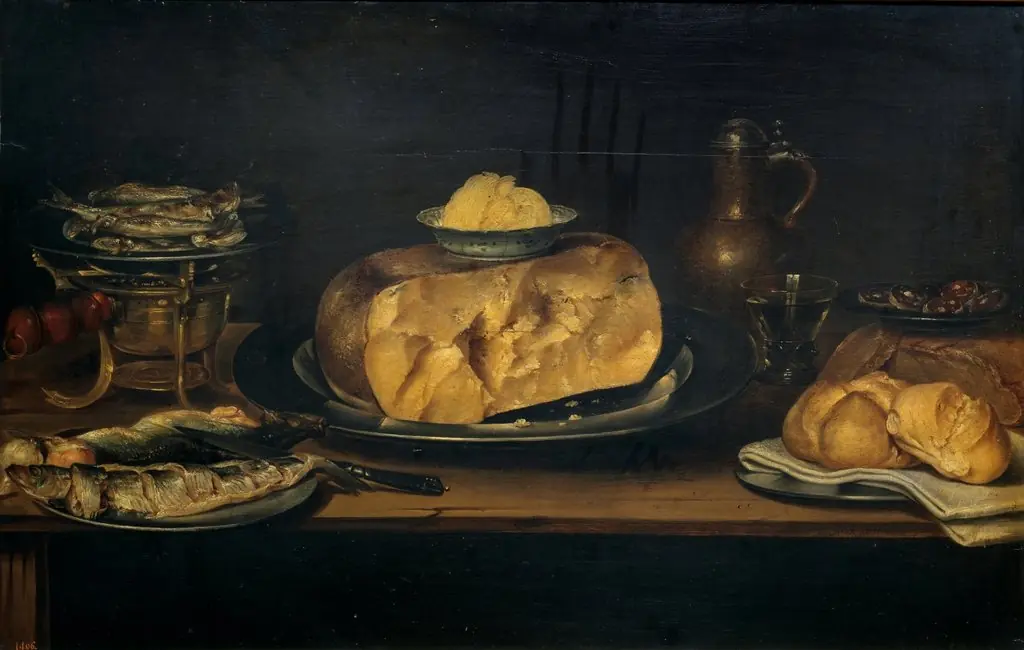 Still life of a table with crockery, cheese, sausage and fish
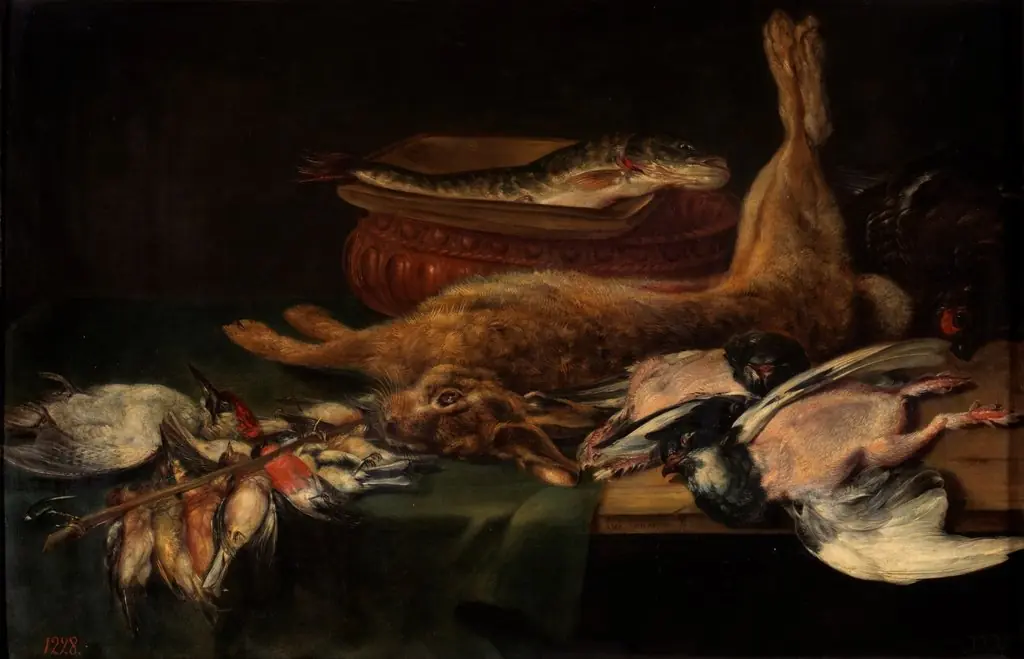 Still life with a hare, dead birds and fish
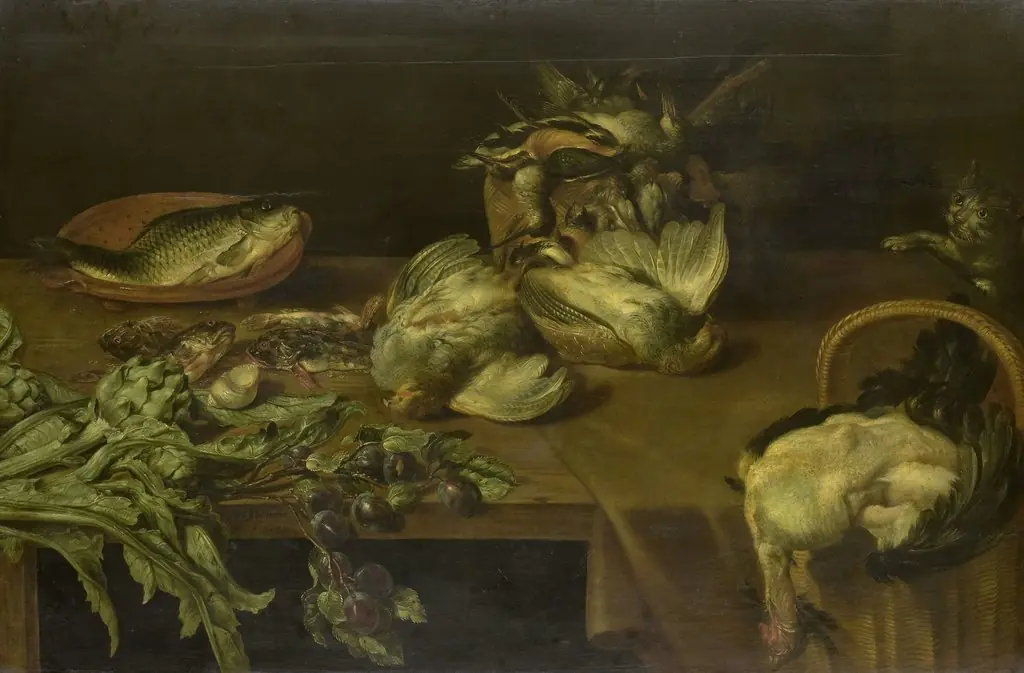 Still life with wild fowl
 Still Life with Fish and a Lobster and Oysters on a Table nearby
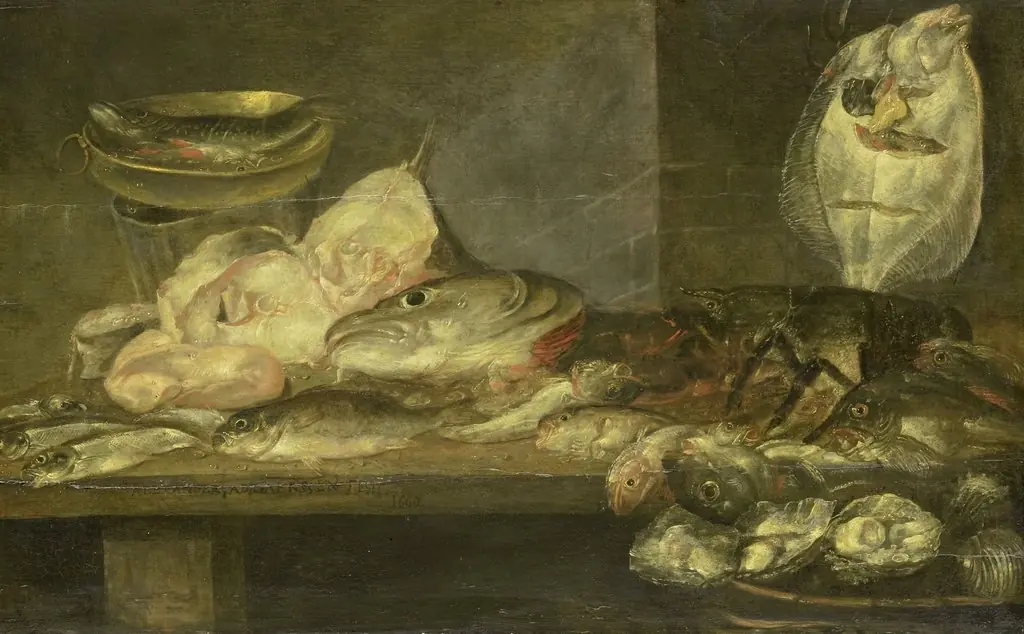 Still life with fish
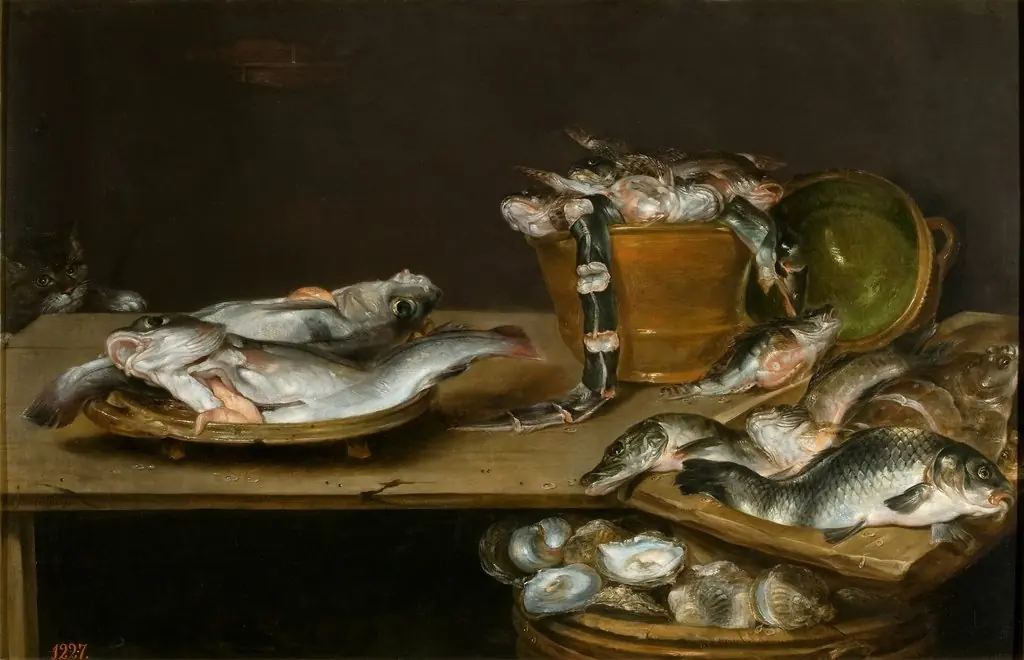 Still Life of Fish and Oysters with a Cat
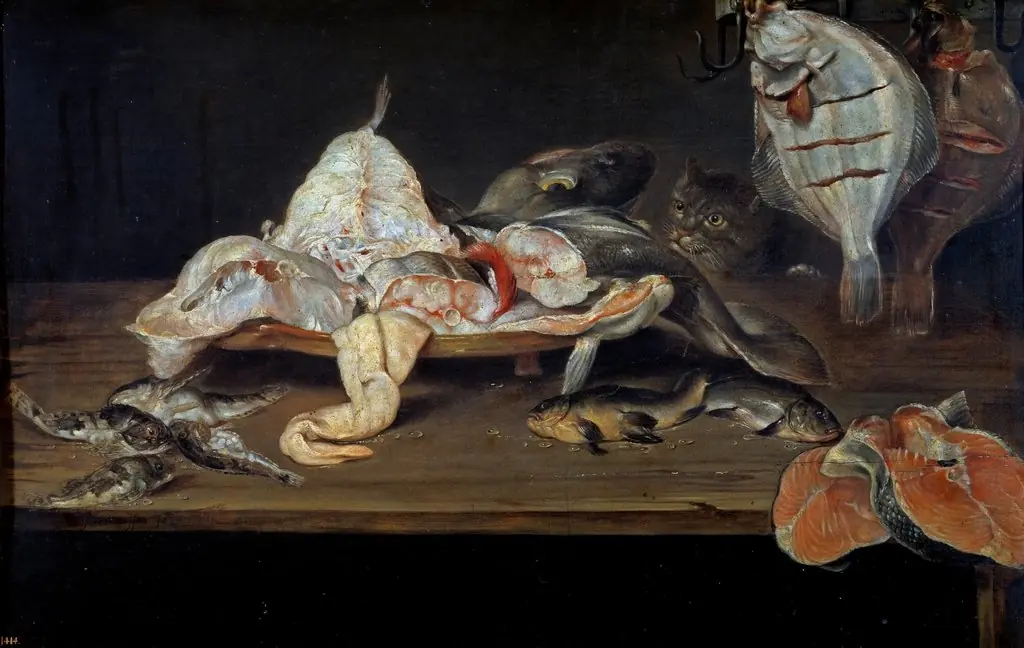 Still life with fish and a cat behind the table
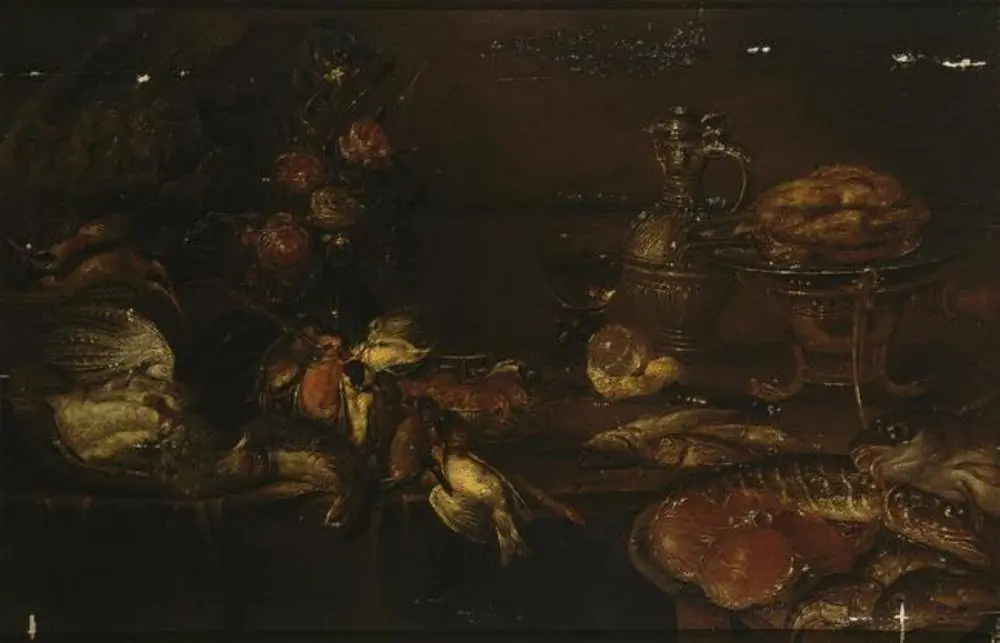 Fish and Game