Artwork
A Sacrifice to Apollo
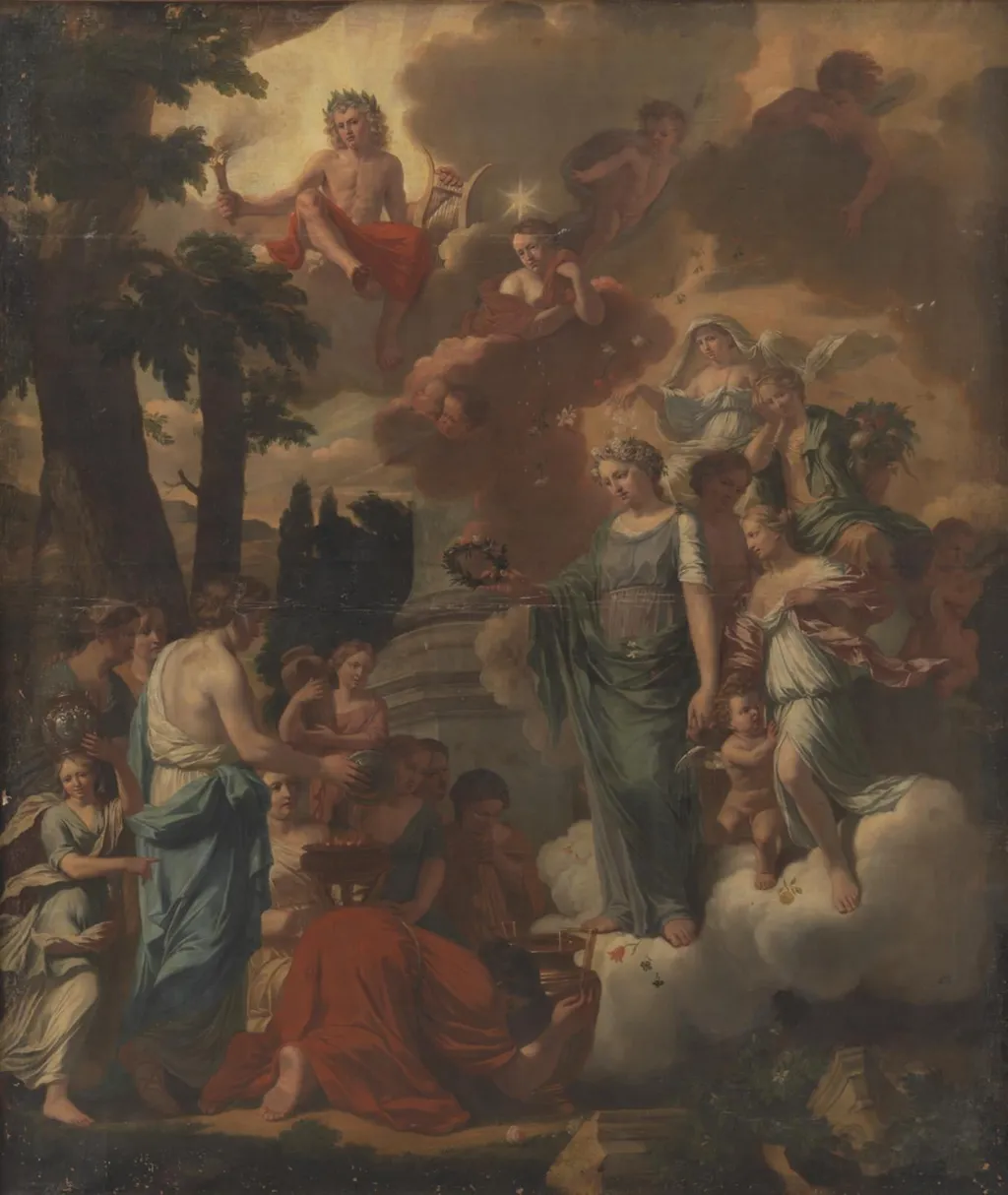
A Sacrifice to Apollo is a photography by the Baroque artist Unknown. It dates from 1672 and is held in the collection of the Statens Museum for Kunst.
About this work
Overview
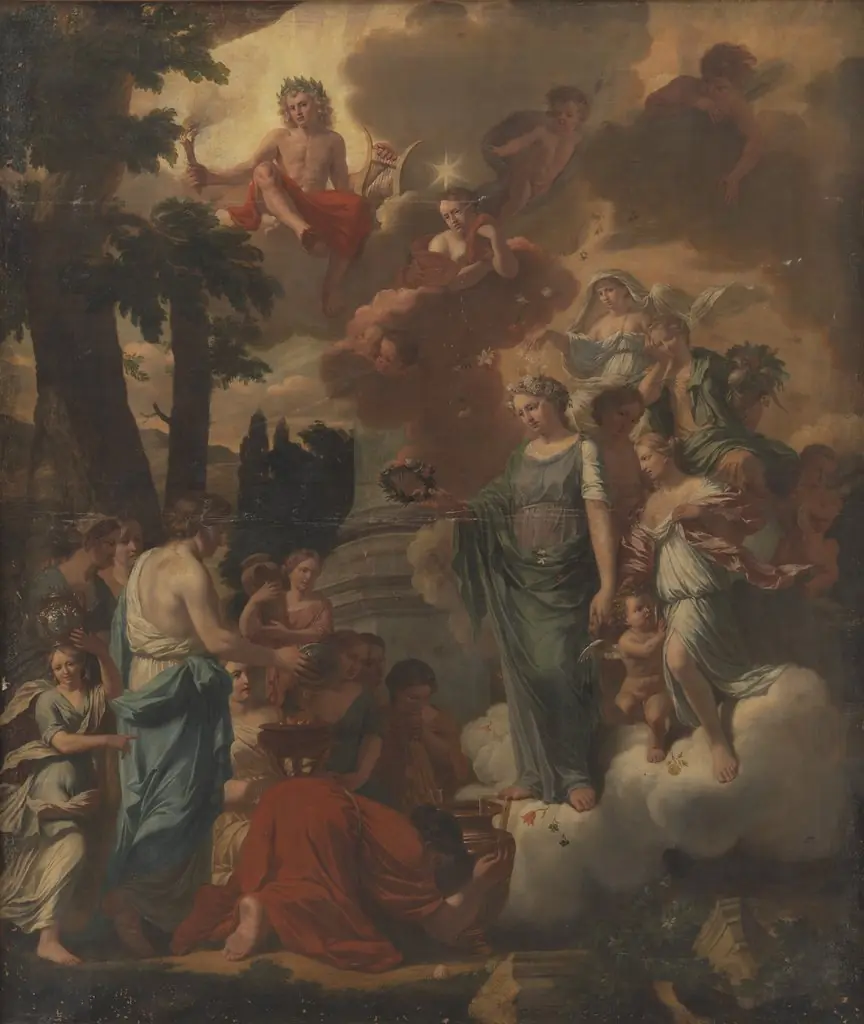
The canvas depicts a mythological rite centered on a serene female figure in a green garment, who holds a laurel wreath while standing upon a cloud.
A Sacrifice to Apollo, painted in 1672 by the artist known as 2066_person, is part of the collection at the Museum of Ethnography. The canvas depicts a mythological rite centered on a serene female figure in a green garment, who holds a laurel wreath while standing upon a cloud. Surrounding her are a mixture of winged and mortal participants, arranged amid a radiant sky and a sunburst that illuminates the scene.
Subject & Meaning
The work illustrates a ritual offering to the Greek god Apollo, emphasizing the interplay between the divine and human realms. The central woman’s composed stance suggests a mediating role, perhaps as a priestess, while the surrounding figures—kneeling, gesturing, or bearing musical instruments—convey the communal aspects of worship and the celebratory atmosphere of a sacred sacrifice.
Technique & Style
Executed in a Baroque visual language, the painting employs strong chiaroscuro to model forms and generate a sense of depth. Bold contrasts of light and shadow highlight the dynamic arrangement of floating and grounded bodies, while the vivid palette of reds, whites, golds, and the green robe creates visual tension. The composition’s swirling movement and dramatic sky are characteristic of the period’s emphasis on theatricality.
History & Provenance
Created in the late seventeenth century, the canvas entered the Museum of Ethnography’s holdings at an unspecified date, where it remains on display. The artist, recorded only as 2066_person, is otherwise obscure, and the painting’s documented ownership prior to its museum acquisition is not recorded in surviving inventories.
Context
The painting reflects the Baroque era’s fascination with mythological subjects, particularly those that allowed for expressive gestures and elaborate staging. Apollo, as a patron of music and prophecy, provided an apt theme for showcasing the period’s love of movement, theatrical lighting, and the integration of celestial symbolism within earthly rituals.
Artist & collection

 Domestic Scene
 Giacomo and Cardinal Marco, investing Andrea, Abbot of San Zeno, with his Benefice
 The Nymph of Fontainebleau
 Portrait of a Woman
 Madonna and Child with Saints in the Enclosed Garden
 Venus and Minerva
 Family Group of Four on Sofa
 Wall painting from Room H of the Villa of P. Fannius Synistor at Boscoreale
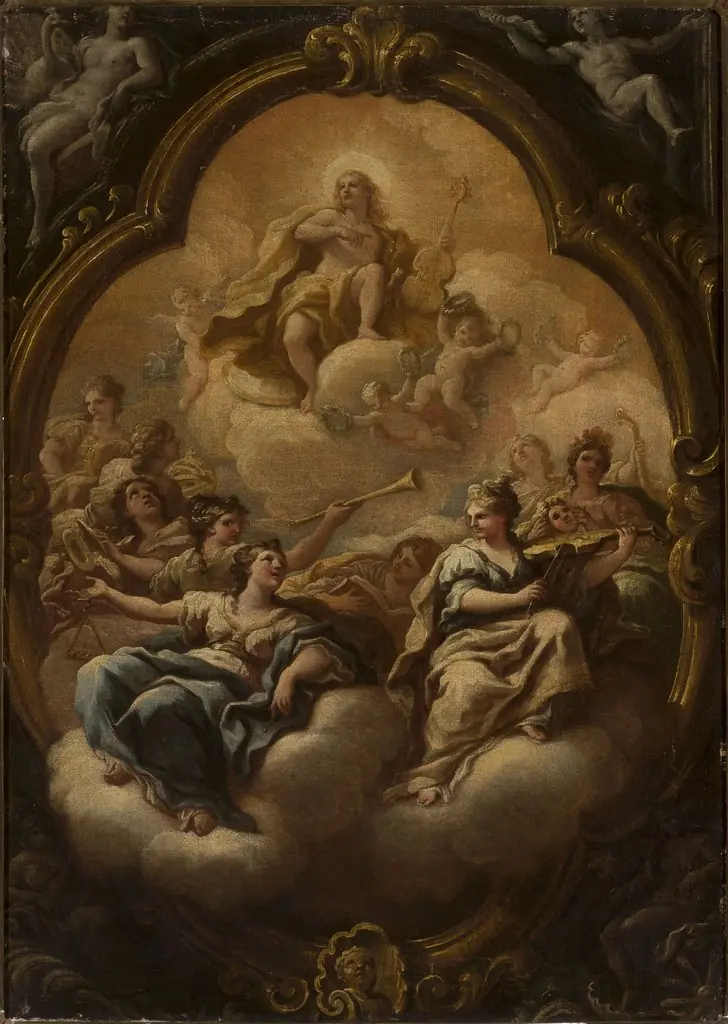 Apollo and Muses
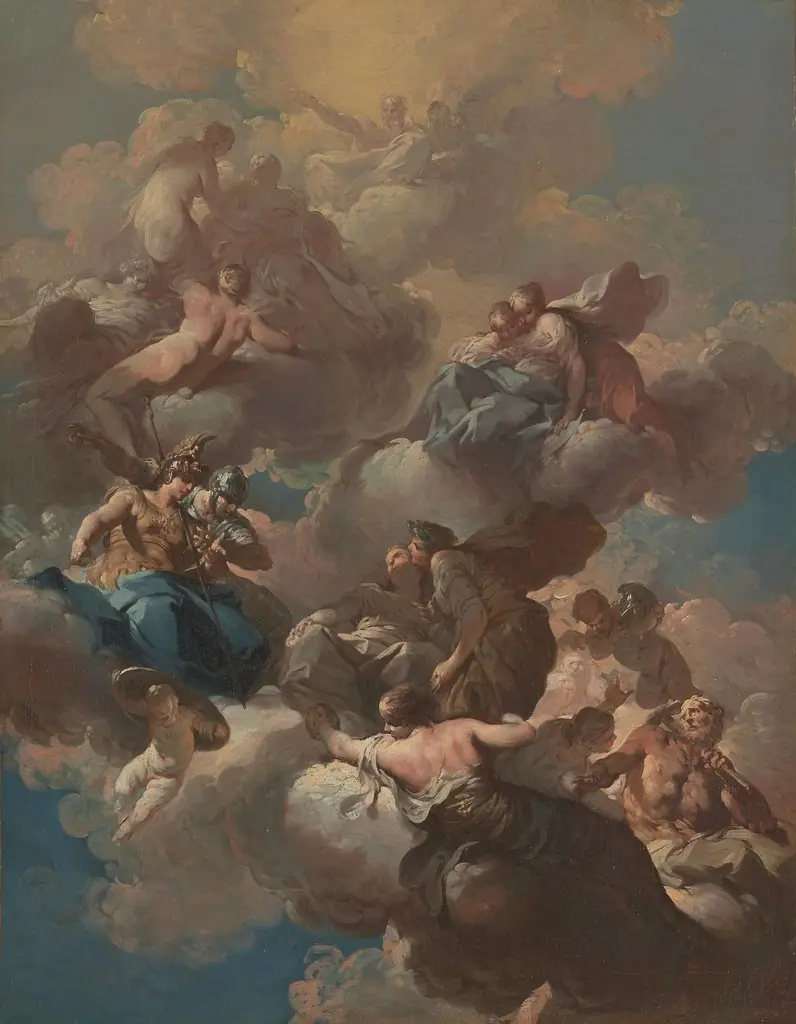 Sketch for a Ceiling Fresco
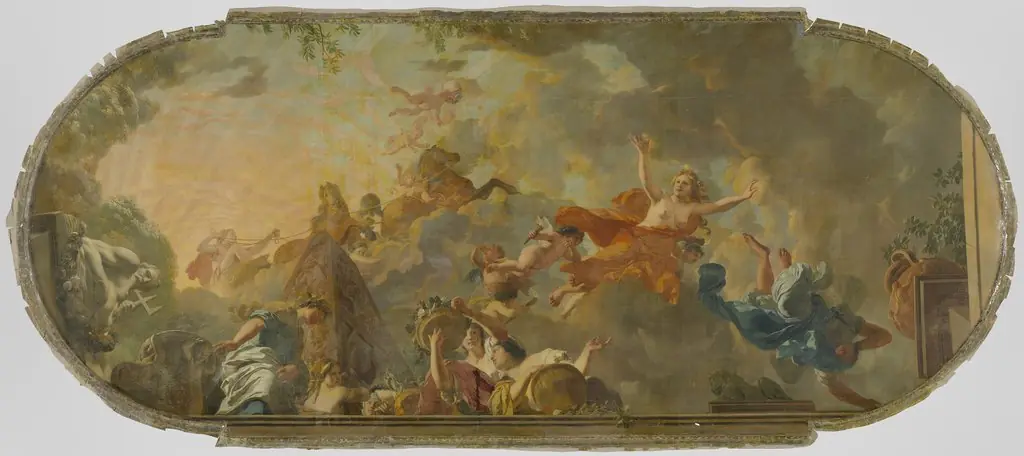 Allegory of dawn
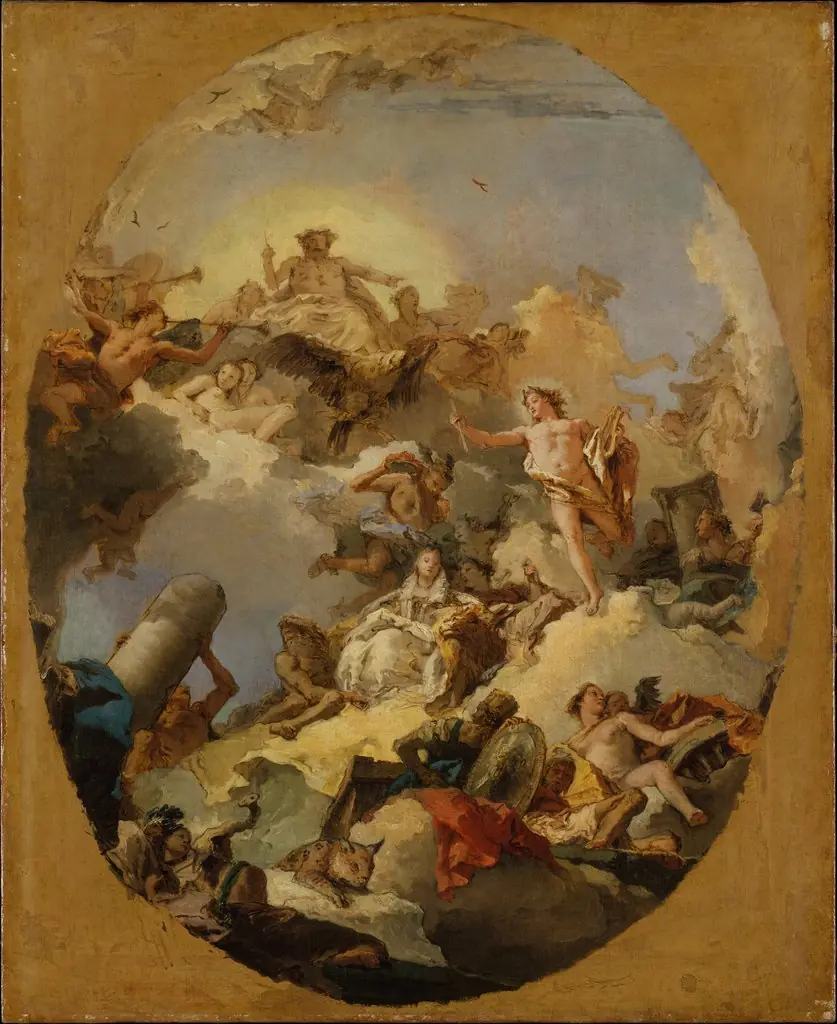 The Apotheosis of the Spanish Monarchy
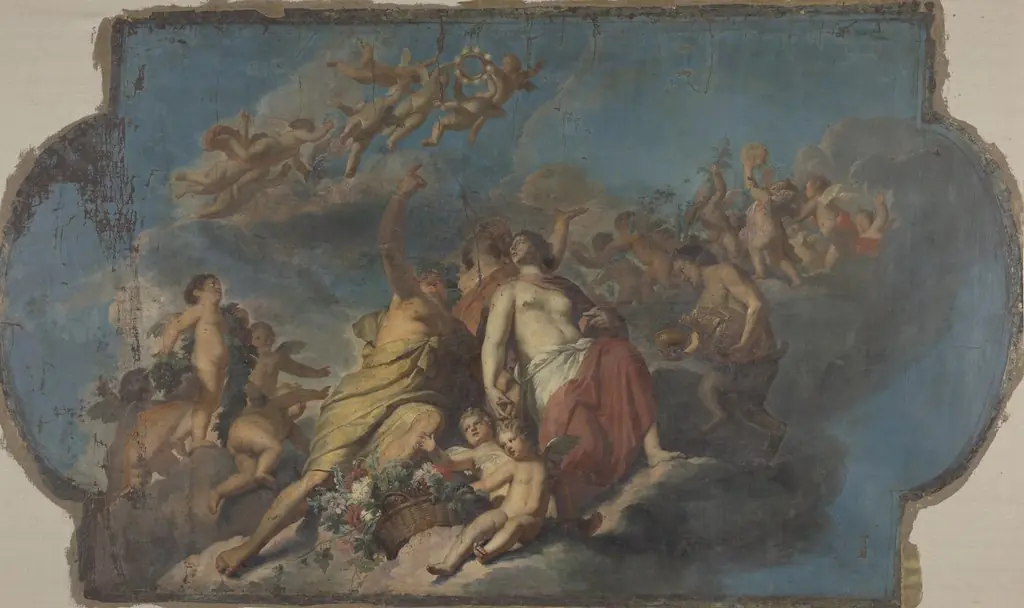 The Marriage of Bacchus and Ariadne
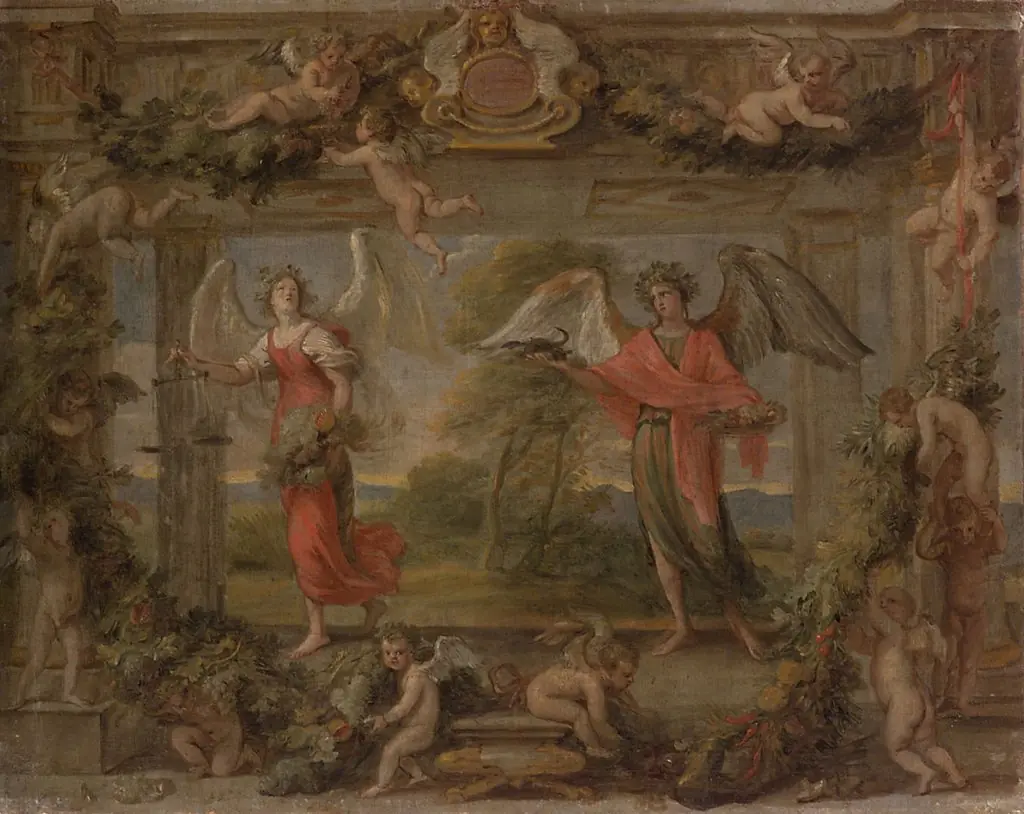 September und Oktober
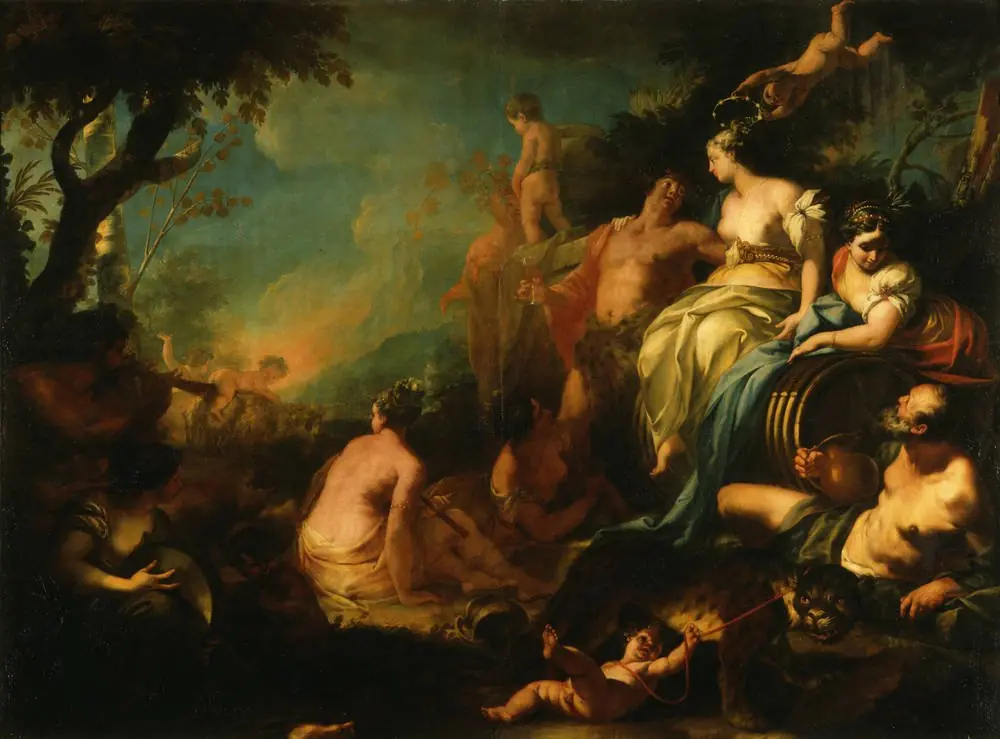 Bacchus and Ariadne
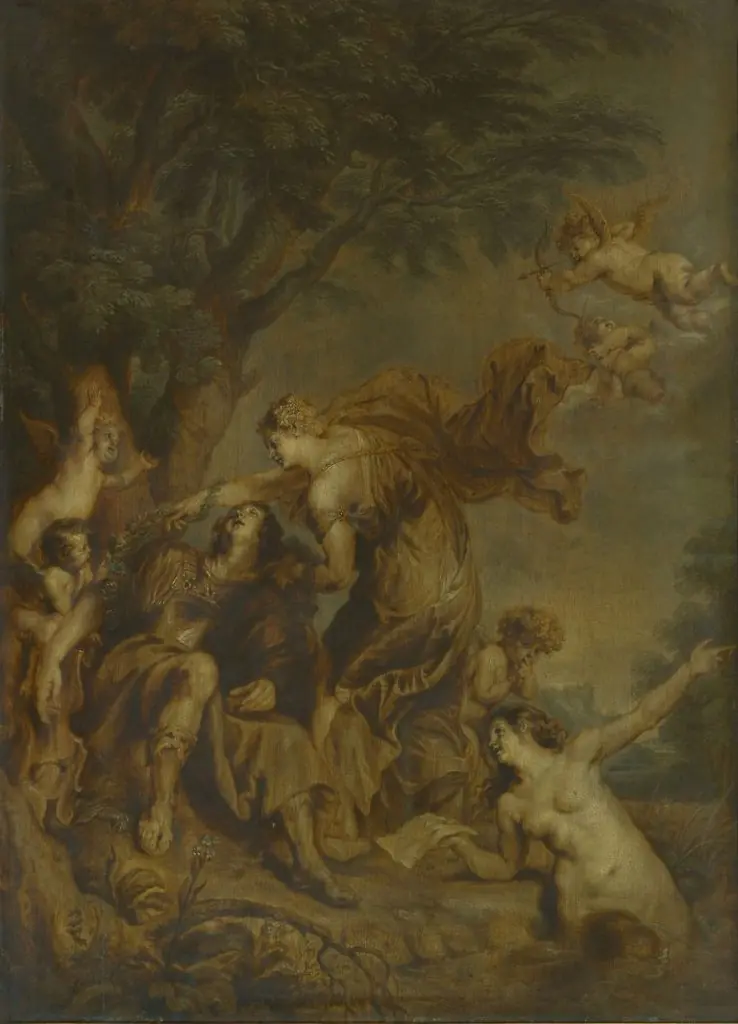 Rinaldo and Armida
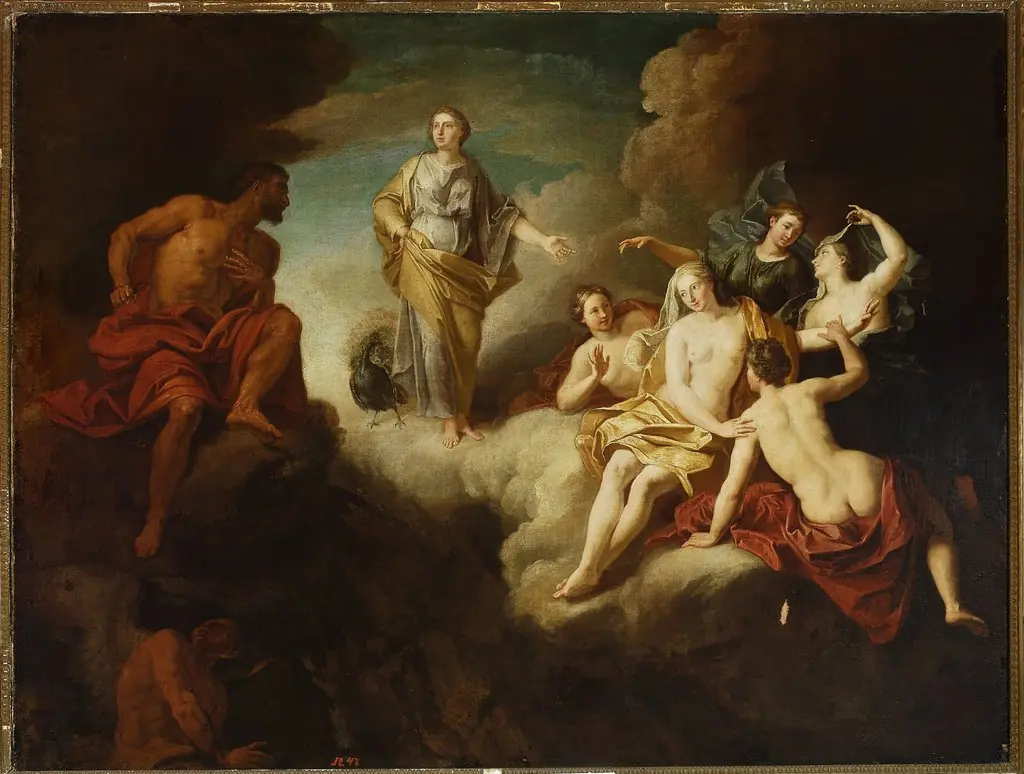 Juno asks Aeolus to destroy Aeneas's ships
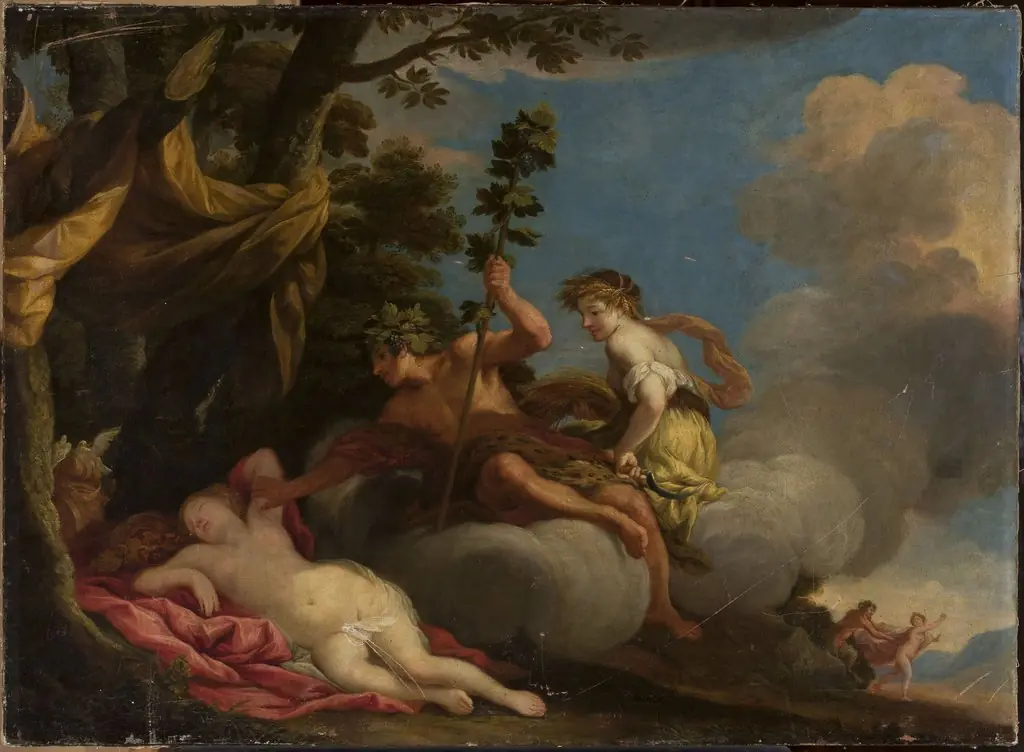 Ceres and Bacchus awaken Venus
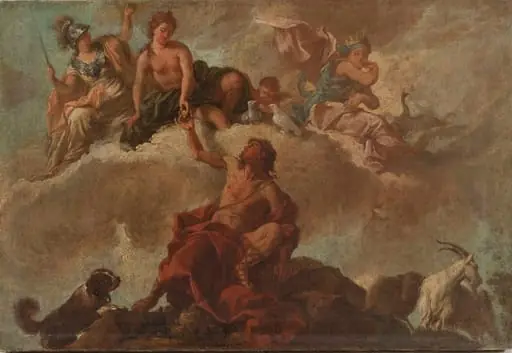 Judecata lui Paris
 A Sacrifice to Apollo