Artwork
Venus Bewailing the Slain Adonis
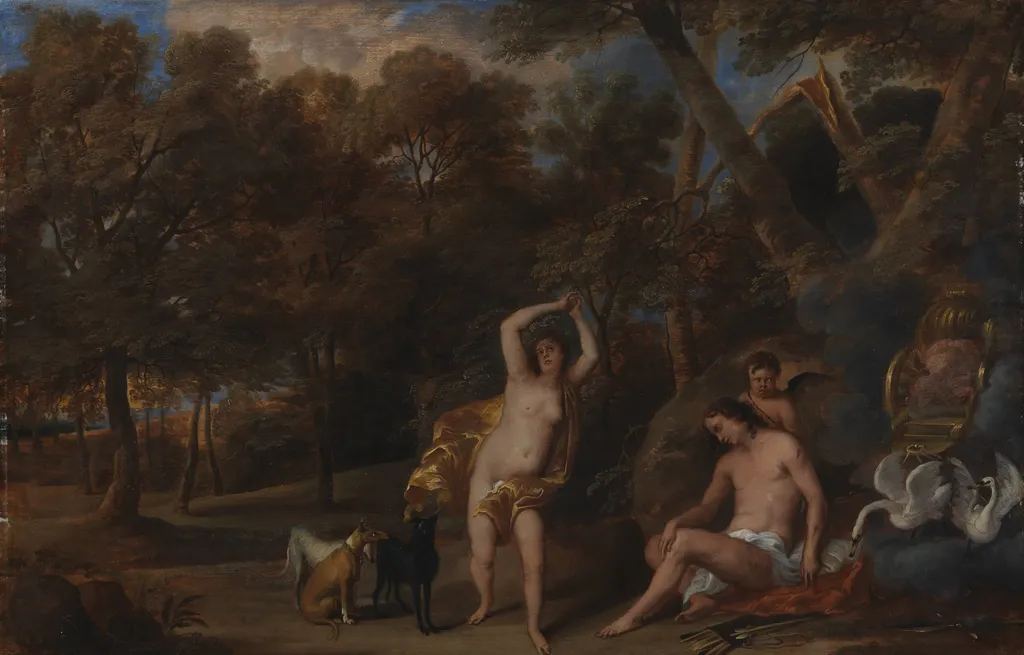
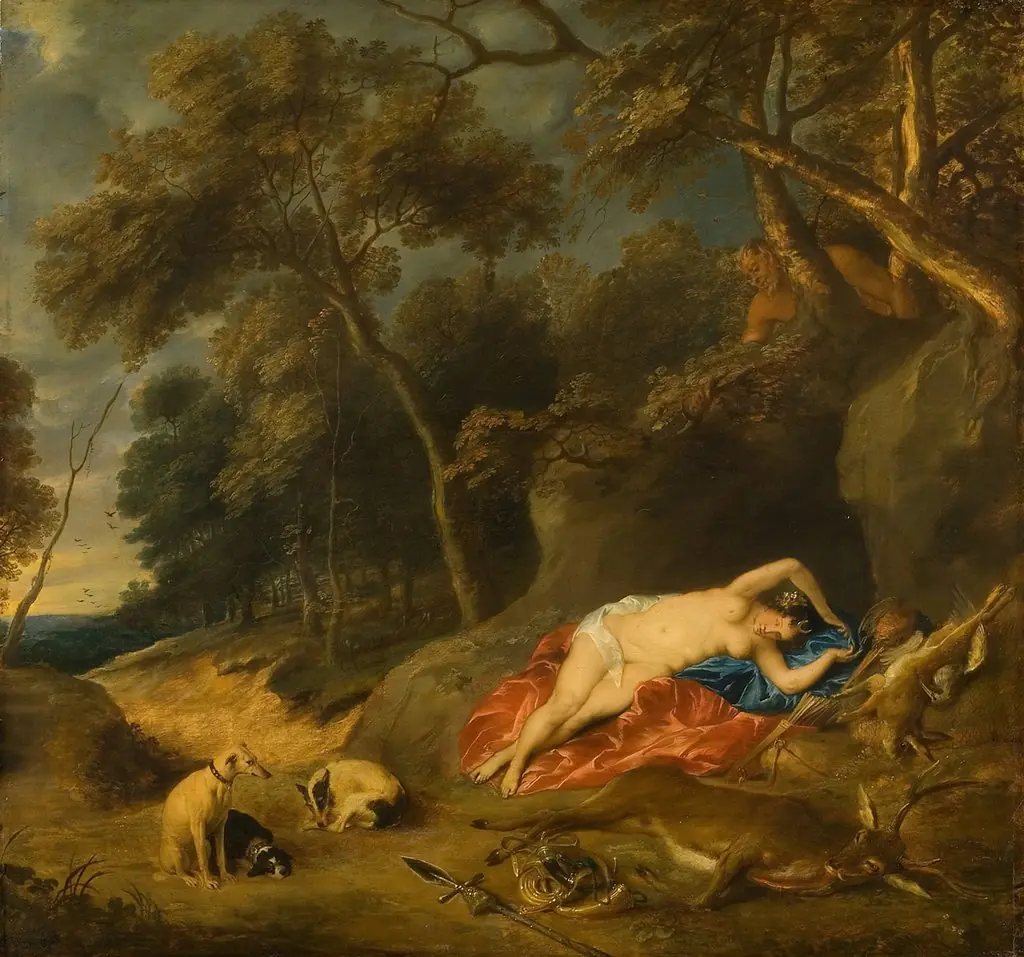
Venus Bewailing the Slain Adonis is a photography by Unknown. It dates from 1654 and is held in the collection of the Statens Museum for Kunst. Painted around 1654, this work portrays the mythological moment of Venus mourning the death of Adonis.
About this work
Overview
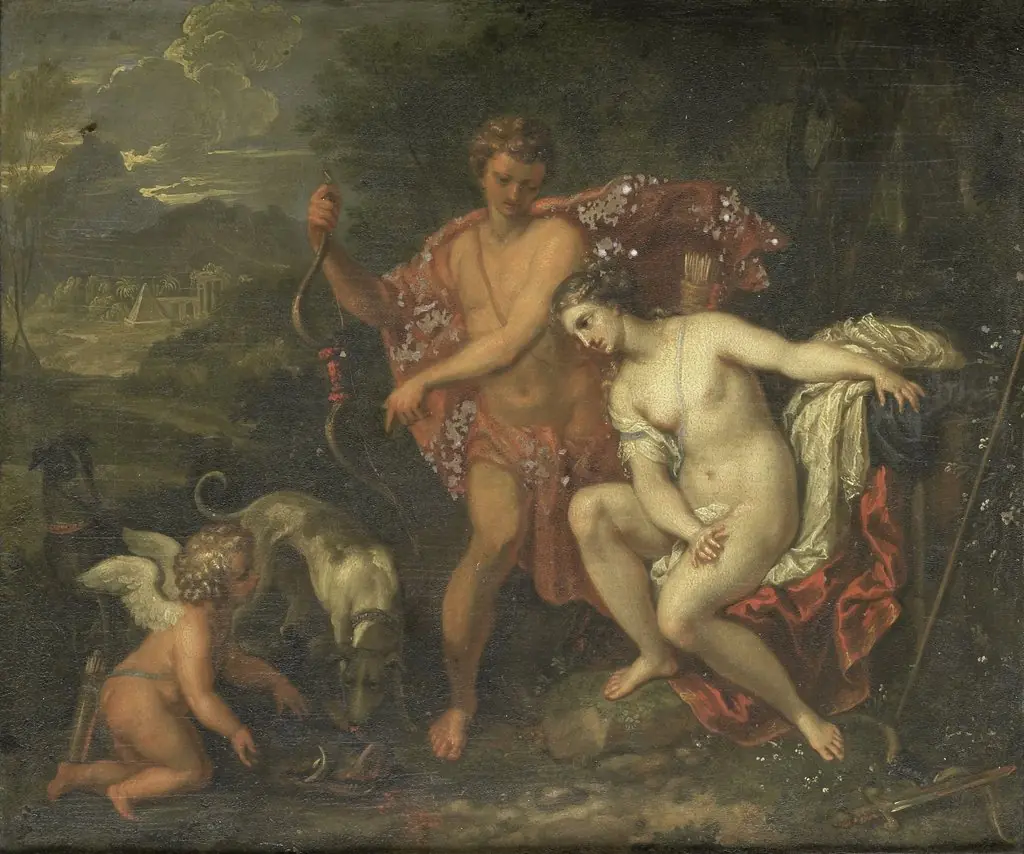
Painted around 1654, this work portrays the mythological moment of Venus mourning the death of Adonis. Executed in oil on canvas, it captures a quiet, intimate scene of grief rather than dramatic action. The composition centers on the two figures, isolated within a dense woodland setting, emphasizing emotional solitude over narrative spectacle.
Subject & Meaning
The painting illustrates the tragic end of Adonis, killed by a wild boar while hunting, as recounted in Ovid’s Metamorphoses. Venus, goddess of love, cradles his lifeless body, her raised arm conveying despair. The nudity of both figures underscores their vulnerability and the rawness of loss, transforming myth into a universal meditation on mortality and sorrow.
Technique & Style
The artist employs soft modeling and muted tones to convey melancholy, with delicate attention to the texture of skin and fabric. The gold drape on Venus contrasts subtly with the pale flesh and white loincloth of Adonis, drawing the eye without disrupting the somber mood. Background foliage is rendered with loose, atmospheric brushwork, deepening the sense of isolation.
History & Provenance
The painting entered the collection of the Museum of Ethnography in the late 19th century, though its earlier ownership remains undocumented. Its attribution to 2083_person is based on stylistic analysis and archival references from the mid-17th century, though no contemporary records confirm its commission or initial display.
Context
Created during a period when mythological themes remained popular in European art, this work diverges from grander Baroque treatments by focusing on stillness and personal grief. It reflects a quieter, more introspective current in mid-17th-century painting, where emotional depth took precedence over theatricality.
Legacy
Though not widely exhibited or reproduced, the painting contributes to a lesser-known strand of mythological interpretation that prioritizes tenderness over heroism. Its preservation in an ethnographic museum, rather than a fine arts institution, has shaped its reception as a cultural artifact of emotional expression rather than artistic achievement.
Artist & collection

 Domestic Scene
 Giacomo and Cardinal Marco, investing Andrea, Abbot of San Zeno, with his Benefice
 The Nymph of Fontainebleau
 Portrait of a Woman
 Madonna and Child with Saints in the Enclosed Garden
 Venus and Minerva
 Family Group of Four on Sofa
 Wall painting from Room H of the Villa of P. Fannius Synistor at Boscoreale