Artwork
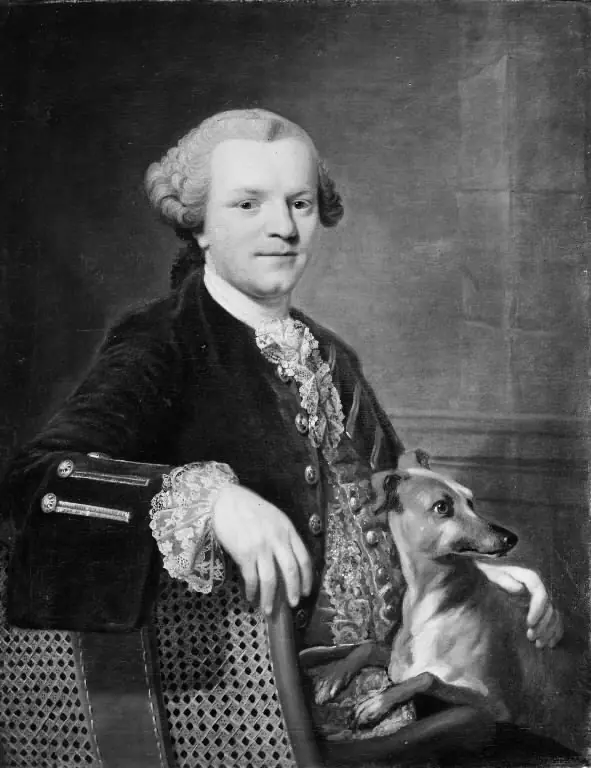
Portrait of Freiherr von Münchhausen
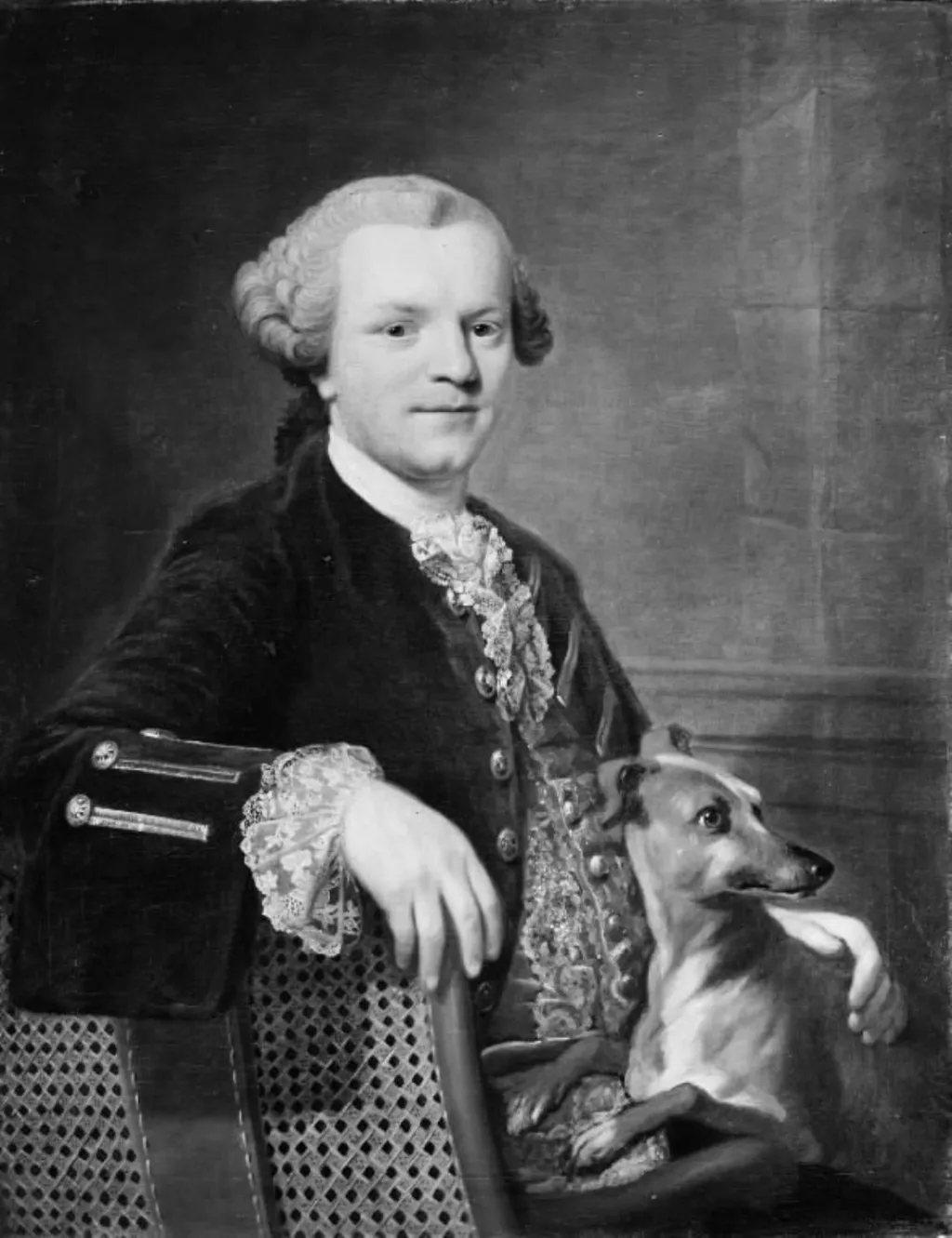
Portrait of Freiherr von Münchhausen is an unspecified painting by Unknown. It dates from 1750 and is held in the collection of the Statens Museum for Kunst. This portrait, dated around 1750, depicts Freiherr von Münchhausen, a German nobleman, in formal attire of the mid-18th century.
About this work
Overview
This portrait, dated around 1750, depicts Freiherr von Münchhausen, a German nobleman, in formal attire of the mid-18th century. Painted by an artist associated with the period, it is part of the collection at the Museum of Ethnography. The composition centers on the sitter and his greyhound, rendered with restrained detail against a neutral backdrop, emphasizing presence over ornamentation.
Subject & Meaning
The portrait captures von Münchhausen in a moment of quiet dignity, his serious expression and upright posture conveying status and composure. The inclusion of the greyhound, a symbol of loyalty and nobility, reinforces his social identity. The dog’s alert gaze toward the viewer introduces a subtle tension, suggesting a relationship between human and animal that extends beyond mere possession.
Technique & Style
The painting employs a muted palette and soft modeling to define form, avoiding dramatic lighting in favor of even illumination. Details like lace cuffs and the texture of the dog’s fur are rendered with precision but without excess. The plain background isolates the figures, directing attention to their posture and interaction, reflecting a preference for understated realism over theatricality.
History & Provenance
The portrait entered the Museum of Ethnography’s collection in the late 19th century, likely through acquisition or donation tied to regional aristocratic collections. Its attribution to the artist remains based on stylistic comparison rather than documented records. The work’s survival suggests it was preserved within family or institutional holdings before public acquisition.
Context
In mid-18th-century Germany, portraiture served as a tool for asserting lineage and social standing. Nobles often commissioned images that paired them with symbols of refinement—hunting dogs, books, or landscapes. This portrait aligns with that tradition, though its simplicity distinguishes it from more elaborate courtly depictions of the era.
Legacy
Though not widely reproduced, the portrait remains a quiet example of provincial aristocratic representation in Enlightenment-era Germany. Its restrained aesthetic offers insight into how nobility expressed identity beyond spectacle. The inclusion of the greyhound reflects enduring cultural associations between dogs and elite status, preserved in visual culture long after the sitter’s lifetime.
Artist & collection

 Domestic Scene
 Giacomo and Cardinal Marco, investing Andrea, Abbot of San Zeno, with his Benefice
 The Nymph of Fontainebleau
 Portrait of a Woman
 Madonna and Child with Saints in the Enclosed Garden
 Venus and Minerva
 Family Group of Four on Sofa
 Wall painting from Room H of the Villa of P. Fannius Synistor at Boscoreale
 Mandsportræt
 Mandsportræt
 Portrait of Claes Fredrik Horn
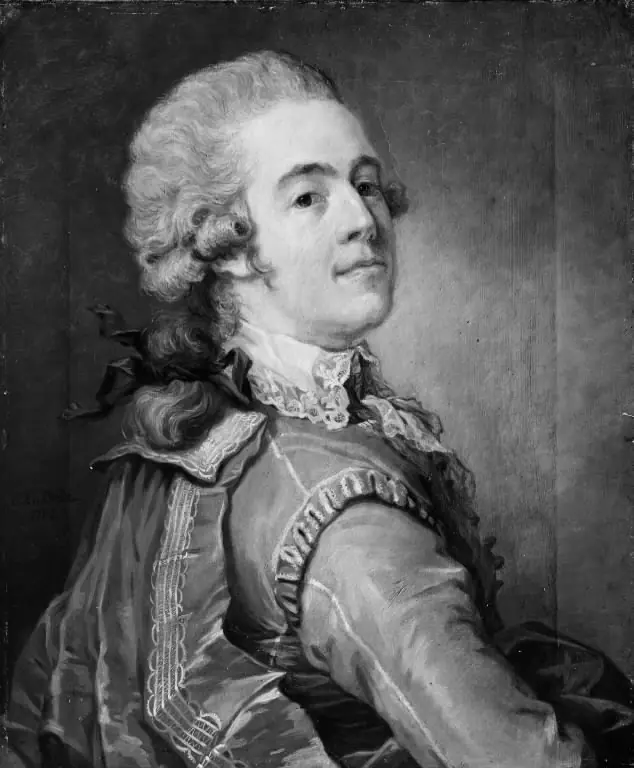 Portrait of Claes Fredrik Horn
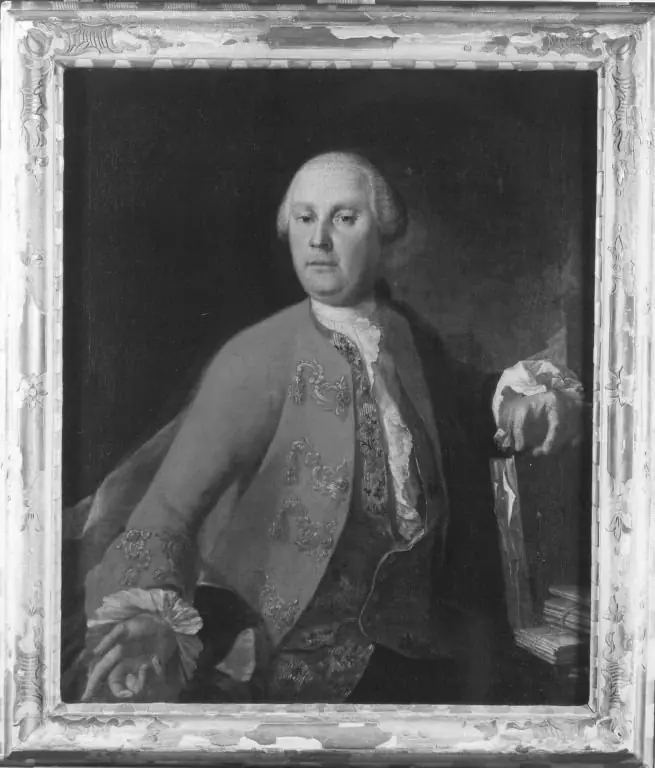 Carl Anton Adam Freiherr von Hagn
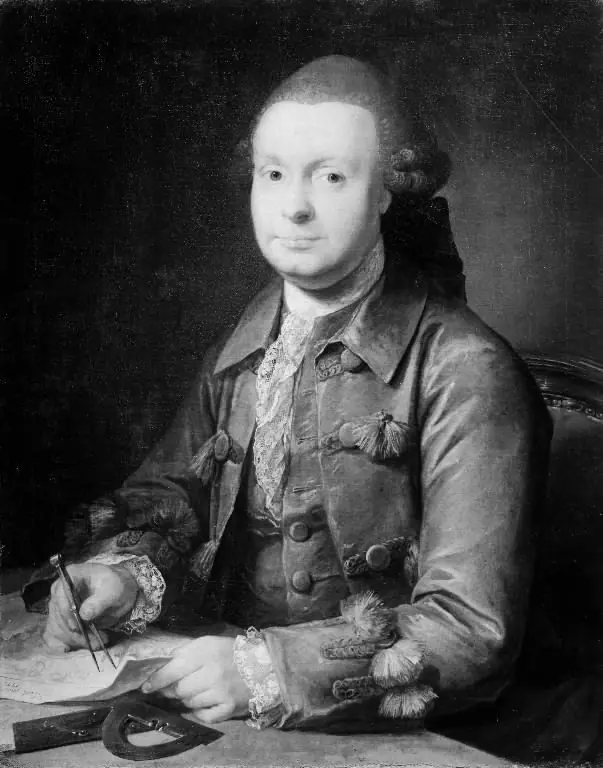 Peder Rahr, købmand i Ribe
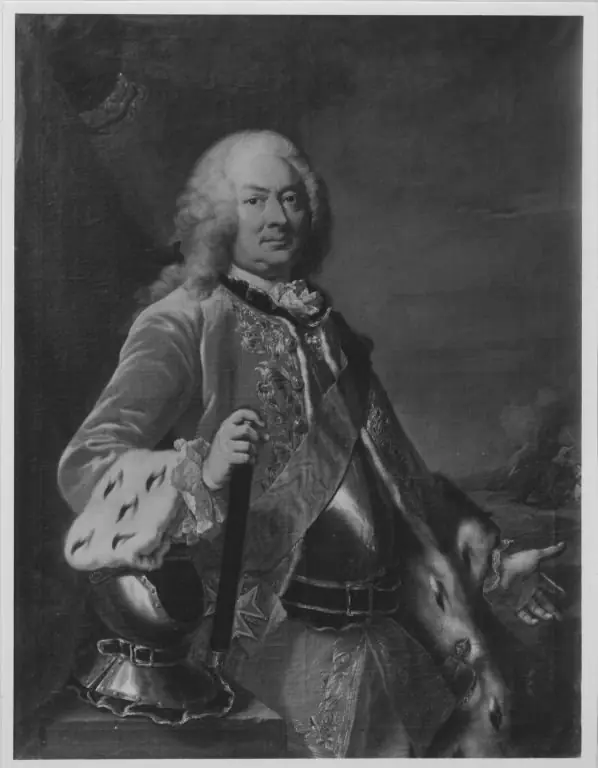 Landgraf Wilhelm VIII. von Hessen-Kassel
 Major General Christopher Nugent (d.1742)
 Marquis de Marigny
 Portræt af J. J. Brandt
 Bildnis des Malers Balthasar August Albrecht
 Portrait of Freiherr von Münchhausen