Artwork
Eggplants and Pomegranates
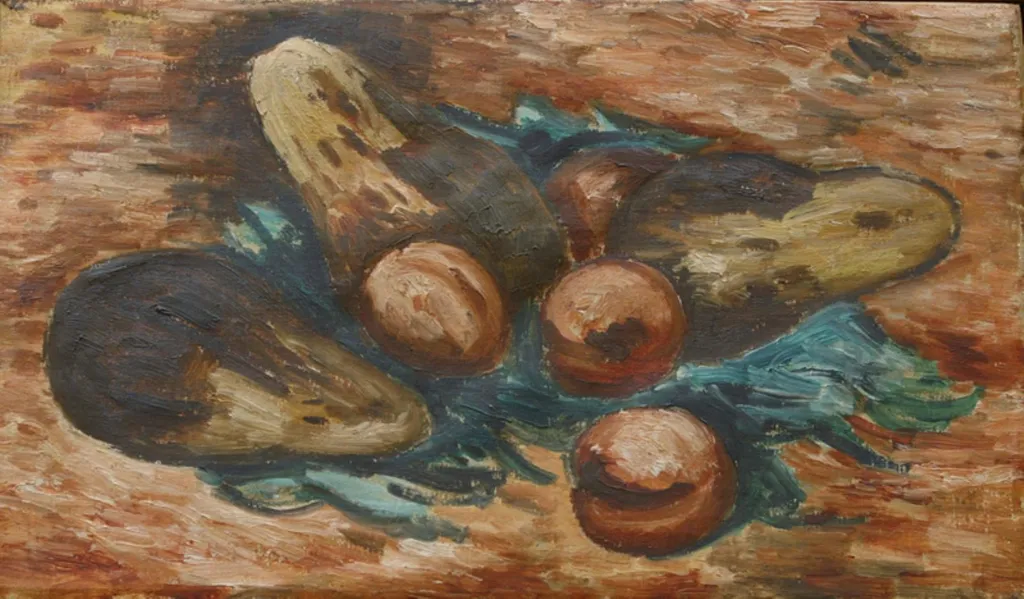
Eggplants and Pomegranates is a photography by Unknown. It dates from 1850 and is held in the collection of the Statens Museum for Kunst.
About this work
Overview
The work is attributed to an artist identified only as 22290_person and is currently held in the collection of the Museum of Ethnography.
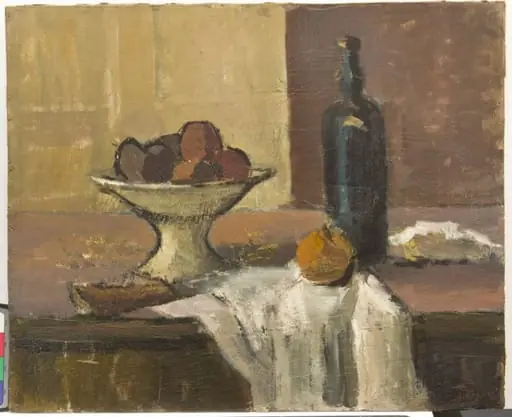
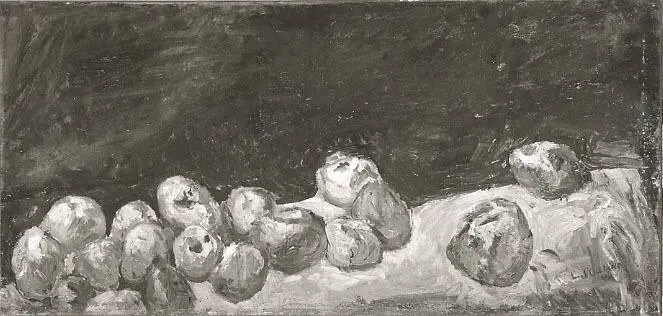
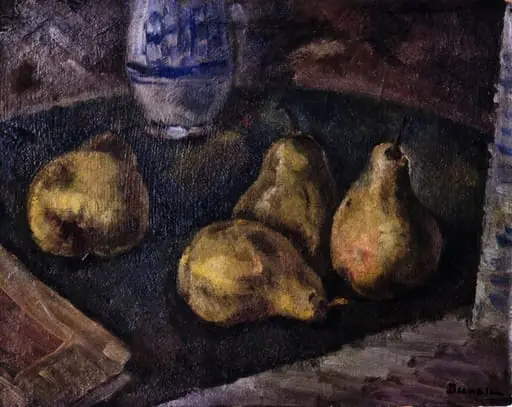
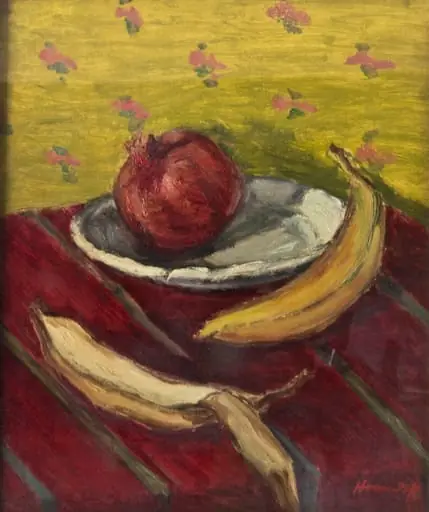
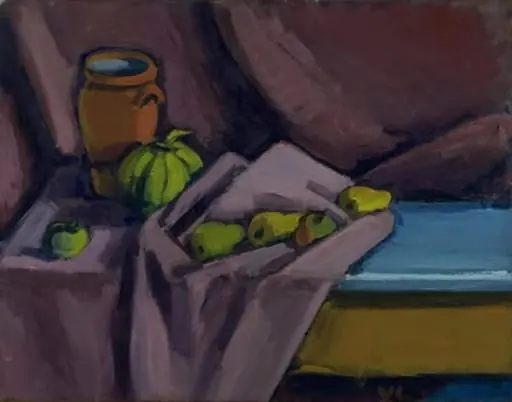
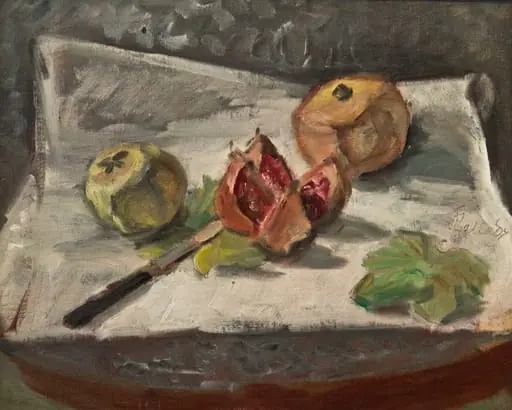
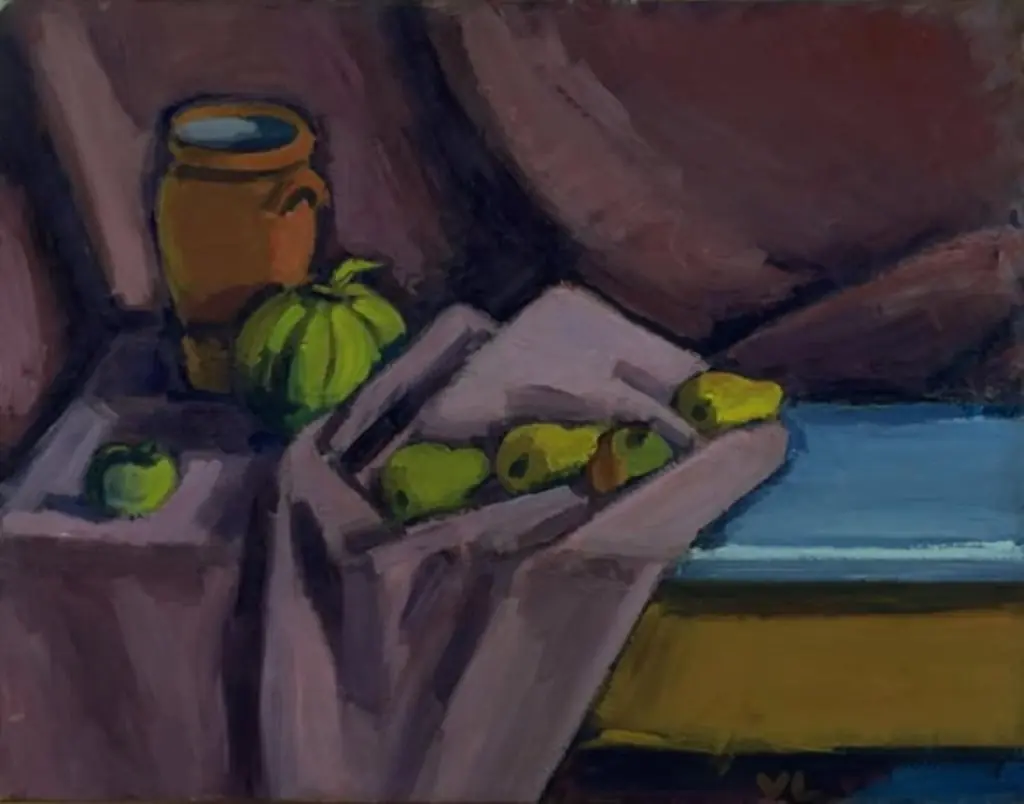
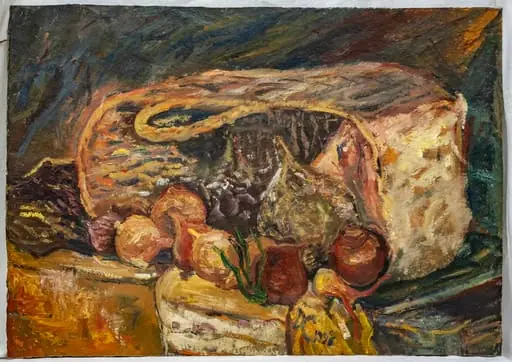
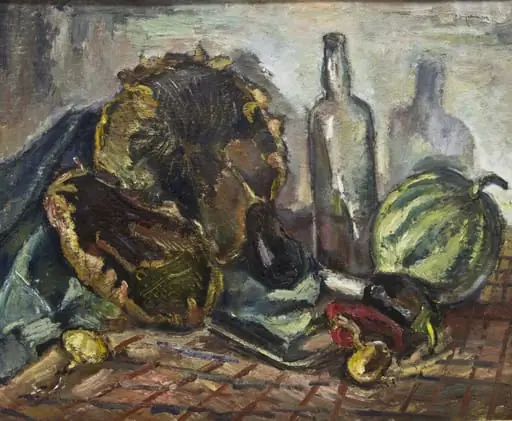
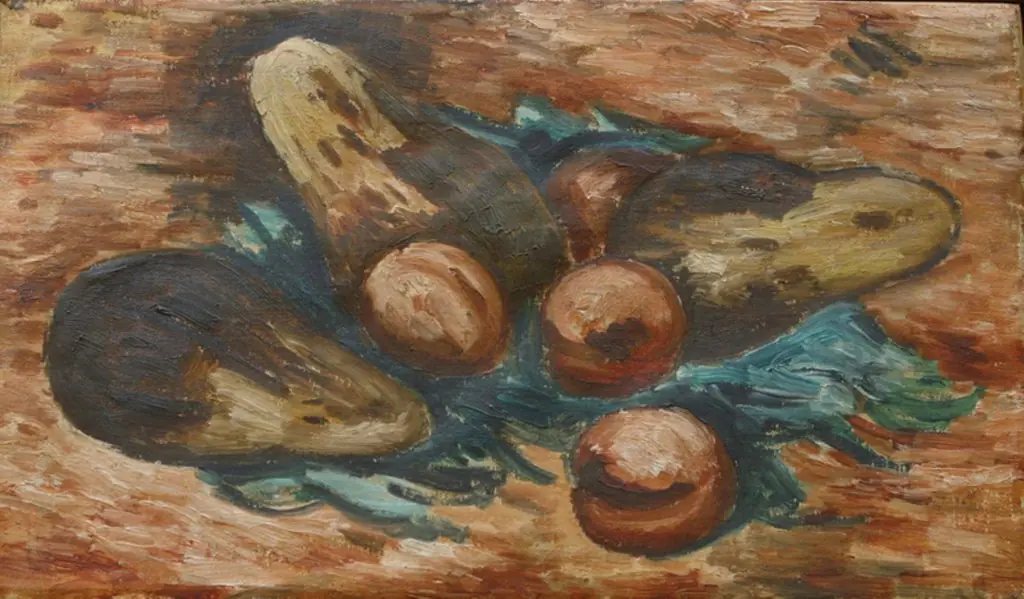
Created around 1850, this still life depicts a simple arrangement of eggplants and pomegranates. The work is attributed to an artist identified only as 22290_person and is currently held in the collection of the Museum of Ethnography. Its focus on everyday produce reflects a quiet, observational approach common in mid-19th-century still-life painting, emphasizing texture and form over symbolic narrative.
Subject & Meaning
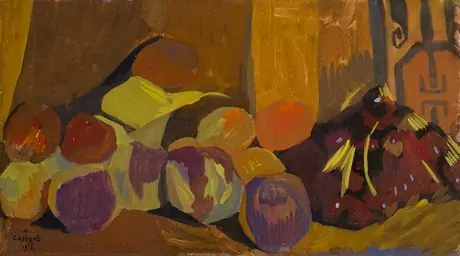
The composition centers on two common fruits: eggplants with their deep purple skins and pomegranates split open to expose clusters of crimson seeds. While no overt symbolism is documented, the choice of these fruits may reflect regional agricultural abundance or a personal interest in natural forms. The emphasis on ripeness and surface detail suggests an appreciation for the physical presence of the objects rather than allegorical meaning.
Technique & Style
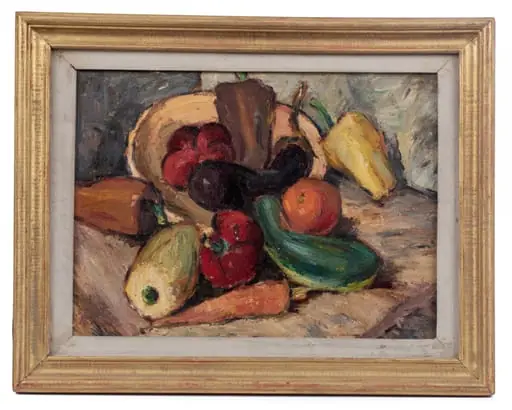
The artist employed impasto to build thick, tactile layers of paint, particularly on the fruit surfaces. This technique gives the eggplants a glossy, almost wet appearance and renders the pomegranate seeds with a sense of depth and volume. The background, composed of blended warm browns and cool blues, contrasts with the textured foreground, enhancing the three-dimensionality of the fruit through bold, visible brushwork.
History & Provenance
The painting has been in the collection of the Museum of Ethnography since at least the late 19th century. Its attribution to 22290_person remains tentative, with no documented exhibition history or personal correspondence linking it to a known artist of the period. The work’s origin and acquisition details are not fully recorded, suggesting it may have entered the museum through a donation or ethnographic collection.
Context
In the mid-1800s, still-life painting in Europe often shifted from elaborate vanitas themes toward more direct depictions of ordinary objects. This work aligns with that trend, focusing on the sensory qualities of produce without moral or religious overtones. Its presence in an ethnographic museum, rather than a fine arts institution, may reflect contemporary interest in documenting regional food culture alongside material artifacts.
Legacy
Though not widely exhibited or studied, the painting contributes to a lesser-known body of 19th-century still-life work that prioritizes material presence over symbolism. Its use of impasto and attention to natural detail offer insight into how artists engaged with everyday subjects outside academic traditions. It remains a quiet example of how ordinary objects could be rendered with physical immediacy in a period increasingly focused on realism.
Artist & collection

 Domestic Scene
 Giacomo and Cardinal Marco, investing Andrea, Abbot of San Zeno, with his Benefice
 The Nymph of Fontainebleau
 Portrait of a Woman
 Madonna and Child with Saints in the Enclosed Garden
 Venus and Minerva
 Family Group of Four on Sofa
 Wall painting from Room H of the Villa of P. Fannius Synistor at Boscoreale