Artwork
Still Life With a Jar and Fruits
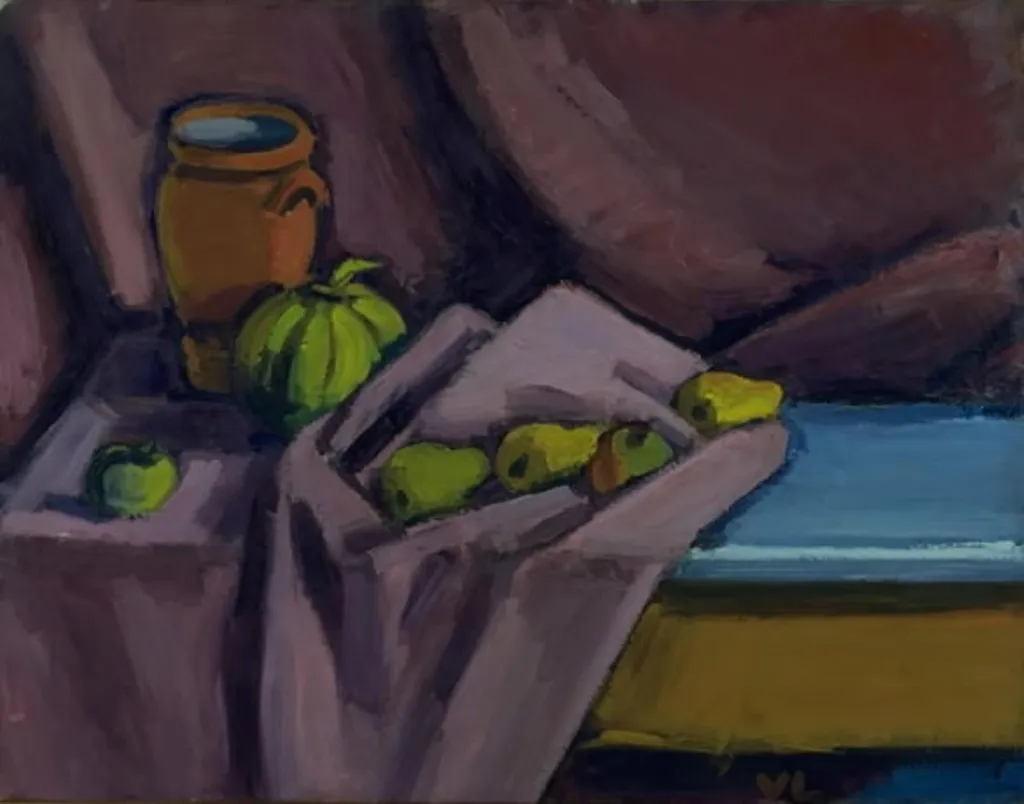
Still Life With a Jar and Fruits is an unspecified painting by the Realist artist Unknown. It dates from 1924 and is held in the collection of the Statens Museum for Kunst.
About this work
Overview
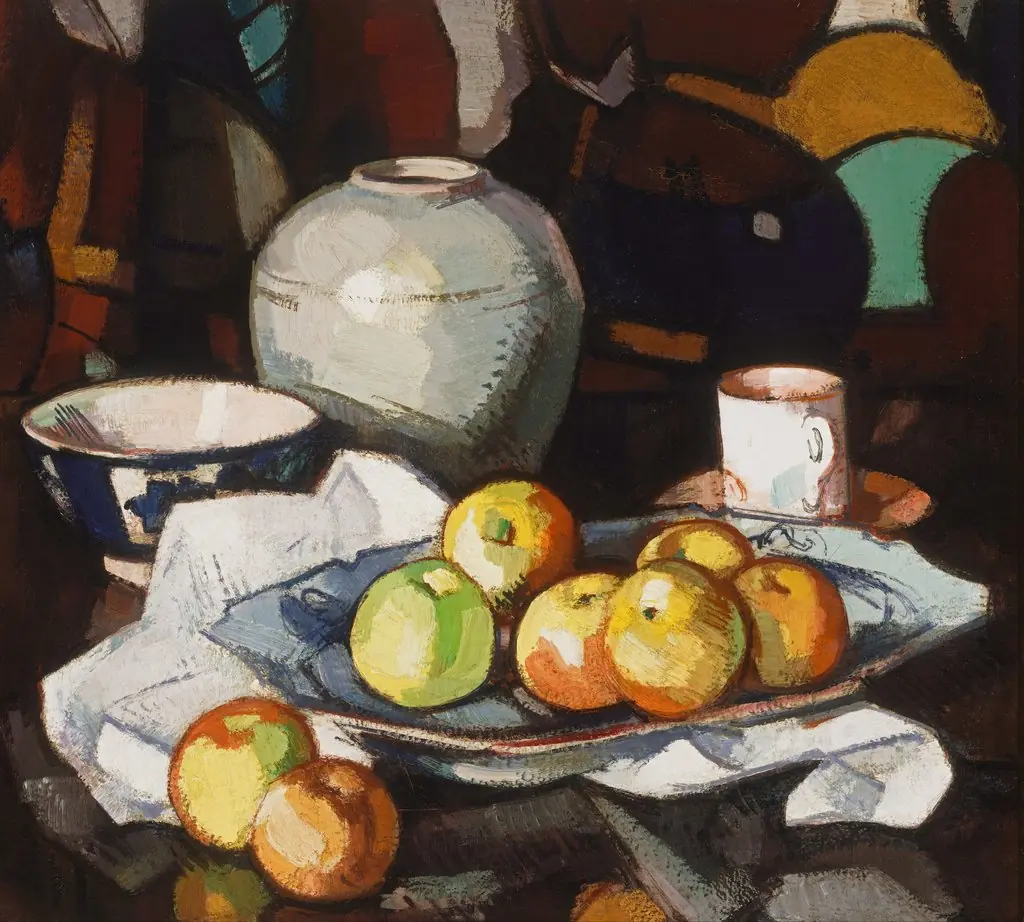
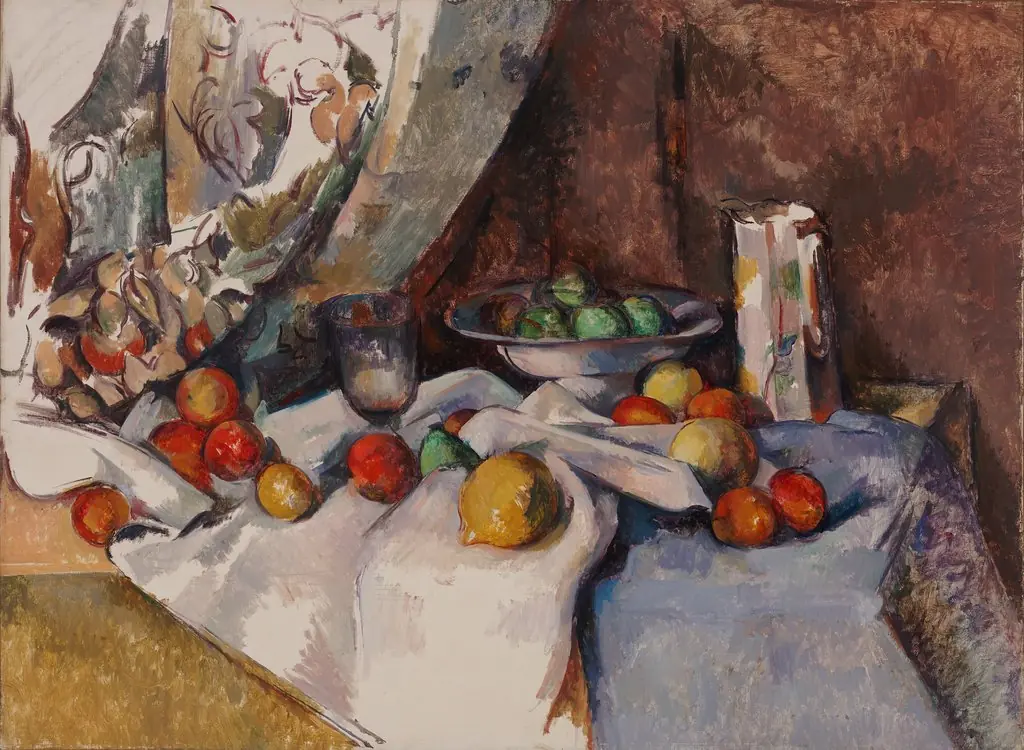
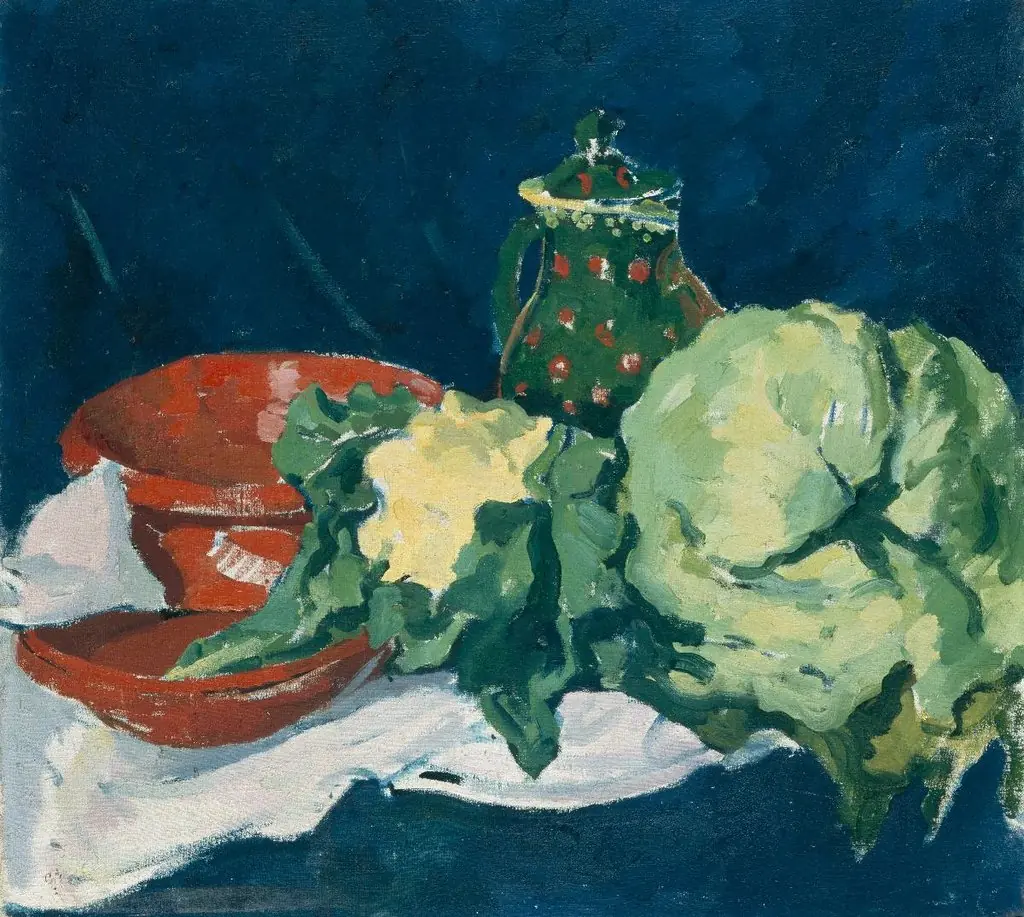
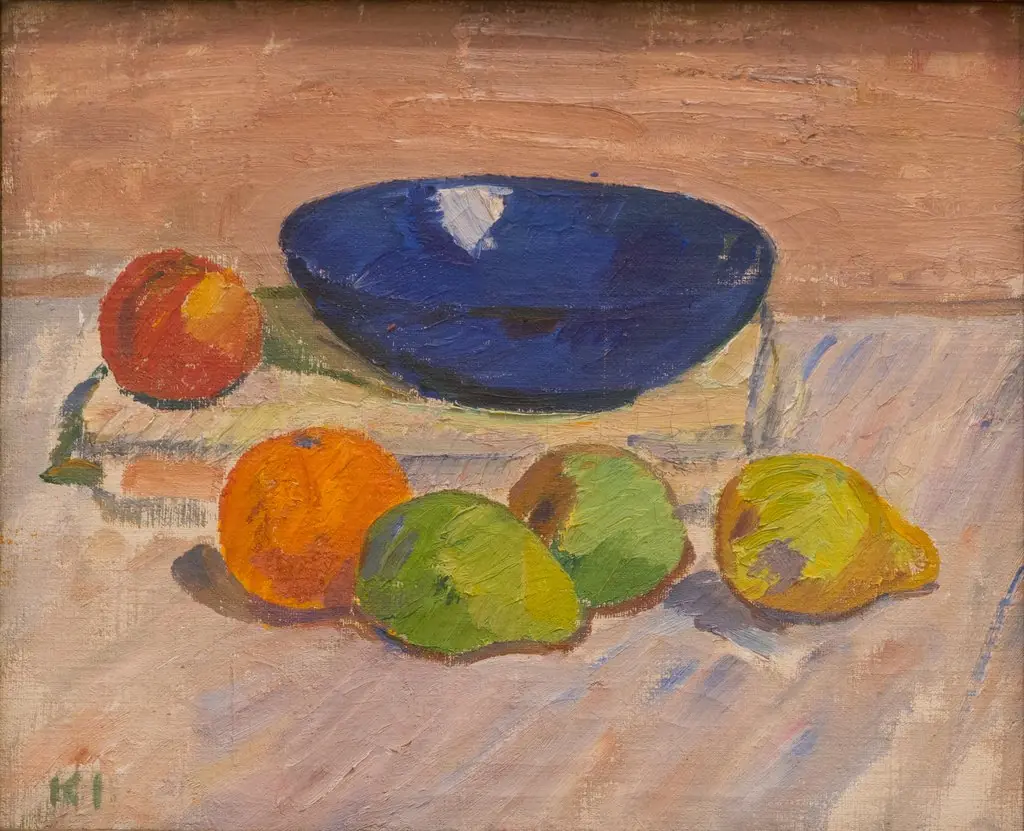
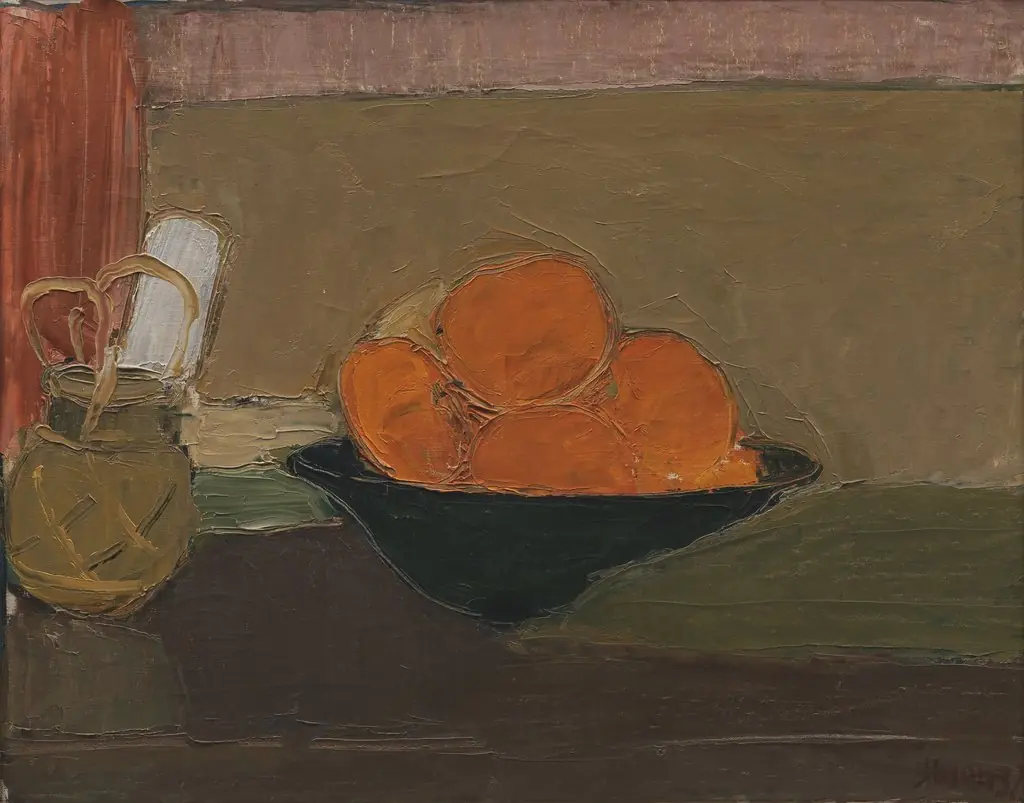
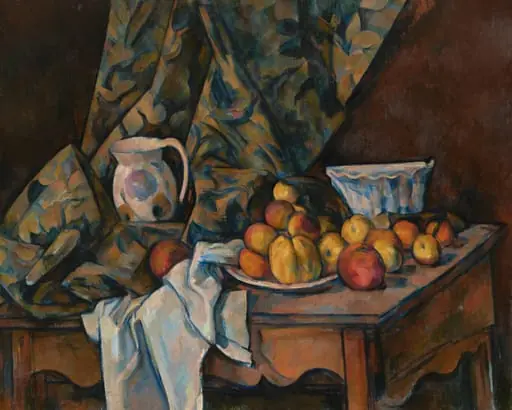
Painted in 1924, this still life depicts a modest arrangement of household items: a ceramic jar, a squash, and several apples resting in a wooden crate. The composition is grounded on a table covered by a blue-green cloth. The work is held in the collection of the Museum of Ethnography, reflecting an interest in ordinary domestic scenes rather than grand or idealized subjects.
Subject & Meaning
The objects—common, utilitarian, and slightly worn—suggest a quiet, unadorned domestic life. The jar, apples, and squash are not exotic or luxurious, but familiar, perhaps gathered from a kitchen or pantry. Their placement implies a momentary pause, as if the scene was left just after use, evoking a sense of quiet routine rather than symbolic meaning.
Technique & Style
Thick, textured brushwork gives the forms a tactile presence, with paint applied in visible, uneven strokes. The warm orange of the jar contrasts with the muted tones of the fruit and cloth, drawing attention without artificial emphasis. The rough handling avoids polish, reinforcing the unidealized nature of the scene and anchoring it in physical reality.
History & Provenance
The painting entered the Museum of Ethnography’s collection after its creation in 1924. Its acquisition suggests an institutional interest in vernacular art and everyday material culture, aligning with early 20th-century ethnographic efforts to document ordinary life. No record of prior ownership or exhibition is widely documented.
Context
Created during a period when many artists turned from abstraction toward realism, this work reflects a broader interest in the dignity of the mundane. While contemporaries explored urban life or political themes, this painting quietly observes domestic stillness, resonating with regional traditions of humble still life in Northern European art.
Legacy
The painting remains a quiet example of interwar still life that prioritizes material presence over narrative. Its inclusion in an ethnographic museum underscores its value as a cultural artifact of everyday life. It continues to be studied for its unembellished approach, offering insight into how ordinary objects were rendered with emotional weight.
Artist & collection

 Domestic Scene
 Giacomo and Cardinal Marco, investing Andrea, Abbot of San Zeno, with his Benefice
 The Nymph of Fontainebleau
 Portrait of a Woman
 Madonna and Child with Saints in the Enclosed Garden
 Venus and Minerva
 Family Group of Four on Sofa
 Wall painting from Room H of the Villa of P. Fannius Synistor at Boscoreale