Artwork
Barneportræt
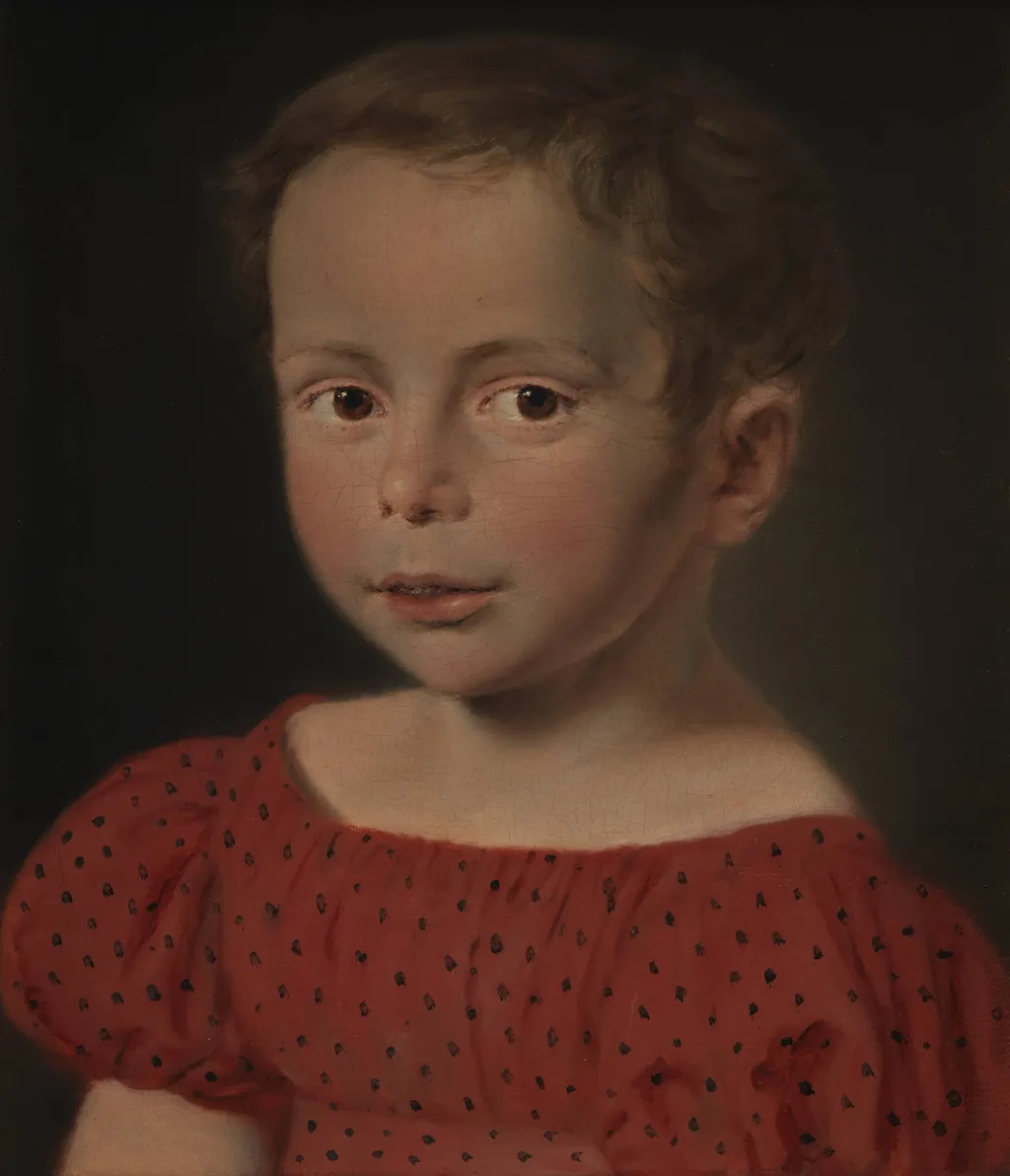
Barneportræt is a photography by the Romanticist artist Unknown. It dates from 1834 and is held in the collection of the Statens Museum for Kunst.
About this work
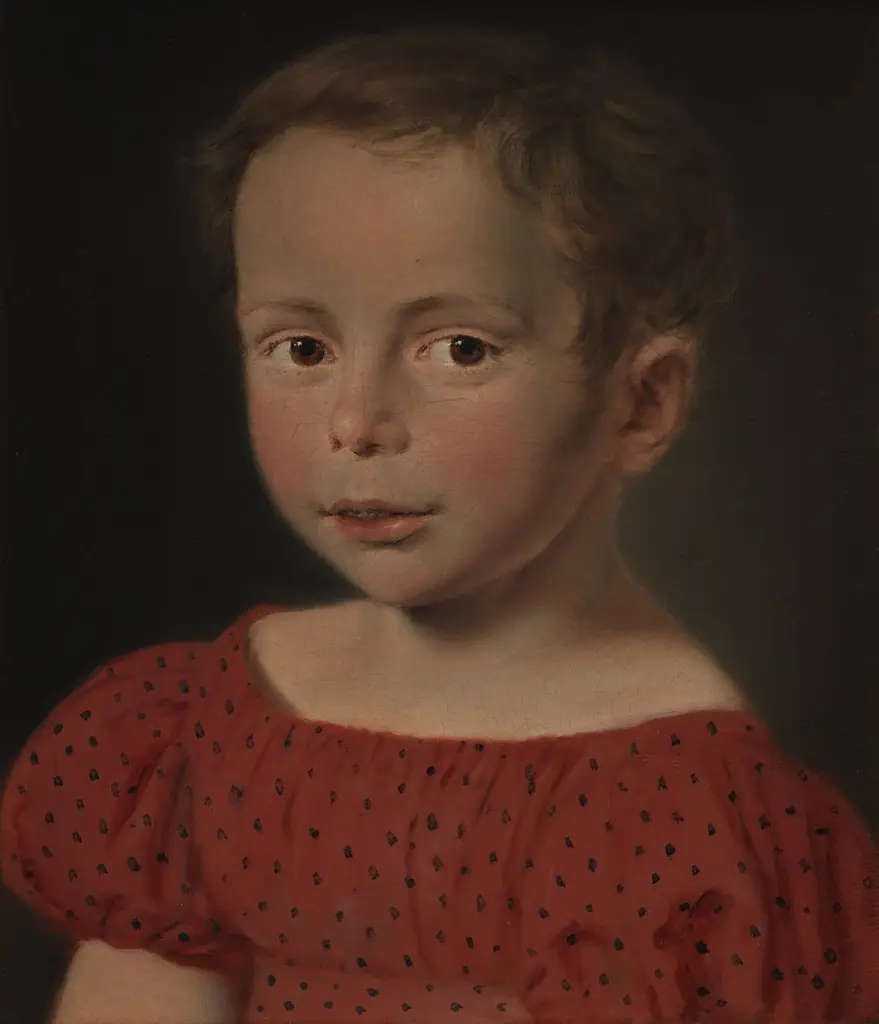
They’re wearing a bright red dress with small black dots, standing against a plain dark background.
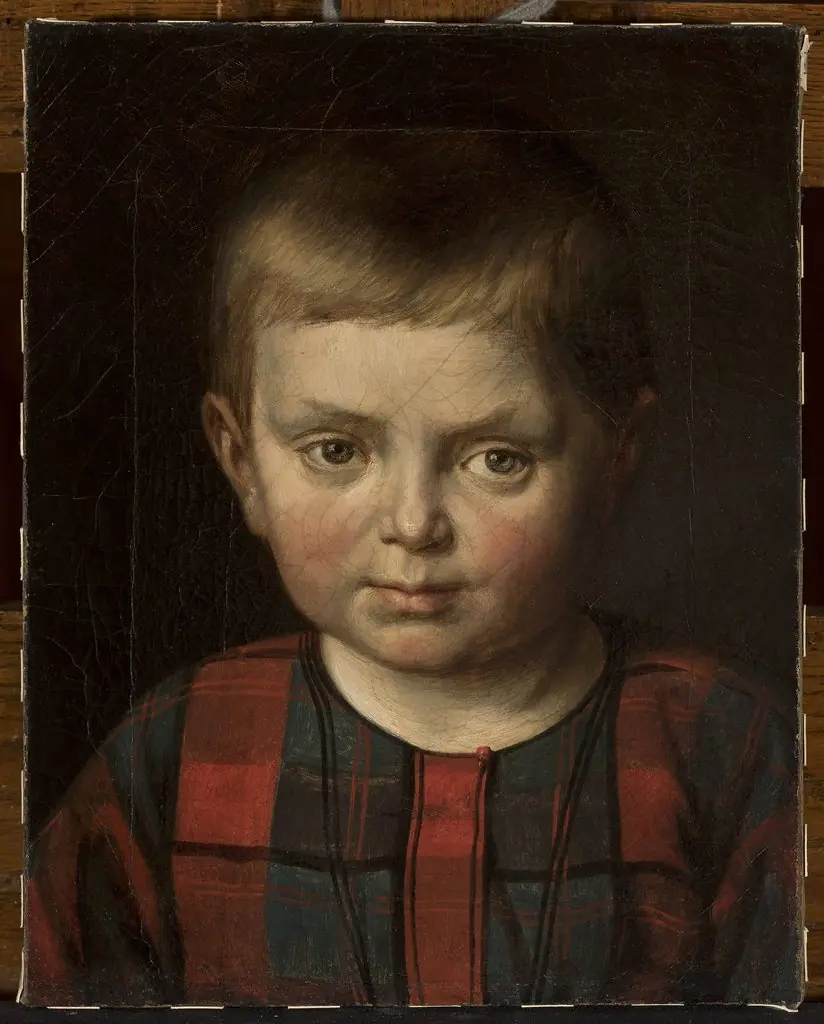
This is a close-up of a young child with light brown hair and serious eyes. They’re wearing a bright red dress with small black dots, standing against a plain dark background. The face looks soft but slightly worn, with a quiet expression.
The painting is actually an early photograph, not a painting at all—this was made in 1834. The artist used light and shadow to give the face a three-dimensional feel.
Check out chiaroscuro to see how artists use light and dark to create depth.
Overview
Created in 1834, Barneportræt is an early photographic portrait, not a painted work as commonly assumed. It depicts a young child against a dark, unadorned background, capturing a moment of quiet stillness. The image was produced using the daguerreotype process, one of the earliest practical methods of photography. Its preservation in the Museum of Ethnography reflects its significance as both a personal record and a technical milestone in visual documentation.
Subject & Meaning
The subject is a child with light brown hair and a composed, serious gaze. Dressed in a vivid red gown patterned with tiny black dots, the figure stands alone, emphasizing solitude and introspection. The absence of context or props directs attention to the child’s expression, suggesting a deliberate focus on individual presence rather than social status or narrative. The stillness conveys a sense of vulnerability, common in early photographic portraiture due to long exposure times.
Technique & Style
The image employs chiaroscuro through careful manipulation of light and shadow, lending the child’s face a sculptural depth. The dark background isolates the figure, enhancing the contrast between skin tones and the bright red fabric. Early photographic processes like the daguerreotype required long exposures, resulting in subtle textures and a soft, slightly worn appearance. These technical constraints shaped the image’s intimate, contemplative tone.
History & Provenance
Created in 1834, the photograph was likely made in Denmark, given its title and current location. It entered the collection of the Museum of Ethnography in the late 19th or early 20th century, possibly as part of a broader effort to document everyday life through emerging visual technologies. Its survival is notable, as many early photographic plates were fragile and easily lost or damaged.
Context
In 1834, photography was in its infancy, with the daguerreotype process only recently announced. Portraits were rare and expensive, often reserved for the elite. This image, depicting a child in modest attire, suggests a middle-class or artisan family commissioning a personal keepsake. Its existence reflects a growing cultural interest in capturing individual identity, even outside aristocratic circles.
Legacy
Barneportræt stands as an early example of photography’s capacity to convey emotional nuance. It contributed to the medium’s acceptance as a legitimate form of portraiture, distinct from painting. Today, it is studied for its technical innovation and its quiet humanism, offering insight into how early photographers shaped the way we see ordinary lives.
Artist & collection

 Domestic Scene
 Giacomo and Cardinal Marco, investing Andrea, Abbot of San Zeno, with his Benefice
 The Nymph of Fontainebleau
 Portrait of a Woman
 Madonna and Child with Saints in the Enclosed Garden
 Venus and Minerva
 Family Group of Four on Sofa
 Wall painting from Room H of the Villa of P. Fannius Synistor at Boscoreale
 Caroline Mortier de Trévise
 Malvina Mortier de Trévise
 Posthumous portrait of Elżbietka Pade (1811–1818), daughter of Elżbieta and Marcin
 Portrait of Rudolf (1838–?), son of Stanisław Jachowicz
 Morris Hunt
 Portrait of a Young Boy
 Emma Lejeune
 The Little Cavalier
 Knabenbildnis
 Minnie Willard
 Portrait of a Child of the Comminges Family
 Barneportræt