Artwork
Cecilie Lønborg, gift 1830 med skibsintendant Theodor Emil Ludvigsen
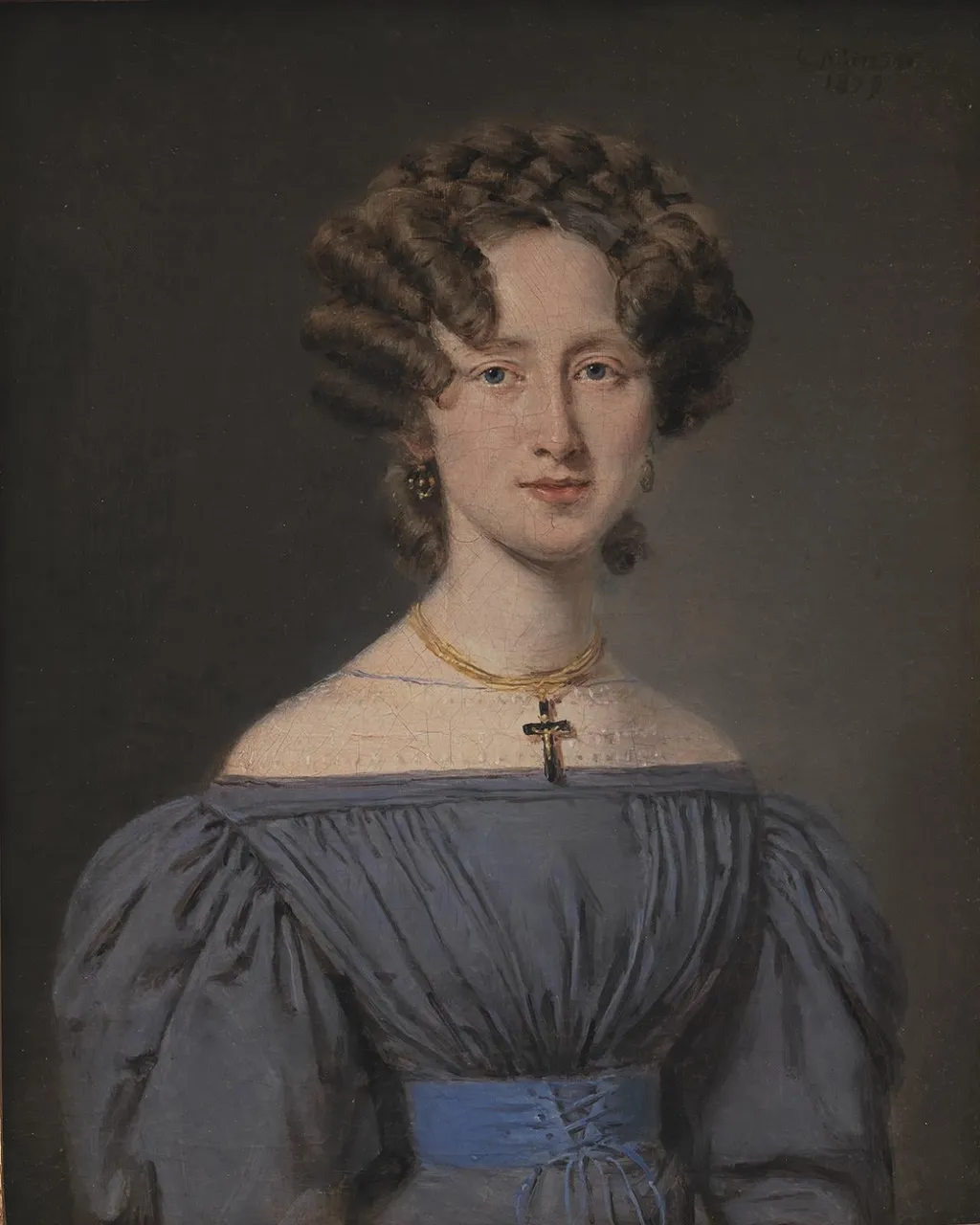
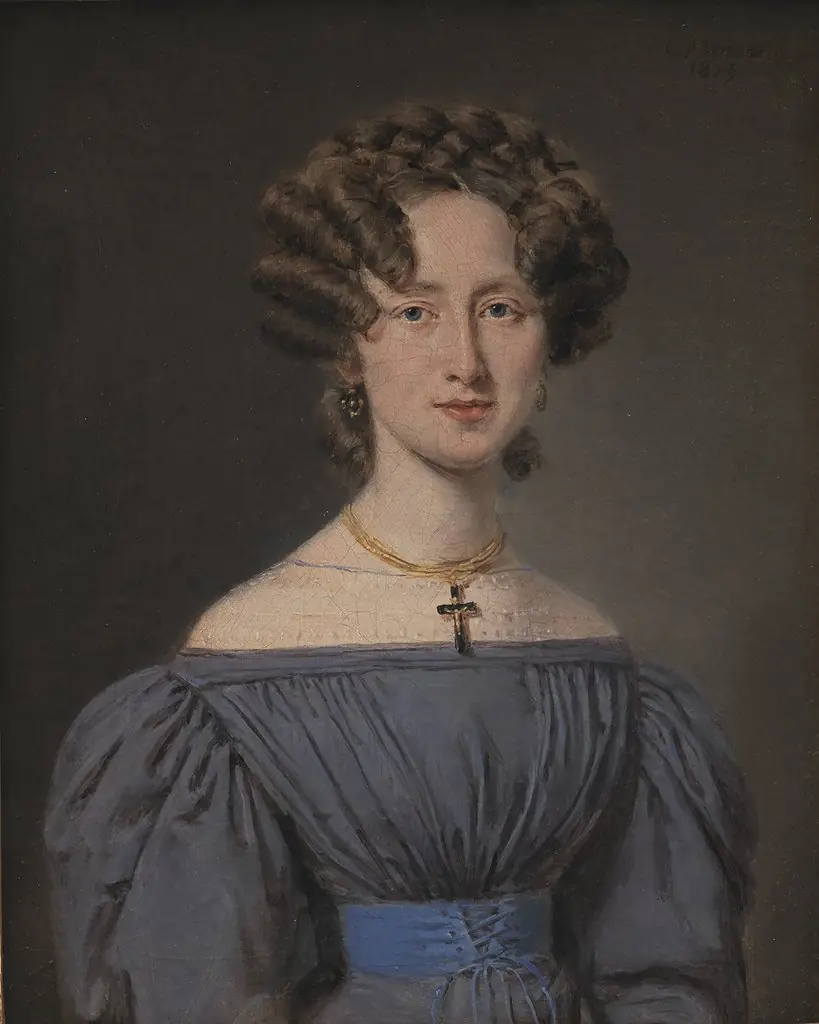
Cecilie Lønborg, gift 1830 med skibsintendant Theodor Emil Ludvigsen is a photography by the Romanticist artist Unknown. It dates from 1829 and is held in the collection of the Statens Museum for Kunst. Painted in 1829, this portrait depicts Cecilie Lønborg, who married Theodor Emil Ludvigsen in 1830.
About this work
Overview
Painted in 1829, this portrait depicts Cecilie Lønborg, who married Theodor Emil Ludvigsen in 1830. The work is attributed to an artist identified as 231_person and resides in the Museum of Ethnography. Rendered in oil on canvas, the composition centers on the sitter’s poised presence against a deep, neutral backdrop, emphasizing her figure through subtle contrasts of light and shadow.
Subject & Meaning
Her direct gaze and composed posture convey quiet dignity rather than theatrical expression.
Cecilie Lønborg is portrayed in formal attire befitting her social standing, with a gold cross necklace and blue ribbon suggesting personal and perhaps religious significance. Her direct gaze and composed posture convey quiet dignity rather than theatrical expression. The portrait likely served as a private commemoration of her identity and marital transition, reflecting values of modesty and inner resolve common among middle- and upper-class women of the era.
Technique & Style
The artist employs soft, diffused lighting to model the sitter’s form, avoiding harsh outlines and enhancing the sense of stillness. The dark background isolates her figure, drawing attention to the texture of her blue dress and the gleam of her jewelry. Brushwork is restrained, favoring smooth transitions over visible strokes, aligning with a quiet realism that prioritizes emotional tone over dramatic flourish.
History & Provenance
The painting entered the collection of the Museum of Ethnography following its creation in 1829, though its early ownership history remains undocumented. Its presence in an ethnographic institution, rather than a fine arts museum, may reflect later reinterpretations of the portrait as a cultural artifact of domestic life rather than a purely aesthetic object.
Context
Created during the height of Romanticism in Northern Europe, the portrait shares the movement’s interest in individual emotion and intimate portrayal. Yet it avoids overt sentimentality, instead favoring restraint. The sitter’s attire and demeanor reflect Danish bourgeois norms of the 1820s, where personal identity was expressed through subtle symbols rather than public display.
Legacy
Though not widely exhibited or studied, the portrait contributes to understanding how private portraiture functioned in early 19th-century Denmark. Its preservation in an ethnographic context underscores shifting scholarly perspectives on domestic life as a valid subject for historical inquiry, beyond traditional narratives of power and politics.
Artist & collection

 Domestic Scene
 Giacomo and Cardinal Marco, investing Andrea, Abbot of San Zeno, with his Benefice
 The Nymph of Fontainebleau
 Portrait of a Woman
 Madonna and Child with Saints in the Enclosed Garden
 Venus and Minerva
 Family Group of Four on Sofa
 Wall painting from Room H of the Villa of P. Fannius Synistor at Boscoreale
 Portrait of Mrs Clementson
 Portrait of Petronella de Lange, Wife of Theodorus Frederik van Capellen
 Pilar Gandiola
 Portrait of a lady in a blue dress
 Delphine Gay
 Actress Anna Nielsen
 Portrait of a young Woman
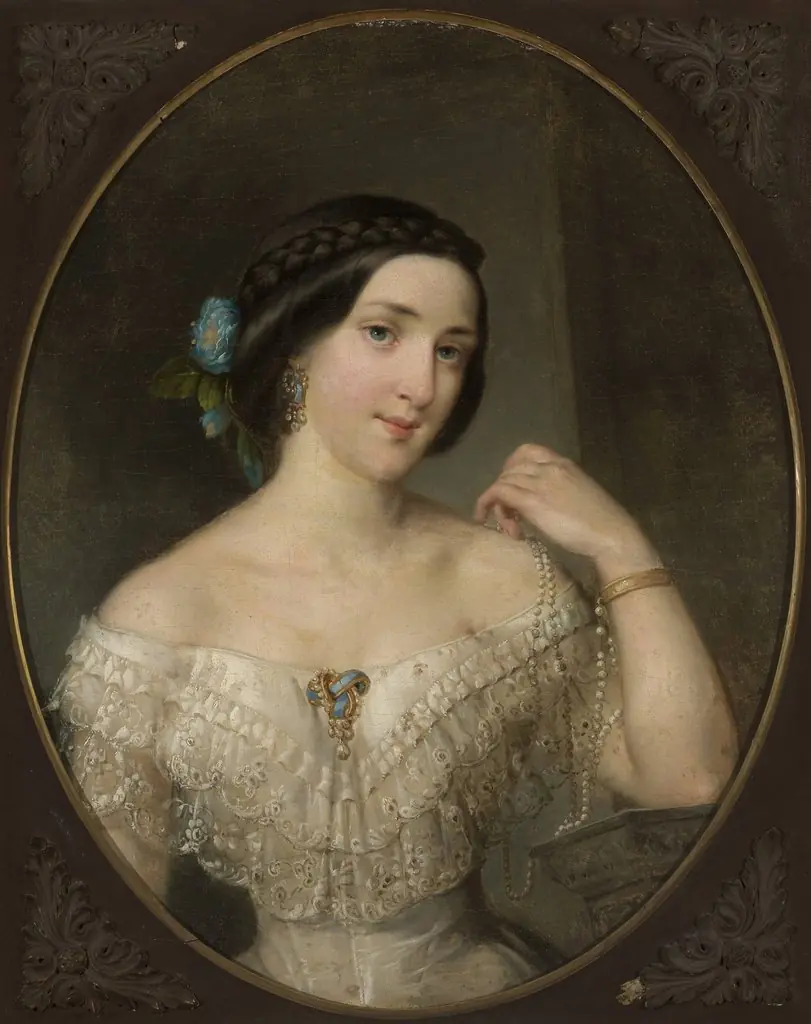 Portrait of Maria Ludwika Blumenfeld née Kobyłecka
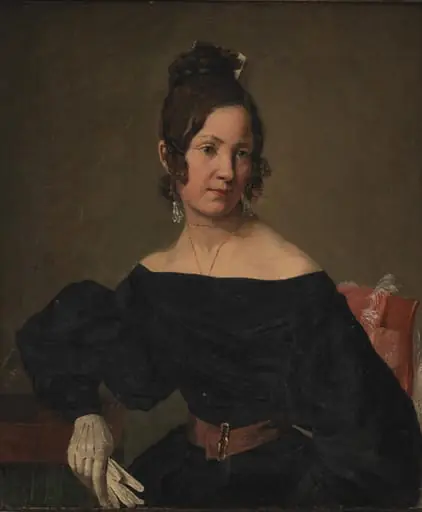 Skuespilleren Anna Nielsen
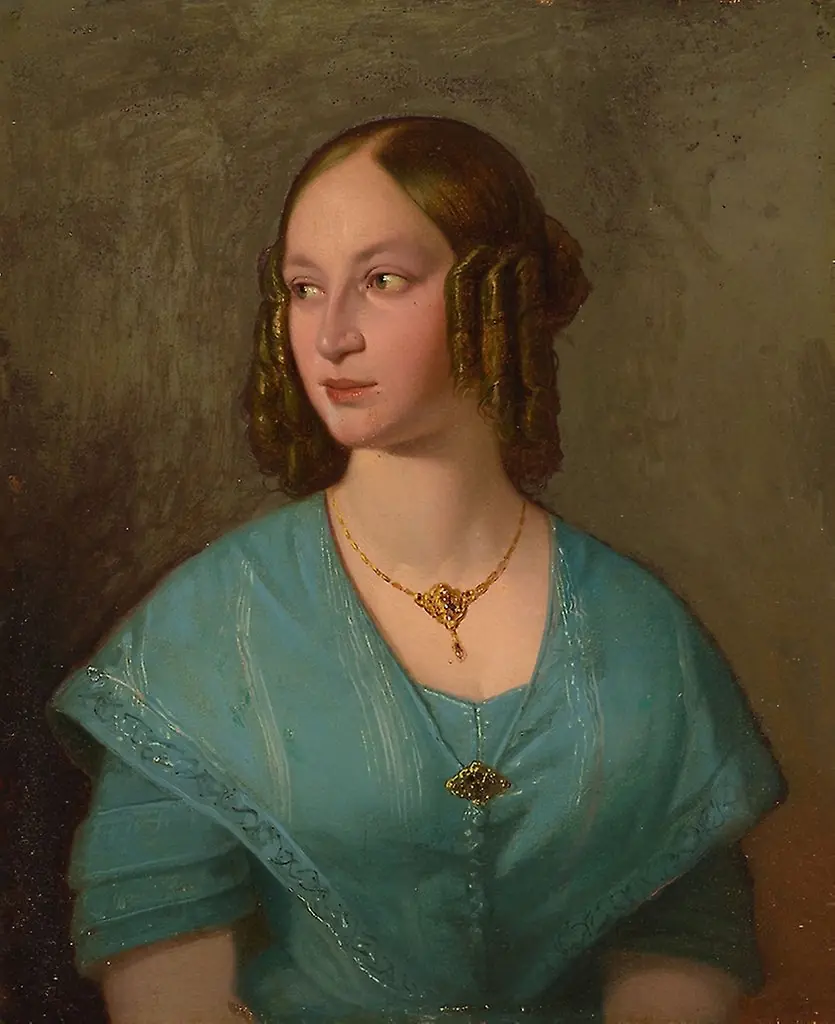 Mrs. Daniel Embury (Emma Catherine Manley)
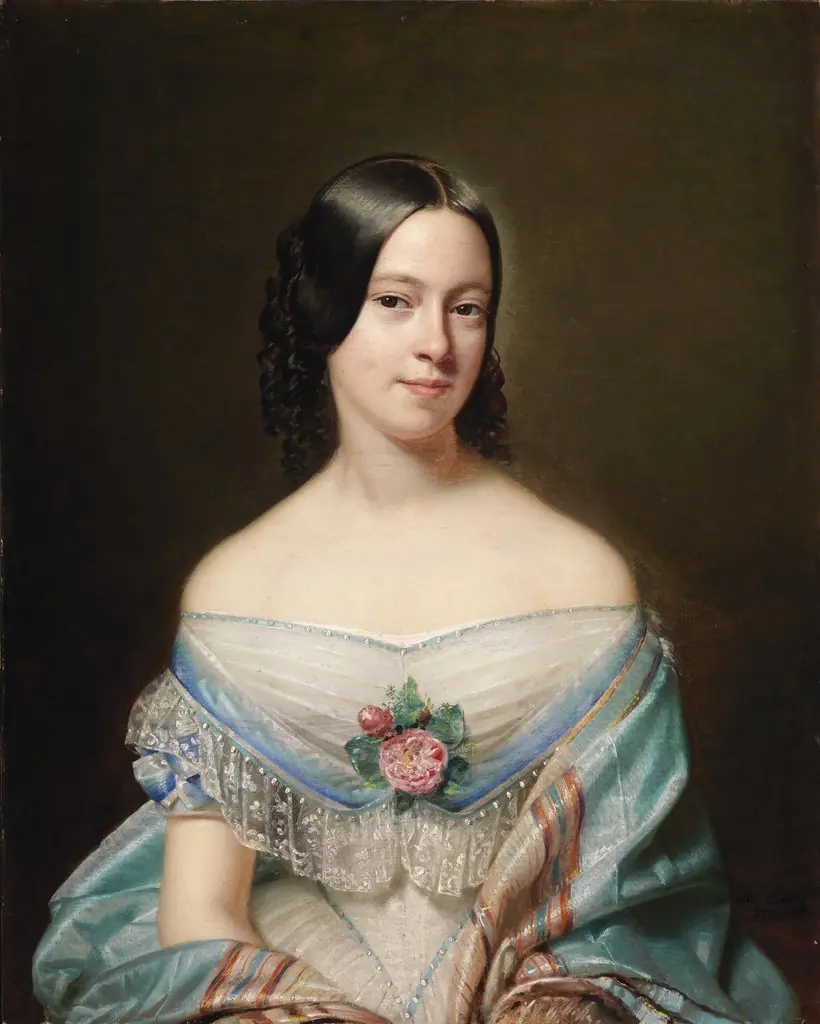 Portrait of Anna von Minarelli-Fitzgerald
 Cecilie Lønborg, gift 1830 med skibsintendant Theodor Emil Ludvigsen