Artwork
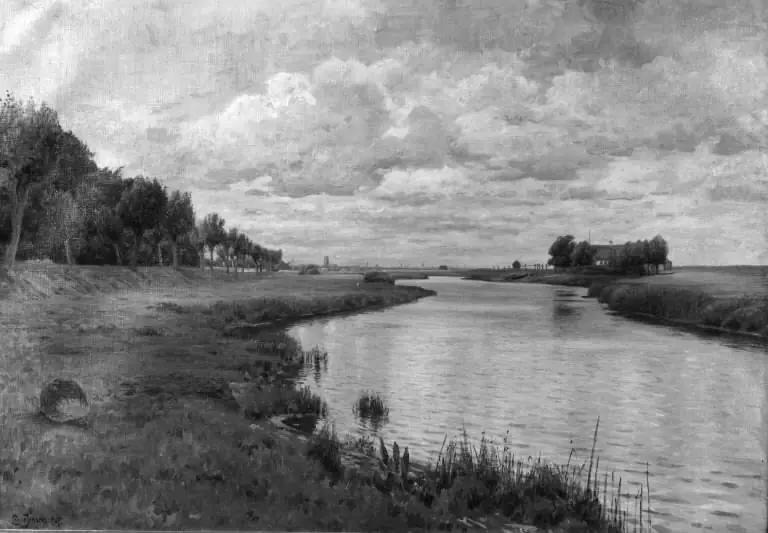
Pramåens udløb ved Vallø Strand
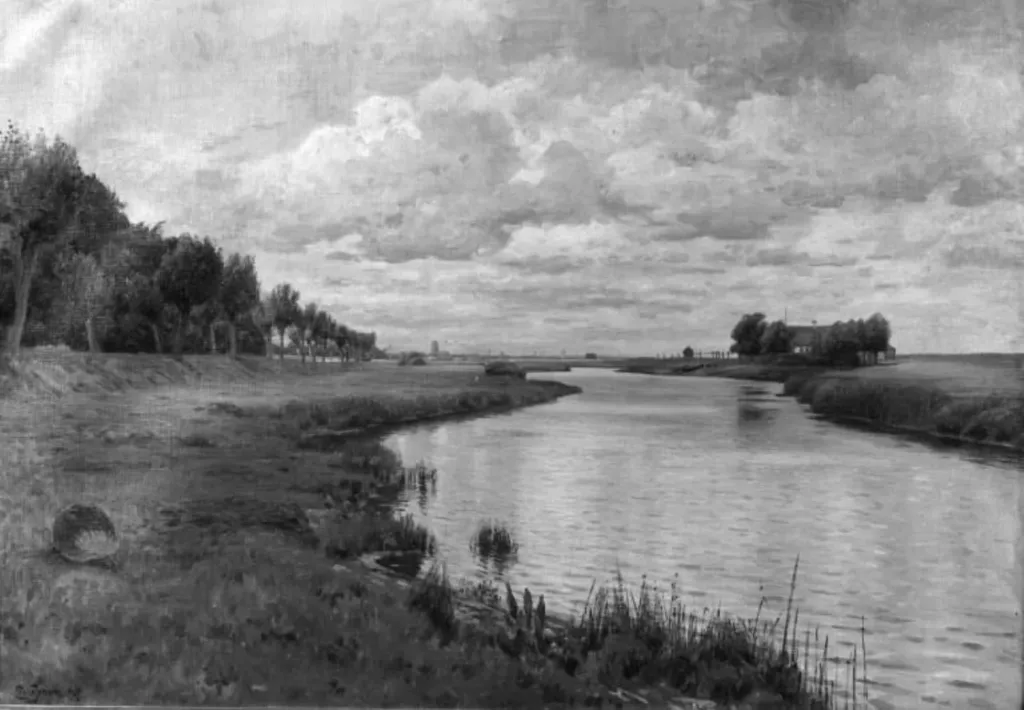
Pramåens udløb ved Vallø Strand is a photography by Unknown. It dates from 1907 and is held in the collection of the Statens Museum for Kunst.
About this work
Overview
Created in 1907, Pramåens udløb ved Vallø Strand is a photographic image depicting the mouth of the Pramå River as it meets the wetlands near Vallø Strand.
Created in 1907, Pramåens udløb ved Vallø Strand is a photographic image depicting the mouth of the Pramå River as it meets the wetlands near Vallø Strand. The work is part of the collection at the Museum of Ethnography, where it is preserved as a record of a specific Danish landscape at the turn of the 20th century. Its quiet composition reflects an observational approach to nature, typical of early documentary photography in the region.
Subject & Meaning
The image captures a tranquil stretch of river flowing through a marshy expanse, framed by tall reeds and a distant line of trees. The flat terrain, subtle hills, and faint outline of a building on the horizon suggest human presence without intrusion. The heavy, even clouds and diffuse light convey a sense of stillness, emphasizing the landscape’s quiet rhythm rather than dramatic events. The scene invites contemplation of nature’s subtle rhythms.
Technique & Style
The photograph employs a soft, even tonal range with minimal contrast, avoiding sharp shadows to maintain a muted, atmospheric quality. The composition is horizontal and balanced, drawing the eye along the river’s curve toward the horizon. The use of natural light and careful framing reflects a documentary aesthetic, prioritizing fidelity to the scene over artistic embellishment. The image’s texture emerges through the repetition of reeds and the gradation of sky and water.
History & Provenance
The photograph was made in 1907 and entered the collection of the Museum of Ethnography shortly thereafter. It was likely produced as part of a broader effort to document Denmark’s natural environments during a period of increasing interest in regional identity and ecological observation. Its preservation in an ethnographic institution suggests its value as a cultural record of place, rather than as fine art.
Context
In early 20th-century Denmark, photography was increasingly used to record rural and natural landscapes as industrialization reshaped the countryside. This image aligns with a national movement to document regional geography and vernacular environments. The absence of people in the scene reflects a preference for unaltered nature, common in scientific and ethnographic documentation of the time.
Legacy
Though not widely exhibited outside institutional settings, the photograph remains a quiet example of early Danish landscape documentation. It contributes to a historical archive of environmental conditions and visual practices in pre-industrialized Denmark. Its enduring presence in the Museum of Ethnography underscores its role as a factual witness to a specific place and moment in time.
Artist & collection

 Domestic Scene
 Giacomo and Cardinal Marco, investing Andrea, Abbot of San Zeno, with his Benefice
 The Nymph of Fontainebleau
 Portrait of a Woman
 Madonna and Child with Saints in the Enclosed Garden
 Venus and Minerva
 Family Group of Four on Sofa
 Wall painting from Room H of the Villa of P. Fannius Synistor at Boscoreale
 Åens udløb
 A Sun-dappled Meadow by a River
 Pilger im Wald
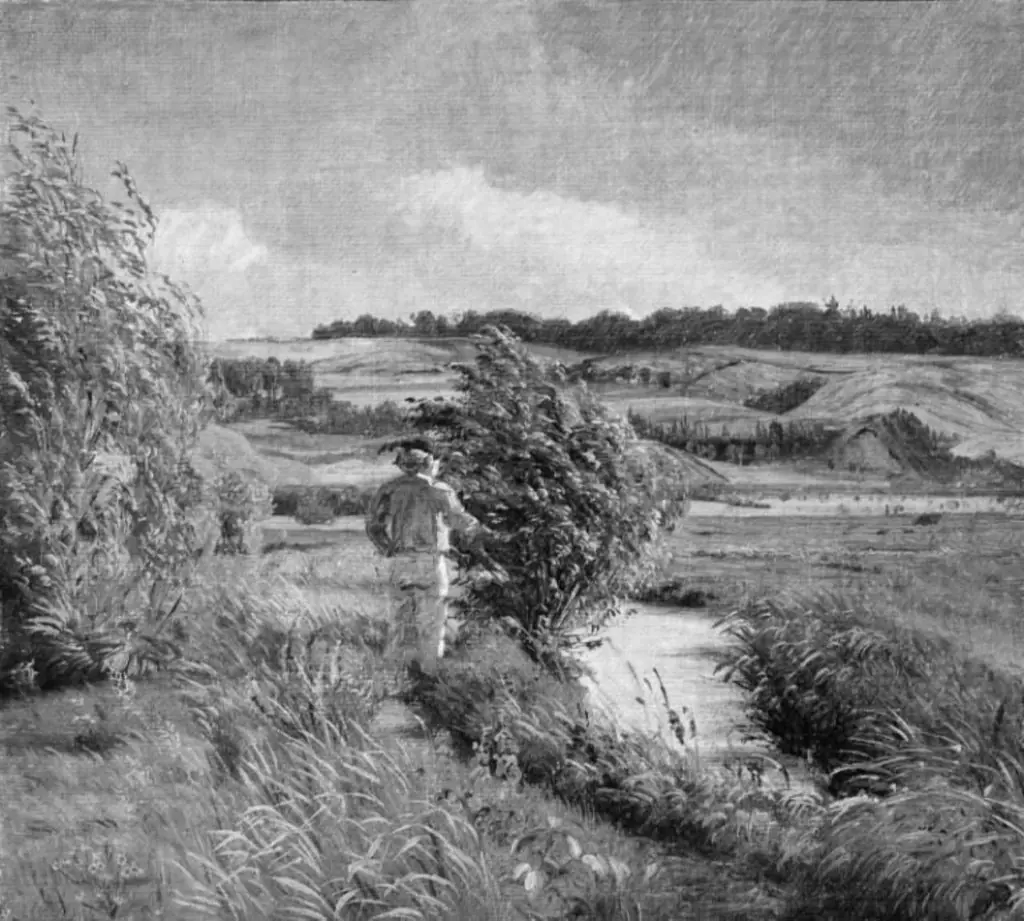 Landskab med en fiskende dreng ved en bæk
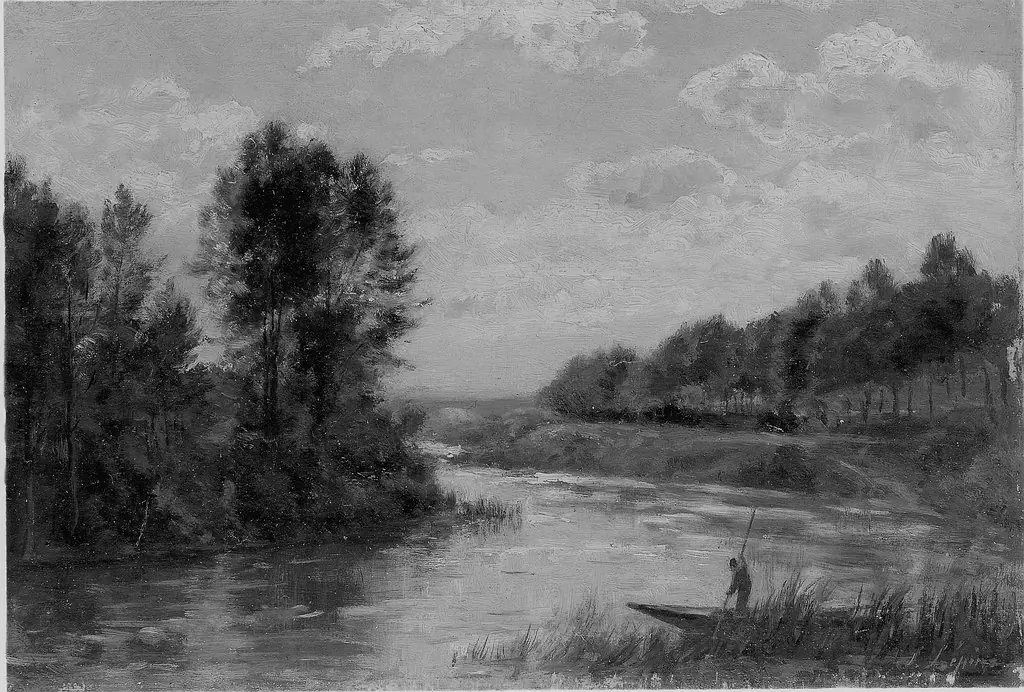 A Stream in France
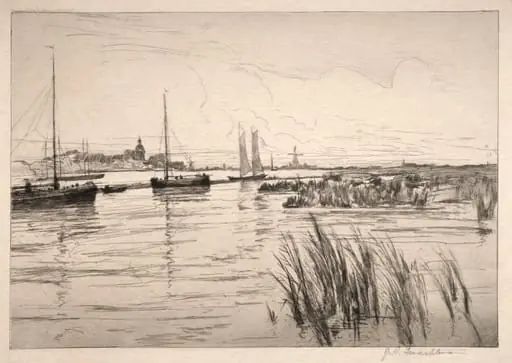 Holland Dykes
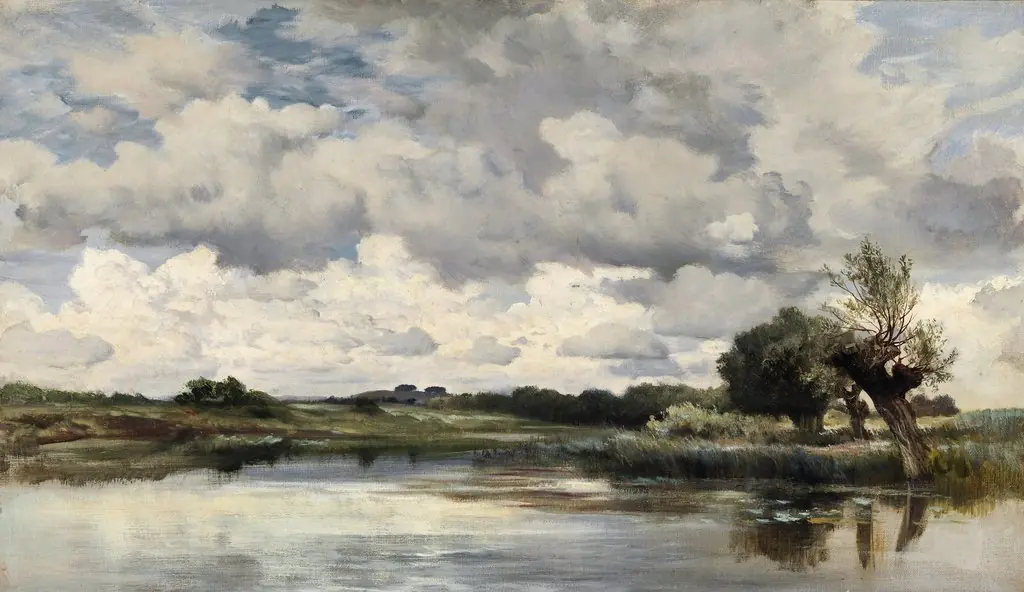 Landscape near Pangbourne
 Landscape with a Rainbow
 River Landscape with a Bridge
 Landscape with Huntsman and Stags
 Landskab med en fiskende dreng ved en bæk
 Pramåens udløb ved Vallø Strand