Artwork
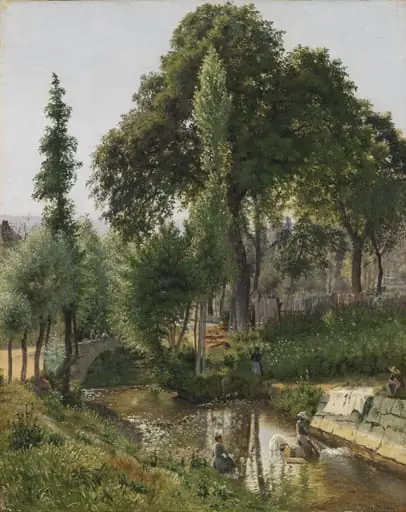
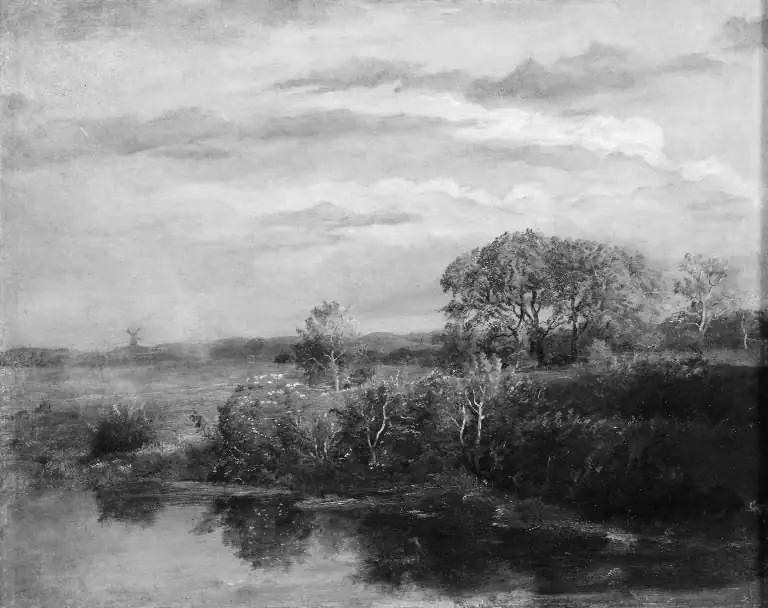
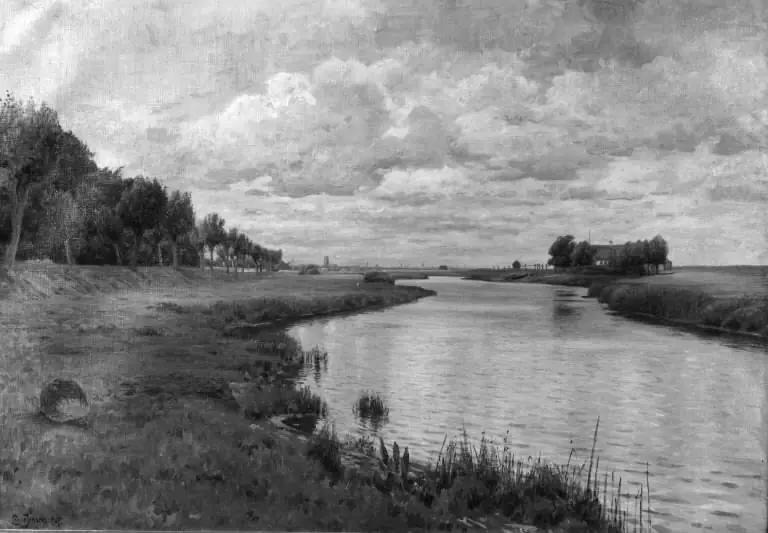
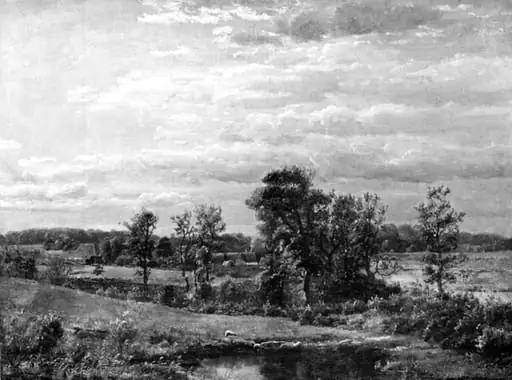
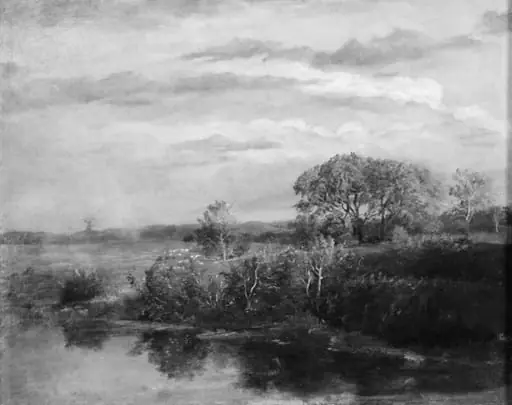
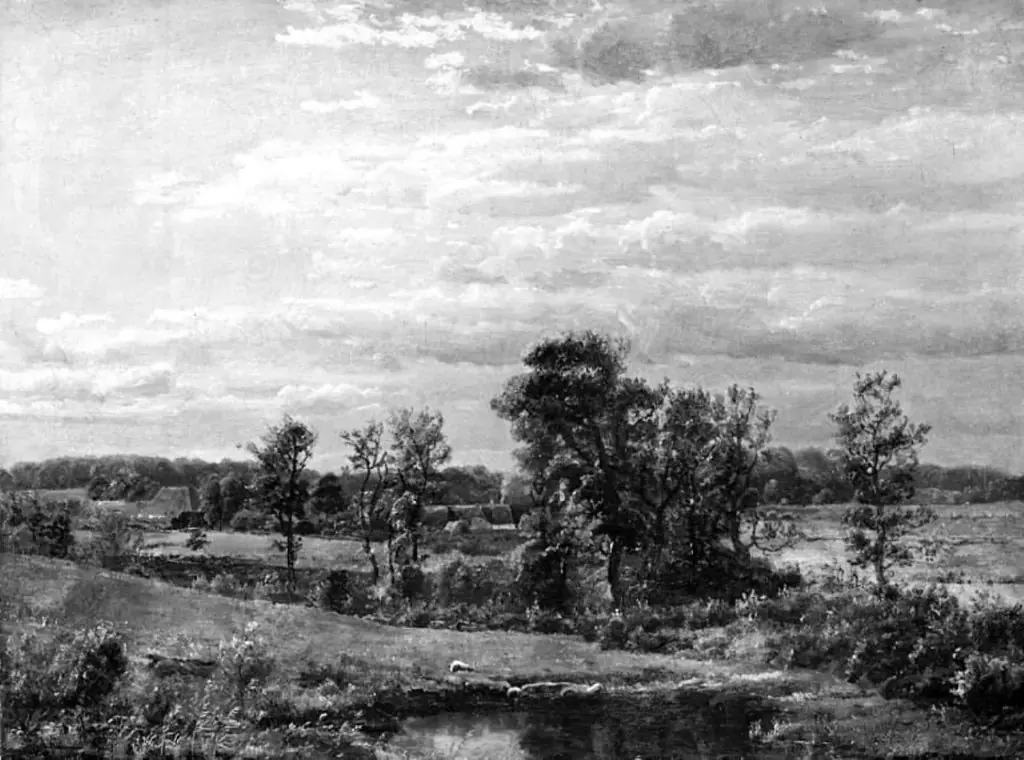
Landskab med en fiskende dreng ved en bæk
Landskab med en fiskende dreng ved en bæk is a photography by the Impressionist artist Unknown artist. It dates from 1861 and is held in the collection of the Statens Museum for Kunst.
About this work
Overview
It resides in the Museum of Ethnography’s collection, reflecting a lesser-known phase of the artist’s career before his shift toward abstraction.
Painted in 1861, *Landskab med en fiskende dreng ved en bæk* is a landscape work by William Ronald Smith, a Canadian artist better known for his later abstract expressionist contributions and co-founding Painters Eleven. This early piece, distinct from his mature style, captures a quiet rural scene. It resides in the Museum of Ethnography’s collection, reflecting a lesser-known phase of the artist’s career before his shift toward abstraction.
Subject & Meaning
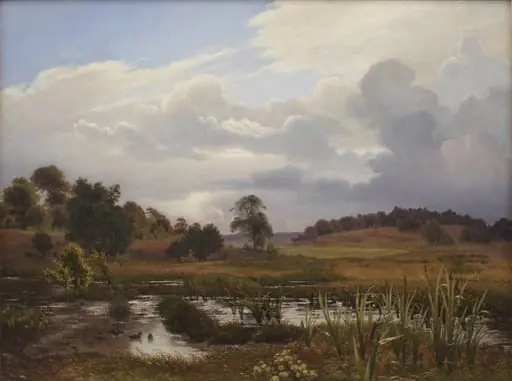
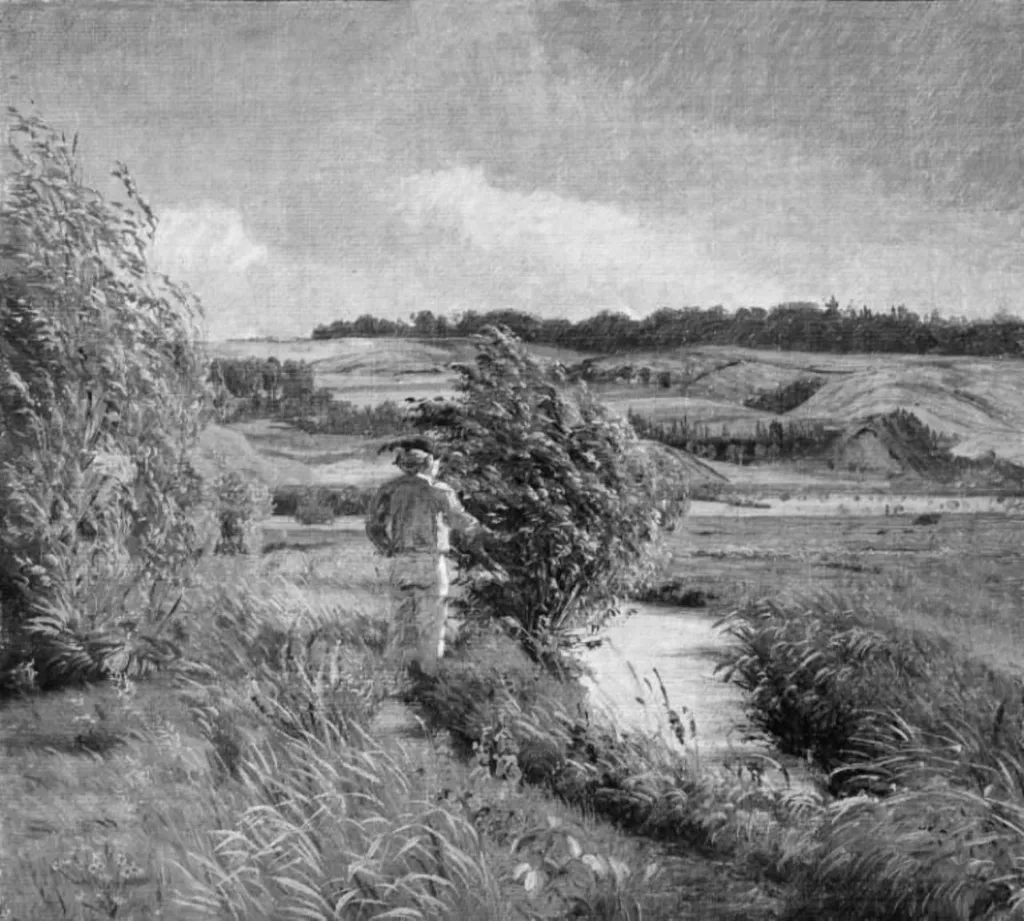
The painting portrays a solitary boy fishing beside a narrow stream, his figure partially absorbed by the surrounding vegetation. The posture suggests quiet concentration, emphasizing stillness over narrative. The absence of dramatic action or symbolic elements points to an interest in ordinary moments, aligning with 19th-century tendencies to observe daily life with restraint and sensitivity.
Technique & Style
Rendered with soft, muted tones and loose brushwork, the piece conveys a sense of atmospheric calm. The boy’s clothing merges with shadowed grass, blurring the boundary between figure and environment. The flat fields and distant tree line are suggested rather than sharply defined, indicating an approach that prioritizes mood over precise detail, anticipating later impressionist sensibilities.
History & Provenance
Created during Ronald Smith’s early career, the painting predates his association with modernist movements by nearly a century. Its presence in the Museum of Ethnography suggests it was acquired as part of a broader collection documenting rural life, rather than as a significant work of fine art at the time. Its provenance remains largely undocumented beyond its current institutional home.
Context
In 1861, European and North American artists increasingly turned to everyday rural scenes as subjects, moving away from grand historical or mythological themes. This painting reflects that shift, aligning with regional traditions of landscape observation. Though not part of a formal movement, its quiet realism resonates with contemporaneous works that valued authenticity over idealization.
Legacy
Though Ronald Smith’s legacy rests on his 20th-century abstract work, this early painting offers insight into his artistic roots. It reveals a sensitivity to light and quietude that may have subtly informed his later explorations of form and emotion. As a rare surviving example of his pre-modernist output, it enriches understanding of his artistic evolution.
Artist & collection
Artist
William Ronald Smith (August 13, 1926 – February 9, 1998), known professionally as William Ronald, was a Canadian painter, best known as the founder of the influential Canadian abstract art group Painters Eleven in 1953…