Artwork
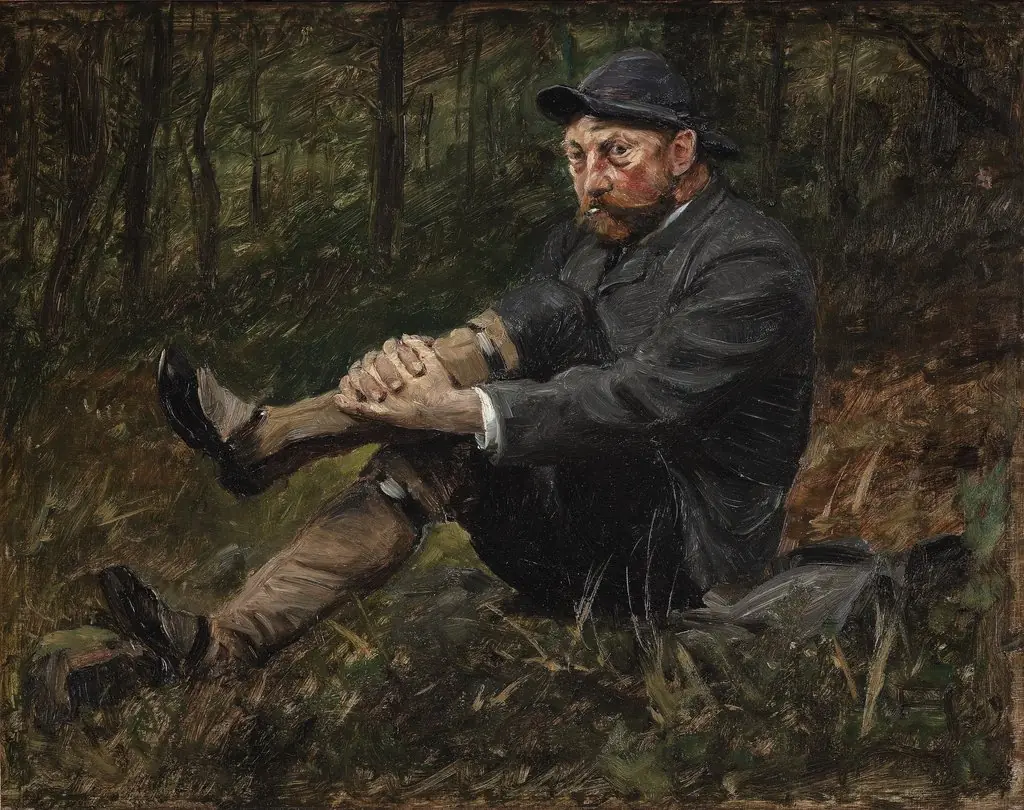
Arkitekten Thorvald Bindesbøll i en granskov på Kullen
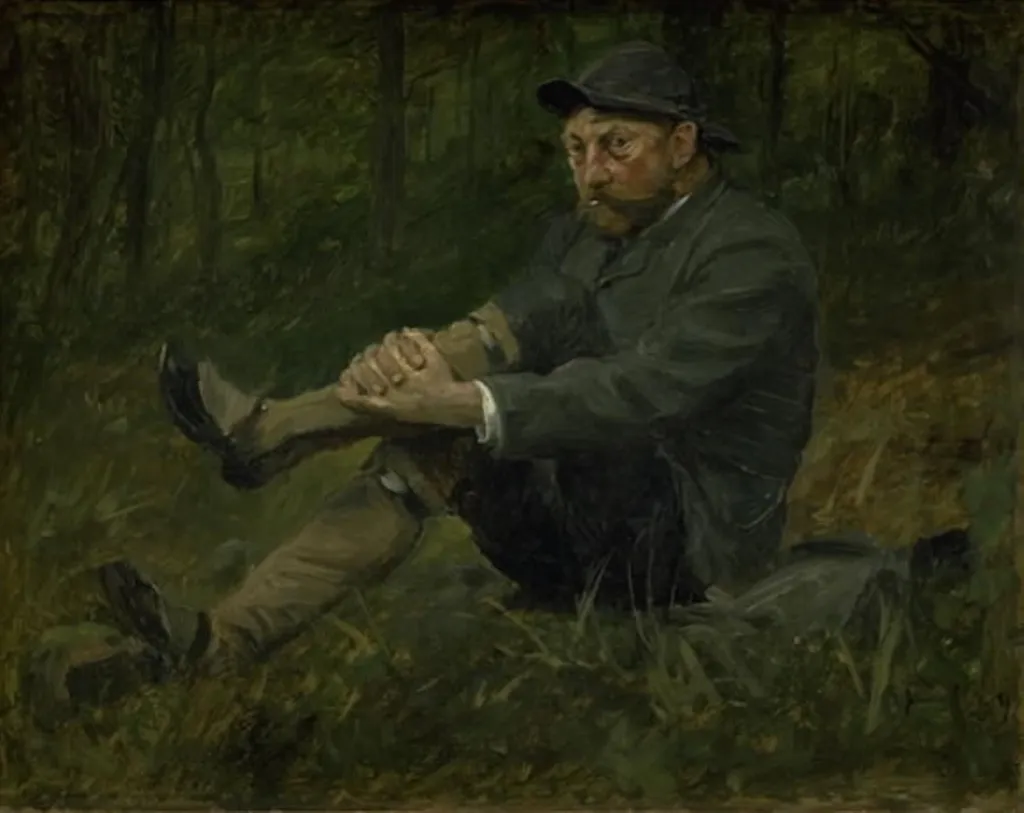
Arkitekten Thorvald Bindesbøll i en granskov på Kullen is a photography by the Impressionist artist Unknown. It dates from 1889 and is held in the collection of the Statens Museum for Kunst. This photograph, taken in 1889, depicts the Danish architect Thorvald Bindesbøll seated in a pine forest on the Kullen peninsula.
About this work
The artist aimed to show everyday life in a simple, honest way—no fancy poses, just a moment caught as it happened.
This photo shows a man sitting on the ground in a forest. He’s wearing a dark coat, a cap, and boots, with his legs stretched out. His hands are clasped over his knees, and he’s looking off to the side with a pipe in his mouth. The background is thick with green trees and bushes, making the scene feel quiet and natural.
The photo was taken in 1889, focusing on a real person in a real place. The artist aimed to show everyday life in a simple, honest way—no fancy poses, just a moment caught as it happened.
If you like this style, look up Realism next.
Overview
This photograph, taken in 1889, depicts the Danish architect Thorvald Bindesbøll seated in a pine forest on the Kullen peninsula. Captured by an unnamed photographer, the image presents a candid moment of quiet contemplation. It belongs to the collection of the Museum of Ethnography, where it serves as a record of personal life rather than a formal portrait. The setting and posture suggest an intentional focus on authenticity over theatricality.
Subject & Meaning
Thorvald Bindesbøll, known for his architectural work, is shown here outside his professional context, engaged in a private, unposed moment. His relaxed posture, pipe in hand, and distant gaze convey introspection rather than performance. The image avoids idealization, instead emphasizing the individual as a person within nature. It reflects a late 19th-century interest in documenting everyday presence without narrative embellishment.
Technique & Style
The photograph employs natural lighting and a shallow depth of field to isolate the figure against a dense, green backdrop. The composition is unadorned, with no staging or props beyond the man’s clothing and pipe. The focus on texture—fabric, bark, foliage—enhances the sense of immediacy. The image’s clarity and lack of manipulation align with emerging documentary practices of the period, prioritizing truth over artifice.
History & Provenance
Created in 1889, the photograph entered the collection of the Museum of Ethnography, likely as part of a broader effort to record cultural and personal life in Scandinavia. Its preservation suggests recognition of its value as a historical document rather than an artistic statement. The photographer’s identity remains unrecorded, underscoring the image’s emphasis on the subject over its maker.
Context
In the late 19th century, photography increasingly served as a tool for ethnographic and social documentation. This image aligns with movements that valued realism and the ordinary, contrasting with staged portraiture common in earlier decades. Bindesbøll’s presence in a natural setting reflects a cultural shift toward appreciating the individual within their environment, away from urban or institutional frames.
Legacy
The photograph endures as a quiet example of early documentary photography in Denmark. It contributes to understanding how architects and intellectuals were perceived beyond their public roles. Its simplicity has allowed it to remain relevant as a reference point for studies on identity, nature, and the evolving role of photography in capturing lived experience.
Artist & collection

 Domestic Scene
 Giacomo and Cardinal Marco, investing Andrea, Abbot of San Zeno, with his Benefice
 The Nymph of Fontainebleau
 Portrait of a Woman
 Madonna and Child with Saints in the Enclosed Garden
 Venus and Minerva
 Family Group of Four on Sofa
 Wall painting from Room H of the Villa of P. Fannius Synistor at Boscoreale
 Un cavaler - Porthos
 The Artist's Father, Reading a Newspaper
 A Man Seated and Asleep
 El artista (Tít.ant.: Cabeza de hombre)
 Portrait de Diego Martelli
 Portrait of a Man – two-sided painting
 Portrait of the Painters Bruno Liljefors and Alf Wallander
 Portrait of Stanisław Czachórski (1853–1904), artist’s brother
 Portrait of the Art Dealer E.J. van Wisselingh
 Рыболов
 Portrait of J.B.S. MacIlwaine (1857-1945), Artist and Inventor
 Arkitekten Thorvald Bindesbøll i en granskov på Kullen