Artwork
Christian I Raising the Province of Holstein to the State of a Duchy in 1460
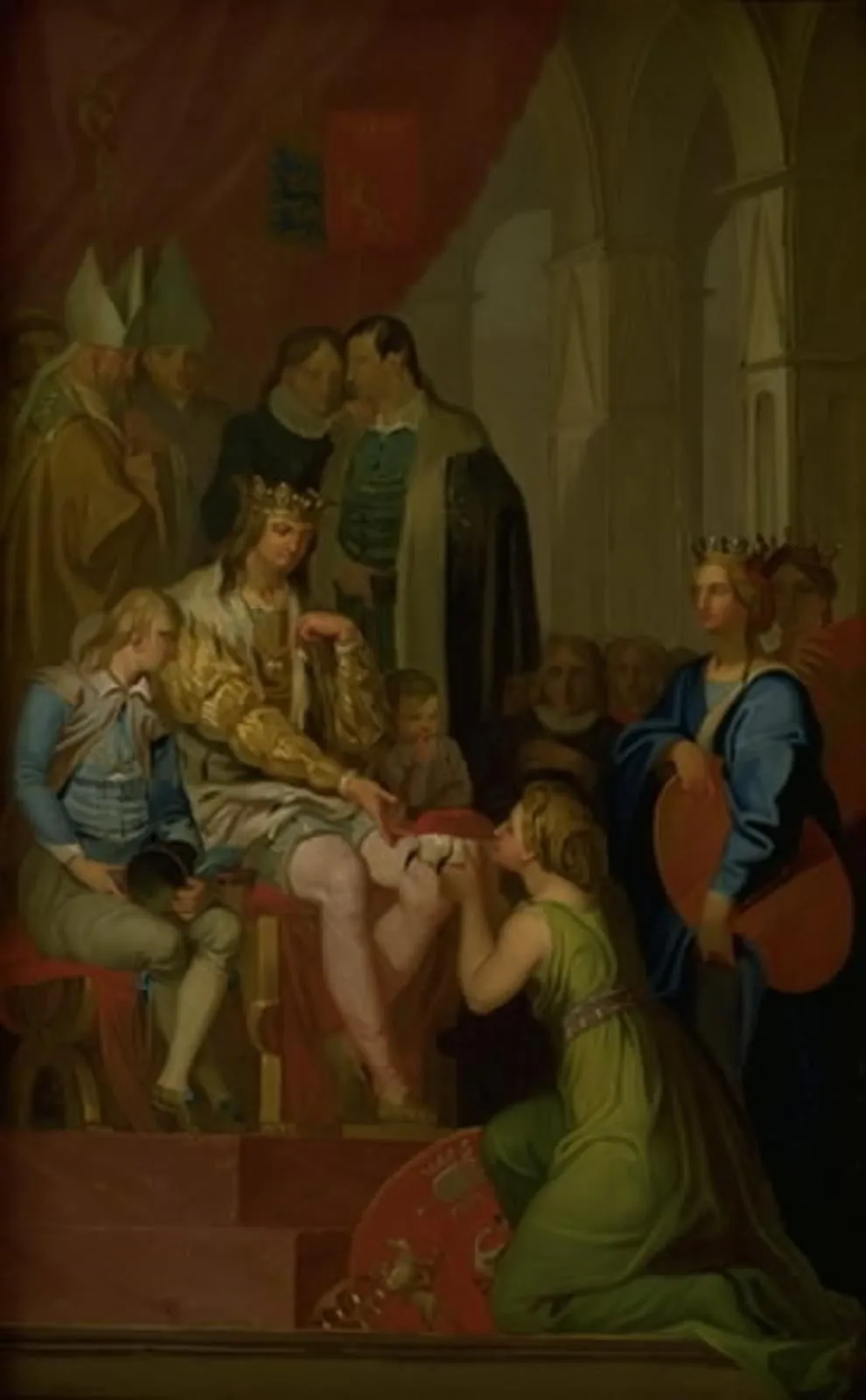
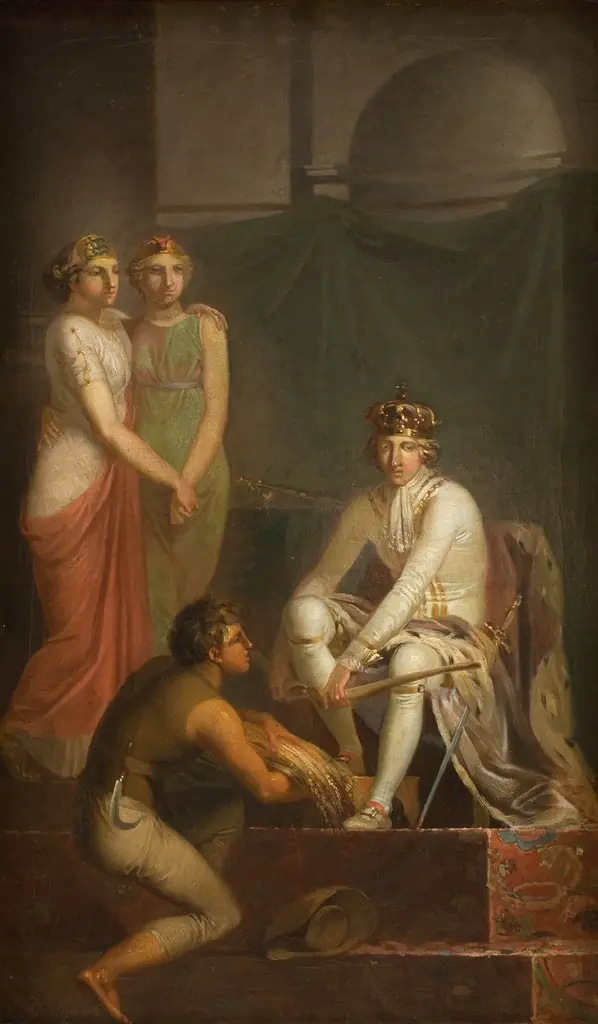
Christian I Raising the Province of Holstein to the State of a Duchy in 1460 is a photography by the Romanticist artist Unknown. It dates from 1778 and is held in the collection of the Statens Museum for Kunst. Painted in 1778, this work depicts a historical moment from 1460 when Christian I elevated Holstein from a province to a duchy.
About this work
Overview
It is held in the Museum of Ethnography, where it serves as a visual record of how past political acts were reimagined in later eras.
Painted in 1778, this work depicts a historical moment from 1460 when Christian I elevated Holstein from a province to a duchy. Though the event occurred centuries earlier, the painting reflects an 18th-century interpretation, blending historical narrative with contemporary artistic conventions. It is held in the Museum of Ethnography, where it serves as a visual record of how past political acts were reimagined in later eras.
Subject & Meaning
The scene centers on Christian I, seated on a throne, presenting a scroll that symbolizes the formal elevation of Holstein. A woman in green kneels before him, possibly representing the region or its nobility, while surrounding figures—nobles, clergy, and attendants—observe in solemn silence. The composition emphasizes hierarchy and legitimacy, reinforcing the authority of the monarch and the gravity of the territorial reorganization.
Technique & Style
The artist employs chiaroscuro to model the figures with strong contrasts between light and shadow, drawing focus to the king’s crown and the scroll. Warm tones of gold, deep blue, and rich brown dominate the palette, enhancing the ceremonial atmosphere. The dark background isolates the group, heightening the sense of ritual. Drapery and facial expressions are rendered with careful detail, reflecting 18th-century academic ideals of historical painting.
History & Provenance
Created in 1778, the painting was likely commissioned to commemorate or reinterpret a key moment in Danish-North German history. It entered the collection of the Museum of Ethnography, possibly as part of a broader effort to document regional governance and cultural identity. Its presence there suggests an interest in visualizing political transformation rather than purely religious or mythological themes.
Context
In the late 18th century, European courts and institutions increasingly turned to historical subjects to legitimize contemporary power structures. This painting aligns with a trend of reviving medieval events to reinforce monarchical authority during a time of political upheaval. Holstein’s status as a duchy under the Danish crown remained politically relevant, making its depiction timely for audiences familiar with dynastic claims.
Legacy
Though not widely known outside specialized collections, the painting contributes to the visual archive of how Nordic history was interpreted in the Enlightenment era. It reflects the era’s fascination with institutional continuity and the symbolic power of ceremony. Its preservation in an ethnographic museum underscores its role as a cultural artifact rather than a purely artistic one.
Artist & collection

 Domestic Scene
 Giacomo and Cardinal Marco, investing Andrea, Abbot of San Zeno, with his Benefice
 The Nymph of Fontainebleau
 Portrait of a Woman
 Madonna and Child with Saints in the Enclosed Garden
 Venus and Minerva
 Family Group of Four on Sofa
 Wall painting from Room H of the Villa of P. Fannius Synistor at Boscoreale
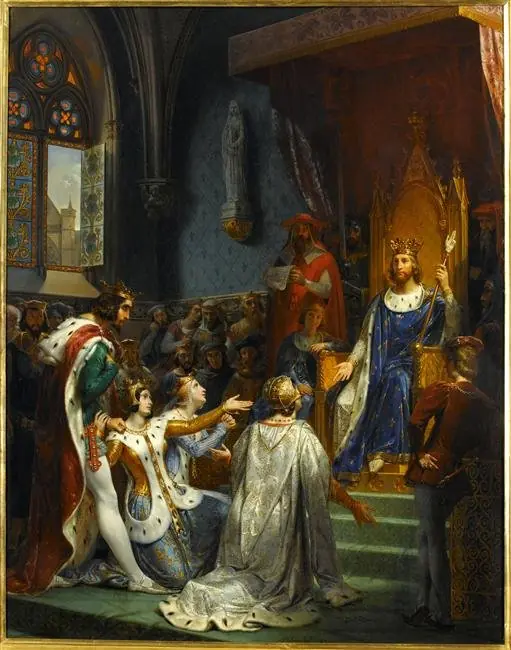 John II receives the submission of Charles II of Navarre
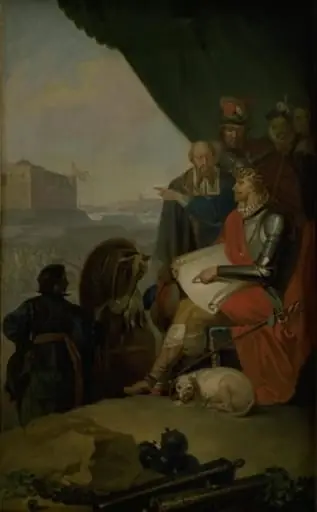 Frederik II Builds Kronborg Castle at Elsinore
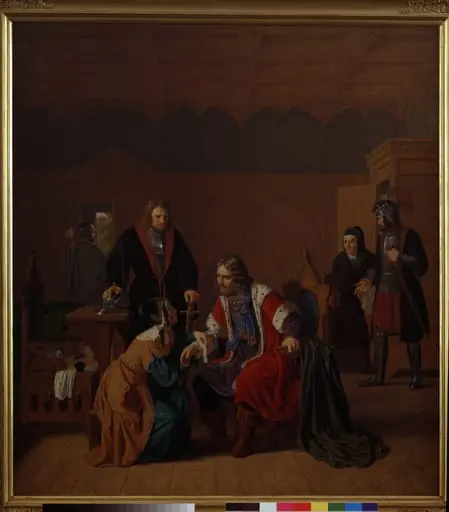 Valdemar den Store bliver forbundet i Absalons moders hus, hvor han har søgt tilflugt efter overfaldet i Roskilde
 The Abolition of Adscription in 1788
 Scenă istorică
 The Abolition of Adscription in 1788
 Felipe III de Francia moribundo bendiciendo a sus hijos