Artwork
The Abolition of Adscription in 1788
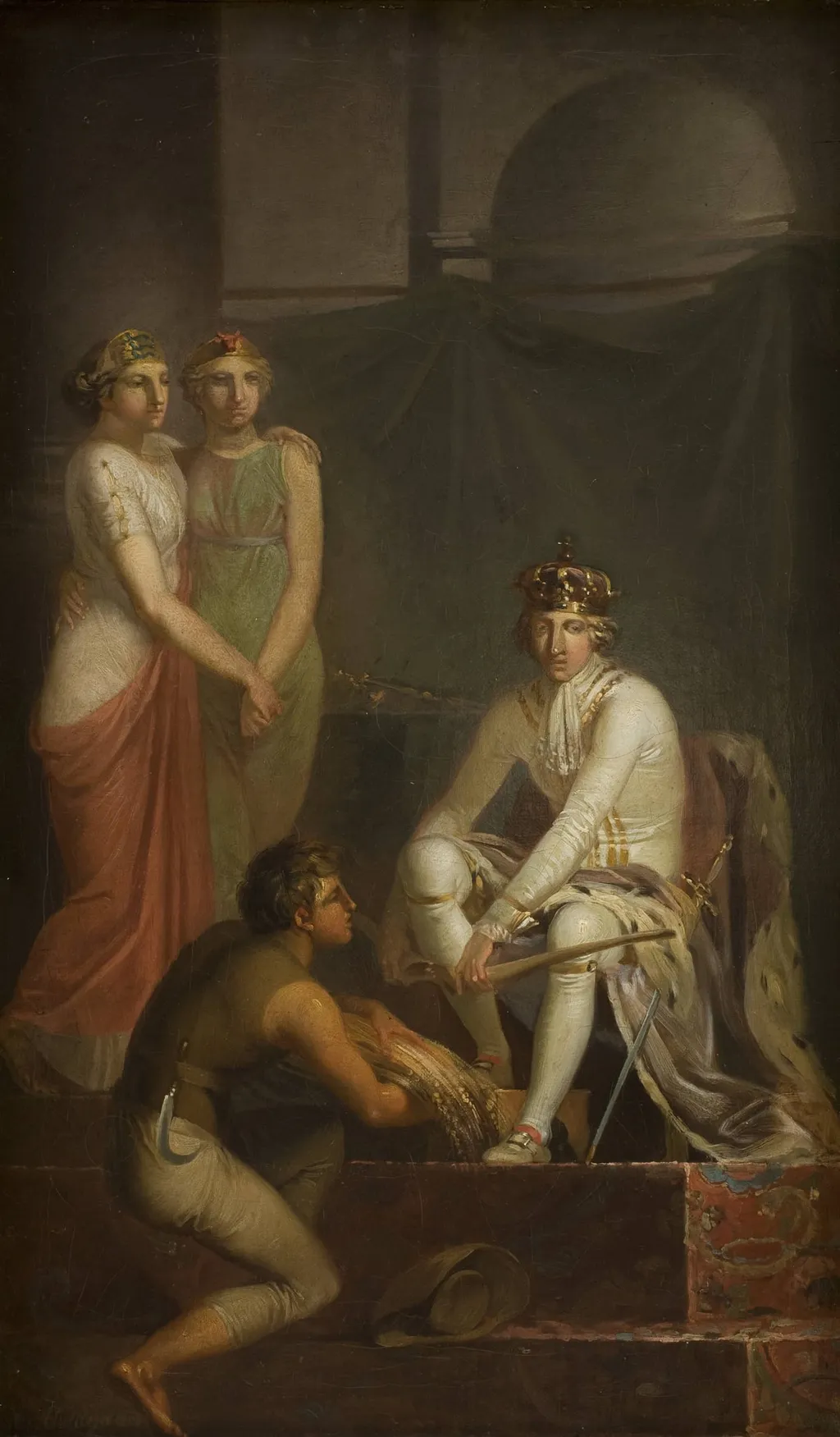
The Abolition of Adscription in 1788 is a photography by the Romanticist artist Unknown. It dates from 1790 and is held in the collection of the Statens Museum for Kunst. Painted in 1790, this work commemorates the 1788 abolition of adscription in Denmark, a system that bound peasants to landowners.
About this work
Overview
Painted in 1790, this work commemorates the 1788 abolition of adscription in Denmark, a system that bound peasants to landowners. The scene captures a formal moment of legal emancipation, rendered with theatrical lighting and restrained composition. It resides in the Museum of Ethnography, where it serves as a visual record of social reform rather than a celebratory monument.
Subject & Meaning
A crowned official, dressed in regal white and gold, holds a scepter—not as a symbol of power, but as an instrument of legal transition.
The painting depicts a boy, formerly bound by adscription, lying on the floor as he receives a scroll symbolizing his newfound freedom. Two women, possibly representing the peasantry or moral guardians, stand nearby in serene stillness. A crowned official, dressed in regal white and gold, holds a scepter—not as a symbol of power, but as an instrument of legal transition. The contrast between the boy’s vulnerability and the calm authority of others underscores the gravity of the moment.
Technique & Style
The artist employs chiaroscuro to isolate key figures against a dim interior, drawing attention to facial expressions and symbolic objects. The boy’s bare torso and the scroll’s gleam are sharply lit, while the women’s flowing robes and the ruler’s crown catch subtle highlights. The composition avoids grandeur, favoring intimacy and psychological tension. Brushwork is precise yet unadorned, prioritizing clarity over ornamentation.
History & Provenance
Commissioned shortly after the 1788 reform, the painting was likely intended for public or institutional display to legitimize the monarchy’s role in social change. It entered the Museum of Ethnography’s collection in the late 19th century, where it was contextualized as a document of Danish rural history rather than fine art. Its preservation reflects an early interest in visualizing legal and social transformation.
Context
Adscription, a form of serfdom in Denmark and Norway, restricted peasant mobility and labor rights until its abolition in 1788 under King Christian VII. Though the reform was enacted by royal decree, it was influenced by Enlightenment ideals and economic pressures. This painting emerged in a climate of cautious reform, avoiding overt revolution while acknowledging the dignity of the formerly bound.
Legacy
The work remains a rare visual testament to Denmark’s gradual move away from feudal structures. Unlike revolutionary imagery elsewhere in Europe, it avoids drama or heroism, instead emphasizing quiet transition. Its presence in an ethnographic museum underscores its role as historical evidence rather than artistic spectacle, influencing later depictions of social justice in Nordic art.
Artist & collection

 Domestic Scene
 Giacomo and Cardinal Marco, investing Andrea, Abbot of San Zeno, with his Benefice
 The Nymph of Fontainebleau
 Portrait of a Woman
 Madonna and Child with Saints in the Enclosed Garden
 Venus and Minerva
 Family Group of Four on Sofa
 Wall painting from Room H of the Villa of P. Fannius Synistor at Boscoreale
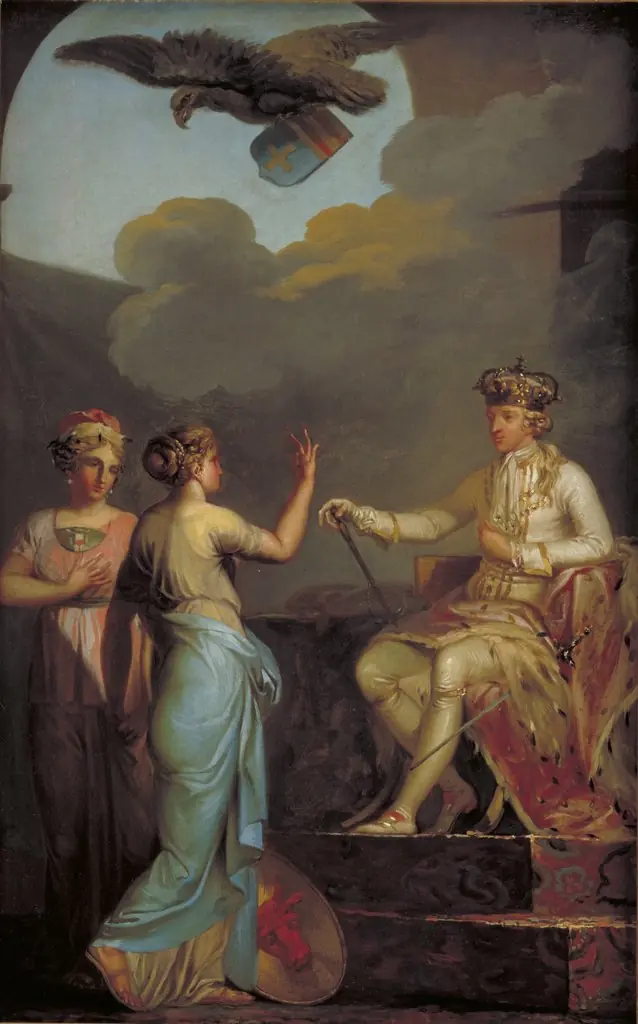 Christian VII Uniting the Ducal with the Royal Part of Holstein in 1767
 Christian VII Uniting the Ducal with the Royal Part of Holstein in 1773
 Christian I Proclaiming Holstein a Duchy in 1474. Painted for Christiansborg Castle
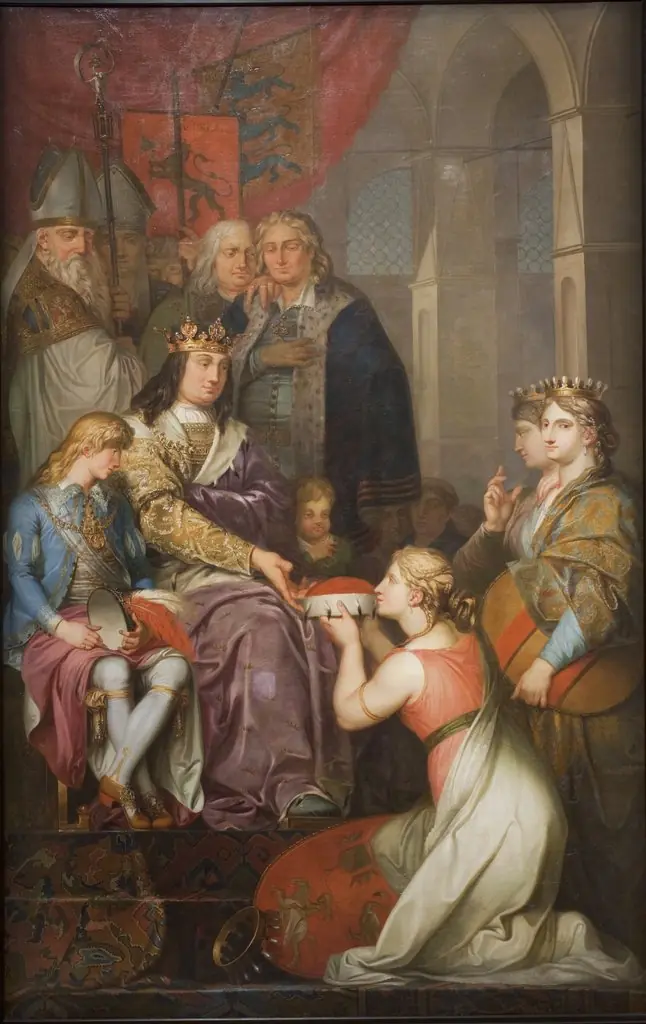 Christian I Proclaiming Holstein a Duchy. Painted for Christiansborg Castle
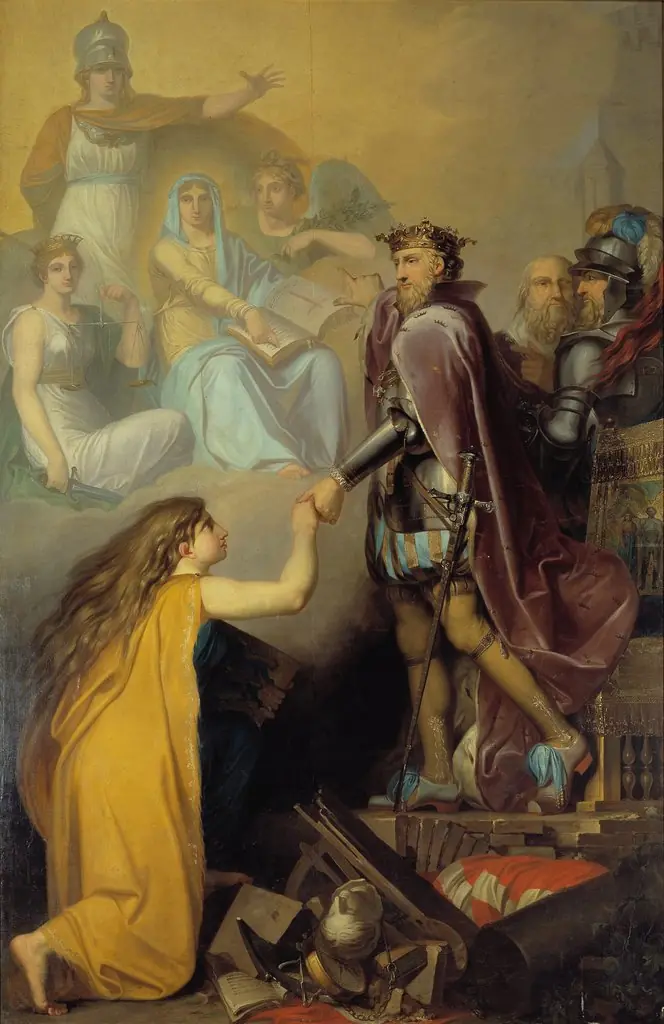 Christian III Succouring Denmark
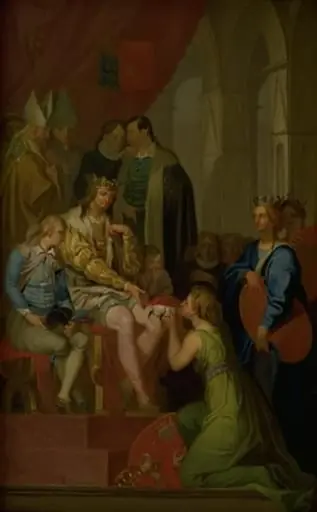 Christian I Raising the Province of Holstein to the State of a Duchy in 1460
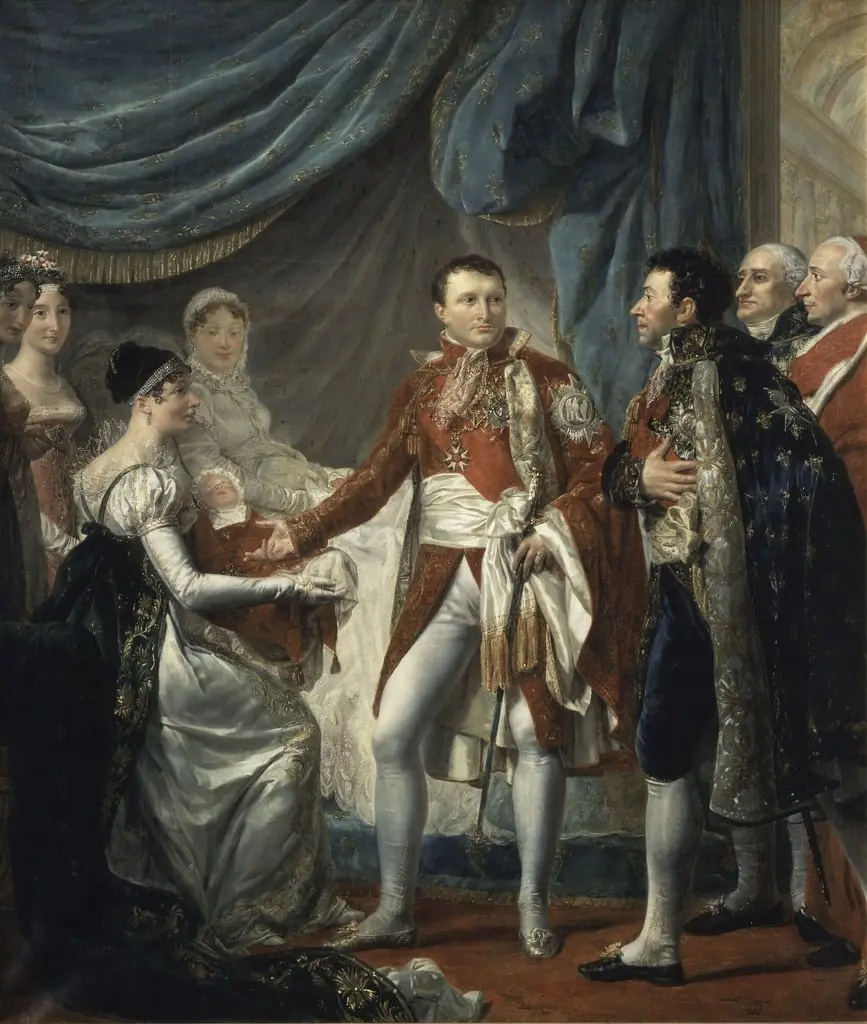 Napoleon I presents the King of Rome to the dignitaries of the Empire, March 20, 1811
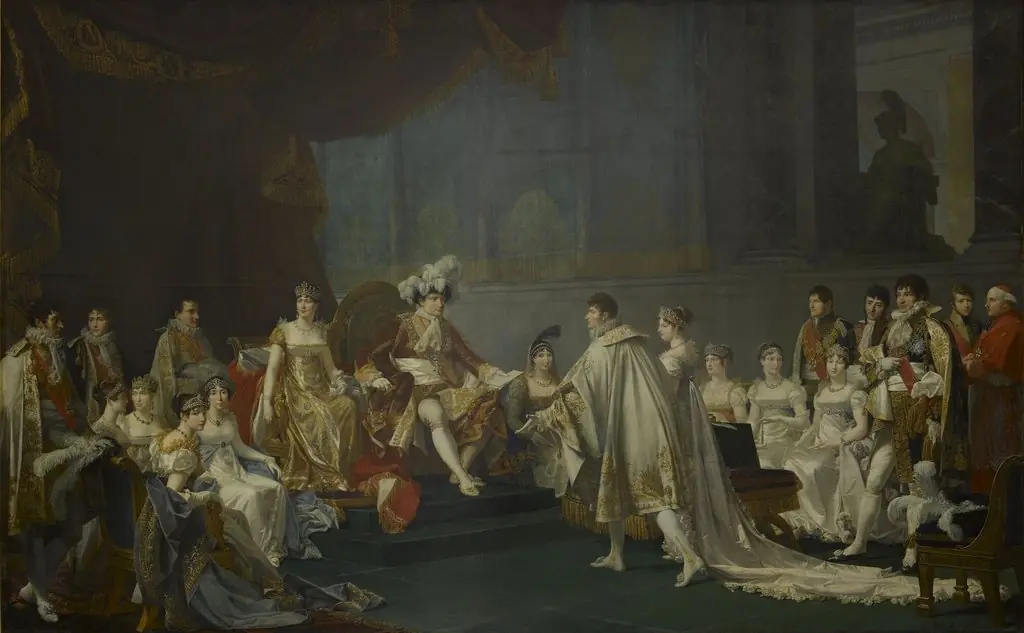 Wedding of Prince Jérôme Bonaparte and Princess Frédérique-Catherine of Wurtemberg, August 22, 1807
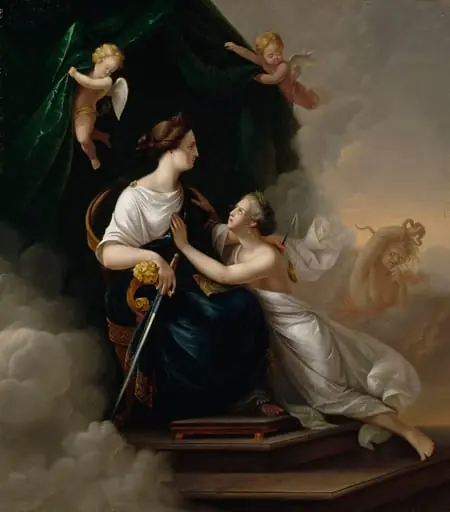 Oikeus ja viattomuus