Artwork
The Establishment of Schools
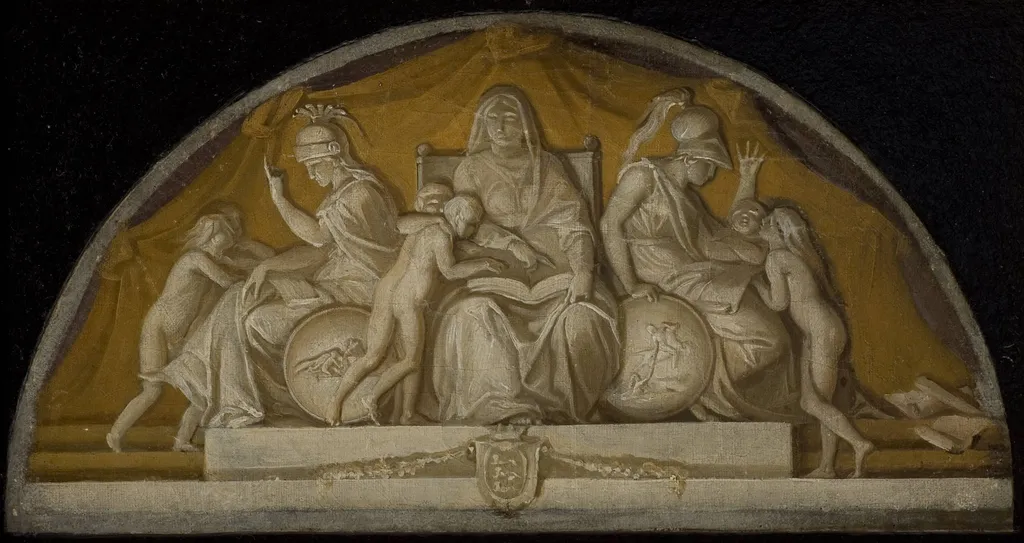
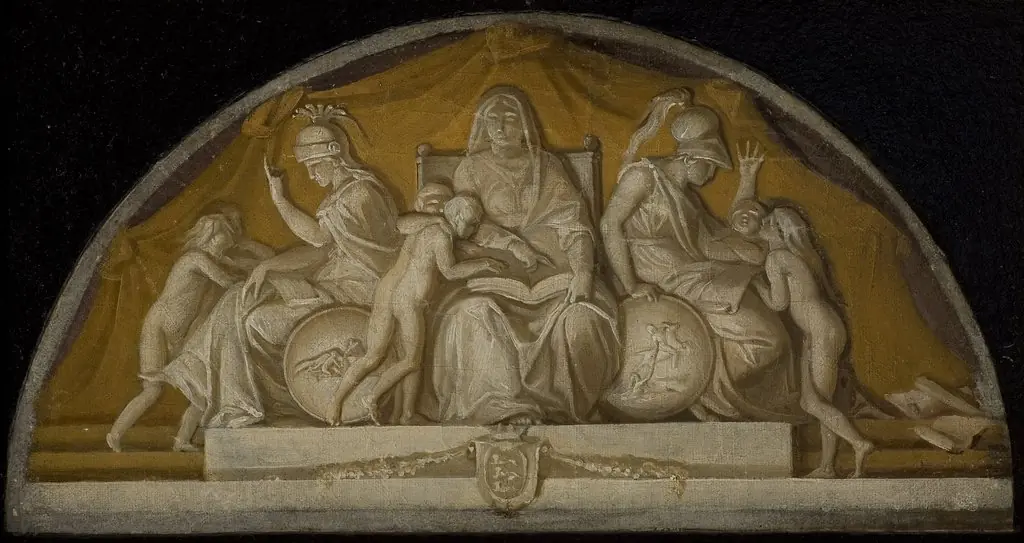
The Establishment of Schools is a photography by Unknown. It dates from 1750 and is held in the collection of the Statens Museum for Kunst. Created around 1750, this carved relief depicts a domestic scene imbued with symbolic weight.
About this work
Overview
The composition centers on a seated woman with two children, flanked by two standing figures—one armed, the other gesturing.
Created around 1750, this carved relief depicts a domestic scene imbued with symbolic weight. It is held in the collection of the Museum of Ethnography. The composition centers on a seated woman with two children, flanked by two standing figures—one armed, the other gesturing. A dog rests at her feet, and a coat of arms is carved on a low ledge, suggesting institutional or familial identity. The work blends intimate domesticity with formal iconography.
Subject & Meaning
The central woman, calm and grounded, appears as a figure of nurture, surrounded by her children and two attendants. The armed figure may represent protection or authority, while the gesturing figure could signify instruction or witness. The presence of the coat of arms implies a link to lineage or a formal body, perhaps a guild or noble household. The scene may illustrate the transmission of social roles within a family, merging private care with public duty.
Technique & Style
The relief employs subtle modeling to define forms, with soft transitions between light and shadow enhancing the three-dimensionality of the figures. The carving is precise yet restrained, avoiding excessive detail in favor of balanced composition. The dog and coat of arms are rendered with careful attention to texture, contrasting with the smoother surfaces of the clothing and skin. The overall effect is serene, emphasizing harmony over drama.
History & Provenance
The work’s origin remains undocumented, though its style aligns with regional carving traditions of the mid-18th century. It entered the Museum of Ethnography’s collection in the late 19th or early 20th century, likely through acquisition or donation. No records confirm its original location or commissioning patron. The absence of inscriptions or known maker’s mark leaves its specific historical context unresolved.
Context
This piece reflects a broader European trend in decorative arts where domestic scenes were elevated through symbolic elements. Similar imagery appears in family portraits and civic reliefs of the period, where the household was framed as a microcosm of social order. The inclusion of armor and heraldry suggests a desire to link private life with public status, a common theme among emerging middle and noble classes seeking to assert identity.
Legacy
Though not widely reproduced or studied, the relief contributes to understanding how everyday life was encoded with meaning in 18th-century material culture. Its quiet dignity and layered symbolism offer insight into how families navigated social expectations through visual representation. It remains a quiet example of how domestic scenes could carry institutional weight without overt grandeur.
Artist & collection

 Domestic Scene
 Giacomo and Cardinal Marco, investing Andrea, Abbot of San Zeno, with his Benefice
 The Nymph of Fontainebleau
 Portrait of a Woman
 Madonna and Child with Saints in the Enclosed Garden
 Venus and Minerva
 Family Group of Four on Sofa
 Wall painting from Room H of the Villa of P. Fannius Synistor at Boscoreale
 Achilles and the Daughters of Lycomedes
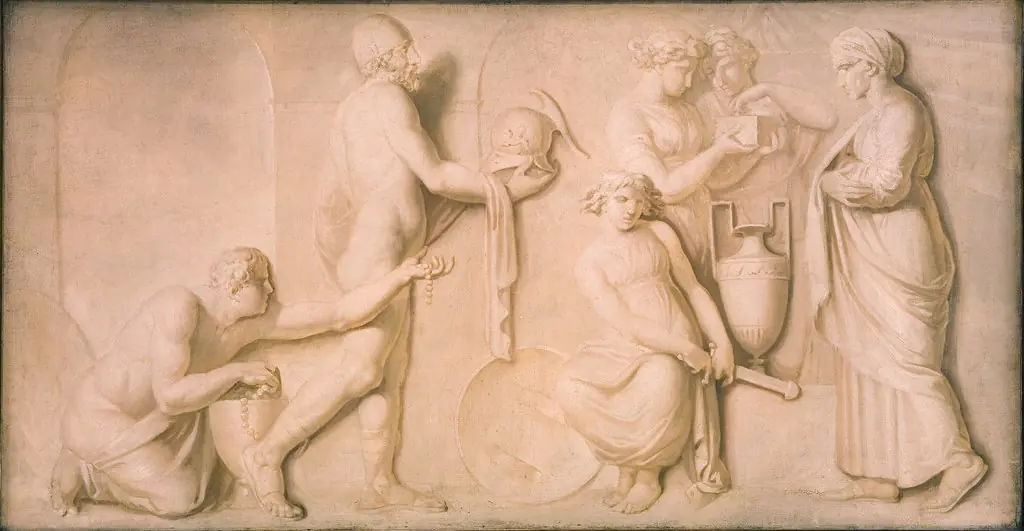 Achilles and the Daughters of Lycomedes
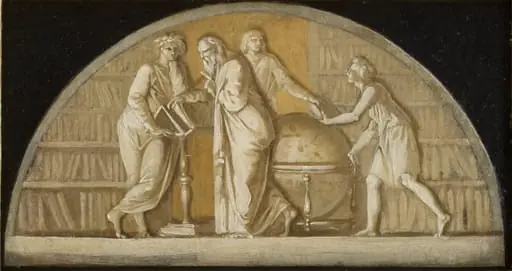 The Foundation of the Royal Library
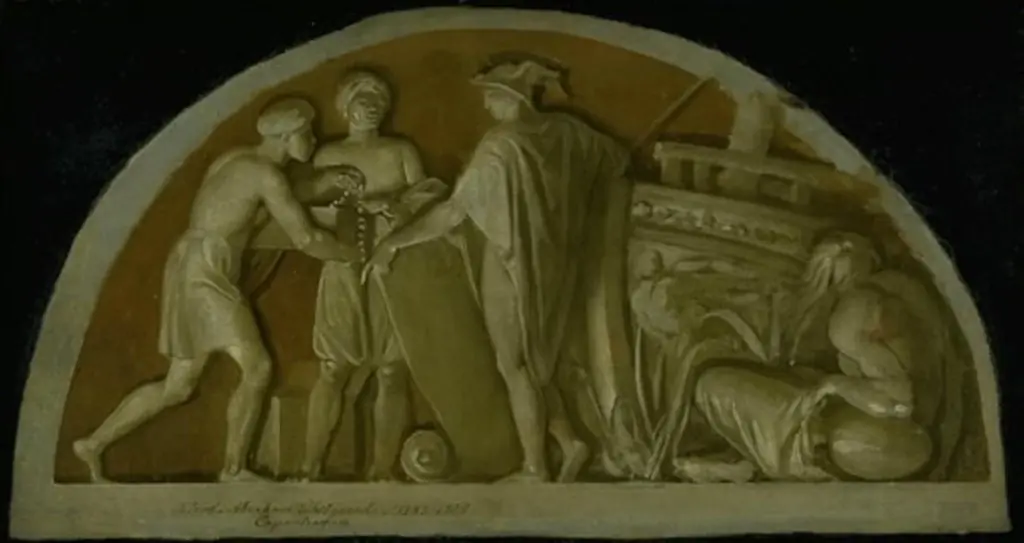 Asiatic Trade
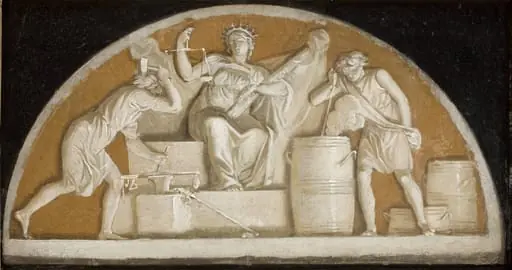 Standardization of Weights and Measures in 1683
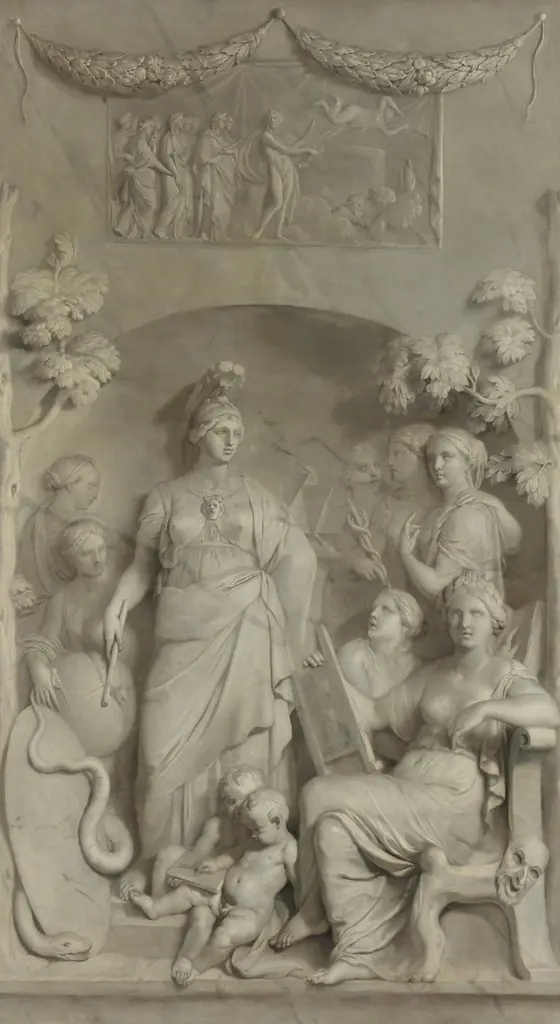 Allegory of the sciences
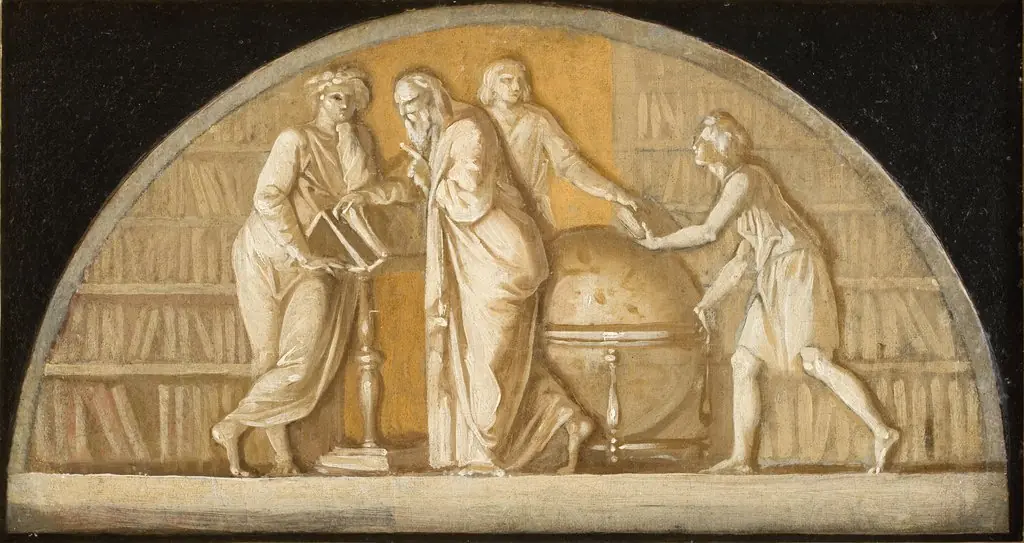 The Foundation of the Royal Library
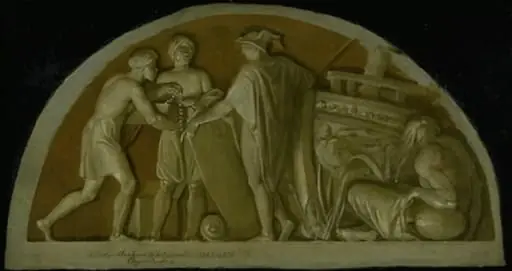 Asiatic Trade
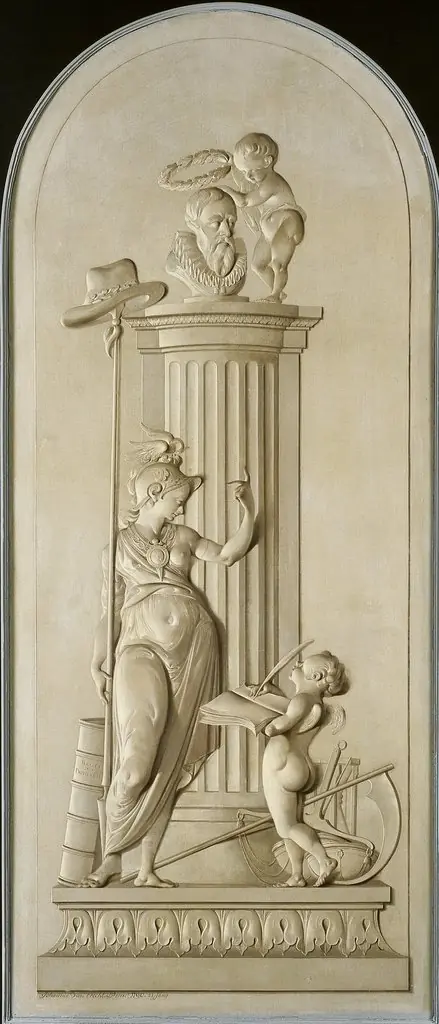 Allegory of Freedom
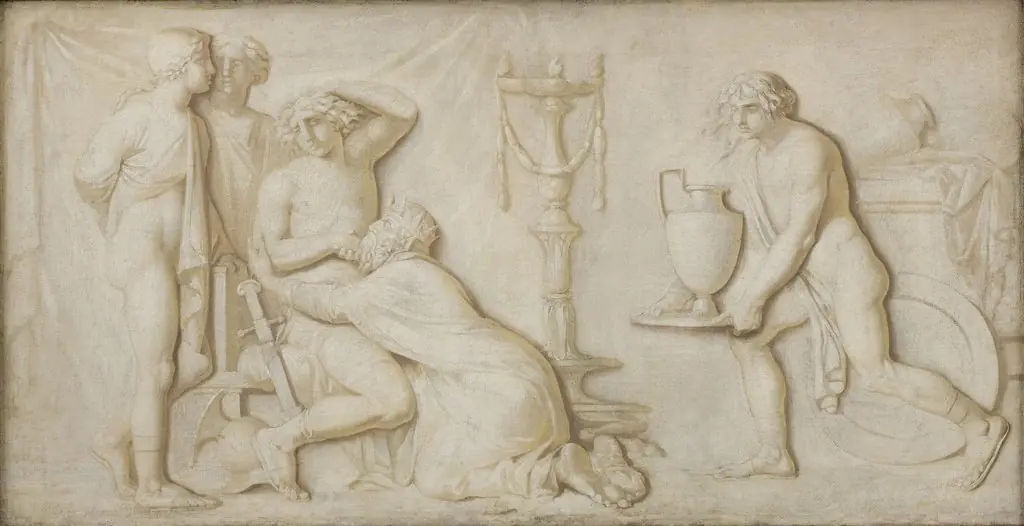 King Priam Pleading with Achilles for the Corpse of Hector
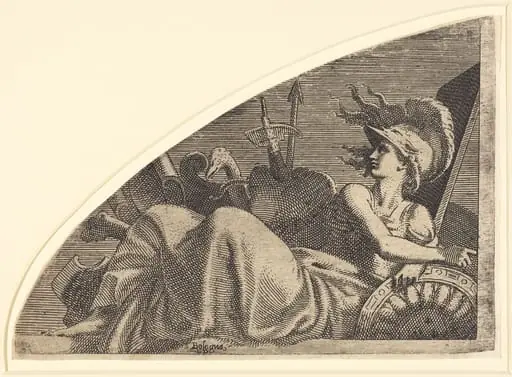 Bellona Seated on Her Trophies
 The Establishment of Schools