Artwork
After the Boar Hunt
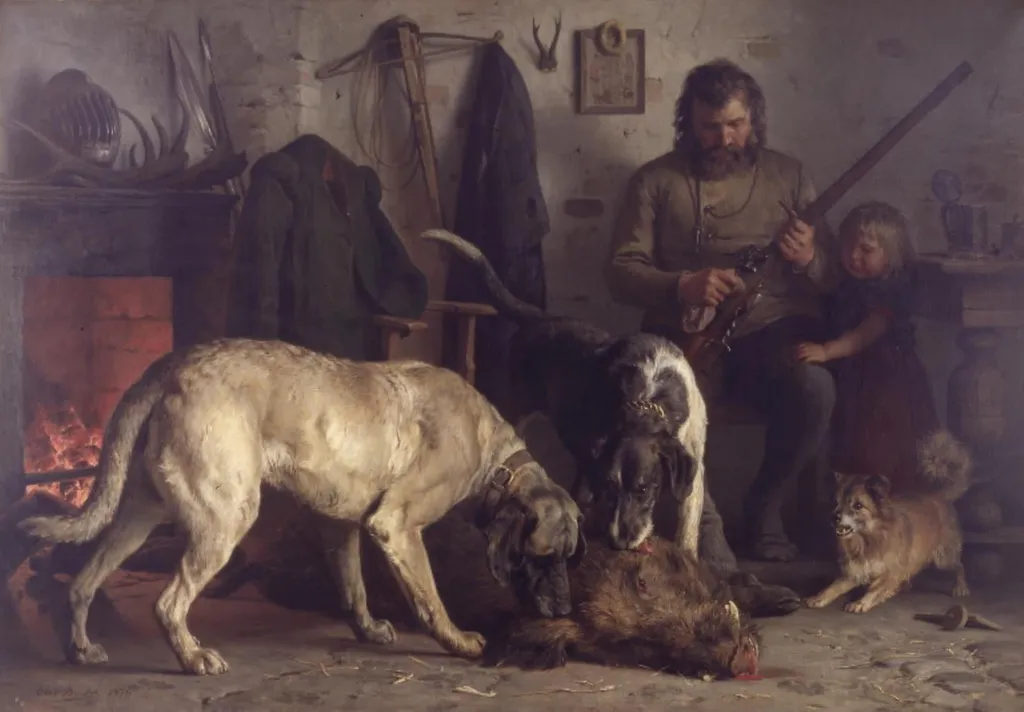
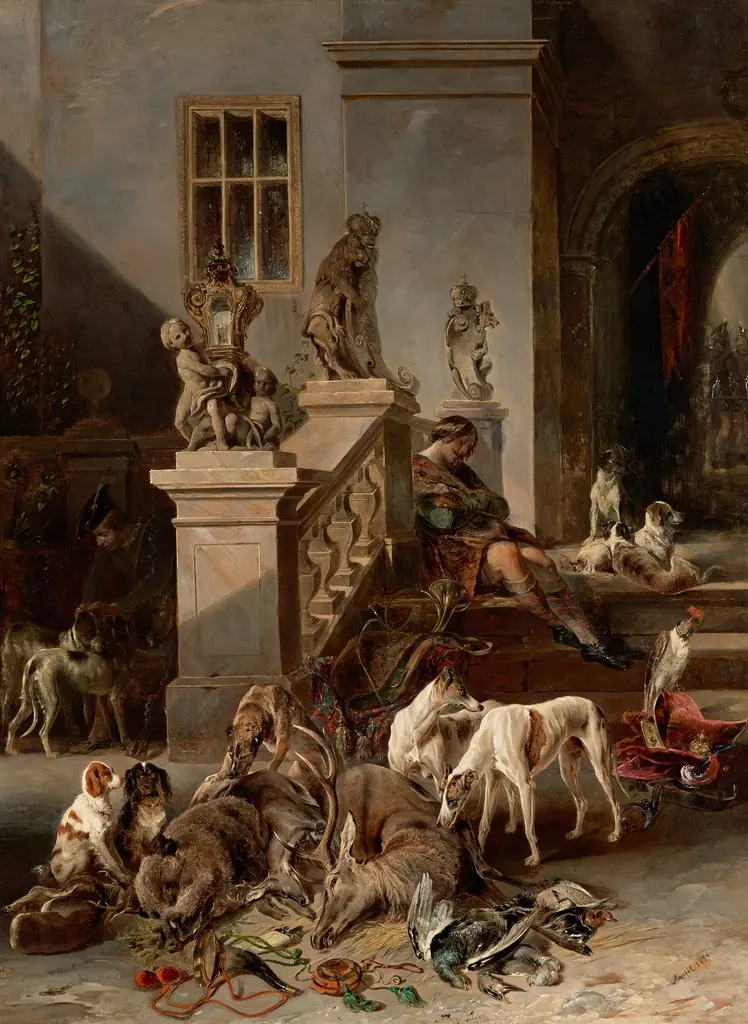
After the Boar Hunt is a photography by the Impressionist artist Unknown. It dates from 1876 and is held in the collection of the Statens Museum for Kunst. Created in 1876 by 253_person, this image captures a quiet aftermath of a hunt in a rural setting.
About this work
Overview
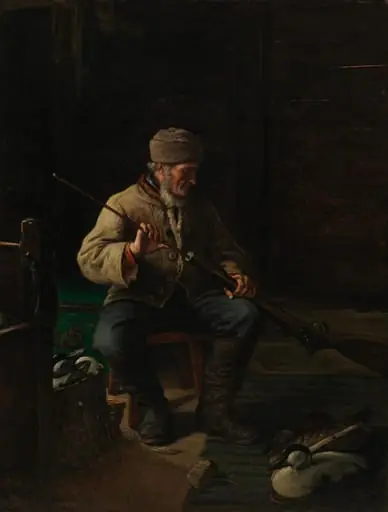
Created in 1876 by 253_person, this image captures a quiet aftermath of a hunt in a rural setting. It is part of the collection at the Museum of Ethnography. The composition centers on a solitary figure seated near a fire, surrounded by the tools and remains of the hunt. The scene avoids theatricality, instead emphasizing the unvarnished reality of daily life in a working-class environment.
Subject & Meaning
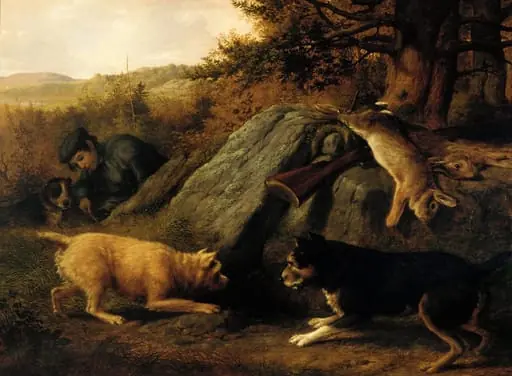
Two dogs, one large and one small, investigate a wounded animal on the floor, suggesting the hunt’s incomplete conclusion.
The image portrays a man holding the head of a slain boar, watched silently by a child. Two dogs, one large and one small, investigate a wounded animal on the floor, suggesting the hunt’s incomplete conclusion. The absence of celebration or triumph underscores the grim necessity of subsistence. The moment feels intimate, revealing the quiet weight of labor and survival in a world where death is part of routine.
Technique & Style
The artist employs muted tones and focused chiaroscuro to heighten the immediacy of the scene. Firelight casts sharp contrasts across rough fabrics, weathered skin, and animal hides, lending texture and depth. Brushwork is deliberate but unpolished, avoiding idealization. The composition is tightly framed, drawing attention to the physicality of the figures and objects, reinforcing the work’s grounding in observable reality.
History & Provenance
The work entered the Museum of Ethnography’s collection in the late 19th century, likely acquired as part of a broader effort to document rural life. Its attribution to 253_person is documented in early museum records, though little is known about the artist’s broader career. The piece has remained in the museum’s holdings since its acquisition, with no known public exhibitions beyond institutional displays.
Context
Produced during the height of Realist movements in Europe, the image aligns with efforts to depict ordinary people and their environments without romanticization. It reflects a shift away from historical or mythological subjects toward the dignity and hardship of manual labor. Similar themes appear in the work of contemporaries who sought to record the lives of peasants and hunters as they lived them.
Legacy
Though not widely reproduced or studied outside ethnographic circles, the image remains a quiet example of 19th-century observational art. It contributes to a visual archive of rural existence, preserving details of clothing, tools, and domestic space that might otherwise have been overlooked. Its endurance lies in its unembellished testimony to a way of life rarely elevated in art of the period.
Artist & collection

 Domestic Scene
 Giacomo and Cardinal Marco, investing Andrea, Abbot of San Zeno, with his Benefice
 The Nymph of Fontainebleau
 Portrait of a Woman
 Madonna and Child with Saints in the Enclosed Garden
 Venus and Minerva
 Family Group of Four on Sofa
 Wall painting from Room H of the Villa of P. Fannius Synistor at Boscoreale