Artwork
Dead Stag
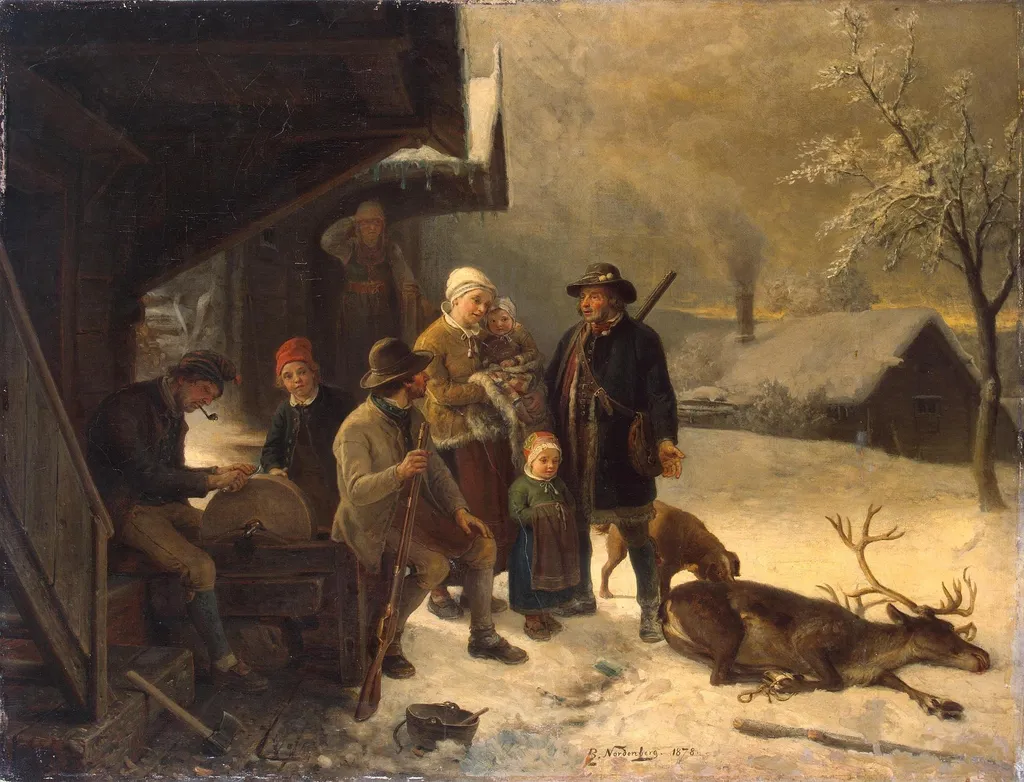
Dead Stag is an oil painting by the Post-Impressionist artist Bengt Nordenberg. It dates from 1890 and is held in the collection of the Hermitage Museum.
About this work
Overview
Though trained in the Düsseldorf tradition, his work diverged from grand historical themes to focus on quiet, rural subjects.
Bengt Nordenberg, a Swedish artist active in the late 19th century, completed *Dead Stag* in 1890 using oil on canvas. Though trained in the Düsseldorf tradition, his work diverged from grand historical themes to focus on quiet, rural subjects. This painting reflects his sustained interest in the natural world and the somber dignity of rural life in Sweden, rendered with careful observation rather than dramatic flourish.
Subject & Meaning
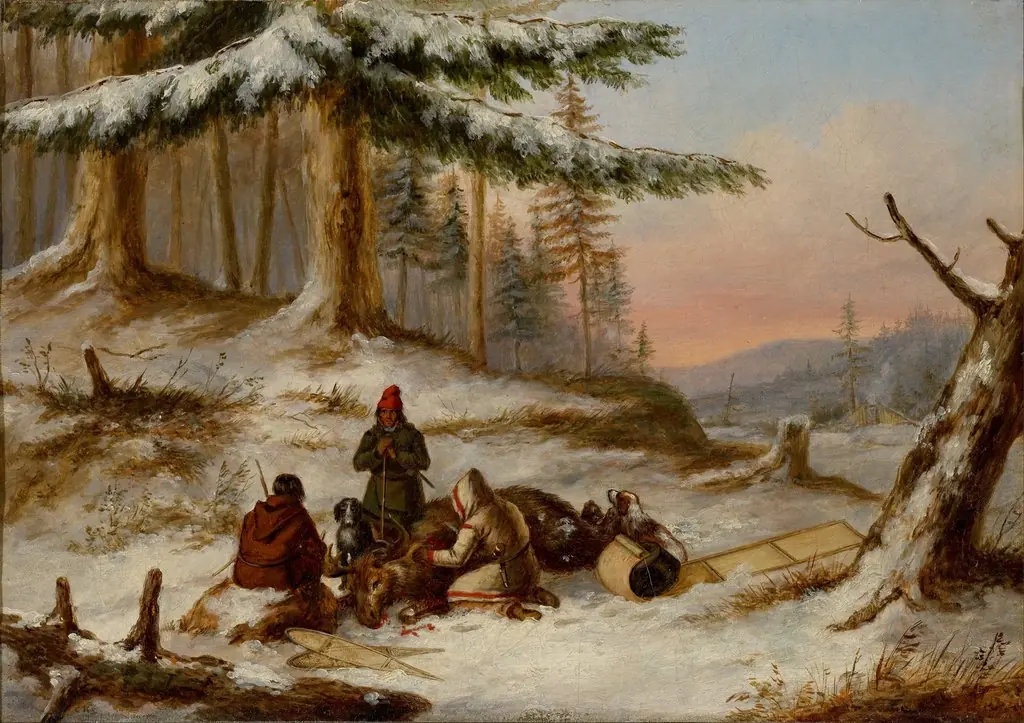
The painting presents a single dead stag, lying still on forest ground, its antlers slightly raised as if caught mid-collapse. There is no human presence, no hunting gear, no blood — only the animal and its environment. The absence of narrative suggests a meditation on mortality, silence, and the quiet cycles of nature, consistent with Nordenberg’s tendency to avoid sentimentality in favor of restrained realism.
Technique & Style
Nordenberg employed a muted palette of browns, grays, and muted greens to evoke the dampness of woodland earth. Brushwork is precise yet unobtrusive, emphasizing texture over drama: the stag’s fur, the moss, the fallen leaves. Light falls diffusely, suggesting early morning or late afternoon, enhancing the painting’s stillness. The composition is tightly framed, drawing attention to the animal’s form without theatricality.
History & Provenance
Created in 1890, the painting entered the collection of the State Hermitage Museum in Saint Petersburg, likely through acquisition or donation in the early 20th century. Nordenberg’s association with the Düsseldorf Academy gave his work visibility in European circles, though he remained primarily known in Sweden. The Hermitage’s holding reflects broader interest in Nordic realism during a period of expanding European art collections.
Context
Nordenberg worked during a time when Scandinavian artists increasingly turned to local landscapes and rural subjects, distancing themselves from academic grandeur. While influenced by Düsseldorf’s detailed realism, his focus on solitary animals and unpopulated nature aligned with emerging Nordic sensibilities — a quiet, introspective mode that contrasted with the more theatrical styles prevalent elsewhere in Europe.
Legacy
*Dead Stag* remains one of Nordenberg’s most recognized works, emblematic of his commitment to understated observation. Though not widely exhibited beyond Scandinavian and Russian institutions, it continues to represent a quiet strand of 19th-century Nordic painting — one that valued stillness, naturalism, and emotional restraint over spectacle.
Own this work as a print
Artist & collection
Artist
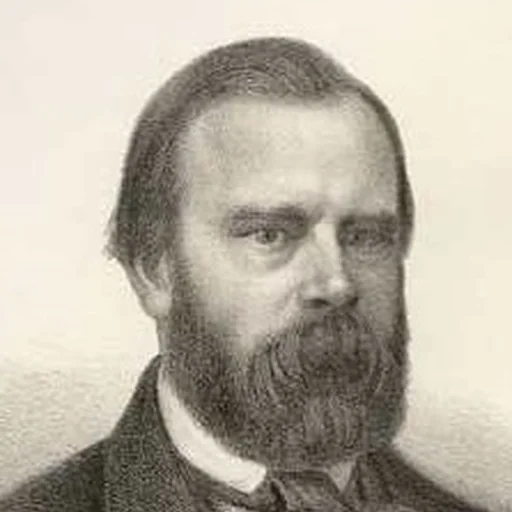
Bengt Nordenberg (April 22, 1822 – December 18, 1902) was a Swedish artist. He belonged to the Düsseldorf school of painting and is best known for his genre paintings with everyday life scenes from the Dalarna, Skåne…